Shape Recognition Adding up to 1000 Without Regrouping Worksheets for Ages 6-9
3 filtered results
-
From - To
Discover fun and engaging "Shape Recognition Adding up to 1000 Without Regrouping" worksheets designed for children ages 6-9! These worksheets seamlessly combine math practice with shape identification, helping young learners strengthen their addition skills while exploring geometry. Each activity encourages kids to enhance their understanding of numbers up to 1000 without the complexity of regrouping, ensuring a solid mathematical foundation. Ideal for classroom use or at-home practice, these printable worksheets cater to diverse learning styles and keep children motivated. Watch your child’s confidence grow as they master both addition and shape recognition with these interactive exercises! Perfect for early mathematics development!
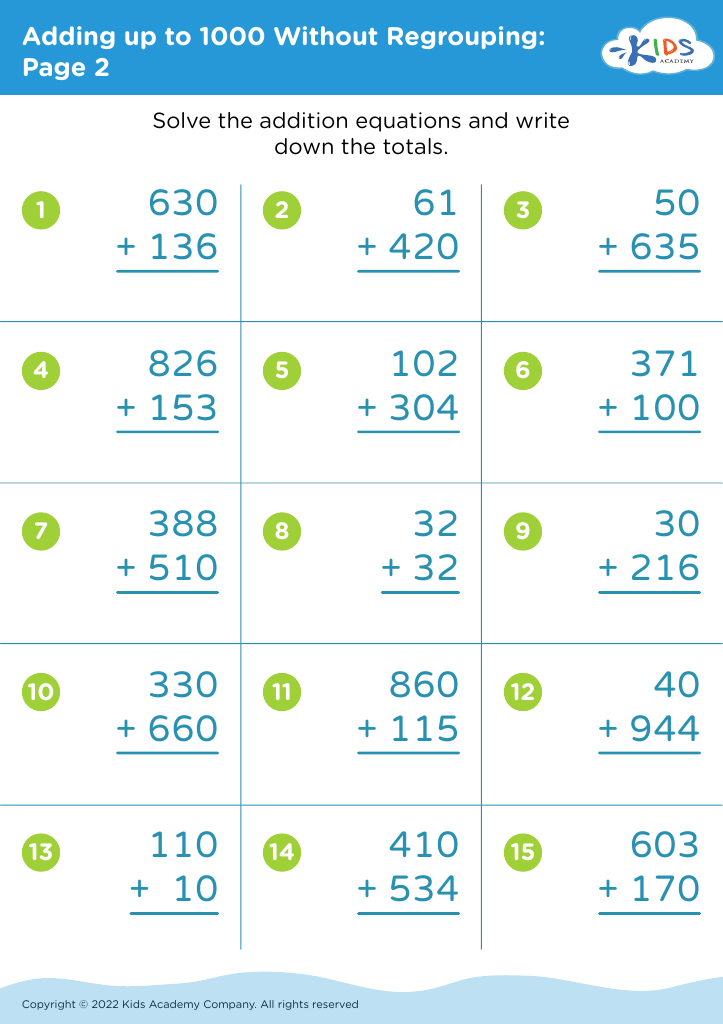
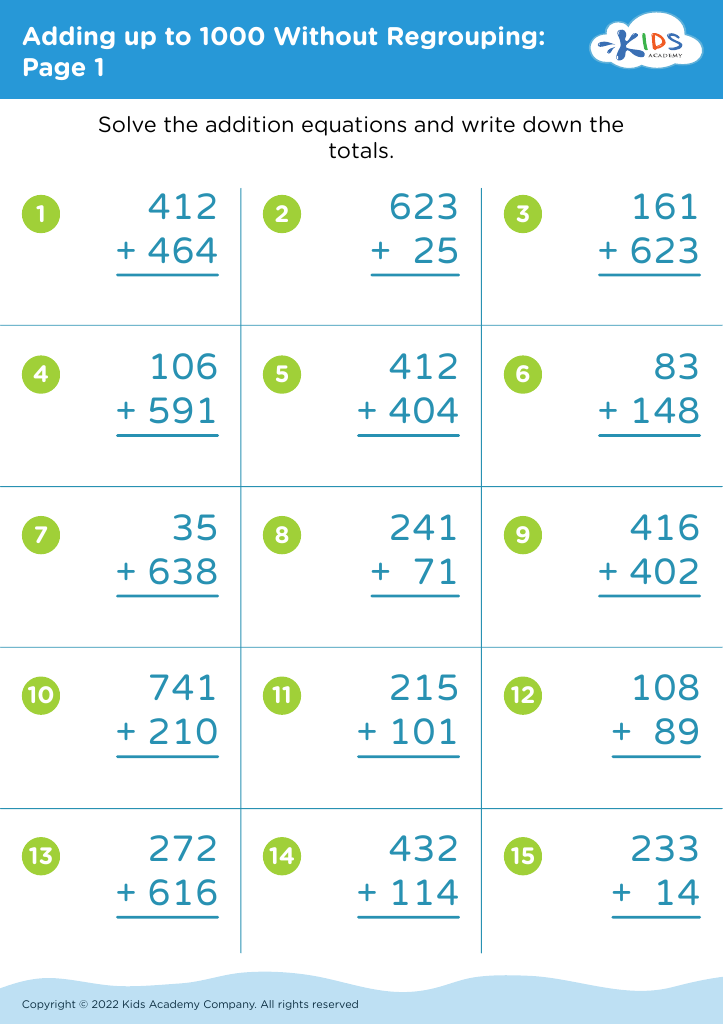
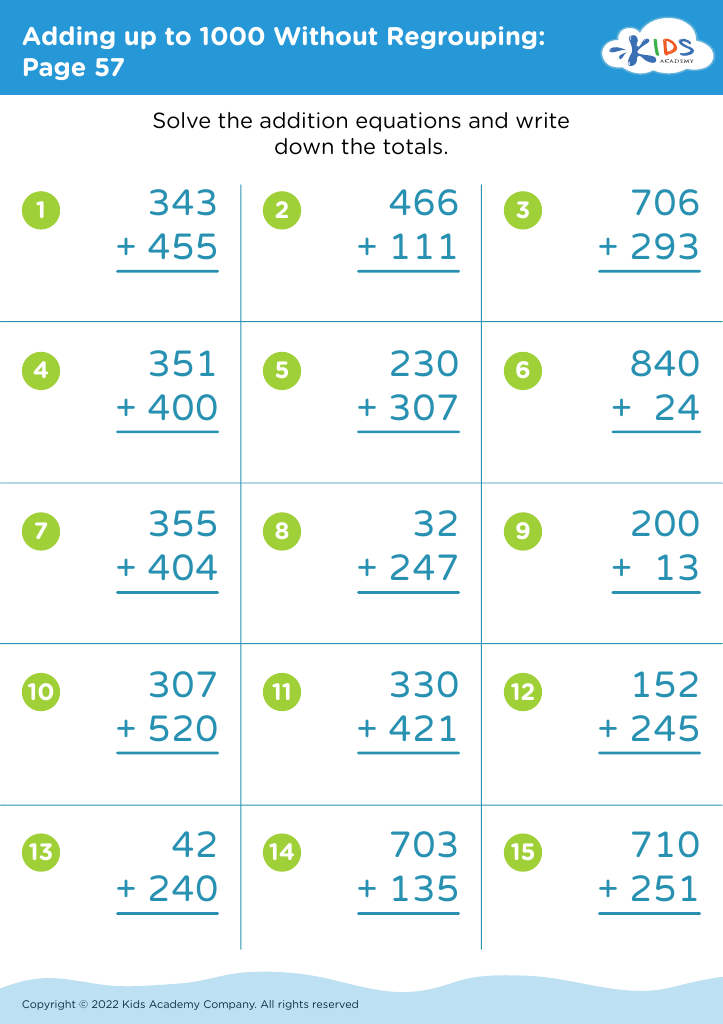


Shape recognition and addition without regrouping are fundamental skills for children aged 6-9, and both play a critical role in their cognitive development. Firstly, shape recognition is essential for developing spatial awareness, an important precursor to more complex math concepts, such as geometry. Children who can identify and differentiate shapes are better equipped to understand how objects relate to each other in space, which is vital as they progress in their education.
Moreover, mastering addition up to 1000 without regrouping strengthens children's arithmetic skills and builds a solid foundation for more advanced mathematical operations. This understanding fosters confidence and reduces math anxiety, allowing children to approach math with a positive mindset. By practicing these skills, students enhance their problem-solving abilities and logical thinking, crucial traits for success in both academic and real-life situations.
Parents and teachers should care about these skills because they are interconnected—shape recognition often appears in word problems and geometry, while addition practice helps to develop patience and perseverance. Supporting children in these areas ultimately equips them with the confidence and skills they need for lifelong learning in a world that requires strong mathematical understanding. Engaging with these concepts sets children on the path to academic achievement and critical global competencies.