Alphabet Recognition Adding up to 1000 Worksheets for Ages 6-9
4 filtered results
-
From - To
Introduce your children to the fascinating world of numbers and letters with our Alphabet Recognition Adding up to 1000 Worksheets, specially designed for kids ages 6-9. These engaging, printable worksheets help young learners master fundamental math skills while also enhancing their alphabet recognition. Each sheet combines fun exercises with educational alignment, encouraging critical thinking and problem-solving. Perfect for both classroom and home settings, these resources make learning interactive and enjoyable. Give your child a head start on math and literacy with our expertly crafted worksheets, available exclusively at Kids Academy. Unlock their full potential today!
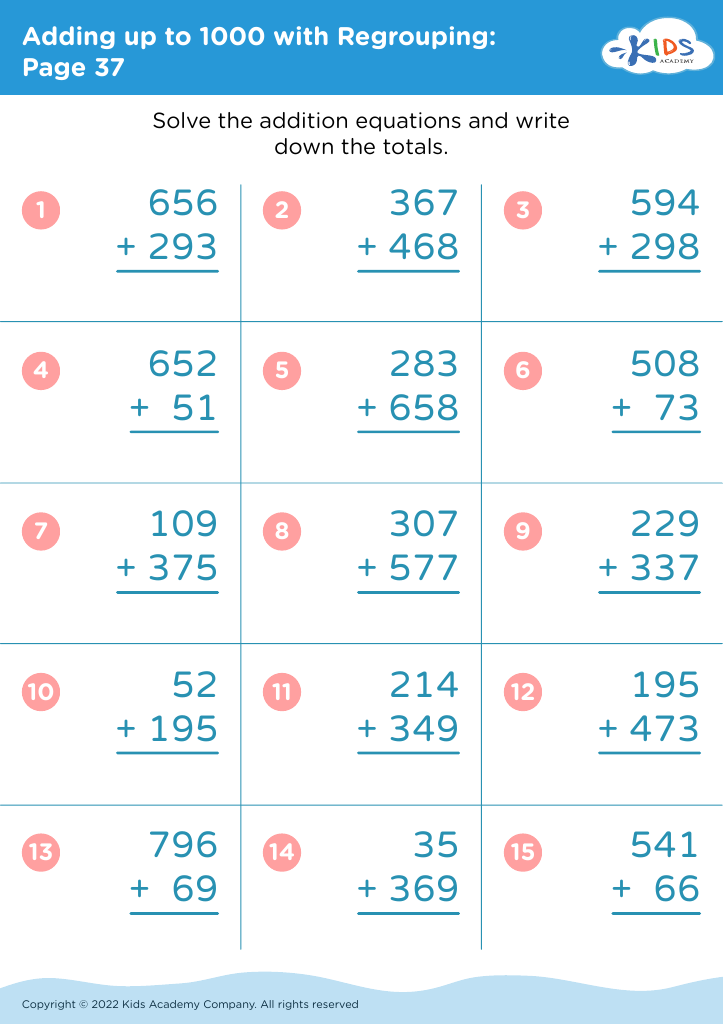
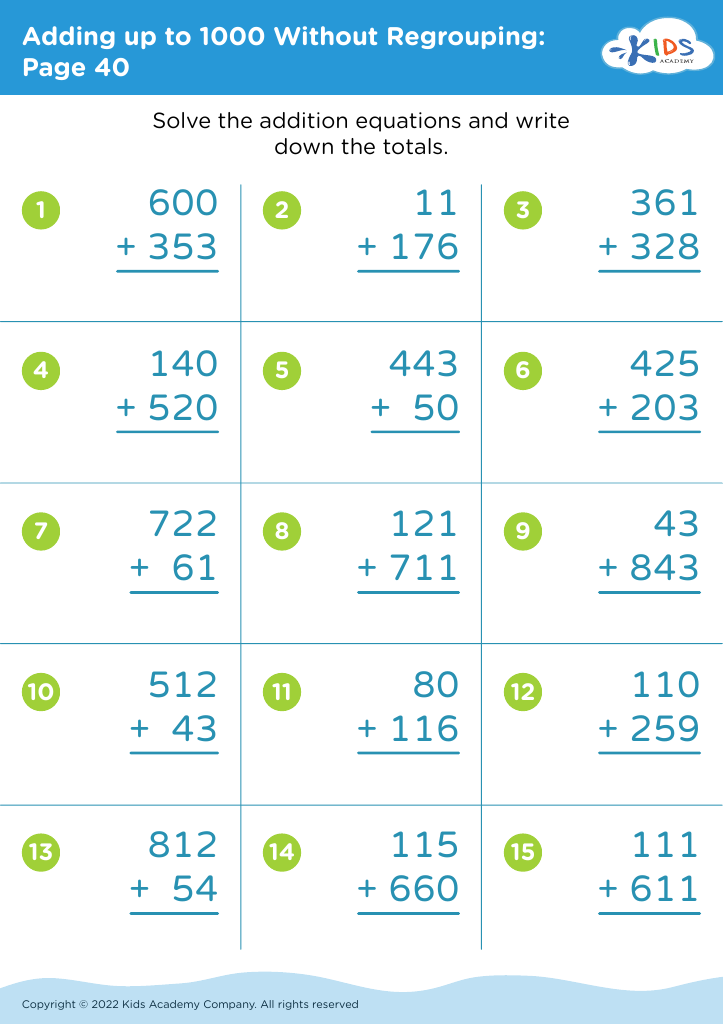
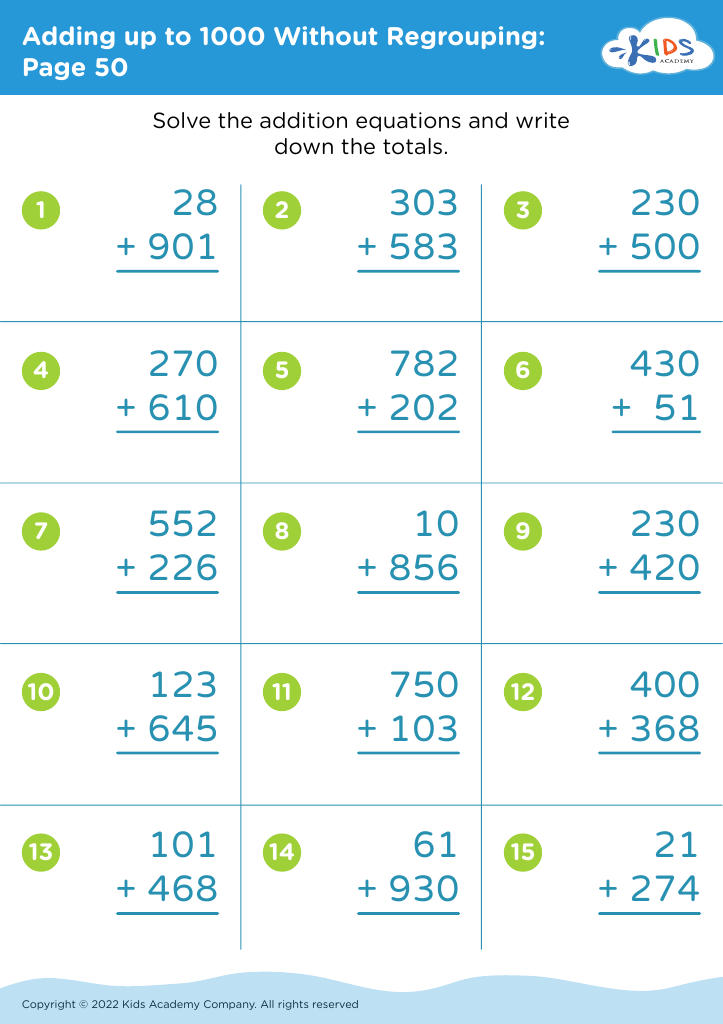
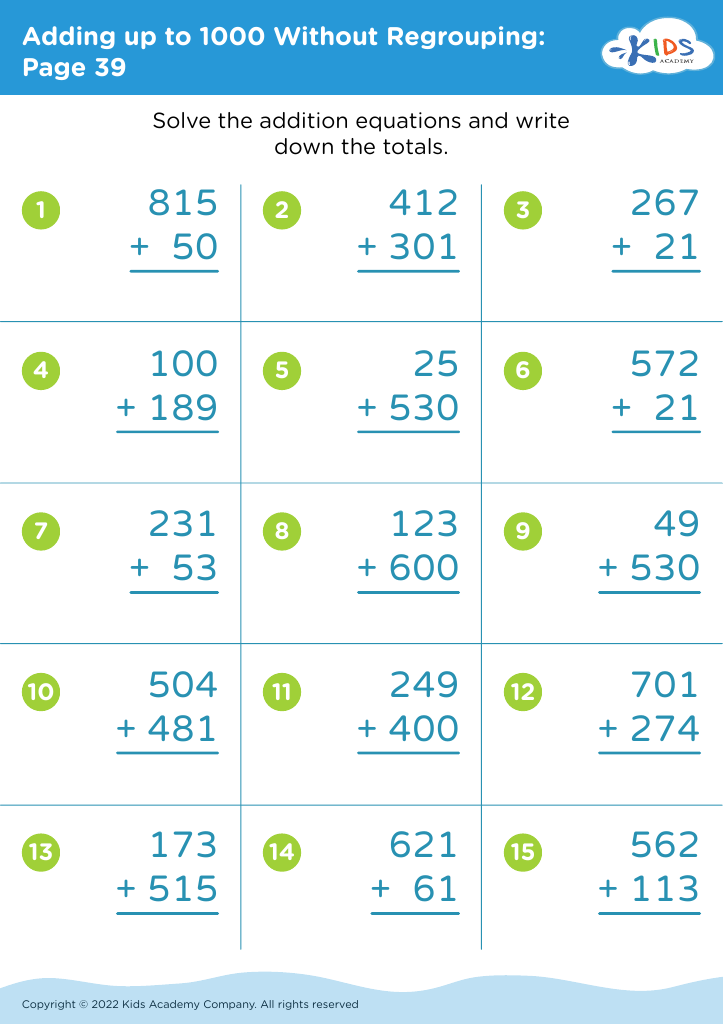



Alphabet recognition adding up to 1000 for children aged 6-9 is a crucial skill, blending letter familiarity with early math concepts, and fostering comprehensive language and cognitive development. At this stage, children’s brains are highly receptive to new information, making it a prime time to develop foundational skills. Alphabet recognition lays the groundwork for reading proficiency, which directly influences future academic success in all subjects.
By incorporating math elements, such as counting and adding up to 1000, educators and parents can enhance critical thinking and problem-solving skills. Combining letters and numbers engages both linguistic and mathematical intelligence, providing a holistic educational approach. This practice helps children understand sequences, patterns, and the relationship between symbols and quantities, which is critical for advanced math and literacy concepts in later grades.
Moreover, such exercises can cater to different learning styles. Visual learners benefit from seeing numbers and letters, while kinesthetic learners gain from activities involving physical manipulation of numbers, like using counters or drawings. Engaging children in fun, multi-sensory activities ensures better retention and a positive attitude toward learning.
Thus, teachers and parents should care about this area of learning as it builds a strong, integrated foundation of essential literacy and numeracy skills that pave the way for continued educational achievement and cognitive development.








