Basic Math Skills Adding up to 1000 Worksheets for Ages 6-9
13 filtered results
-
From - To
Welcome to our "Basic Math Skills Adding Up to 1000 Worksheets for Ages 6-9"! This engaging collection of printable worksheets is designed to help young learners build essential addition skills up to 1000. Each worksheet features fun and colorful exercises that encourage students to practice adding single and multi-digit numbers, enhancing their arithmetic abilities in a playful way. Our carefully crafted resources aim to foster confidence in math, laying a strong foundation for future learning. Perfect for classroom use or at-home practice, these worksheets make math an enjoyable journey for children aged 6 to 9. Start adding up fun today!
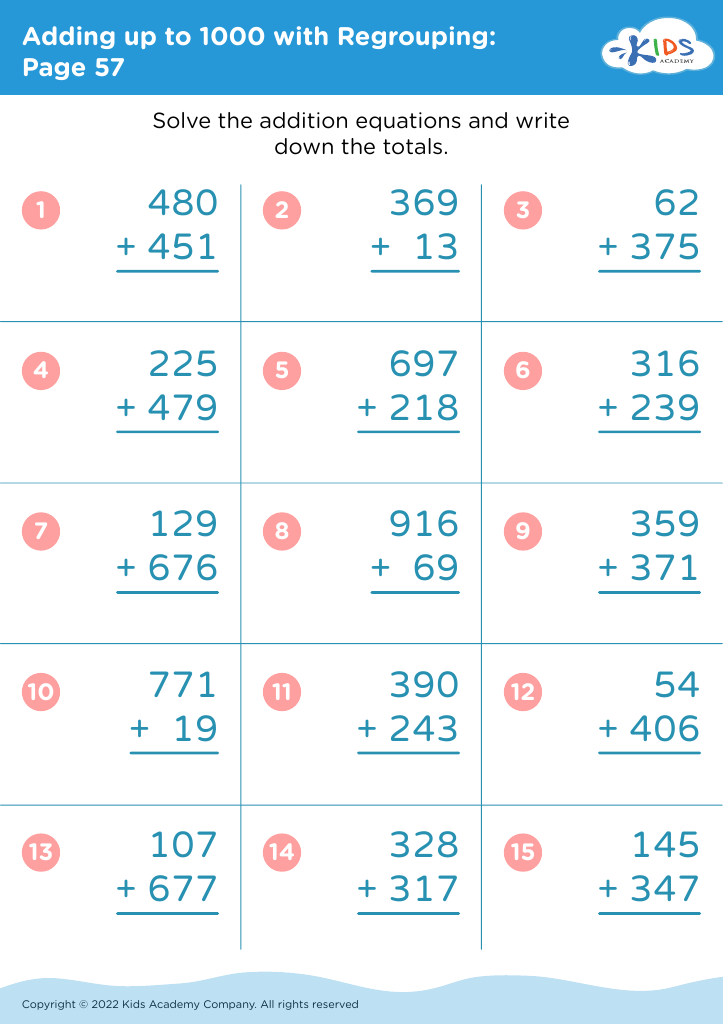
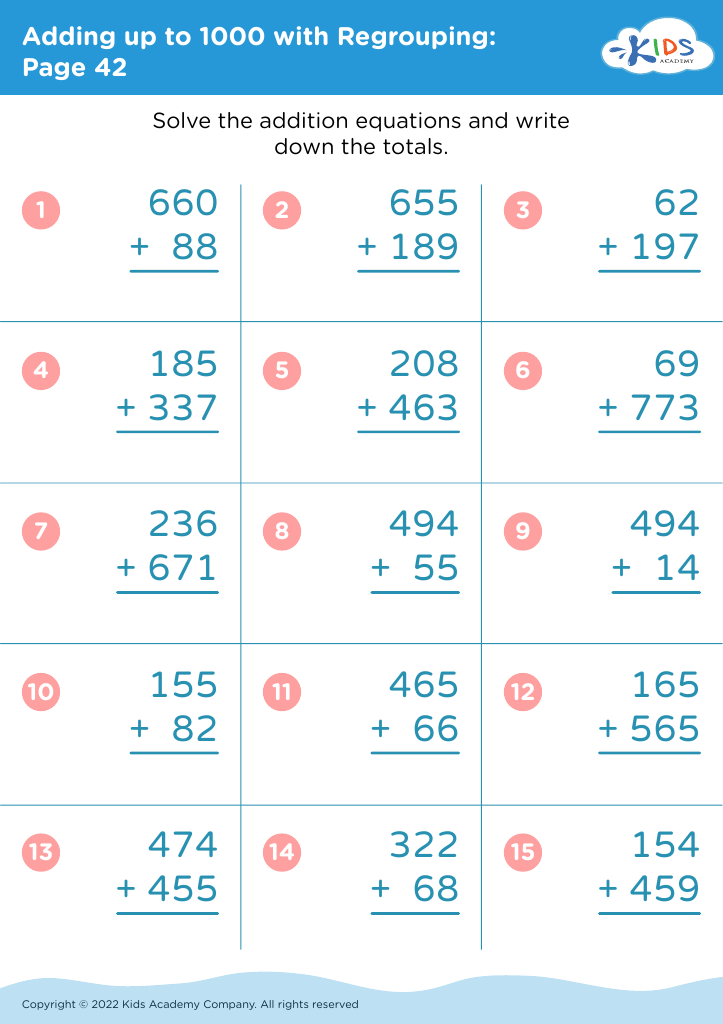
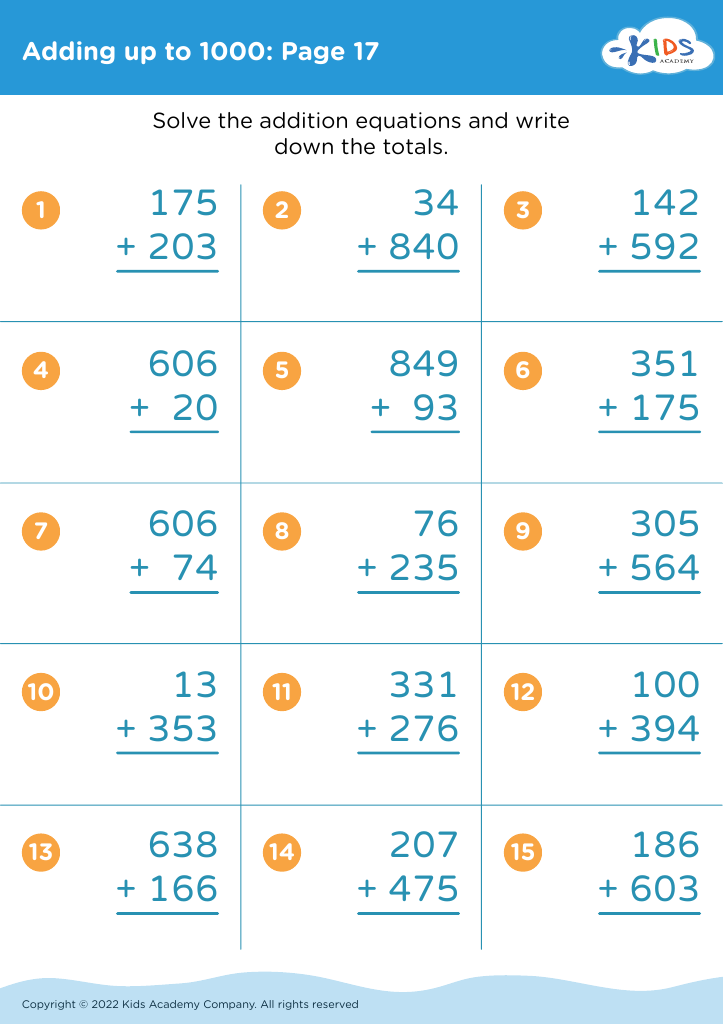
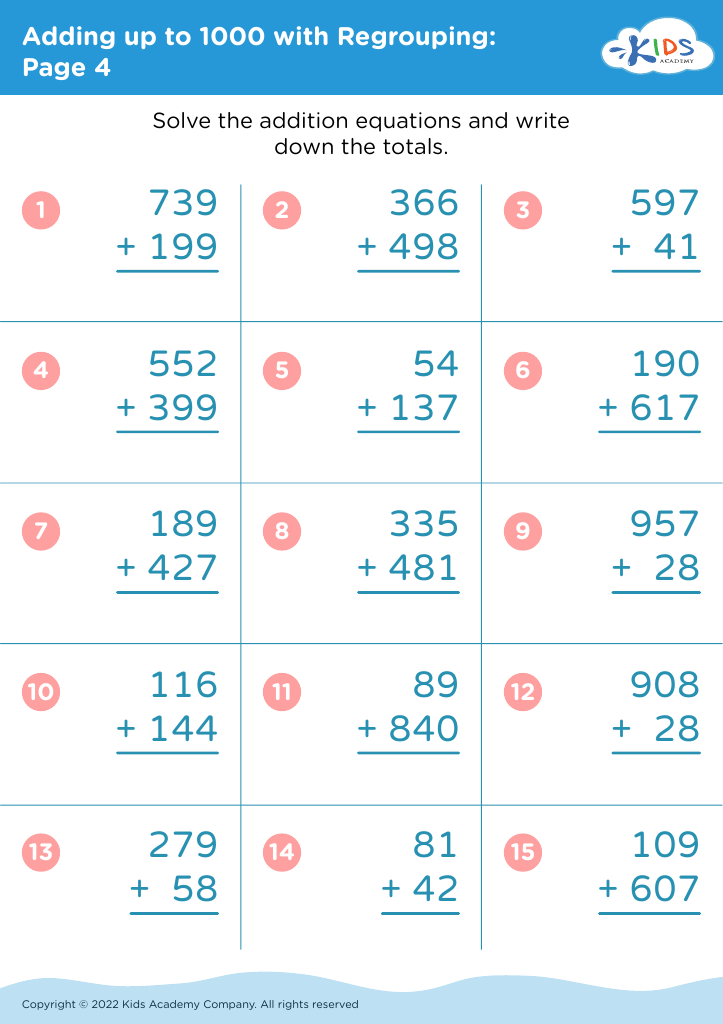
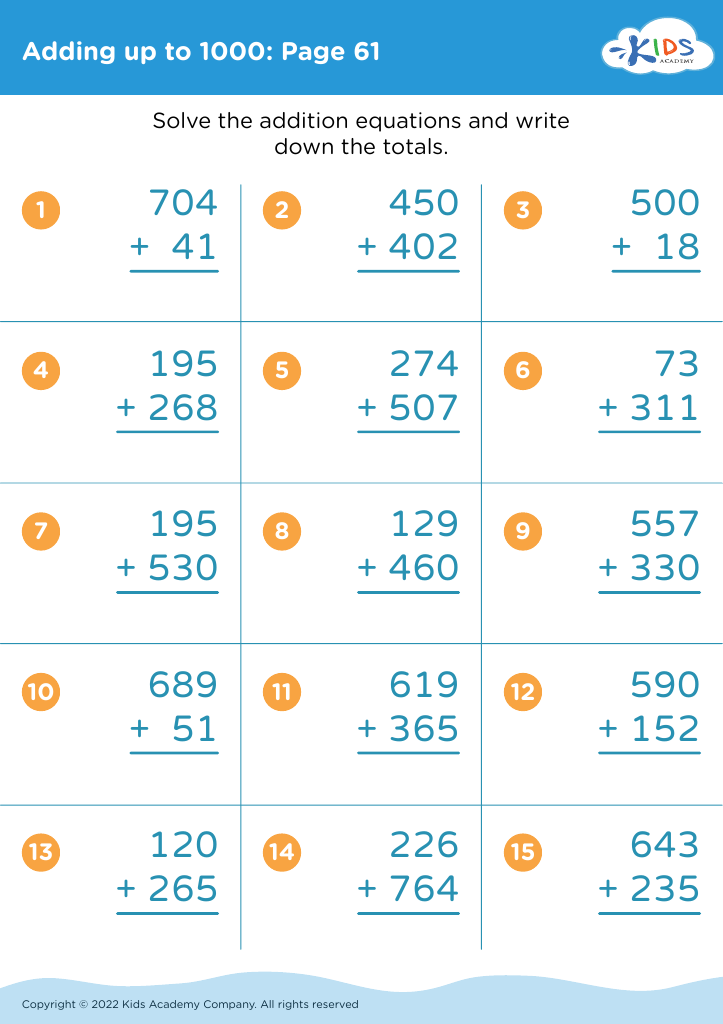
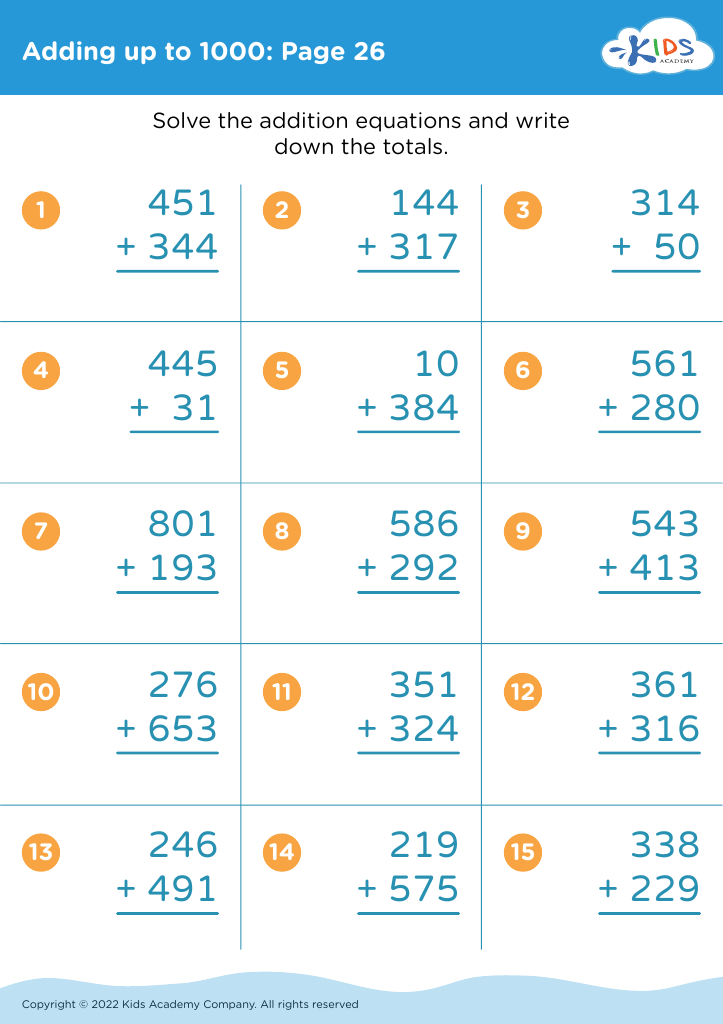
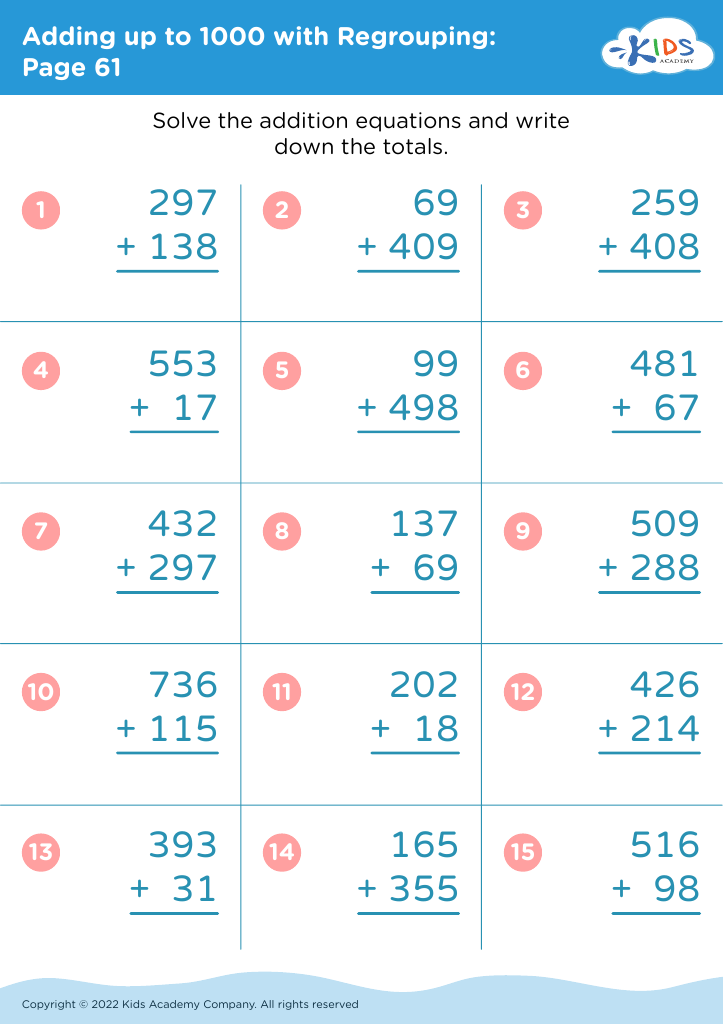
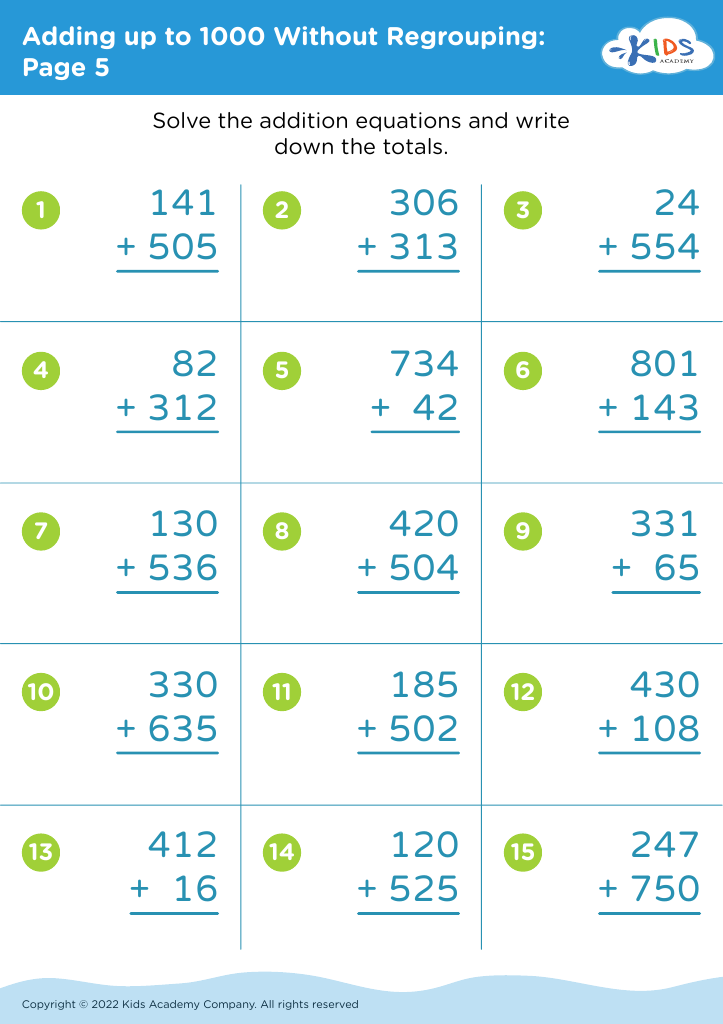
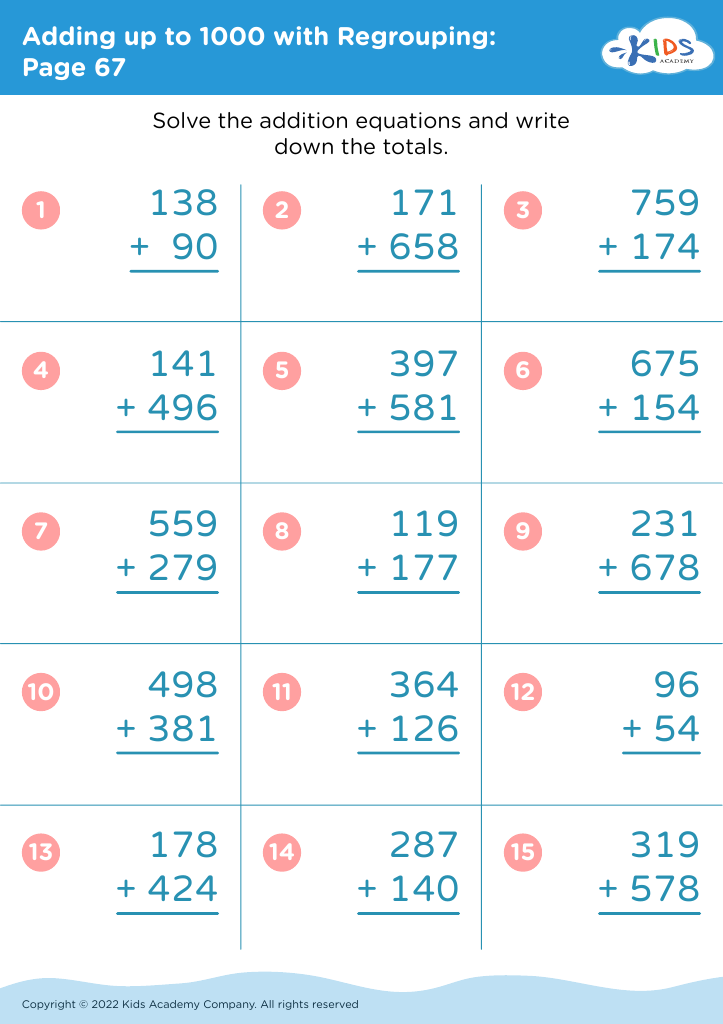
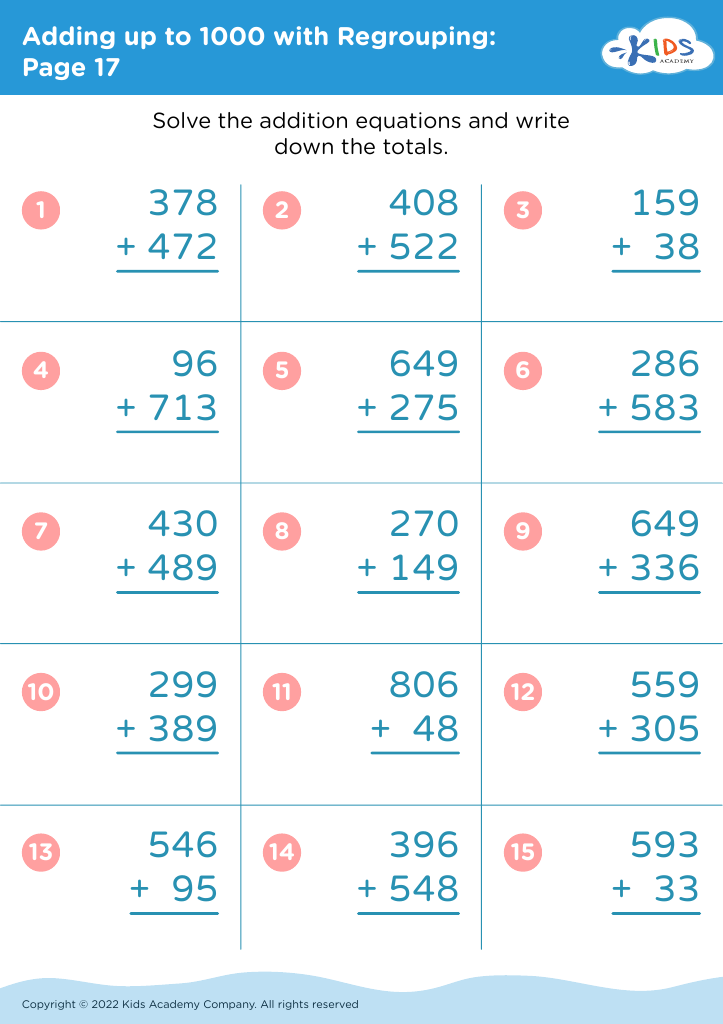
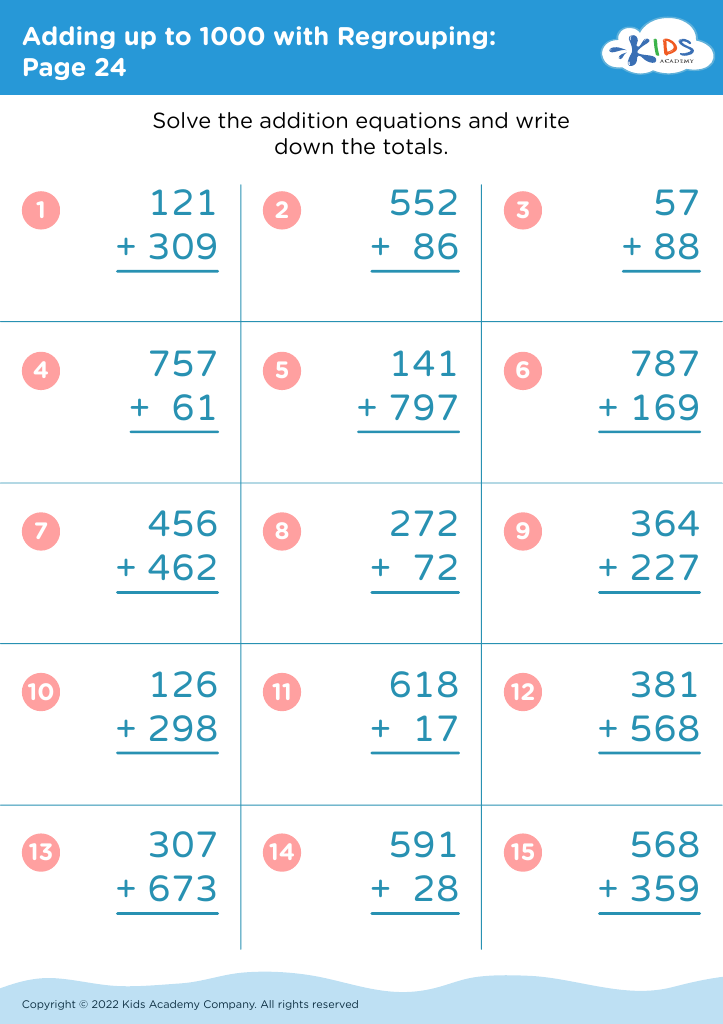
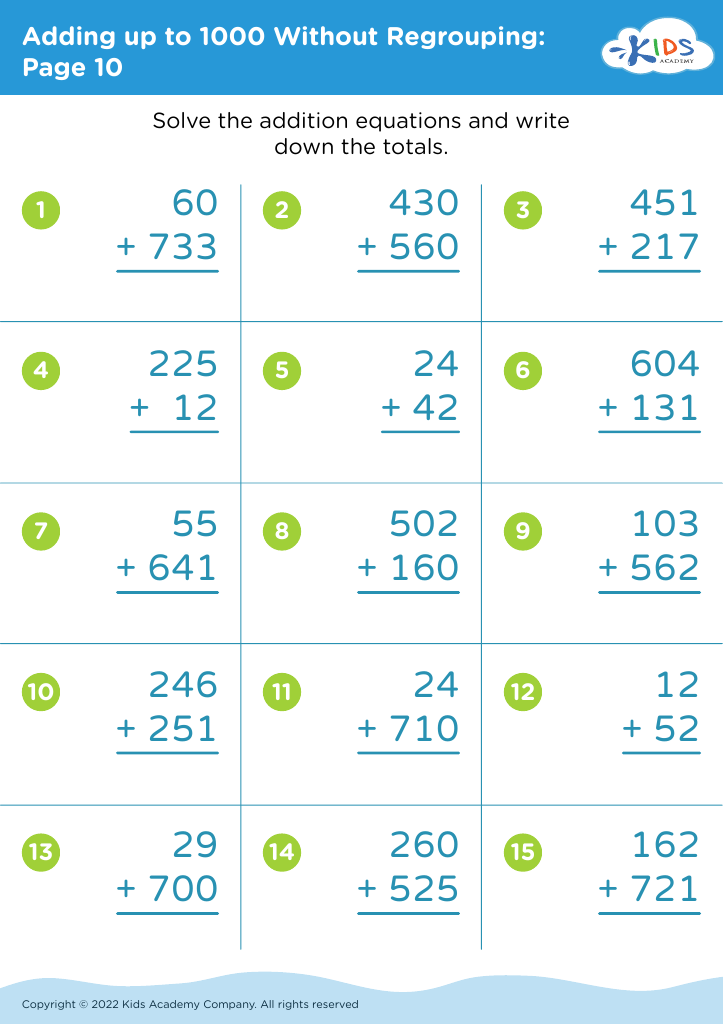
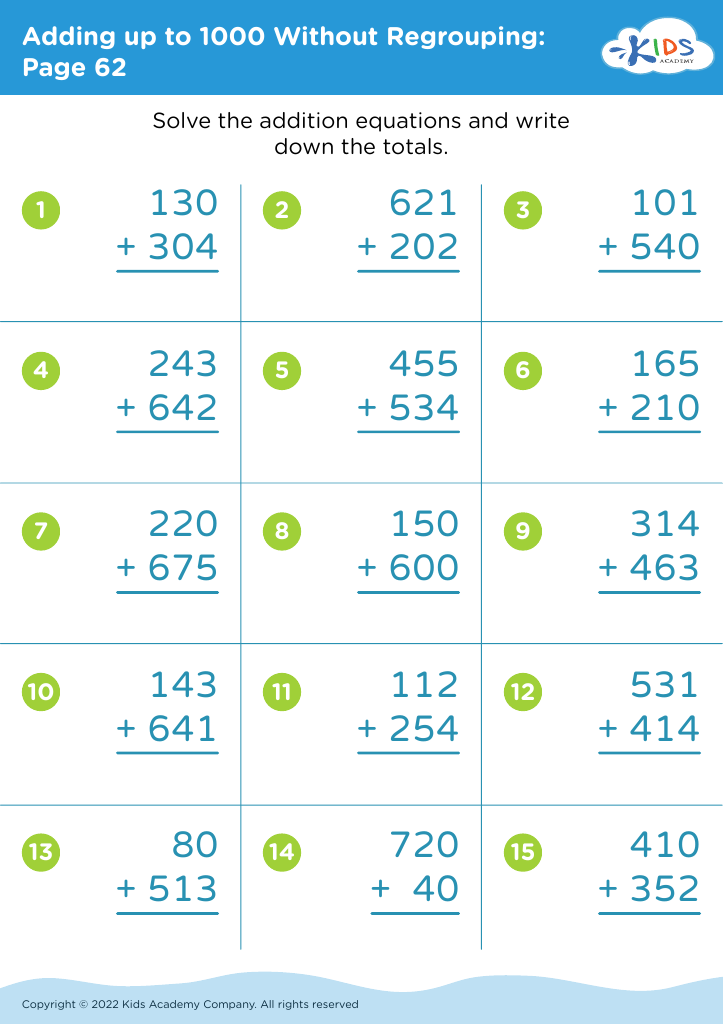



Basic math skills, such as adding up to 1000, are critical for children aged 6-9 as they form the foundation for future learning. At this developmental stage, children are building their understanding of number sense, patterns, and problem-solving strategies. Mastery of addition up to 1000 is essential because it helps children develop confidence in their abilities and reduces math anxiety, setting a positive tone for their future education.
Parents and teachers should care because these skills not only enhance cognitive capabilities but also promote critical thinking and logical reasoning. Proficiency in basic addition facilitates a smoother transition into more advanced math concepts, including subtraction, multiplication, and division. It enables children to excel in math-related subjects, ultimately impacting their overall academic success.
Moreover, these skills are applicable in everyday life, helping children understand finances, measurements, and time management. By fostering a strong math foundation, educators and parents prepare children to navigate real-world situations effectively. This investment in their early education equips children with practical skills they will utilize throughout their lives, ensuring they are prepared for more complex challenges as they grow. Supporting children's growth in basic math skills is nurturing their curiosity, independence, and academic resilience.








