Filters

16 filtered results

Clear all filters
Favorites
With answer key
Interactive

16 filtered results

Difficulty Level

Grade


Welcome to our "Comparing Fractions Adding up to 1000 Worksheets" for children ages 6-9! Designed to build foundational math skills, these worksheets help young learners understand how to compare fractions effectively. Engaging activities seek to make fractions intuitive, encouraging critical thinking as students analyze and compare different fractions that total 1000. With colorful visuals and age-appropriate challenges, these worksheets not only enhance mathematical understanding but also spark a love for learning. Ideal for classrooms or at-home practice, these resources support educators and parents in nurturing confident math thinkers. Jumpstart your child’s journey in mastering fractions today!
Check out this FREE Trial Lesson on Adding up to 1000 for age 6-9!

Short and Long Vowel Sort

Favorites
With answer key
Interactive
  • 6-9
  • Comparing Fractions
  • Adding up to 1000
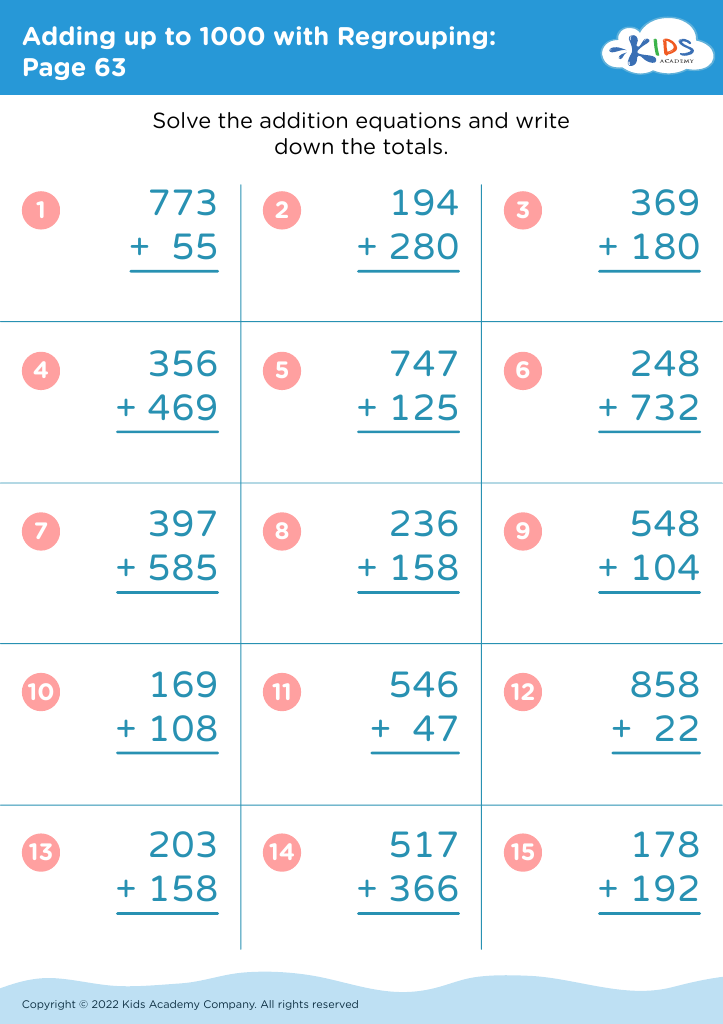
Adding up to 1000 with Regrouping: Page 63
Worksheet
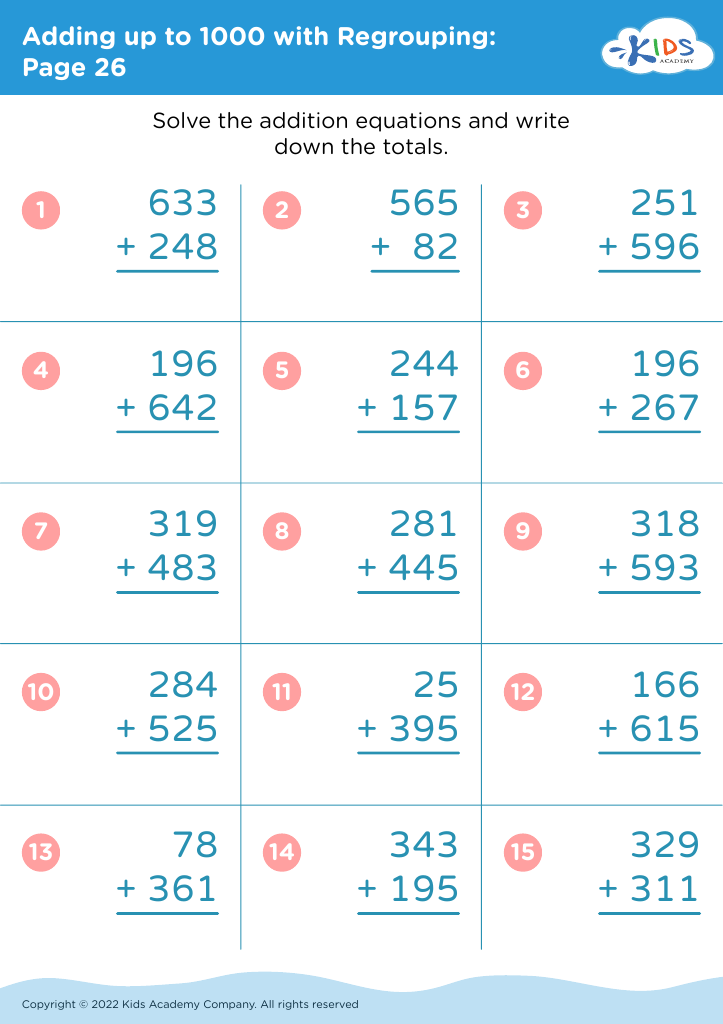
Adding up to 1000 with Regrouping: Page 26
Worksheet
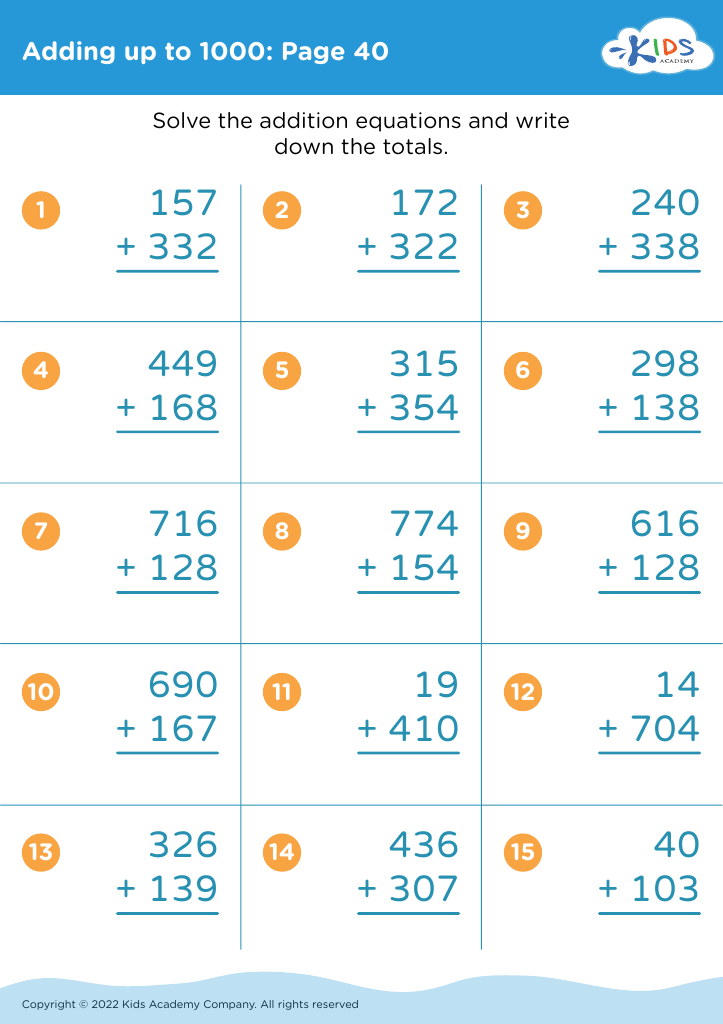
Adding up to 1000: Page 40

Adding up to 1000: Page 40

Adding up to 1000: Page 40
Worksheet
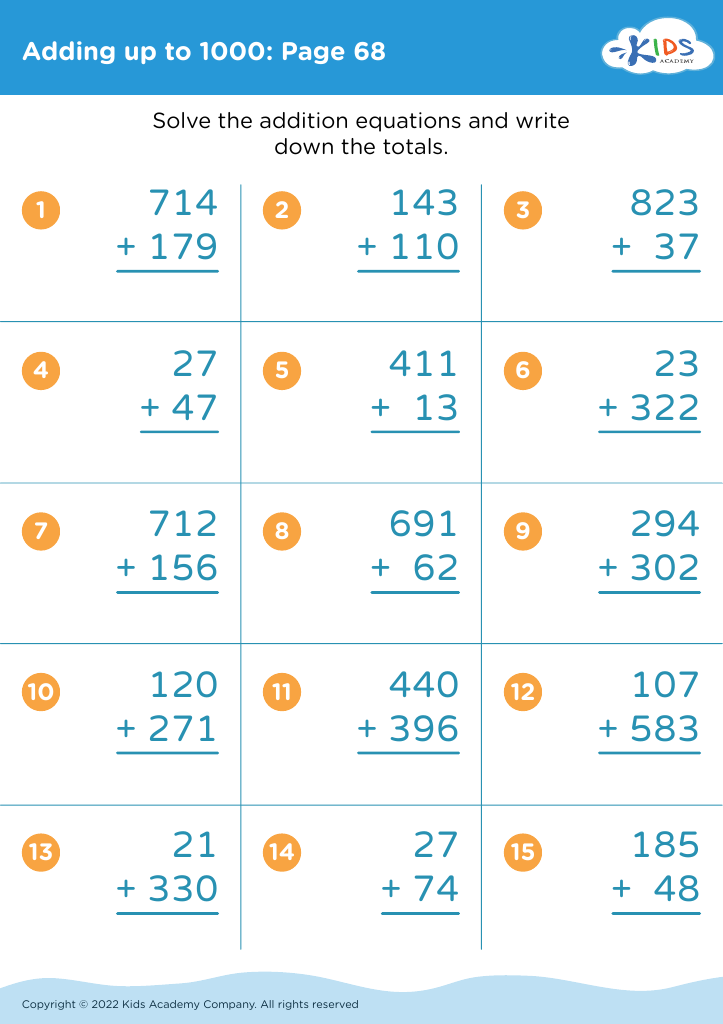
Adding up to 1000: Page 68

Adding up to 1000: Page 68

Adding up to 1000: Page 68
Worksheet
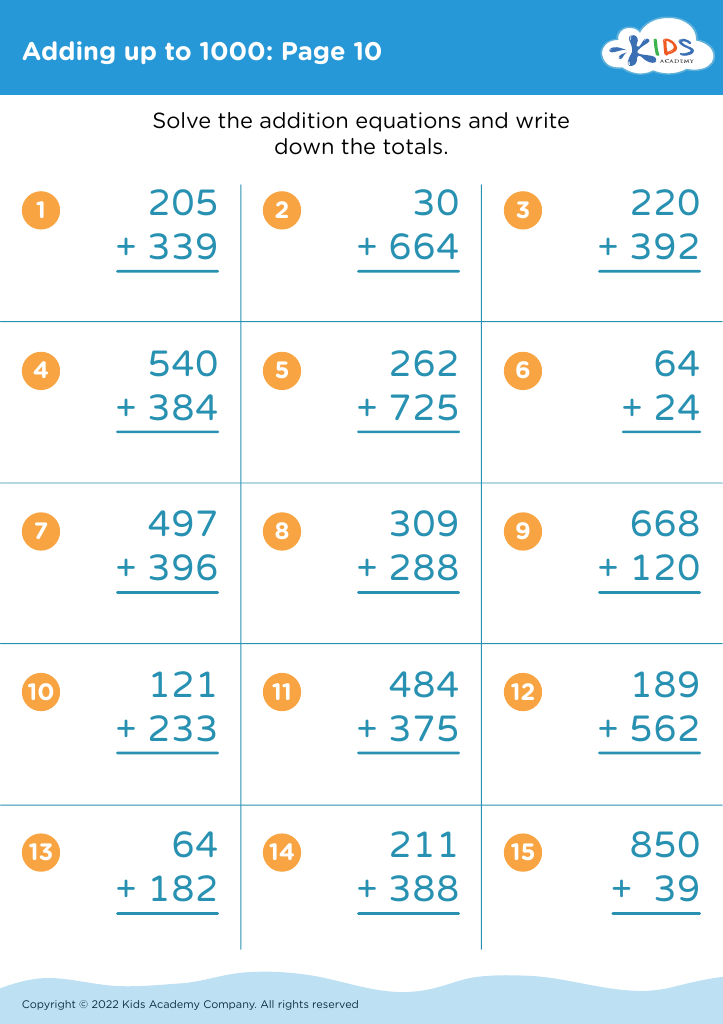
Adding up to 1000: Page 10

Adding up to 1000: Page 10

Adding up to 1000: Page 10
Worksheet
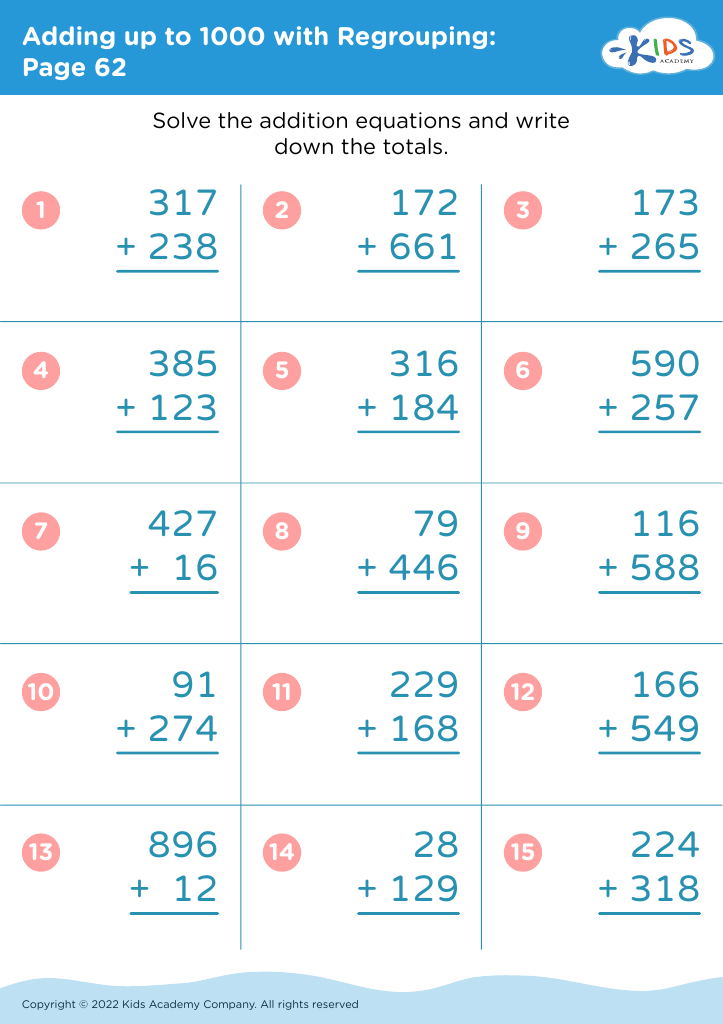
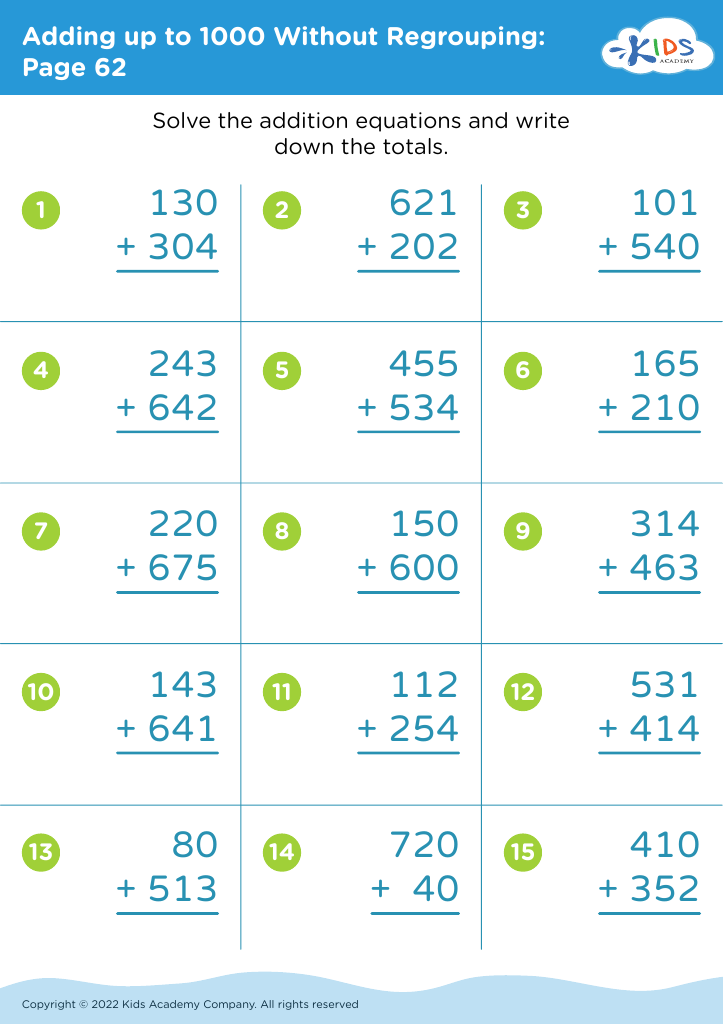
Adding up to 1000 with Regrouping: Page 62
Worksheet
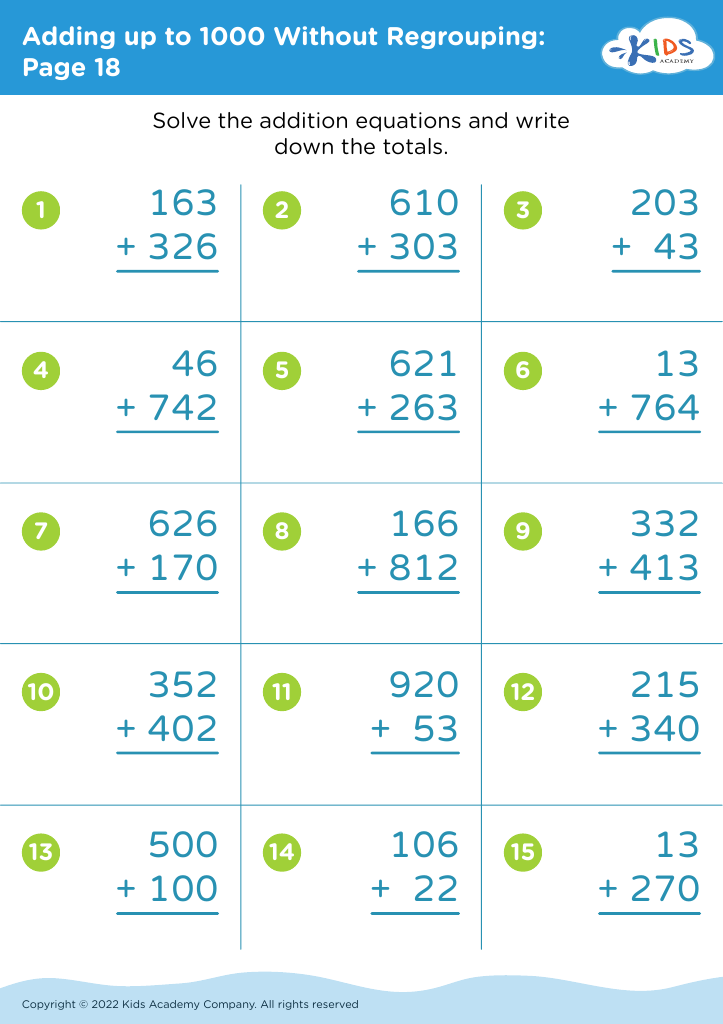
Adding up to 1000 Without Regrouping: Page 18
Worksheet
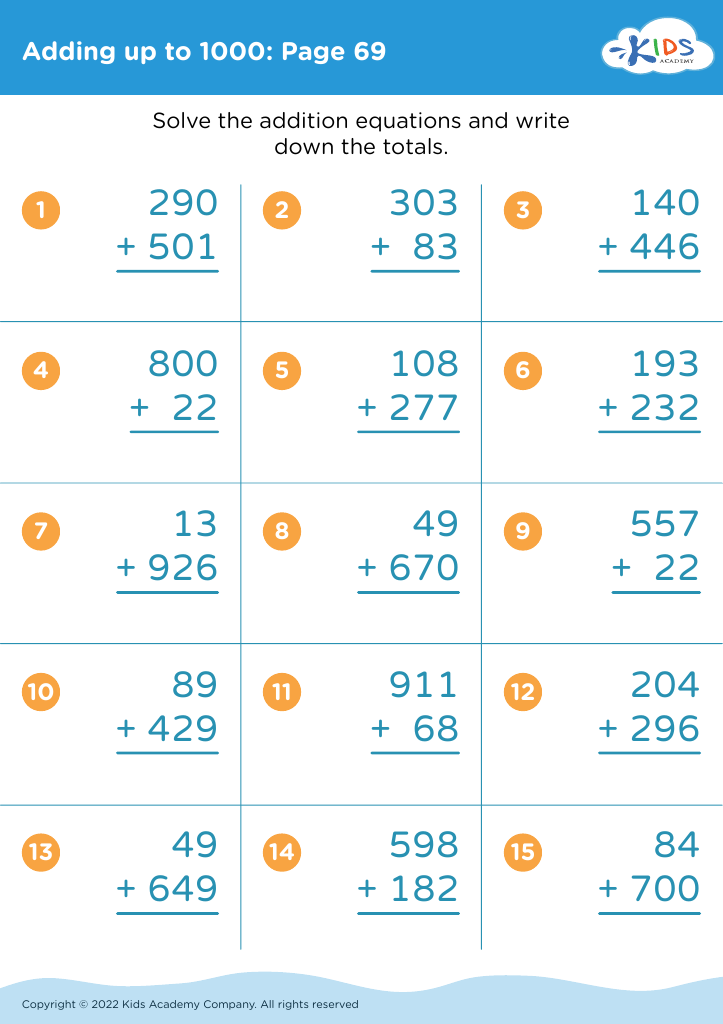
Adding up to 1000: Page 69

Adding up to 1000: Page 69

Adding up to 1000: Page 69
Worksheet
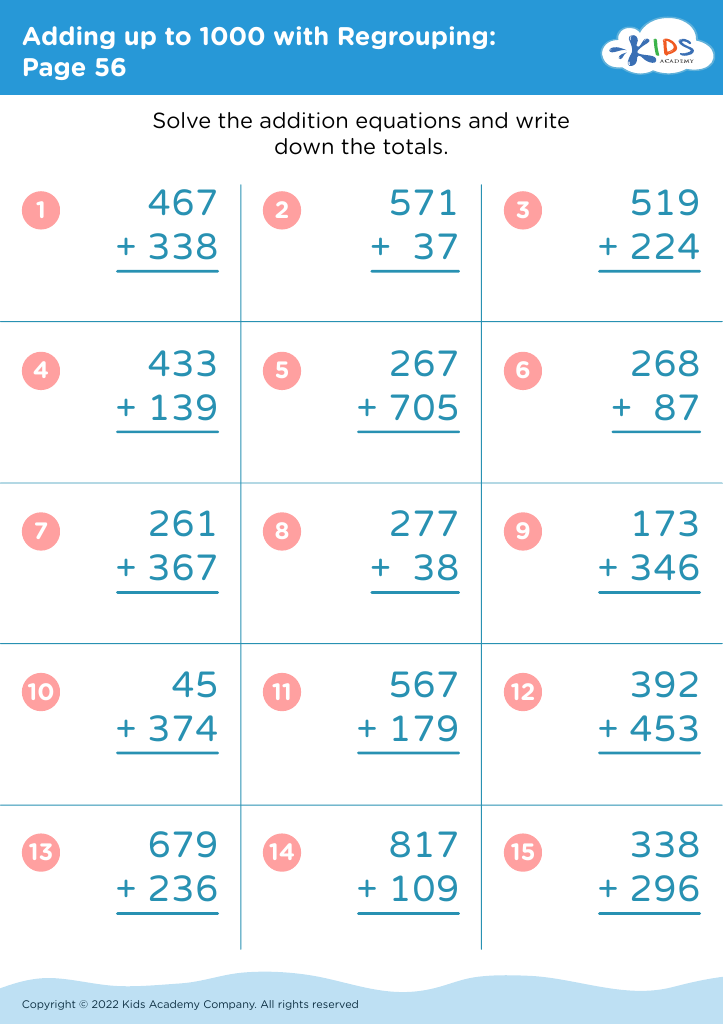
Adding up to 1000 with Regrouping: Page 56
Worksheet
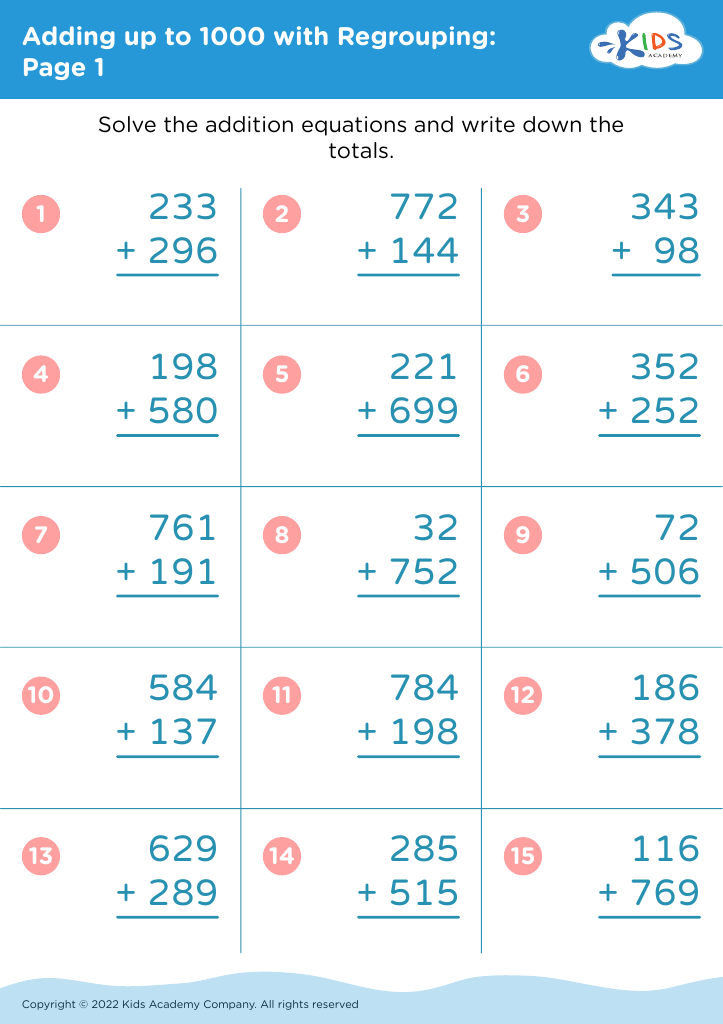
Adding up to 1000 with Regrouping: Page 1
Worksheet
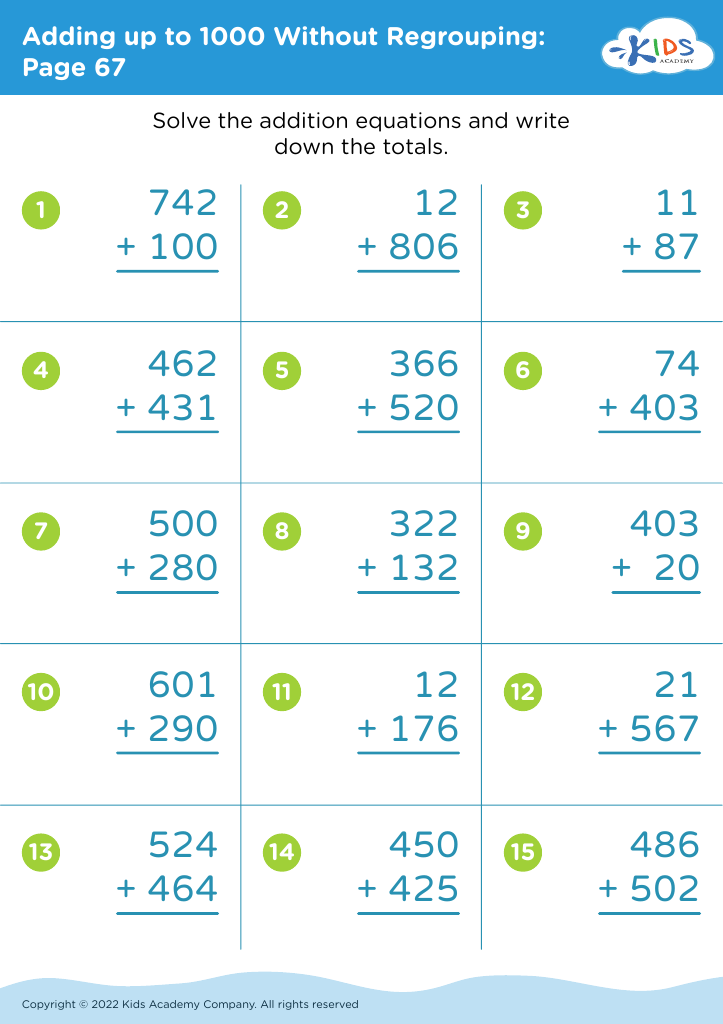
Adding up to 1000 Without Regrouping: Page 67
Worksheet
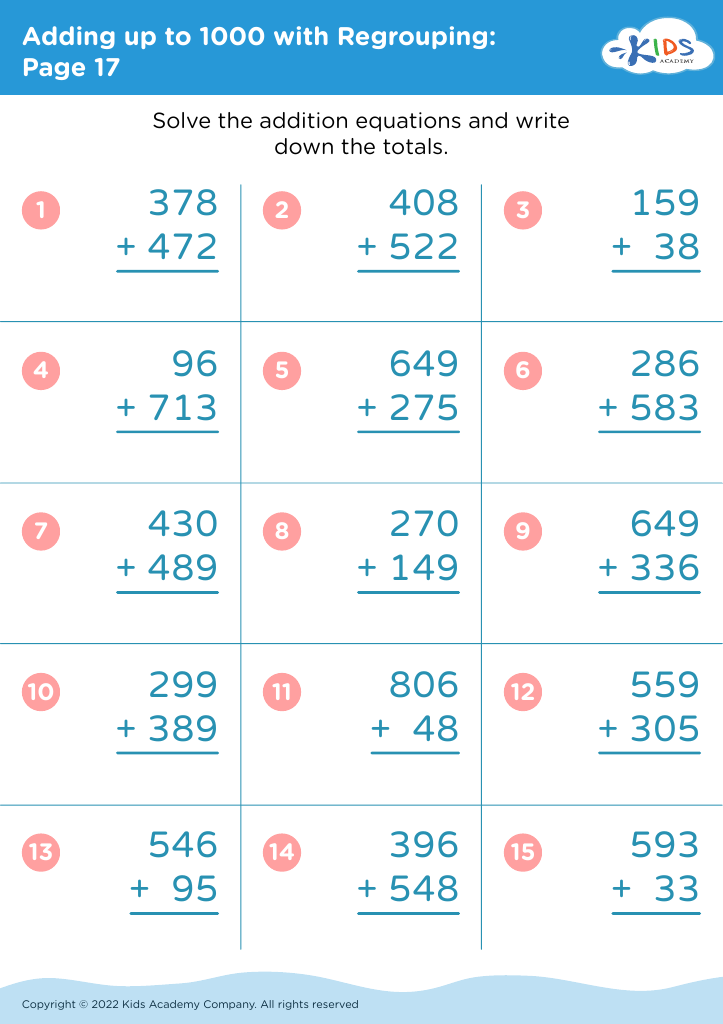
Adding up to 1000 with Regrouping: Page 17
Worksheet
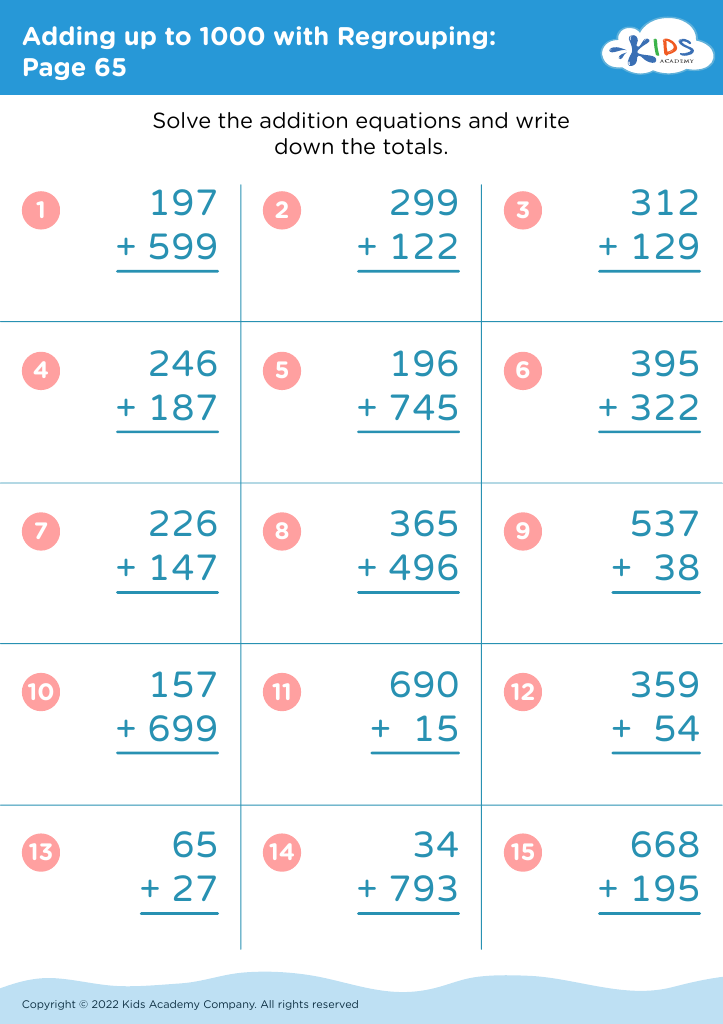
Adding up to 1000 with Regrouping: Page 65
Worksheet
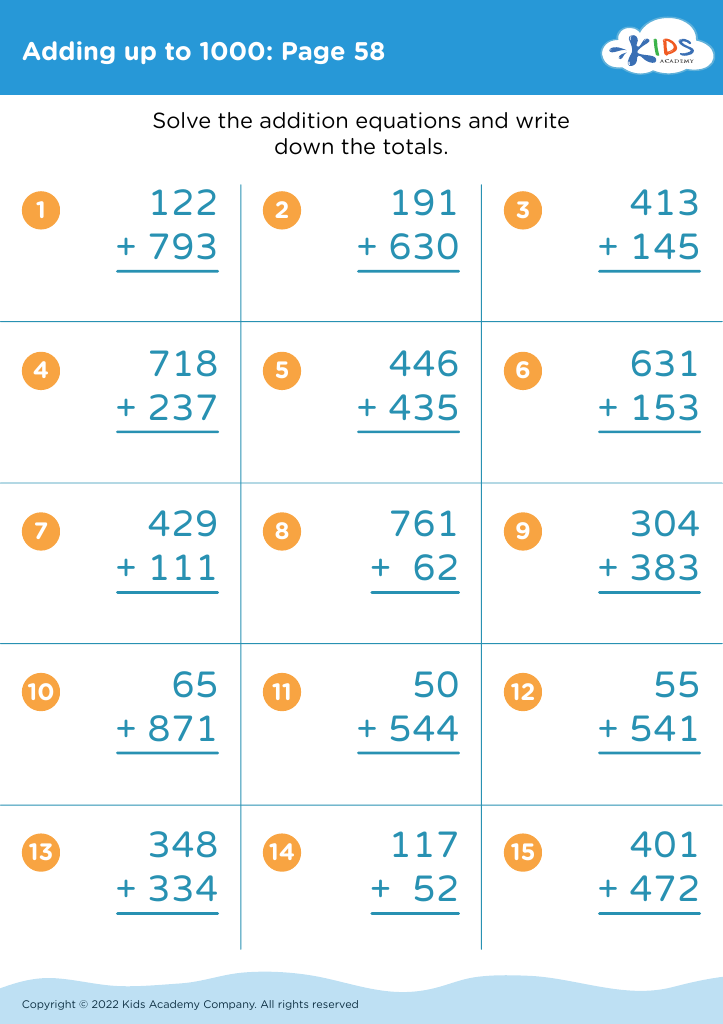
Adding up to 1000: Page 58

Adding up to 1000: Page 58

Adding up to 1000: Page 58
Worksheet
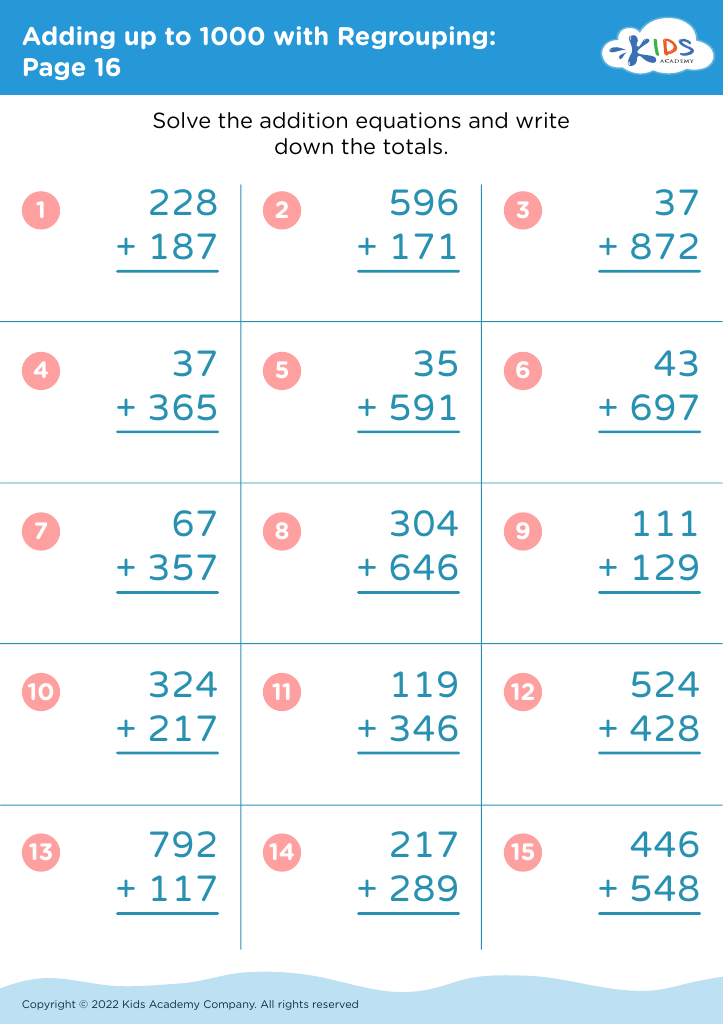
Adding up to 1000 with Regrouping: Page 16
Worksheet
Adding up to 1000 Without Regrouping: Page 62
Worksheet


Understanding how to compare fractions is a crucial skill for children ages 6-9, as it lays the foundation for more advanced mathematical concepts. Teaching children to compare fractions enhances their critical thinking and problem-solving abilities, as they learn to analyze relationships between different amounts. Moreover, engaging with fractions helps develop number sense, enabling children to grasp concepts such as equivalency, ratios, and proportions.

For parents and teachers, fostering this understanding is essential for ensuring students encounter challenges in a supportive and enriching environment. When children can effectively compare fractions, they can apply this knowledge in real-life situations, such as cooking, dividing snacks, and handling money, promoting practical mathematics skills.

Additionally, fractions are foundational for learning operations like addition and subtraction, which will be expanded upon in later grades. By guiding children through comparing fractions adding up to 1000, parents and teachers can also create a fun learning experience that encourages collaboration and teamwork through games and visual aids. This not only prevents math anxiety but also builds confidence in students as they harness the skills necessary for academic success. Engaging with fractions early on empowers children to become competent mathematicians and confident learners.