Filters

19 filtered results

Clear all filters
Favorites
With answer key
Interactive

19 filtered results

Difficulty Level

Grade


Elevate your child's math skills with our "Counting Practice Adding up to 1000 Worksheets" designed for ages 6-9! Each printable worksheet offers engaging exercises that help young learners master addition, counting, and number sequencing up to 1000. Ideal for both home and classroom use, these resources foster mathematical confidence and accuracy. Packed with fun and intuitive designs, our worksheets transform learning into an exciting adventure. Ensure your child builds a strong arithmetic foundation by incorporating these worksheets into their daily routine. Boost their numeracy skills and watch them thrive with Kids Academy’s premium counting practice resources!
Check out this FREE Trial Lesson on Adding up to 1000 for age 6-9!

H

Favorites
With answer key
Interactive
  • 6-9
  • Counting practice
  • Adding up to 1000
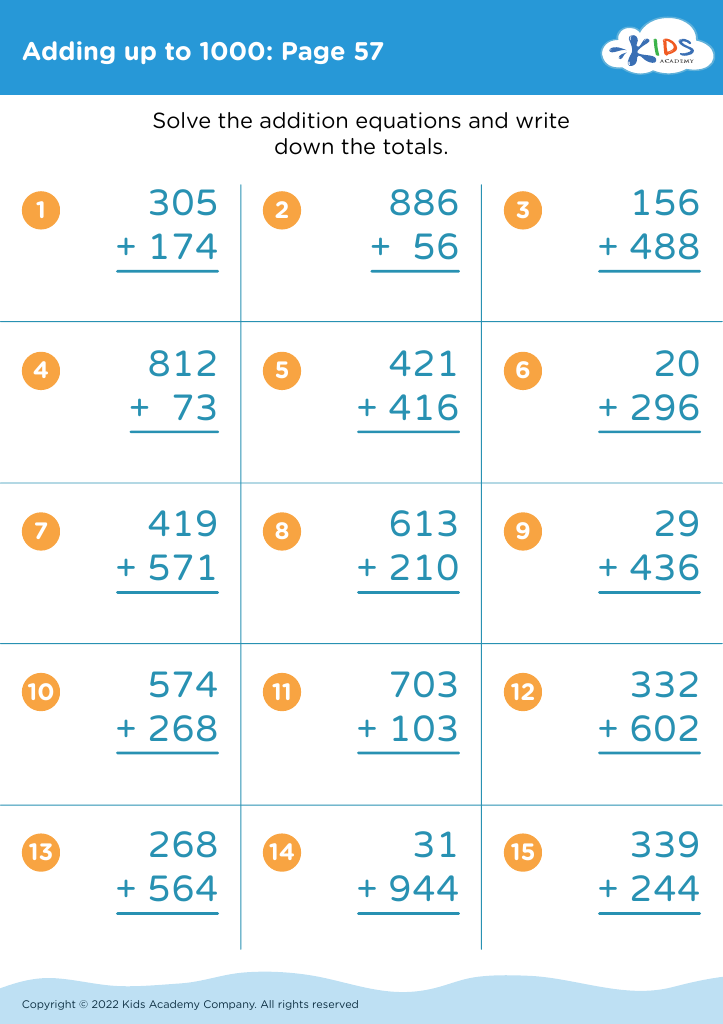
Adding up to 1000: Page 57

Adding up to 1000: Page 57

Adding up to 1000: Page 57
Worksheet
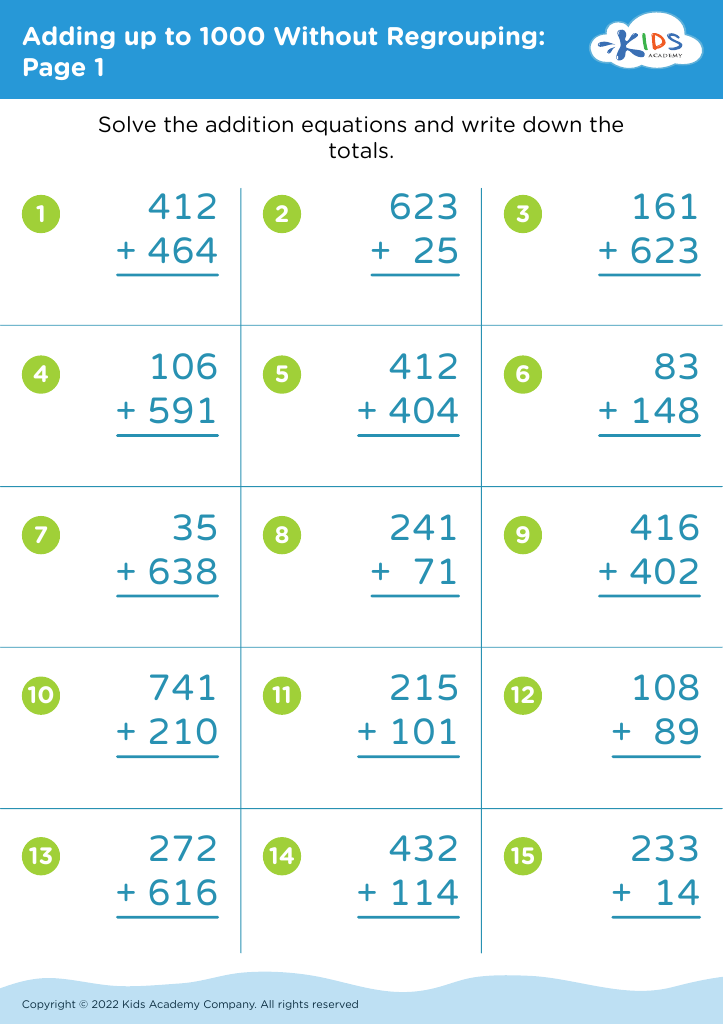
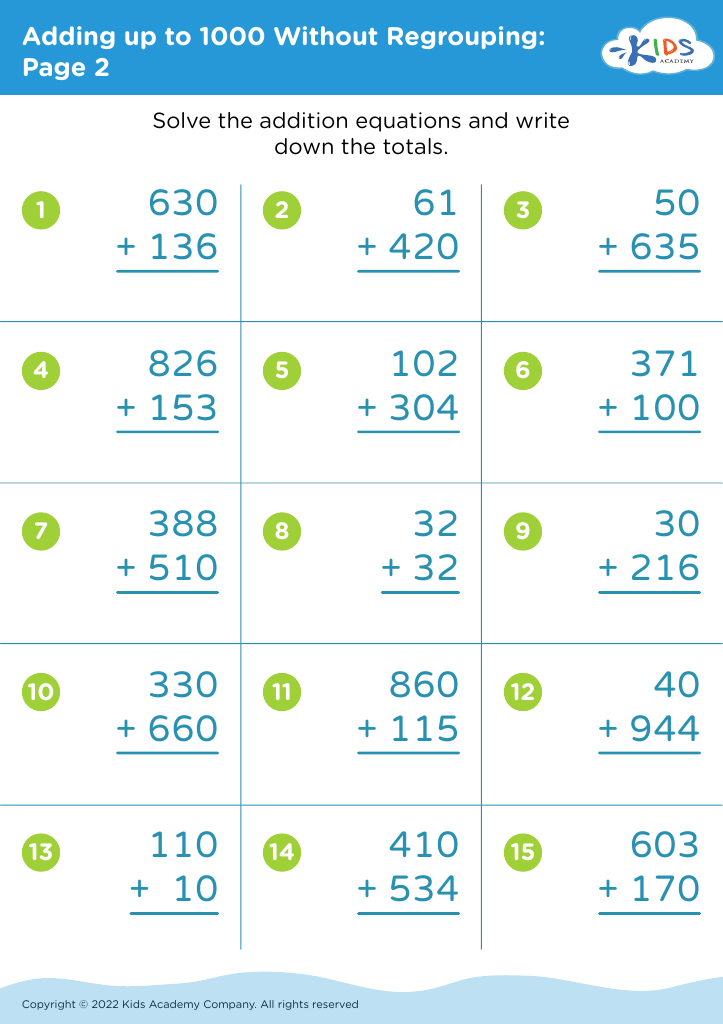
Adding up to 1000 Without Regrouping: Page 2
Worksheet
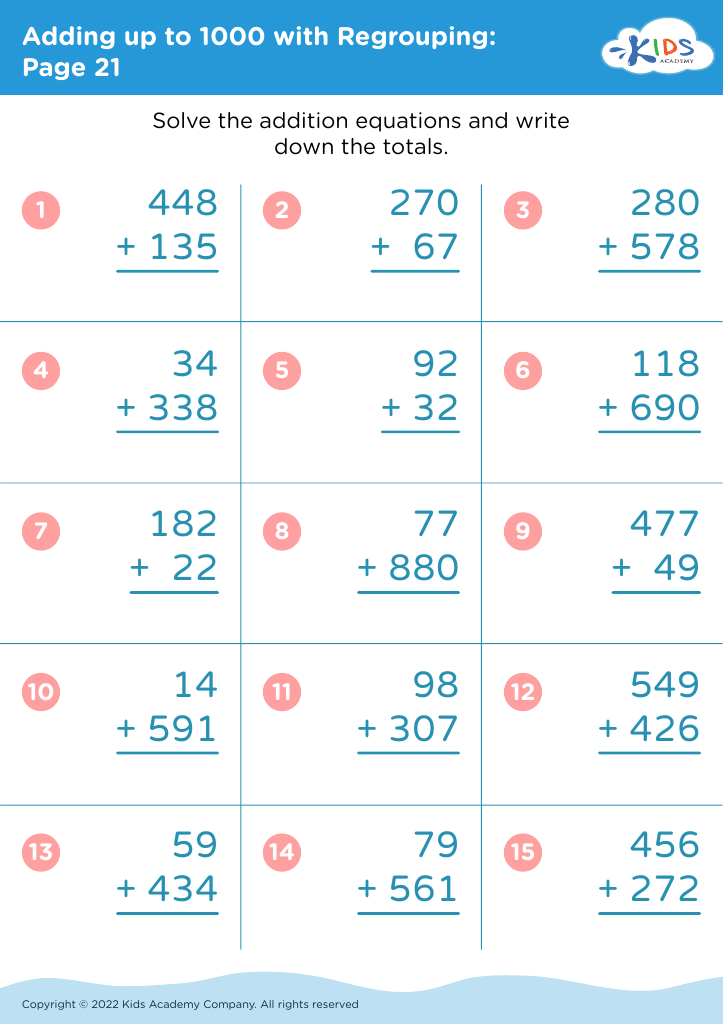
Adding up to 1000 with Regrouping: Page 21
Worksheet
Adding up to 1000 Without Regrouping: Page 1
Worksheet
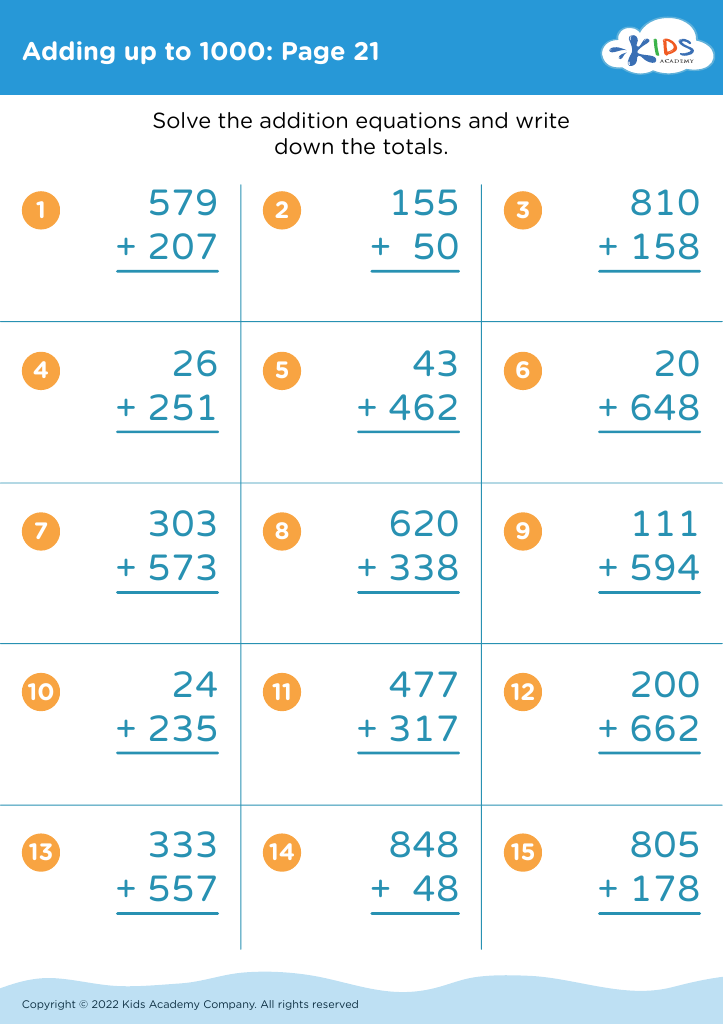
Adding up to 1000: Page 21

Adding up to 1000: Page 21

Adding up to 1000: Page 21
Worksheet
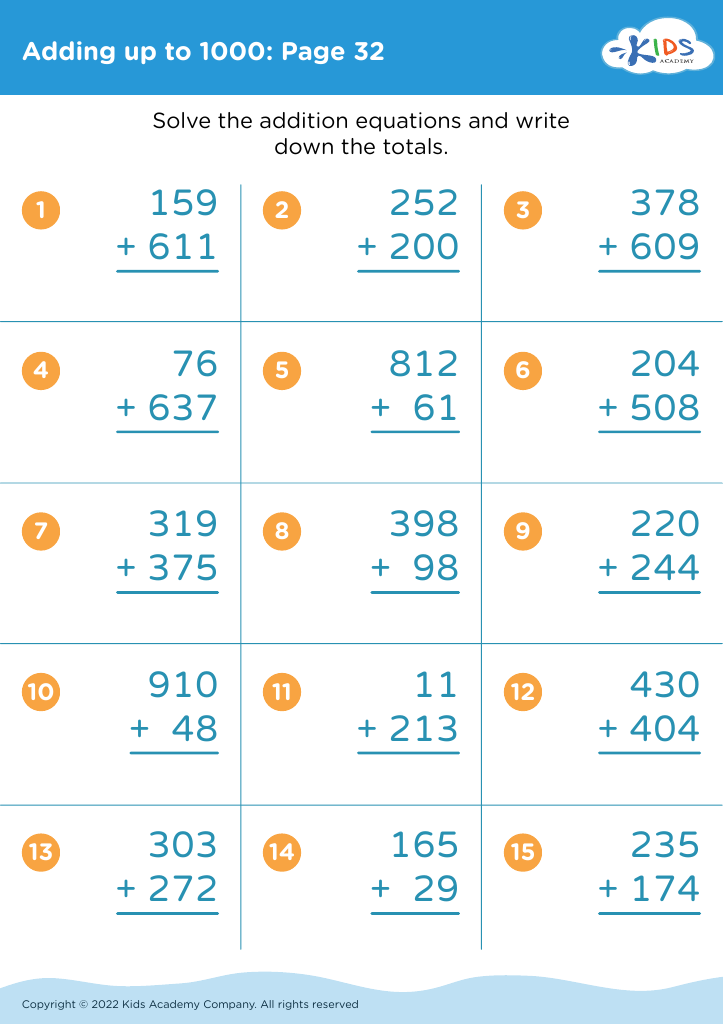
Adding up to 1000: Page 32

Adding up to 1000: Page 32

Adding up to 1000: Page 32
Worksheet
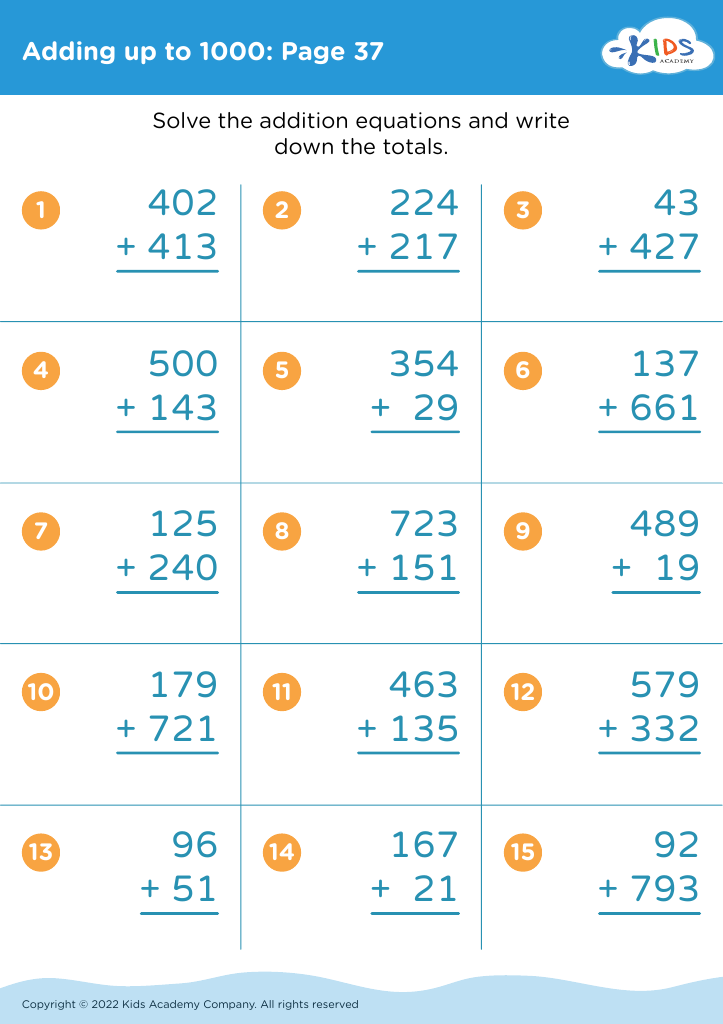
Adding up to 1000: Page 37

Adding up to 1000: Page 37

Adding up to 1000: Page 37
Worksheet
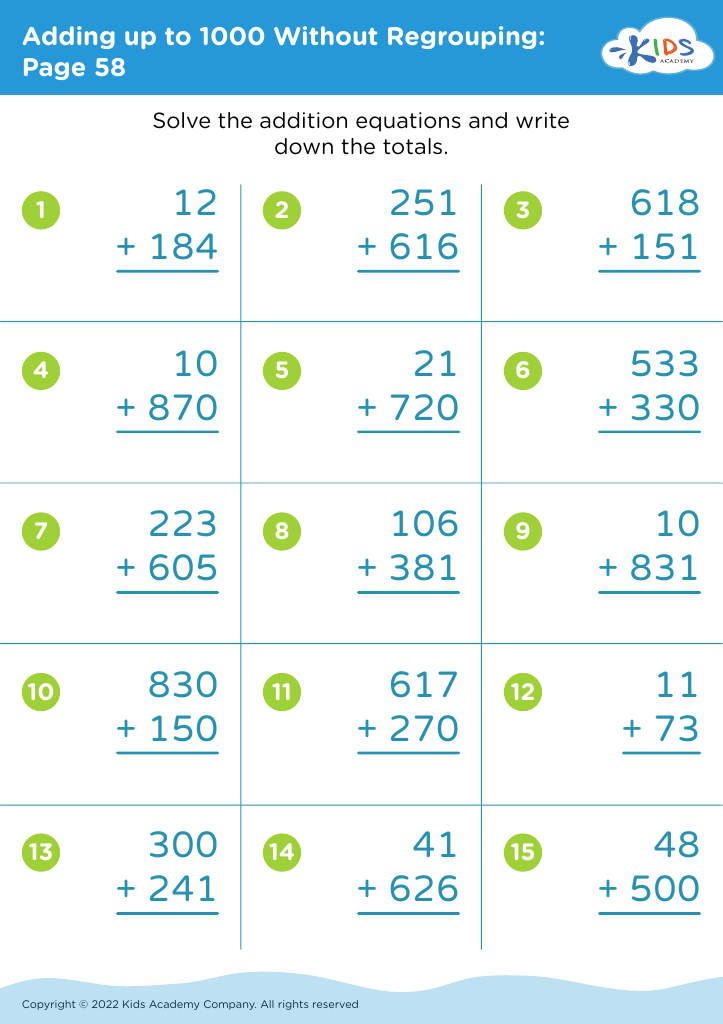
Adding up to 1000 Without Regrouping: Page 58
Worksheet
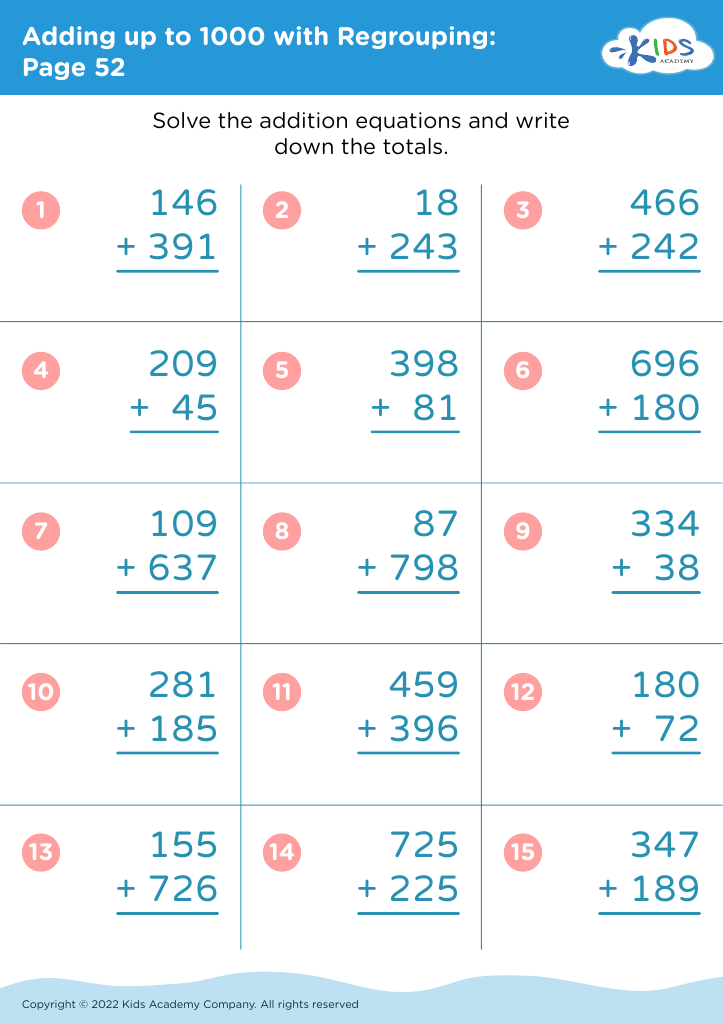
Adding up to 1000 with Regrouping: Page 52
Worksheet
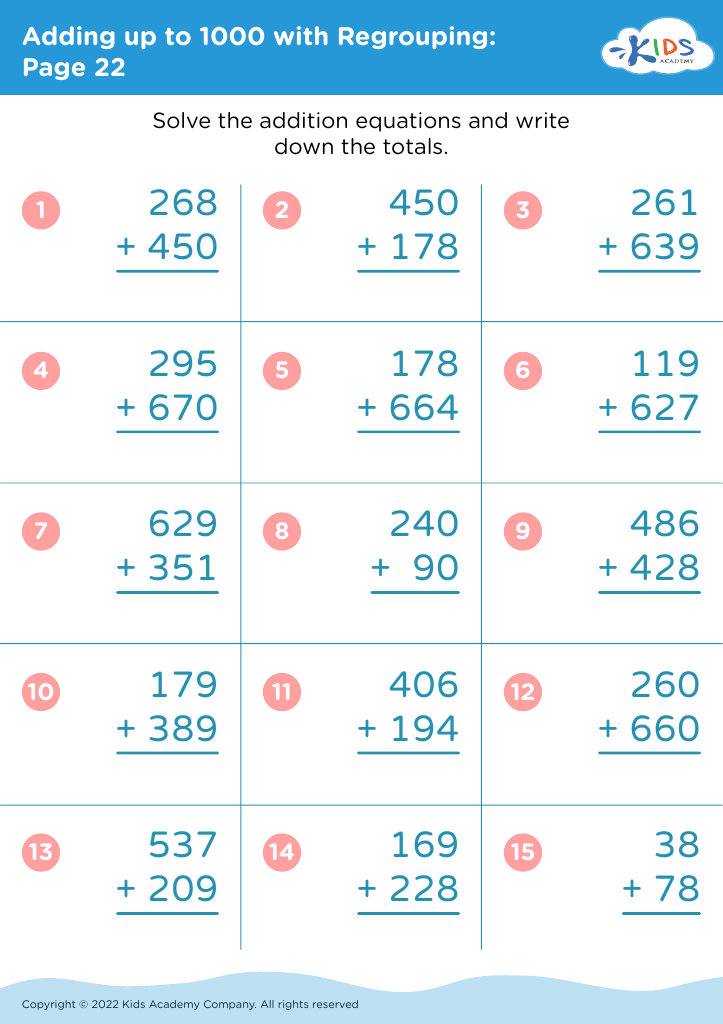
Adding up to 1000 with Regrouping: Page 22
Worksheet
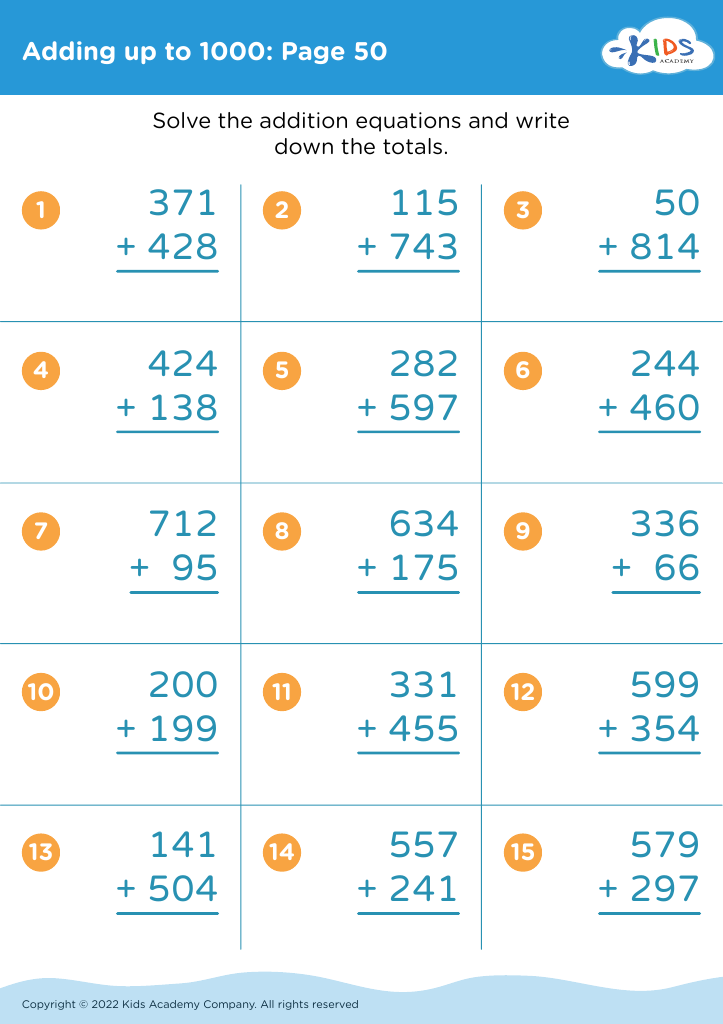
Adding up to 1000: Page 50

Adding up to 1000: Page 50

Adding up to 1000: Page 50
Worksheet
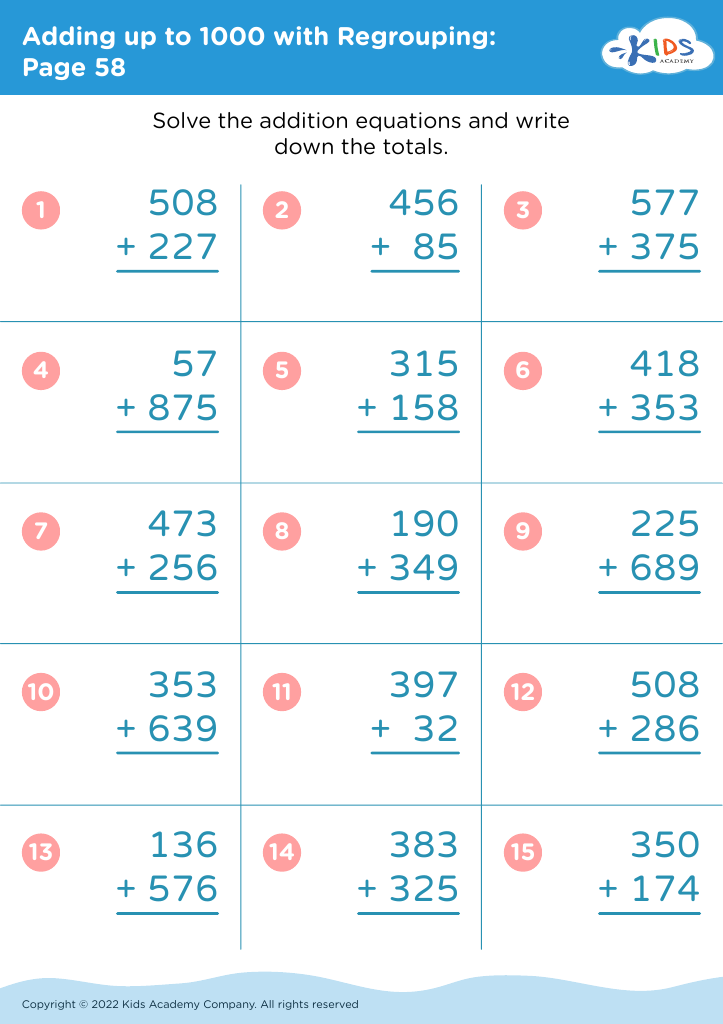
Adding up to 1000 with Regrouping: Page 58
Worksheet
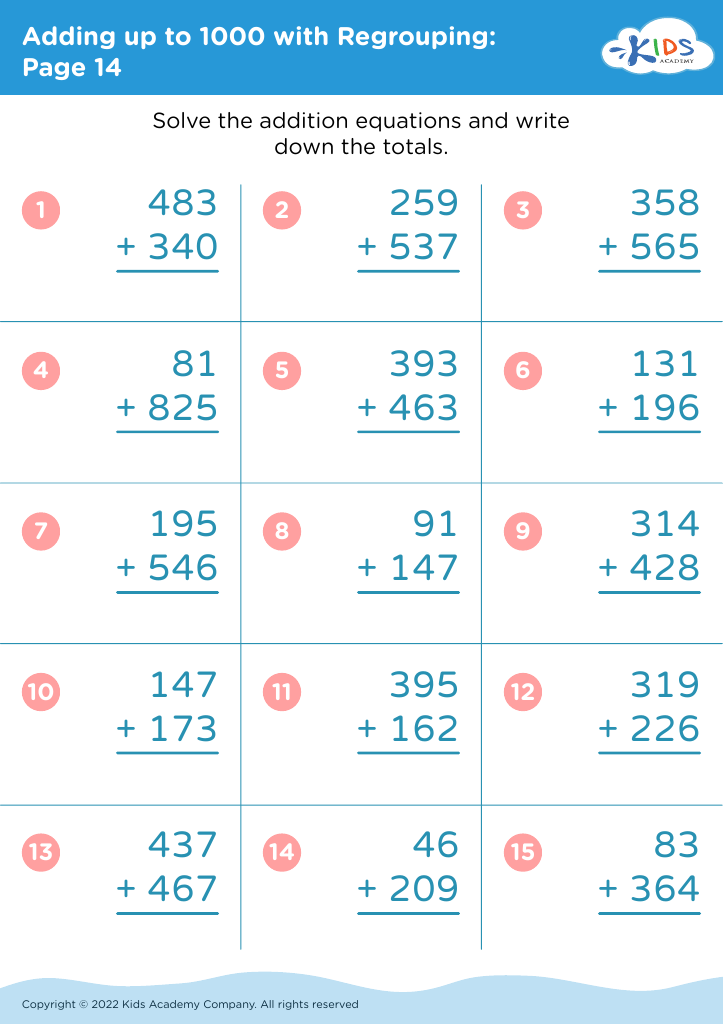
Adding up to 1000 with Regrouping: Page 14
Worksheet
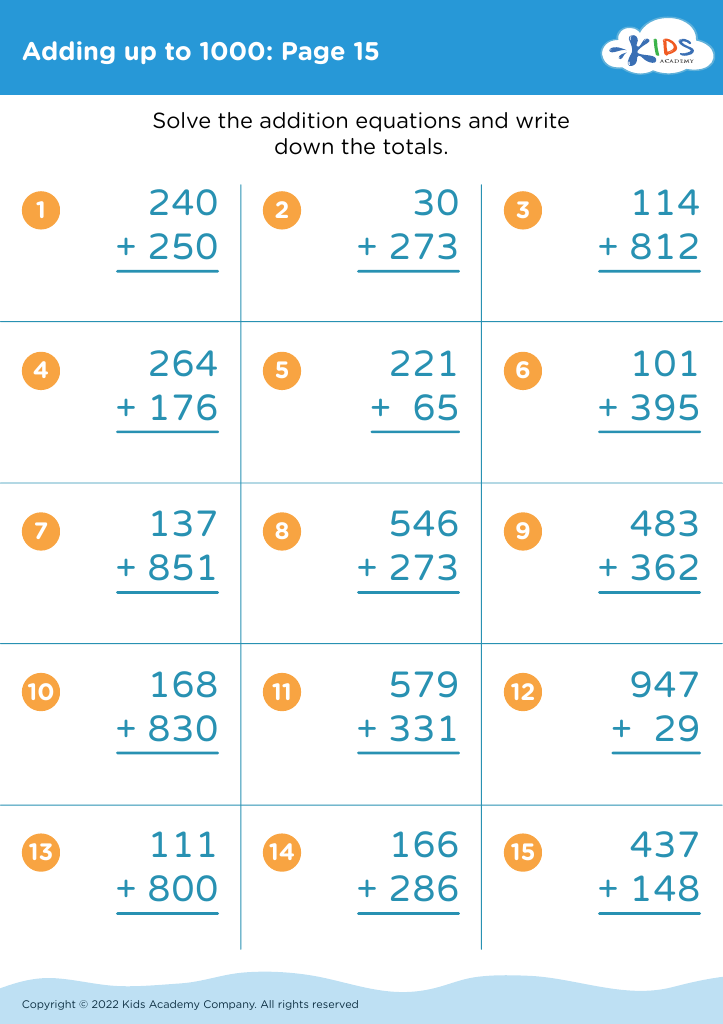
Adding up to 1000: Page 15

Adding up to 1000: Page 15

Adding up to 1000: Page 15
Worksheet
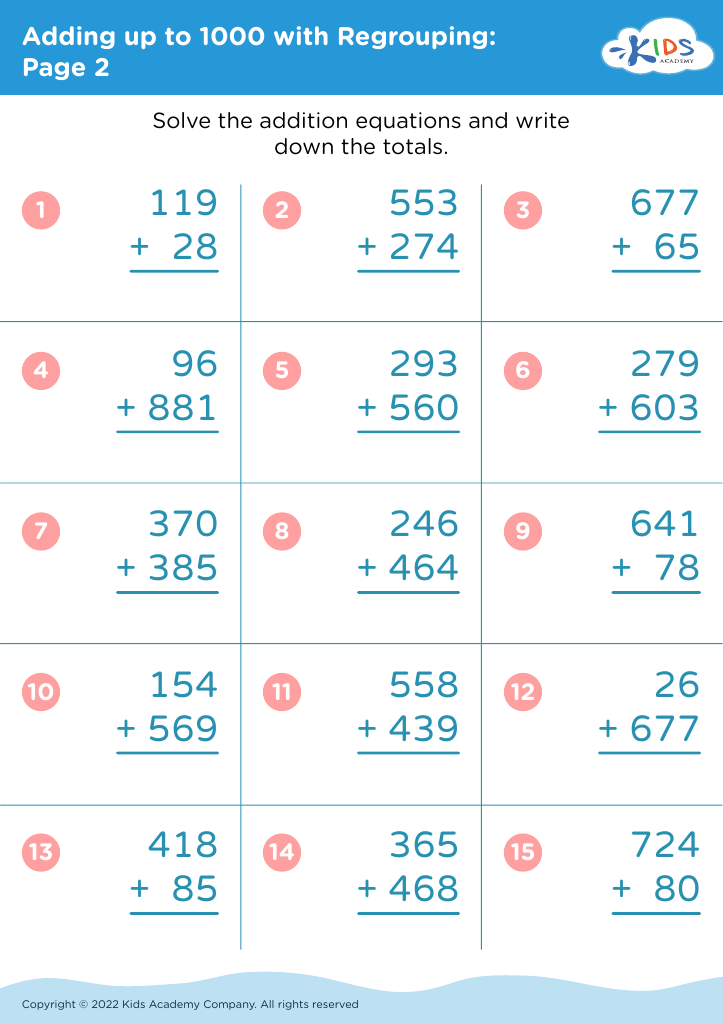
Adding up to 1000 with Regrouping: Page 2
Worksheet
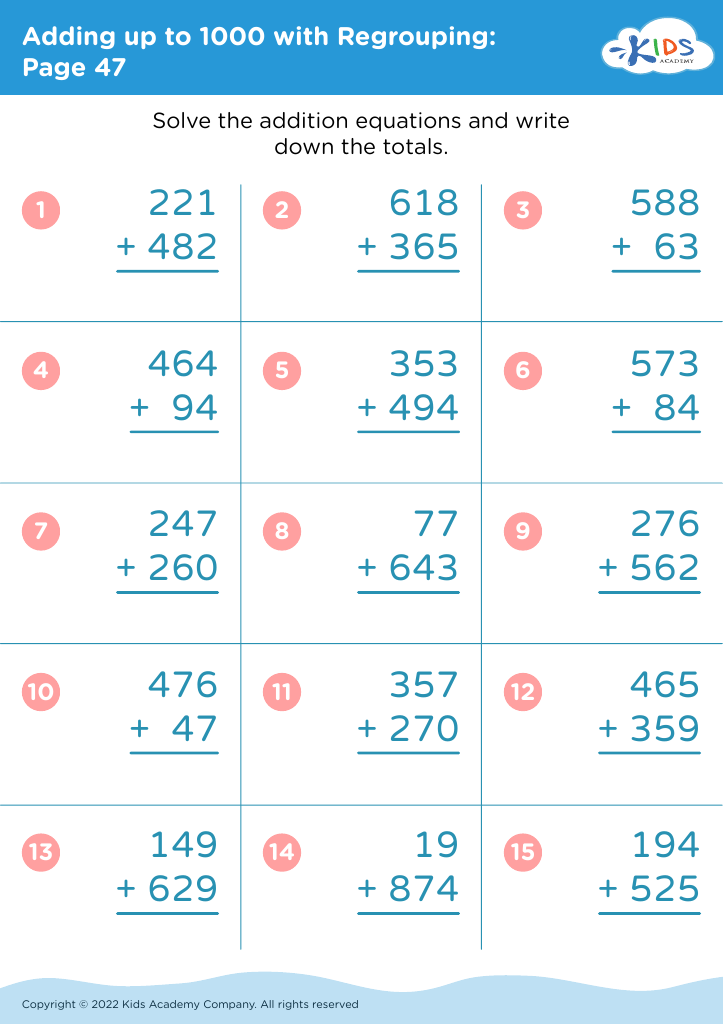
Adding up to 1000 with Regrouping: Page 47
Worksheet
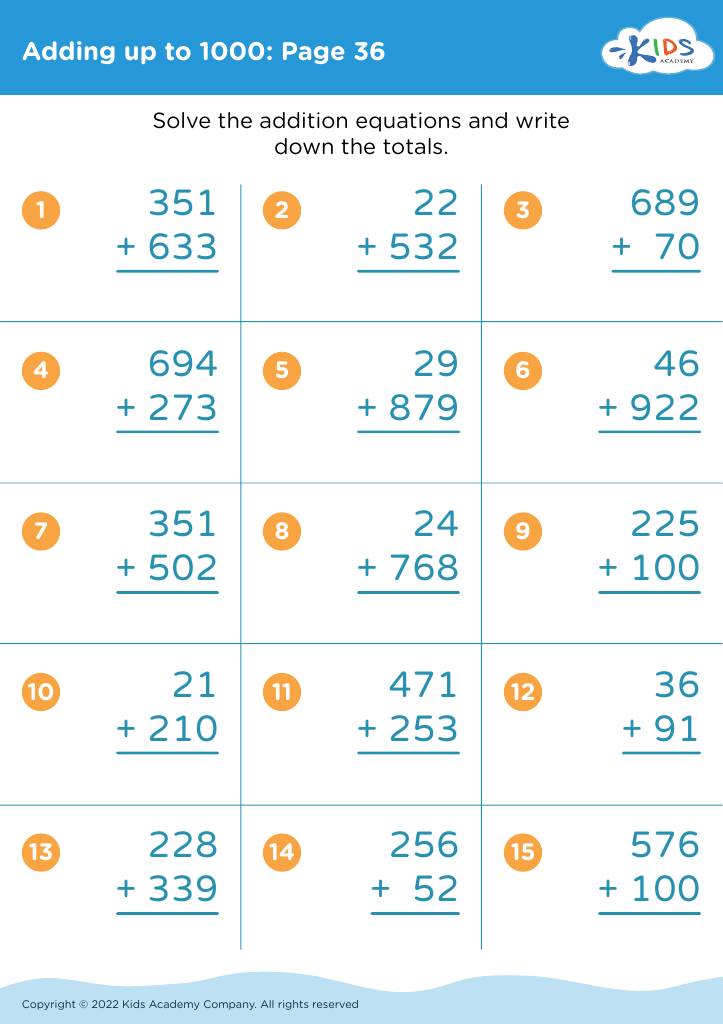
Adding up to 1000: Page 36

Adding up to 1000: Page 36

Adding up to 1000: Page 36
Worksheet
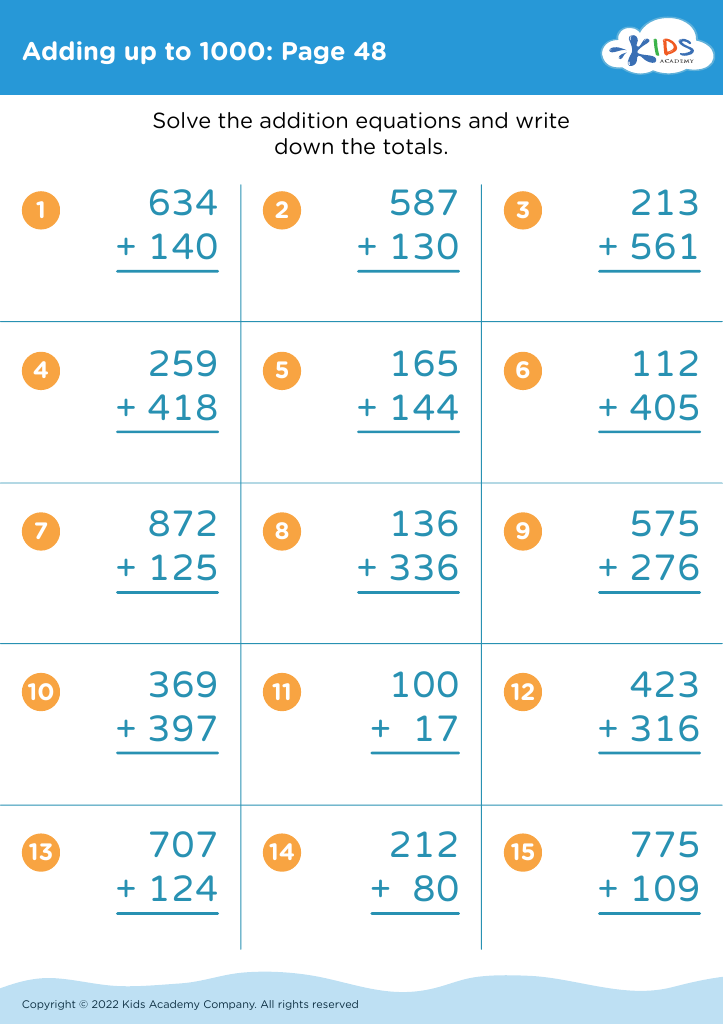
Adding up to 1000: Page 48

Adding up to 1000: Page 48

Adding up to 1000: Page 48
Worksheet
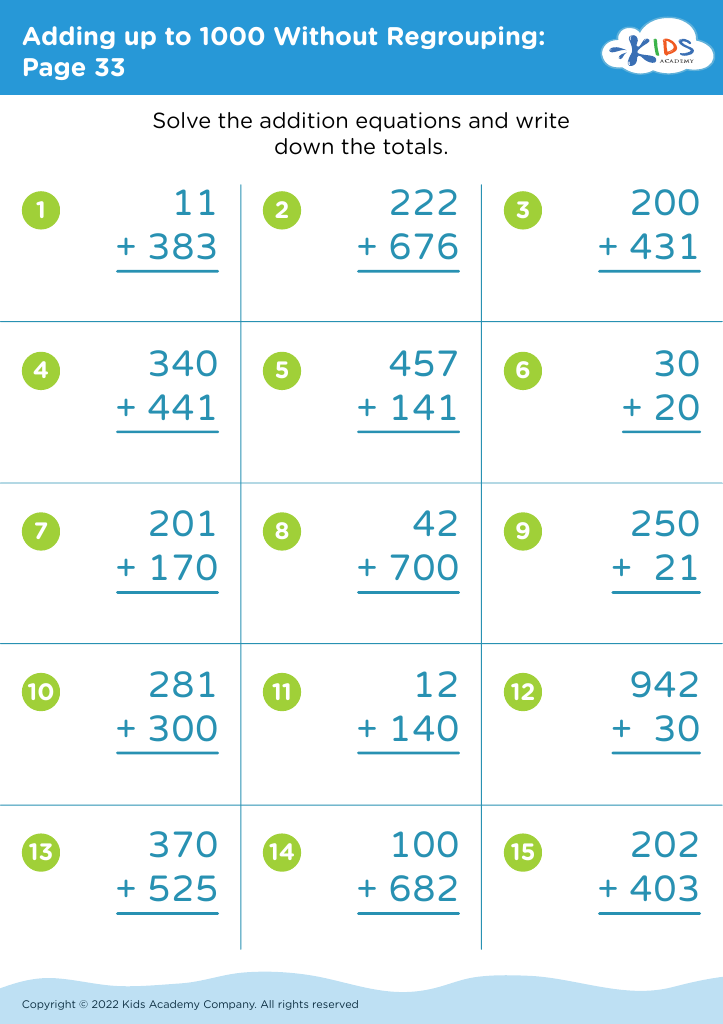
Adding up to 1000 Without Regrouping: Page 33
Worksheet


Counting practice and learning to add up to 1000 is foundational for children aged 6-9 as it establishes essential numerical and arithmetic skills. During these formative years, children are developing cognitive abilities that flourish through engaging, hands-on experiences. Focusing on counting and addition sharpens their number sense, enabling them to understand quantities, place value, and the relationship between numbers.

Mastering addition within this range also aids in problem-solving and logical thinking. As children become proficient, they gain confidence, promoting a positive attitude towards math. This early success paves the way for grasping more complex mathematical concepts in later years, such as multiplication, division, and fractions.

Moreover, these basic arithmetic skills are not isolated to math classes alone; they play a crucial role in daily life and other subjects. For instance, children use addition and counting in science experiments, while playing games, and even in understanding time and money. By nurturing these skills, parents and teachers are providing children with essential tools that will support their academic and personal growth. Innovative games, hands-on activities, and real-life applications make learning these skills enjoyable, ensuring that education remains a fun and integral part of a child's development.