
Critical Thinking Adding up to 1000 Worksheets for Ages 6-9
5 filtered results
Difficulty Level
Grade
Age
-
From - To
Subject
Activity
Standards
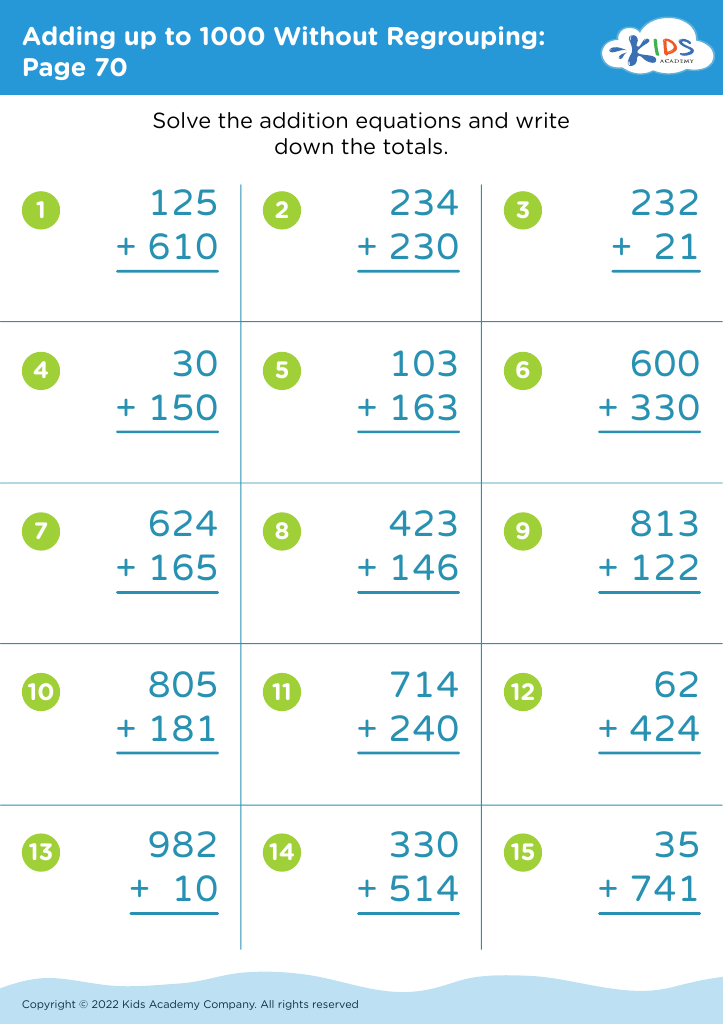
Discover an engaging collection of "Critical Thinking Adding up to 1000 Worksheets" designed specifically for ages 6-9. These worksheets not only enhance your child's math skills but also foster critical thinking abilities through fun and challenging tasks. Students will tackle addition problems that require them to analyze, compare, and problem-solve in various contexts. Each worksheet is designed to promote logical reasoning and creativity, allowing children to explore math in an enjoyable manner. Perfect for home or classroom use, these resources help cultivate a lifelong love for learning while building essential skills. Start your child's math journey today!
Favorites
With answer key
Interactive
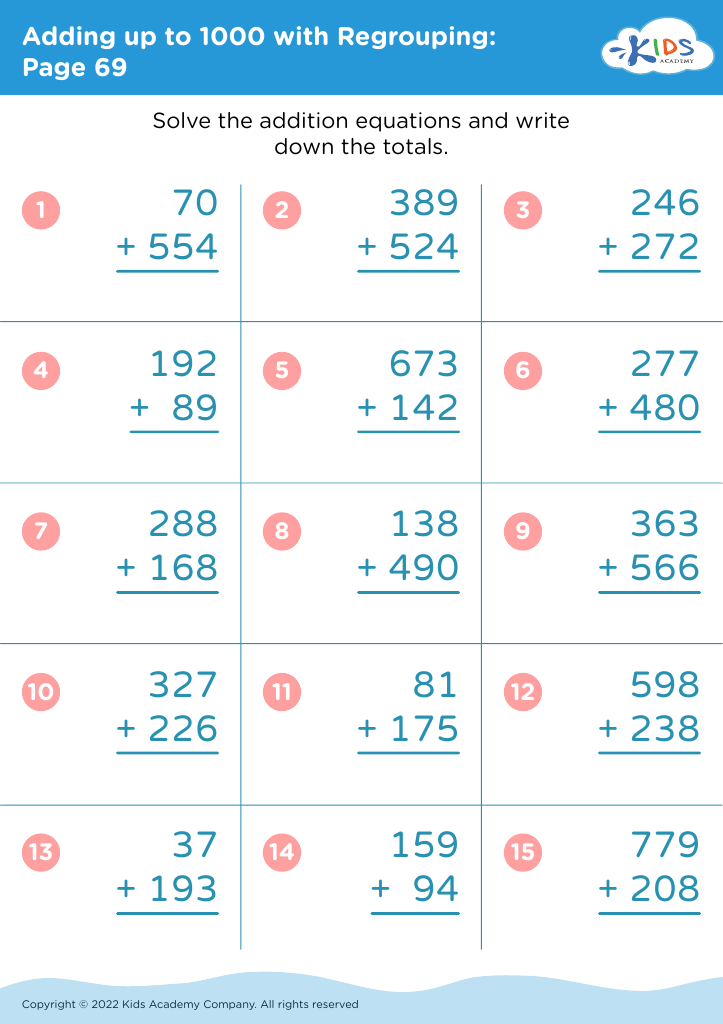
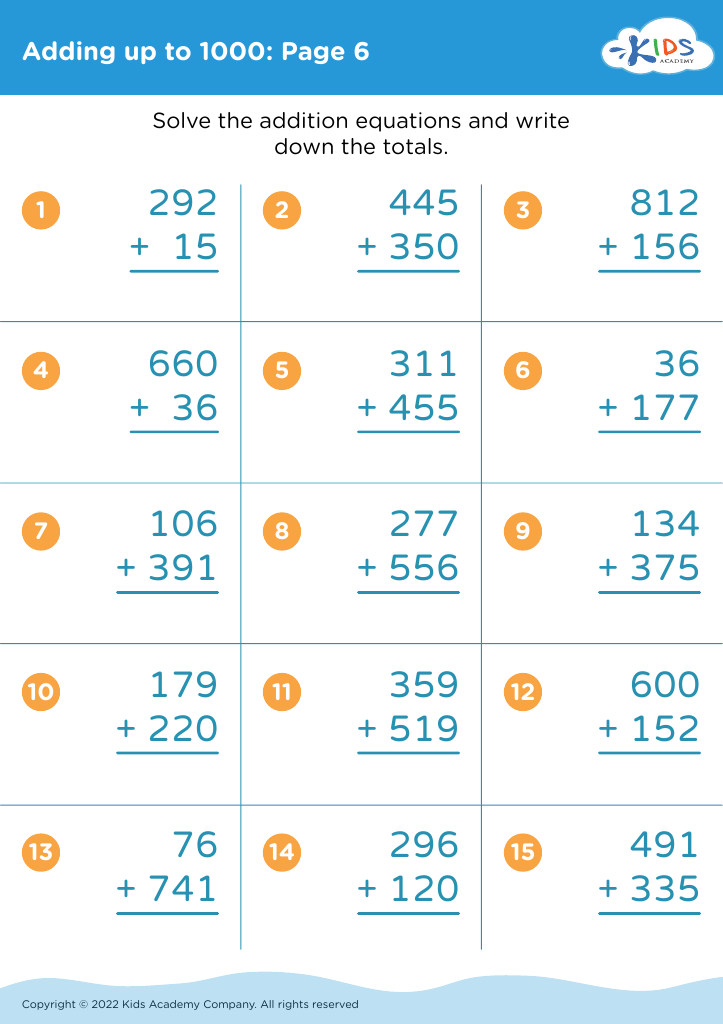
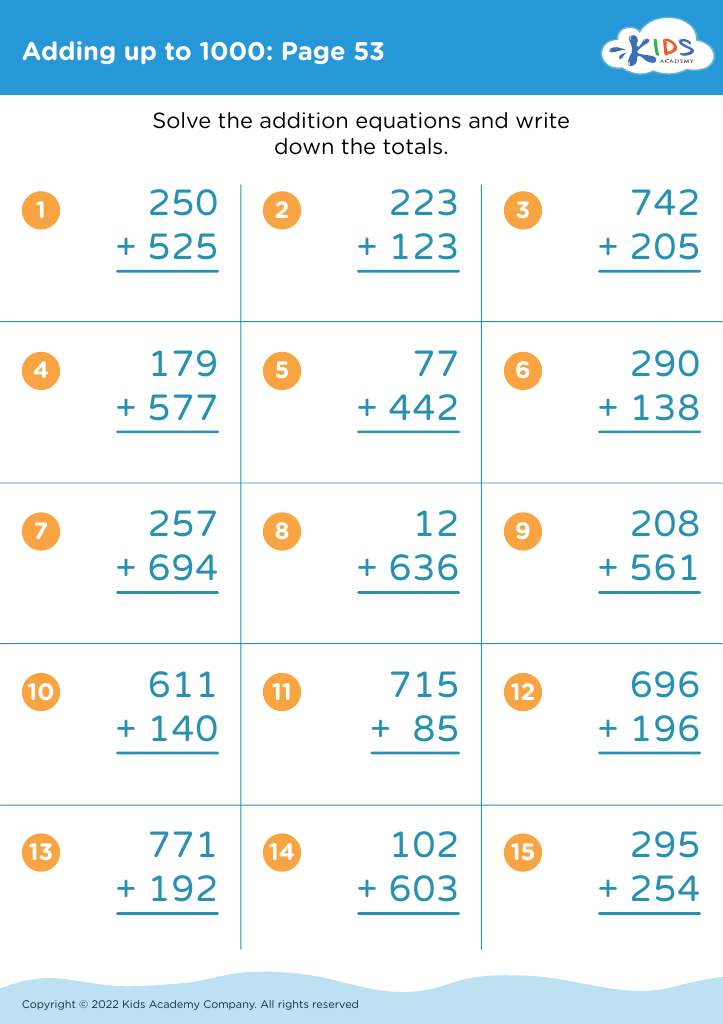
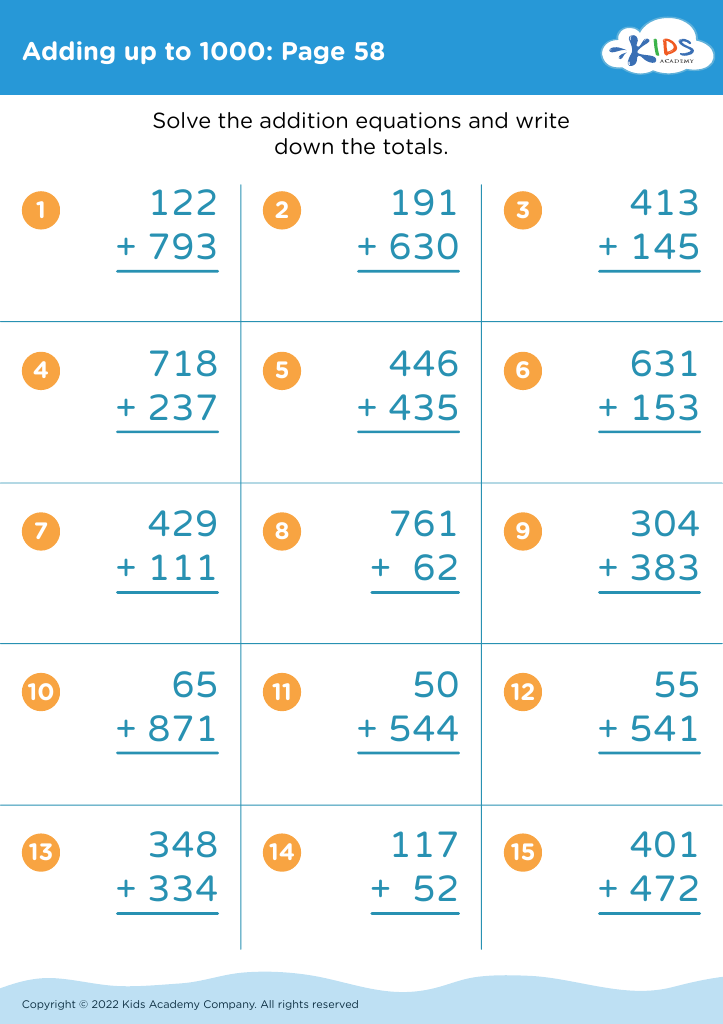
Join Kids Academy for Free
Who is primarily going to use this learning content?



Critical thinking is essential for children aged 6-9 as it lays the foundation for effective problem-solving and decision-making skills. During this crucial developmental stage, kids learn to process information and think logically, enabling them to navigate their world more confidently. Parents and teachers should prioritize fostering critical thinking since it encourages curiosity and a love for learning. When children engage in critical thinking activities, they become more adept at analyzing situations, asking questions, and considering multiple perspectives before drawing conclusions.
Additionally, developing critical thinking skills helps children build resilience, as they learn to evaluate their mistakes and seek solutions. This ability to reflect on their thought processes is invaluable not just academically but also in social settings, where they make friendships and resolve conflicts.
Encouraging critical thinking through interactive activities, discussions, and real-world problem solving can enhance children's engagement and motivation. By nurturing these skills at an early age, parents and teachers prepare children for future academic challenges and life scenarios. Ultimately, promoting critical thinking equips young learners with the cognitive tools they need to thrive and succeed in an increasingly complex world. Supporting this growth is not only beneficial but essential for their overall development.








