Fine Motor Skills Adding up to 1000 Worksheets for Ages 6-9
12 filtered results
-
From - To
Our "Fine Motor Skills Adding up to 1000 Worksheets for Ages 6-9" are expertly designed to enhance your child's fine motor development while boosting their math confidence. These printable worksheets blend intricate, engaging problems with activities requiring precision in writing and drawing. Kids will enjoy the fun exercises that challenge their addition skills up to 1000, encouraging focus, hand-eye coordination, and dexterity. Perfect for both classroom and home use, these resources offer an excellent way to make learning math enjoyable and beneficial for young learners, setting a strong foundation for future academic success. Discover these essential tools today!
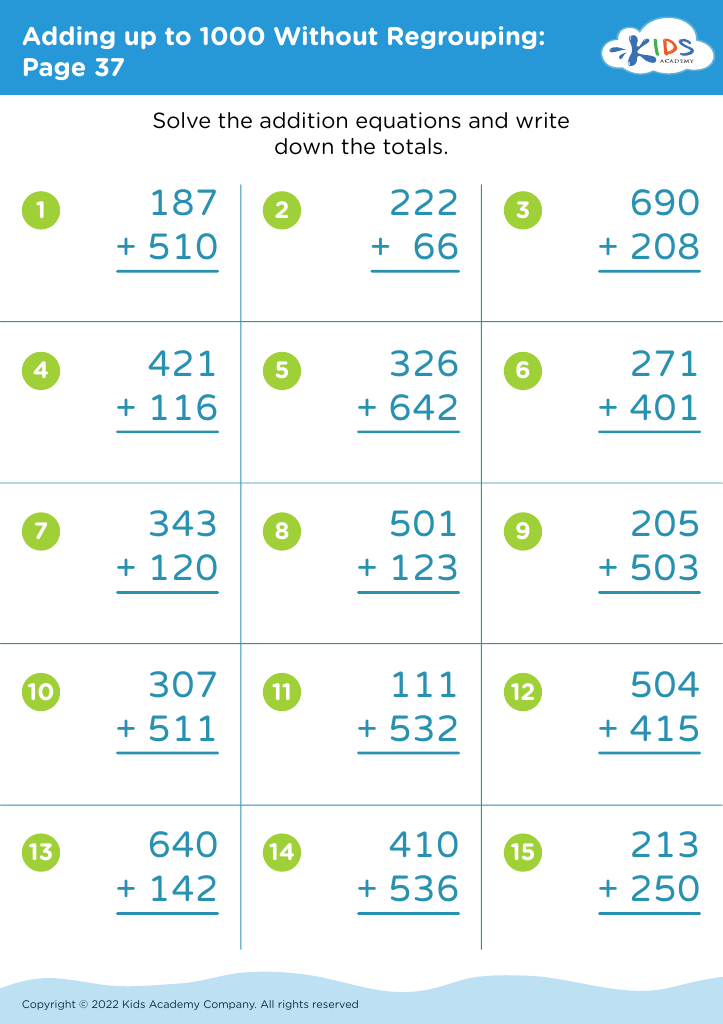
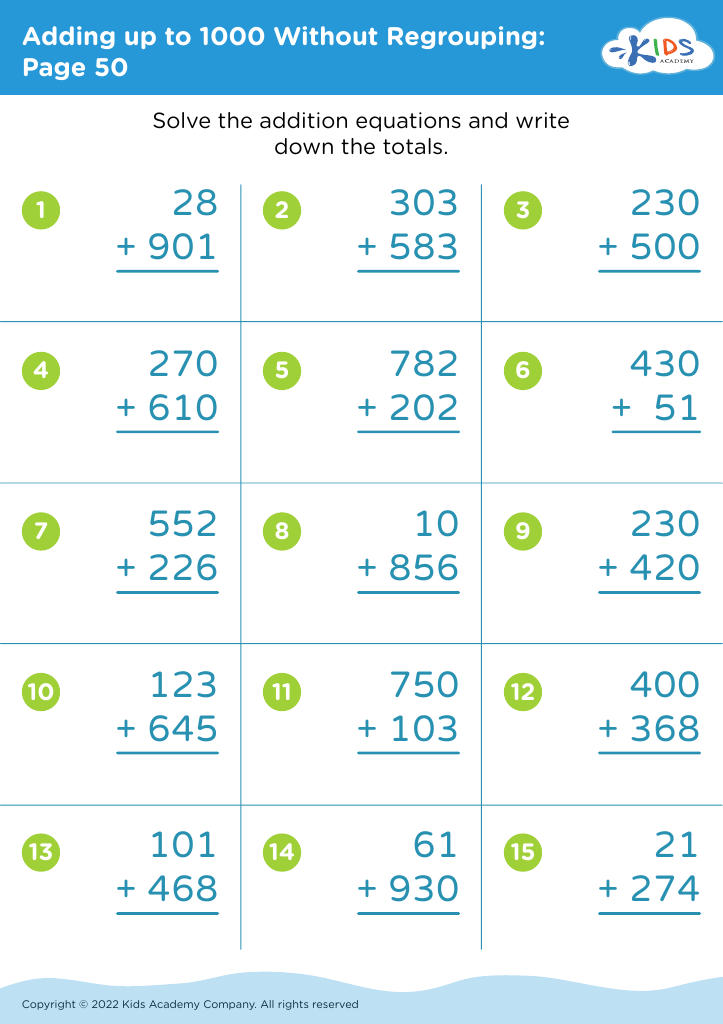
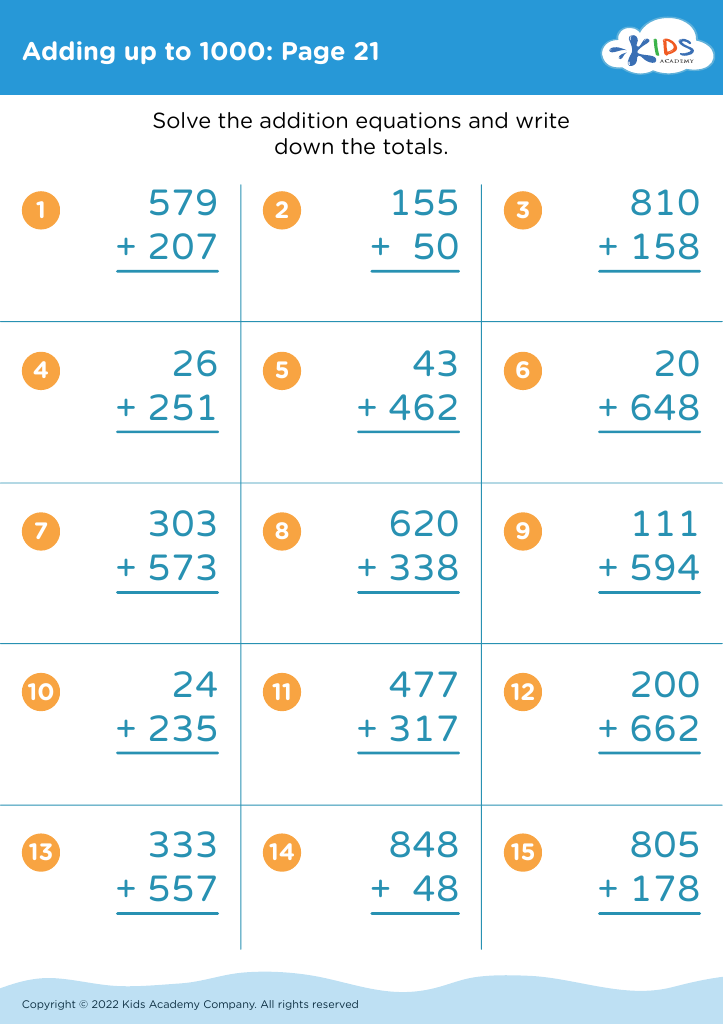
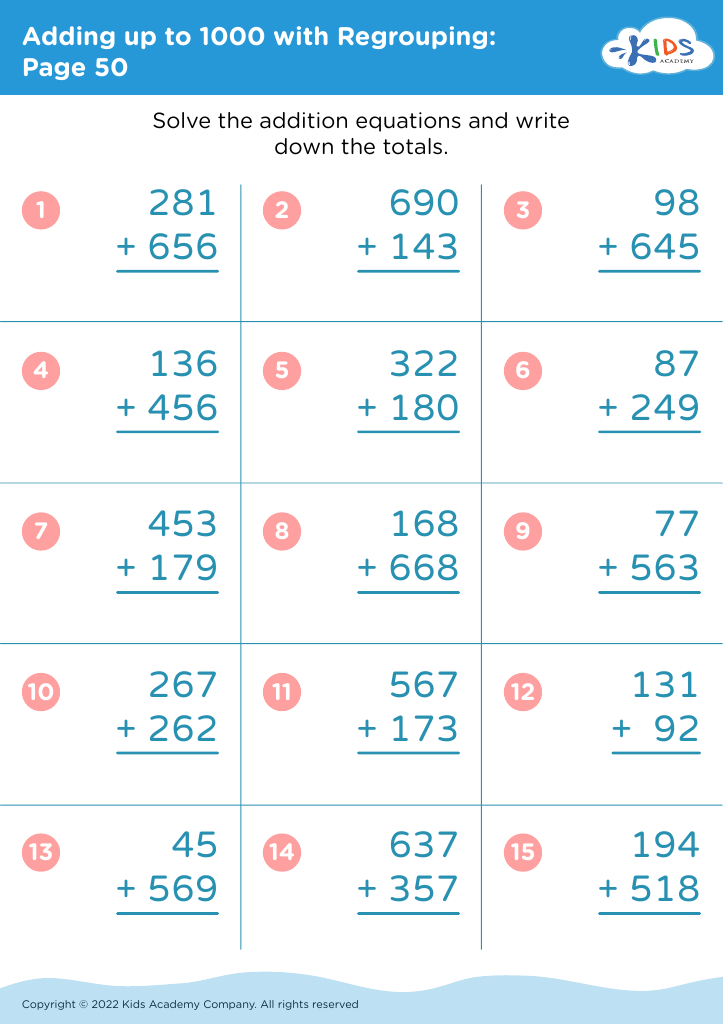
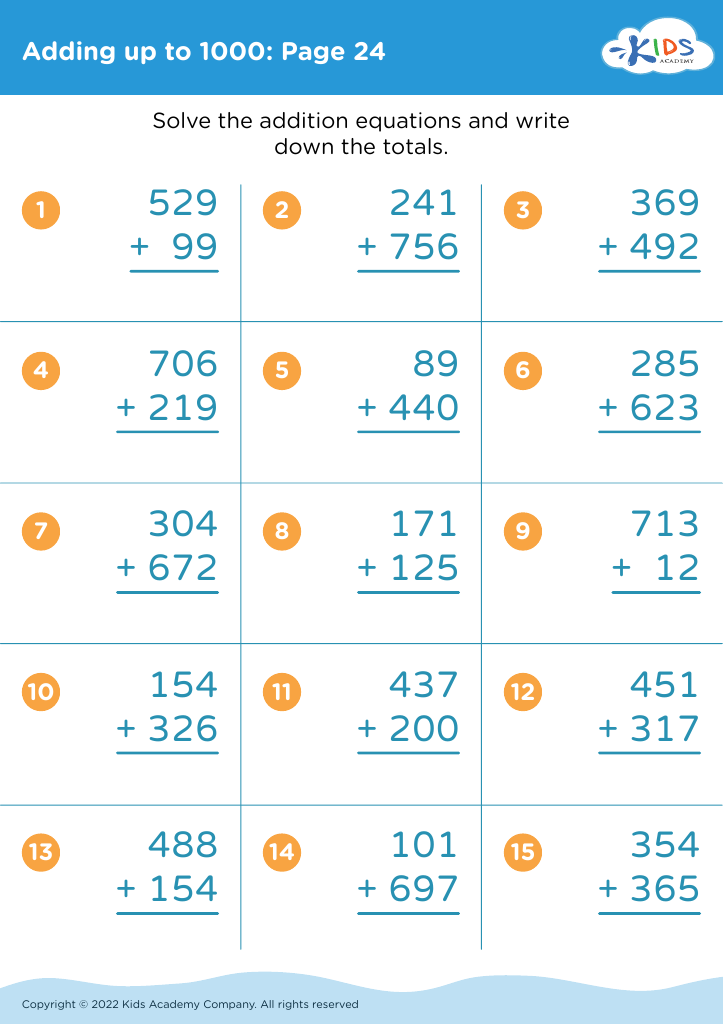
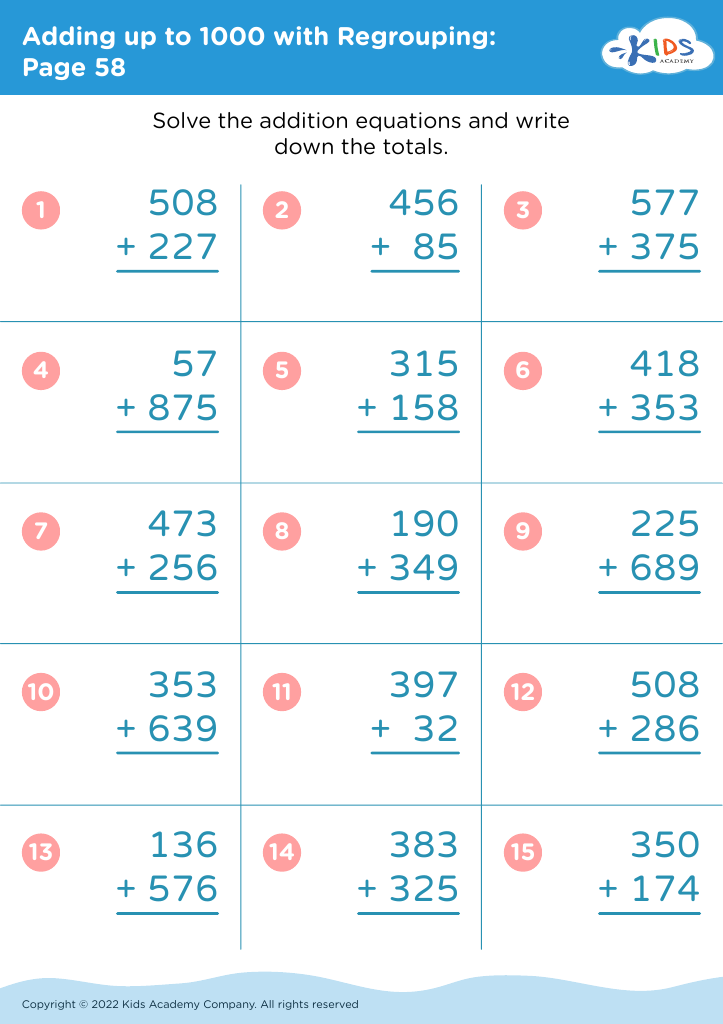
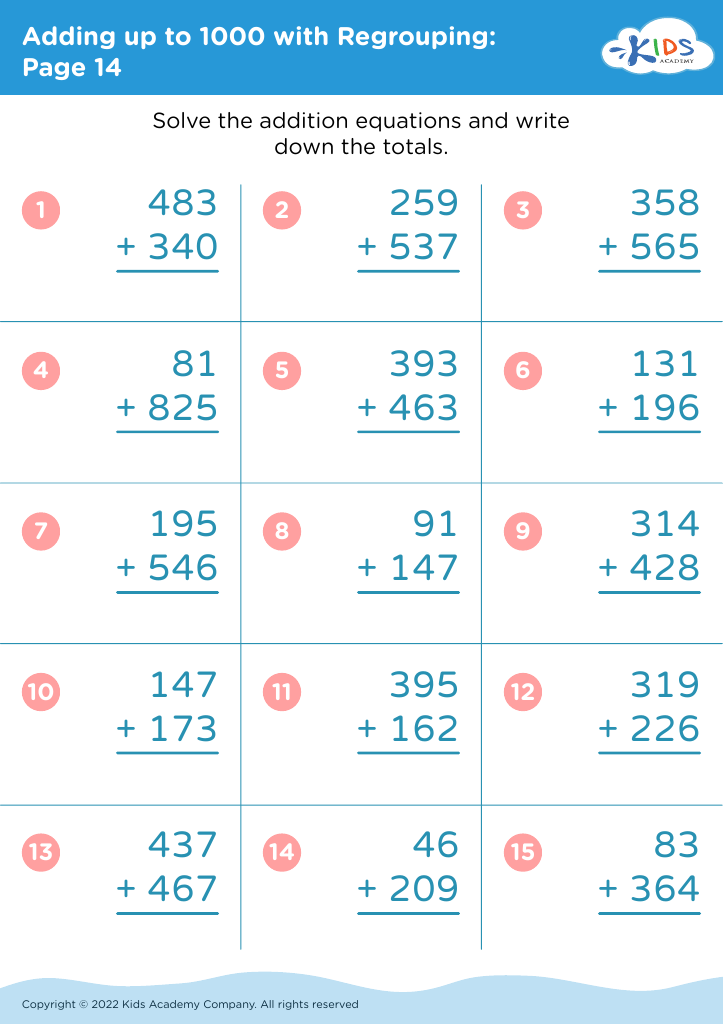
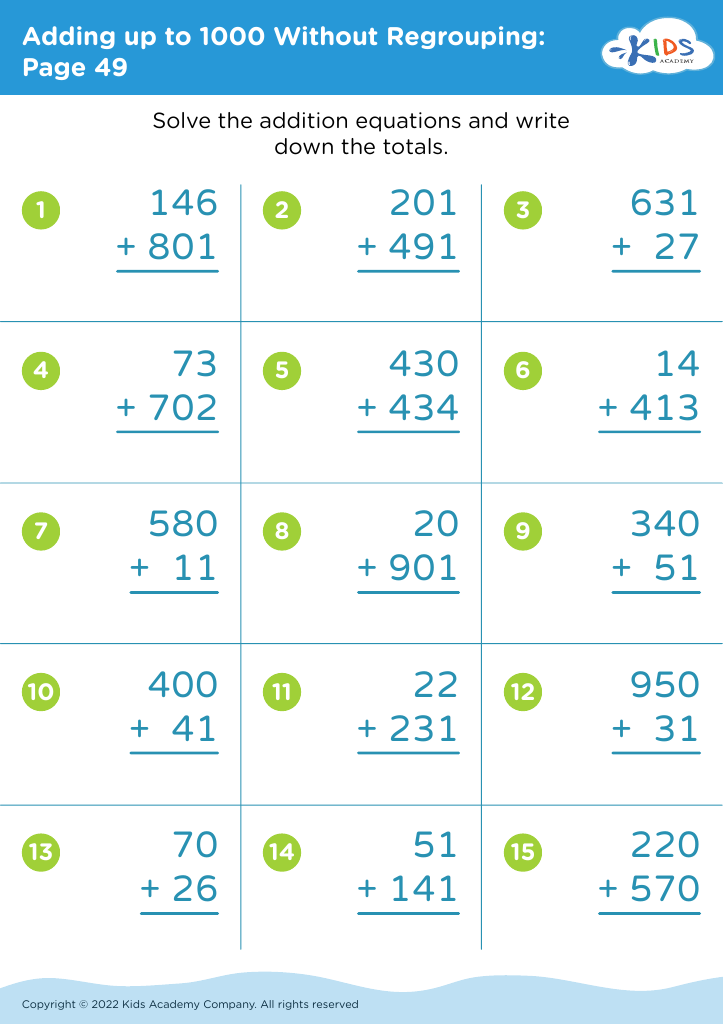
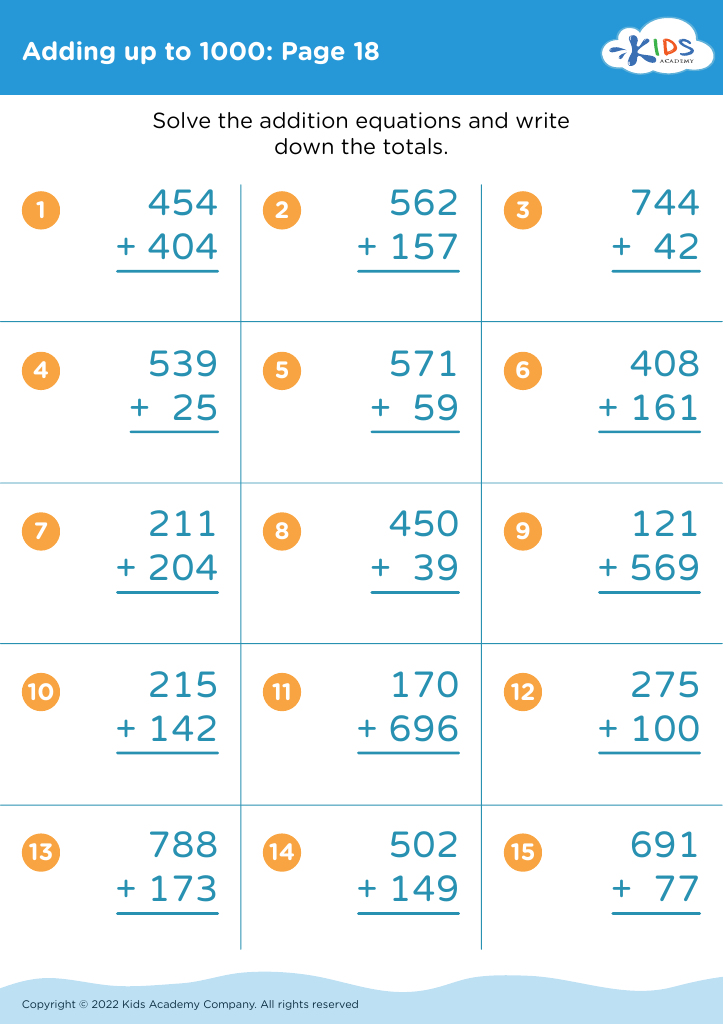
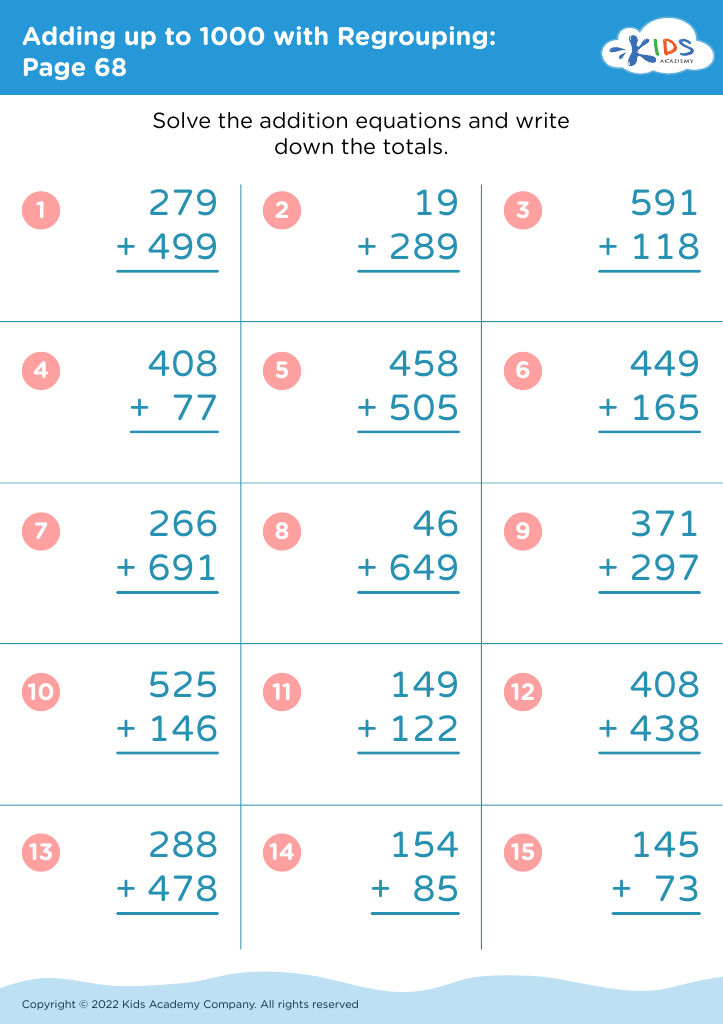
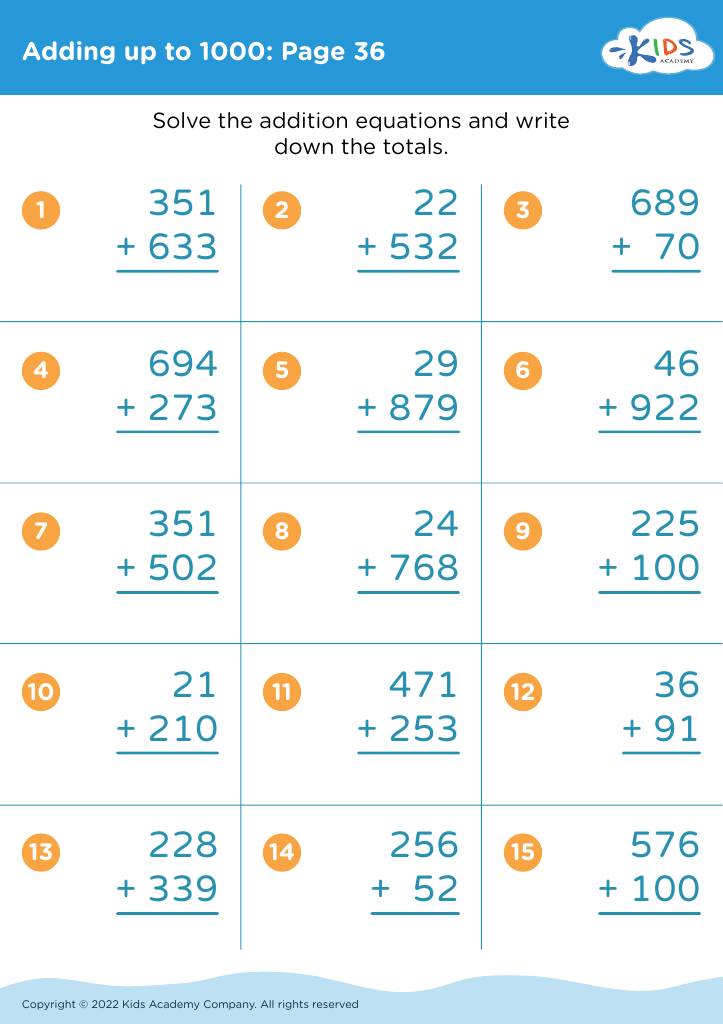
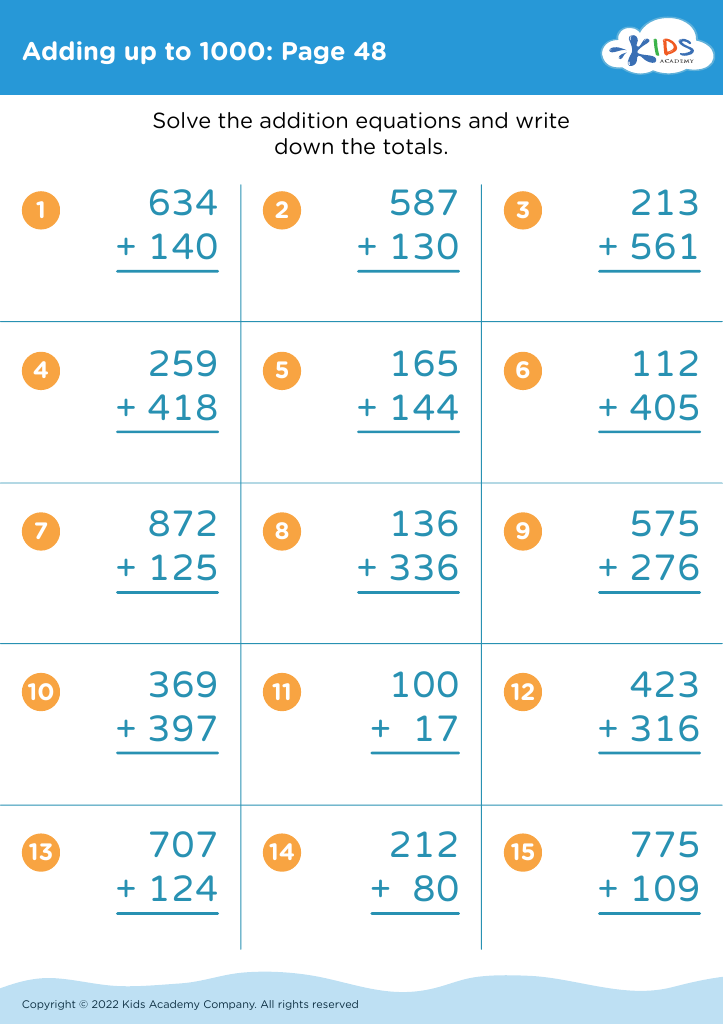



Parents and teachers should care about fine motor skills and activities, like adding up to 1000 for ages 6-9, because these skills are fundamental to children's overall development and academic success. Fine motor skills involve the small muscles in the hands, wrists, and fingers, which are crucial for tasks such as writing, cutting, and buttoning clothes. Developing fine motor skills through activities like making calculations or manipulating small objects enhances hand-eye coordination, dexterity, and control—abilities essential for everyday tasks.
When children engage in adding up to 1000, they use multiple small muscles in synchronization and also boost their cognitive abilities. These activities improve numerical understanding, memory, and problem-solving skills. Handling numbers and operations require precision; working with fine motor skills helps sharpen focus and patience.
For educators, incorporating fine motor skill activities into math lessons fosters a holistic learning environment. Building these skills supports academic tasks beyond math, facilitating better performance in subjects that require precise hand movements, such as art and science experiments. Parents engaging with their children in such activities at home can bond with them while reinforcing classroom learning.
By prioritizing the development of fine motor skills through math activities, parents and teachers set the stage for improved academic performance, greater independence in daily tasks, and enhanced overall development.








