
Following instructions Adding up to 1000 Worksheets for Ages 6-9
5 filtered results
Difficulty Level
Grade
Age
-
From - To
Subject
Activity
Standards
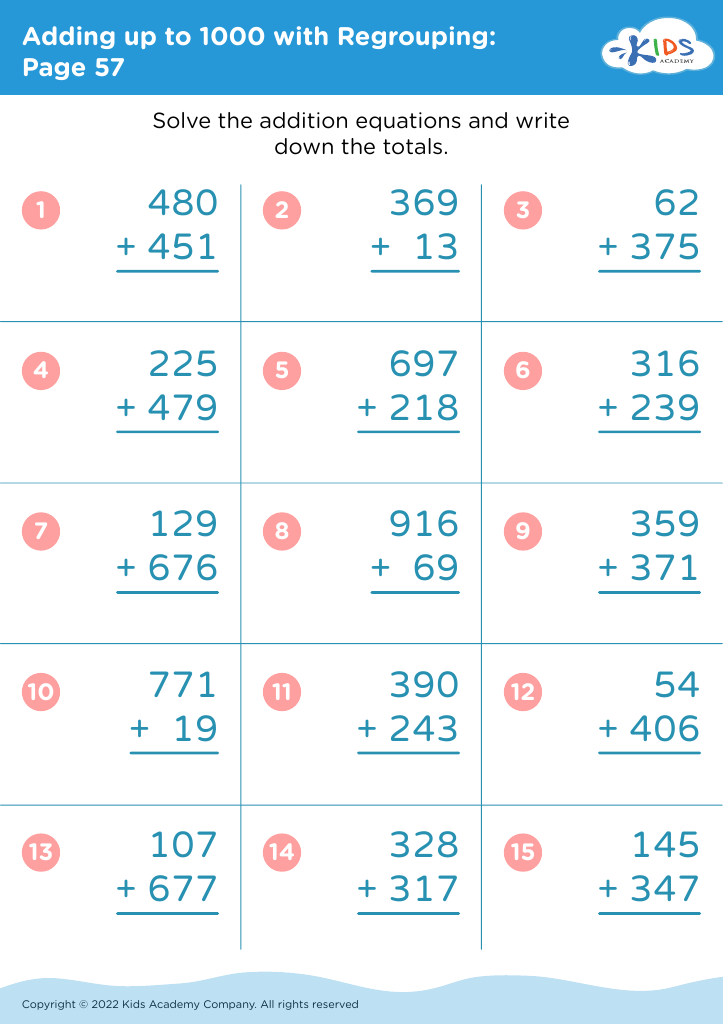
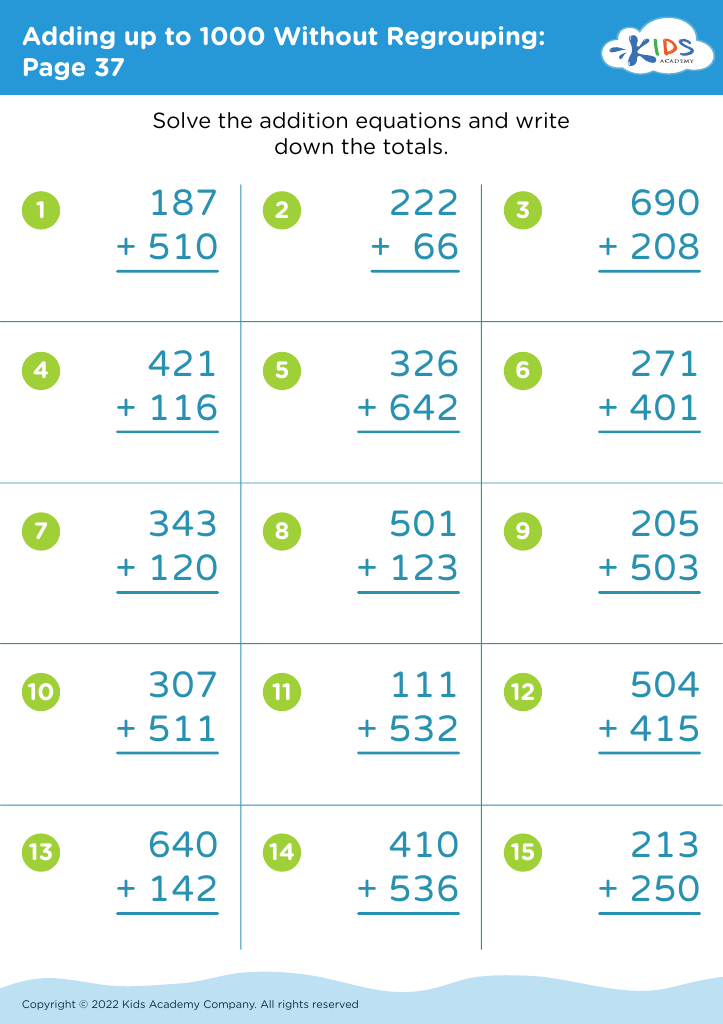
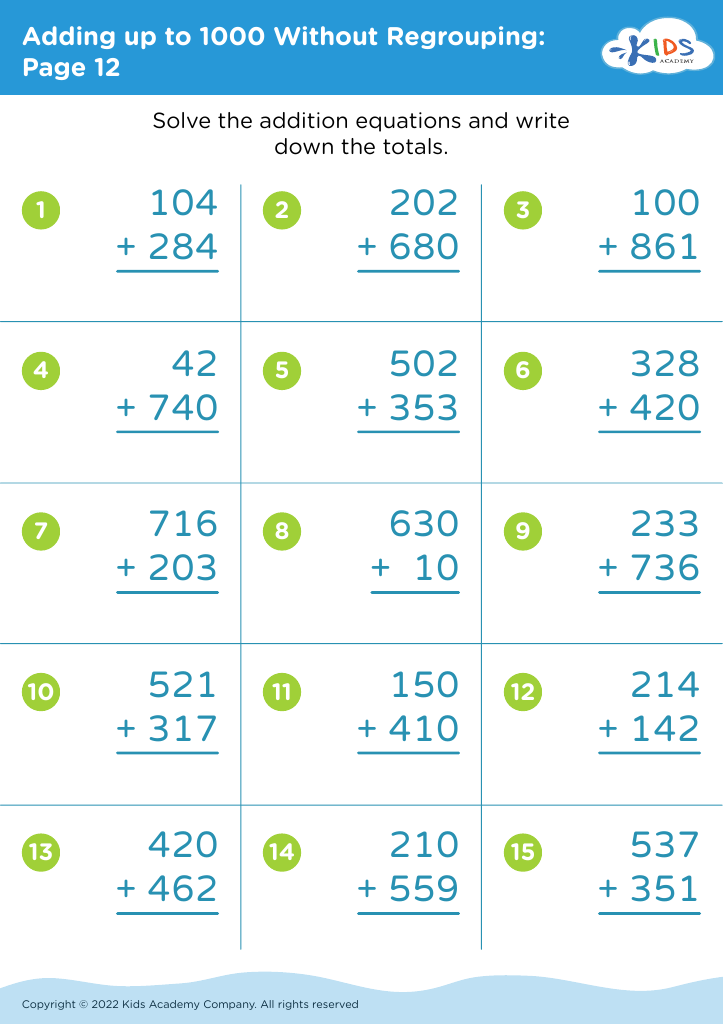
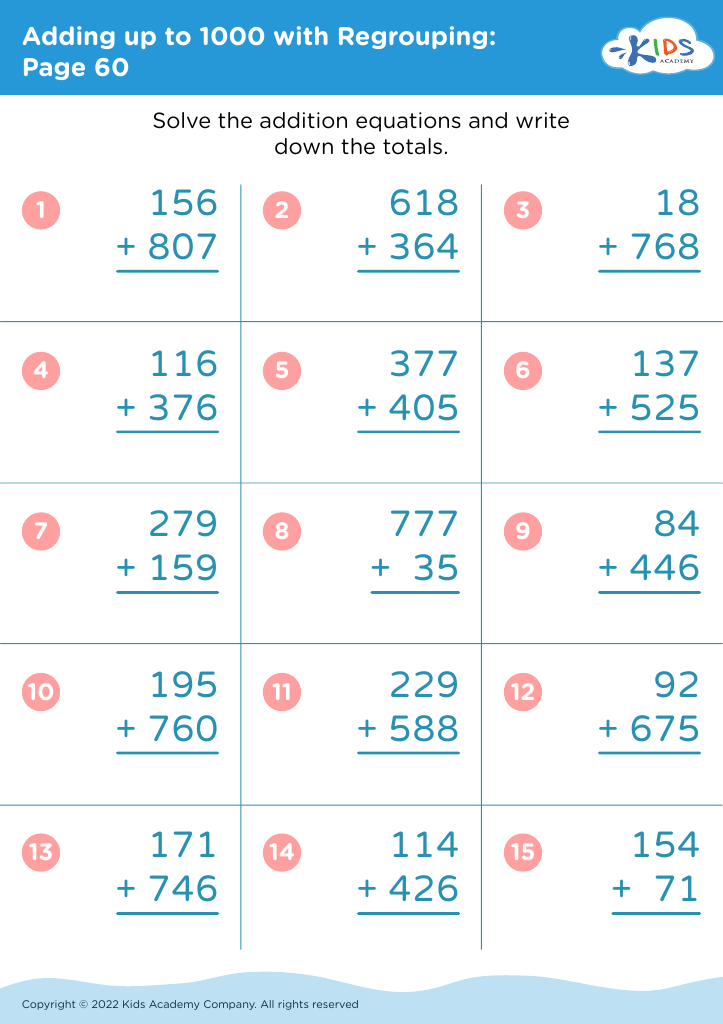
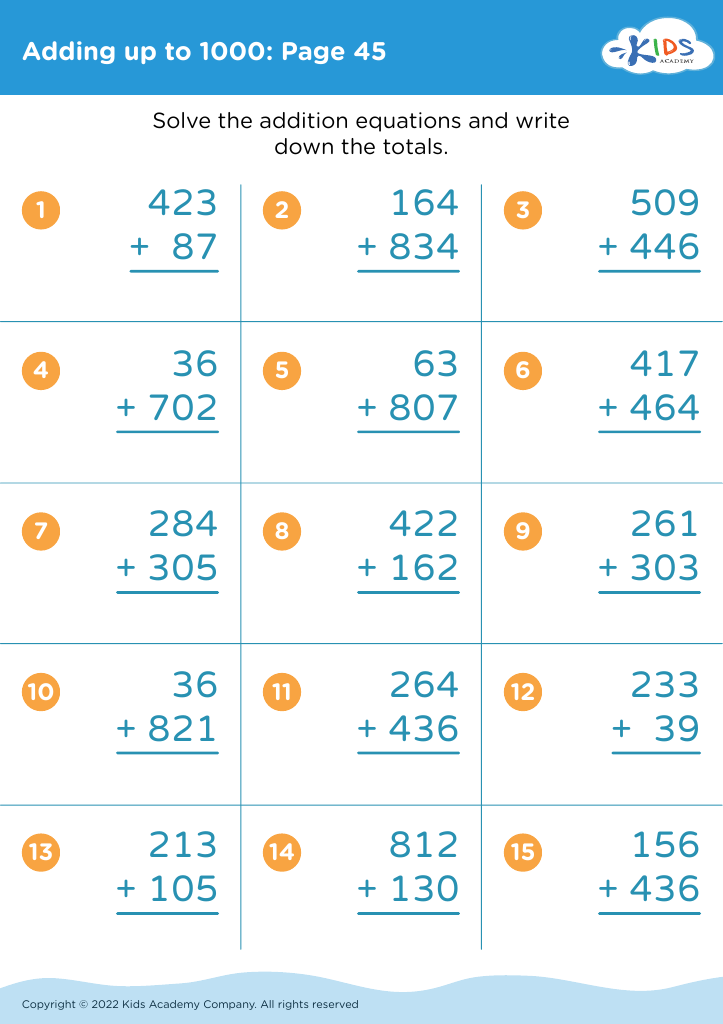
Enhance your child's mathematical skills with our Following Instructions Adding Up to 1000 worksheets, designed specifically for children aged 6-9. These engaging and interactive resources help young learners practice critical math concepts while mastering the art of following directions. Each worksheet encourages students to carefully read and comprehend instructions as they solve addition problems that sum up to 1000. By combining foundational math skills with instruction following, your child will not only improve their arithmetic abilities but also build essential reading comprehension skills. Perfect for home, classroom, or supplemental learning, these worksheets offer a fun and effective way to learn!
Favorites
With answer key
Interactive
Join Kids Academy for Free
Who is primarily going to use this learning content?



Following instructions is a fundamental skill essential for children's academic success and overall development. For children aged 6-9, tasks often require them to adhere to specific guidelines, whether in math exercises like "Adding up to 1000" or classroom projects. Learning to follow instructions helps develop their attention span, critical thinking, and problem-solving abilities.
When children understand how to follow step-by-step directions, they gain confidence in their capabilities, which positively influences their willingness to tackle more challenging tasks in the future. This process also aids in promoting self-discipline, as they learn to focus on one task at a time and resist distractions.
Moreover, activities that involve numerical skills, such as adding up to 1000, teach children valuable lessons about math and improve their number sense. It promotes logical thinking while providing a sense of achievement once they complete the task.
For parents and teachers, guiding children to follow instructions not only builds essential academic competencies but also fosters a structured learning environment. This partnership plays a crucial role in shaping children's approach to learning and their ability to navigate future educational journeys. Encouraging children to embrace the habit of following directions sets a foundation for lifelong learning skills.








