Identify shapes Adding up to 1000 Worksheets for Ages 6-9
4 filtered results
-
From - To
Explore our “Identify Shapes Adding up to 1000 Worksheets” designed for kids aged 6-9! These engaging worksheets combine shape recognition with addition skills, helping young learners practice math concepts while identifying various geometric shapes. Each activity reinforces essential skills in a fun and interactive way, making it perfect for visual learners. With colorful illustrations and age-appropriate challenges, your child will enhance their understanding of both shapes and numbers. Perfect for home learning or classroom activities, these worksheets ensure that learning is enjoyable and effective. Get ready to inspire your child's love for math and shapes today!
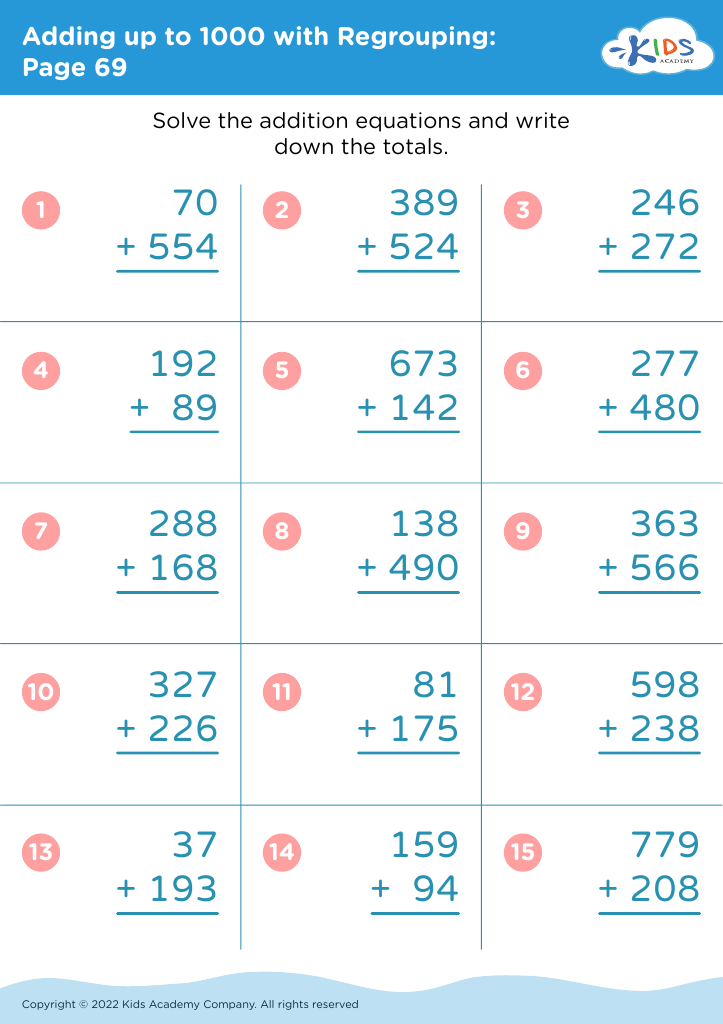
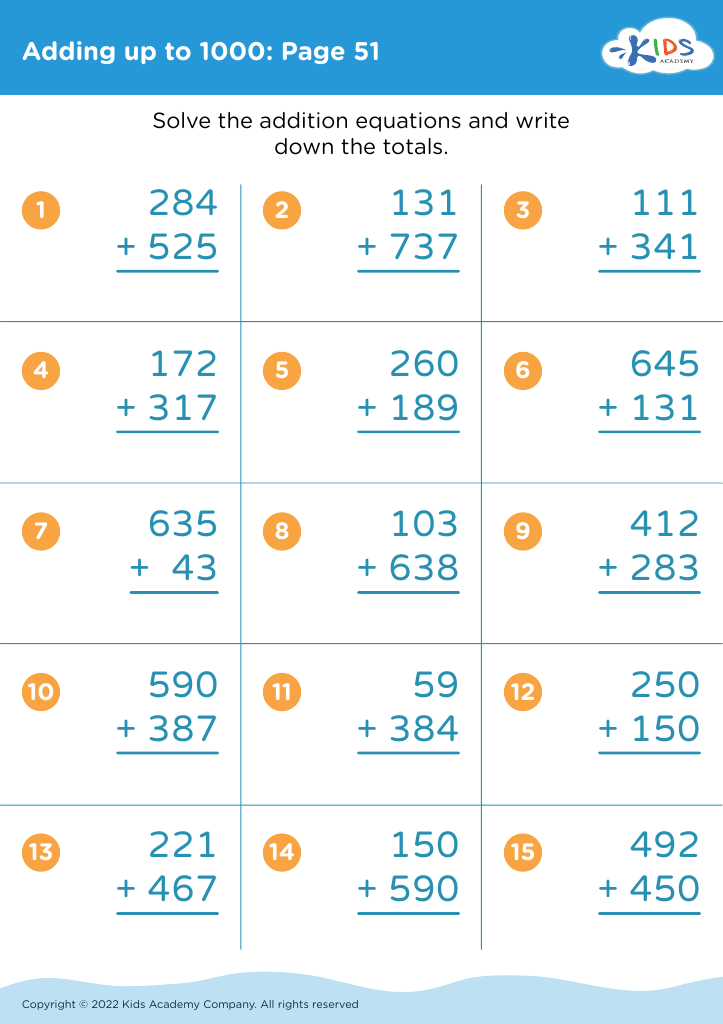
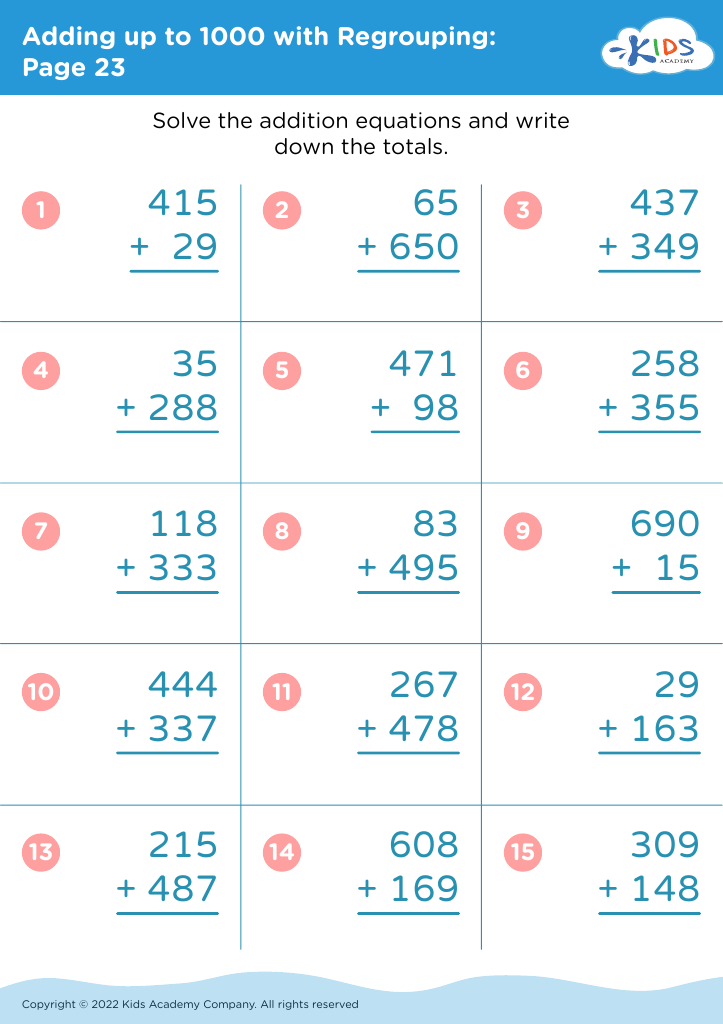
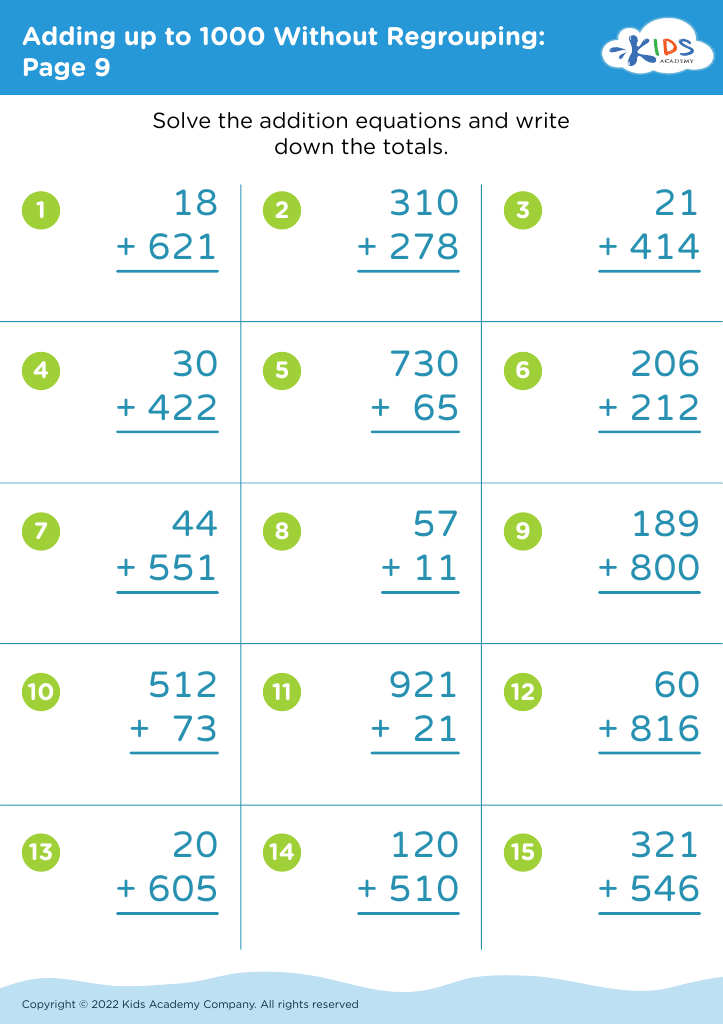



Identifying shapes and understanding their properties is a fundamental skill for children ages 6-9. As parents and teachers, fostering this understanding is crucial for several reasons.
Firstly, recognizing shapes helps improve spatial awareness, which is essential for later success in mathematics, science, and engineering fields. Children learn to associate different shapes with their respective functions in the real world, enhancing their problem-solving skills.
Secondly, this skill lays the groundwork for comprehension in geometry and measurement concepts. Children begin to learn about area, perimeter, and volume, further emphasizing the importance of shapes in everyday life.
Moreover, engaging in shape identification fosters creativity and critical thinking. When children manipulate and categorize shapes, they develop logical reasoning abilities which are vital for academic growth.
Finally, integrating shape identification with activities such as art projects or puzzles keeps learning fun and engaging, encouraging children to view mathematics positively. It also promotes collaborative learning as children can work together to identify and create various shapes, enhancing social skills.
Thus, investing time in teaching children about shapes offers long-term benefits, making it a priority for parents and educators guiding their children’s educational journeys.








