Improving math skills Adding up to 1000 Worksheets for Ages 6-9
6 filtered results
-
From - To
Enhance your child's math abilities with our "Improving Math Skills: Adding up to 1000" worksheets, designed for ages 6-9. This comprehensive set of printable worksheets from Kids Academy focuses on boosting addition skills through engaging exercises and fun activities. Perfect for young learners, these worksheets help build strong numerical foundations, promote critical thinking, and reinforce classroom learning. Each worksheet is carefully crafted to captivate children's interest while ensuring they gain confidence in their math abilities. Give your child the tools they need for academic success. Start their journey to mastering math today with our expertly designed resources.
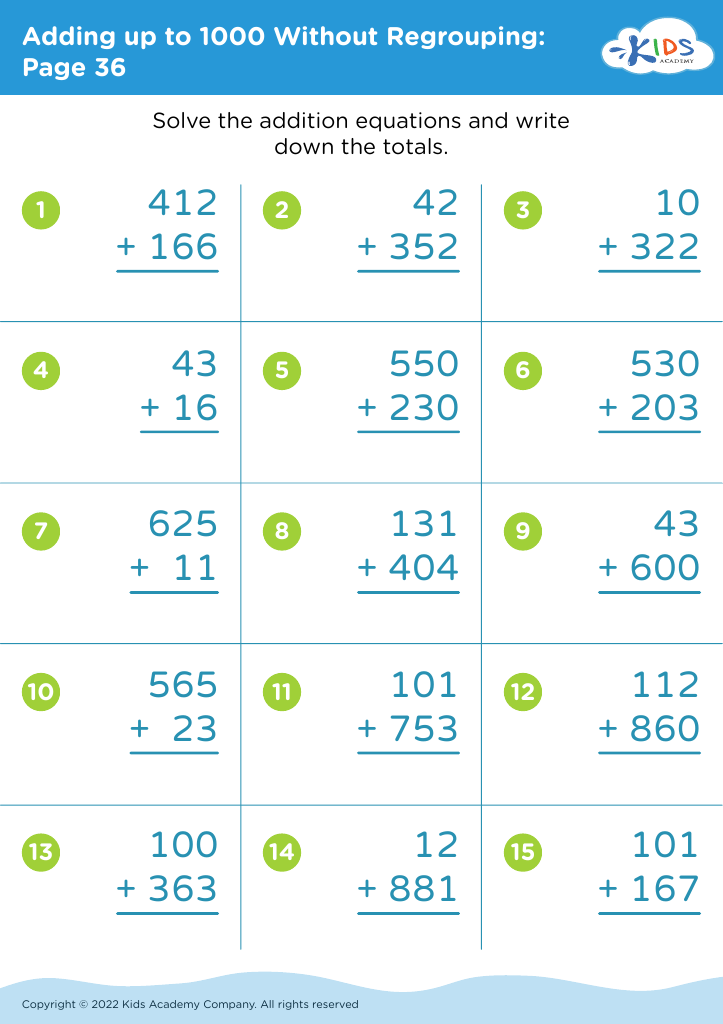
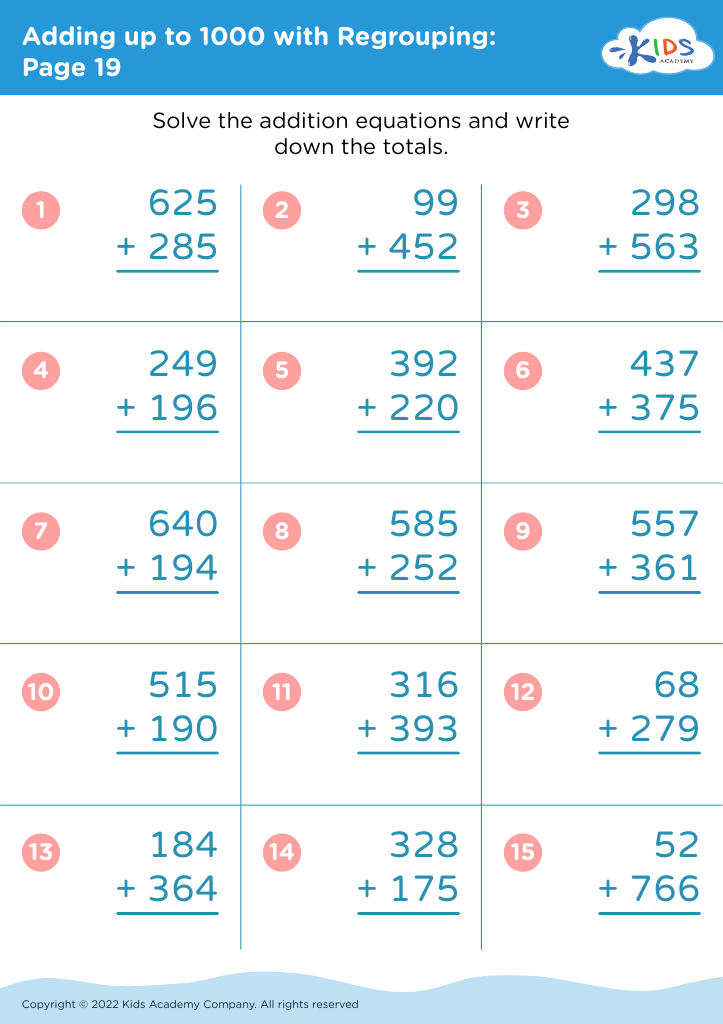
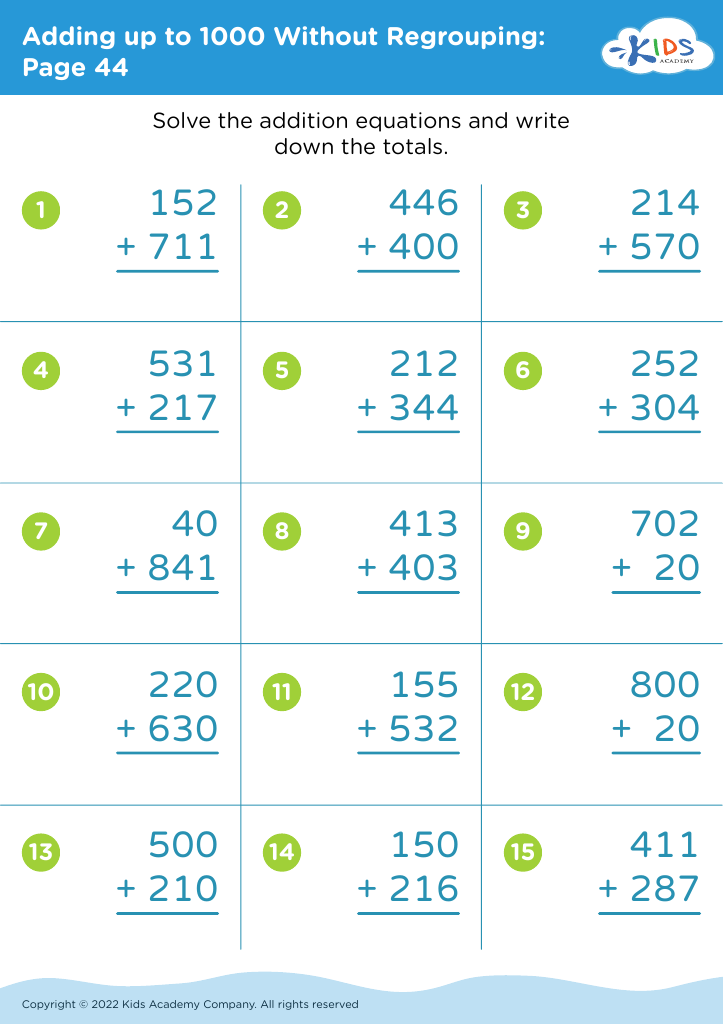
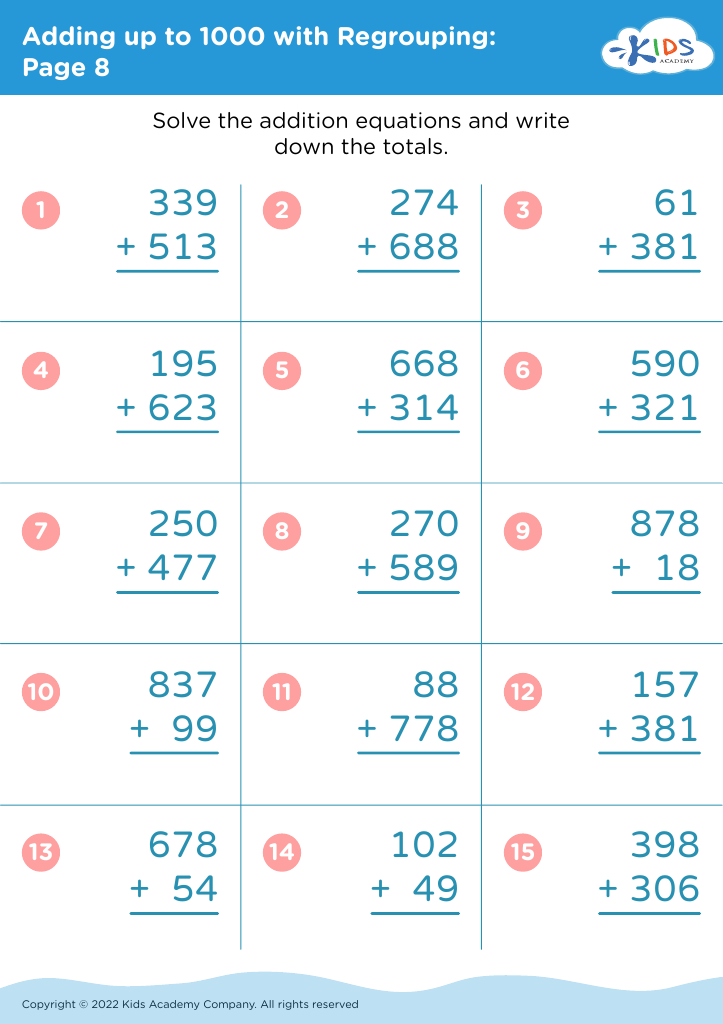
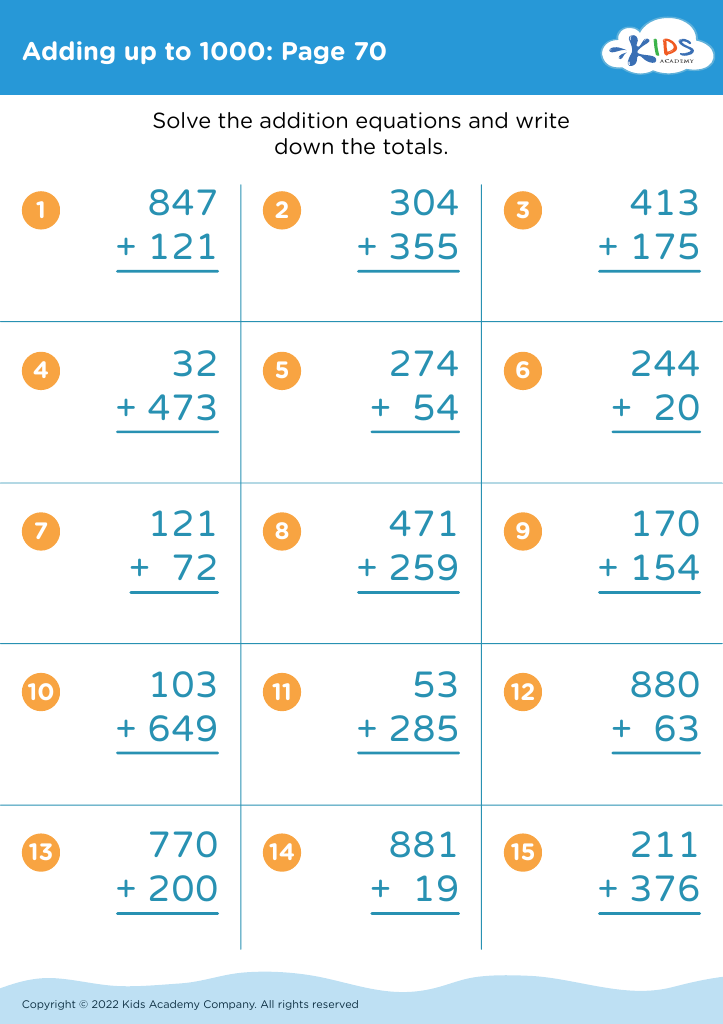
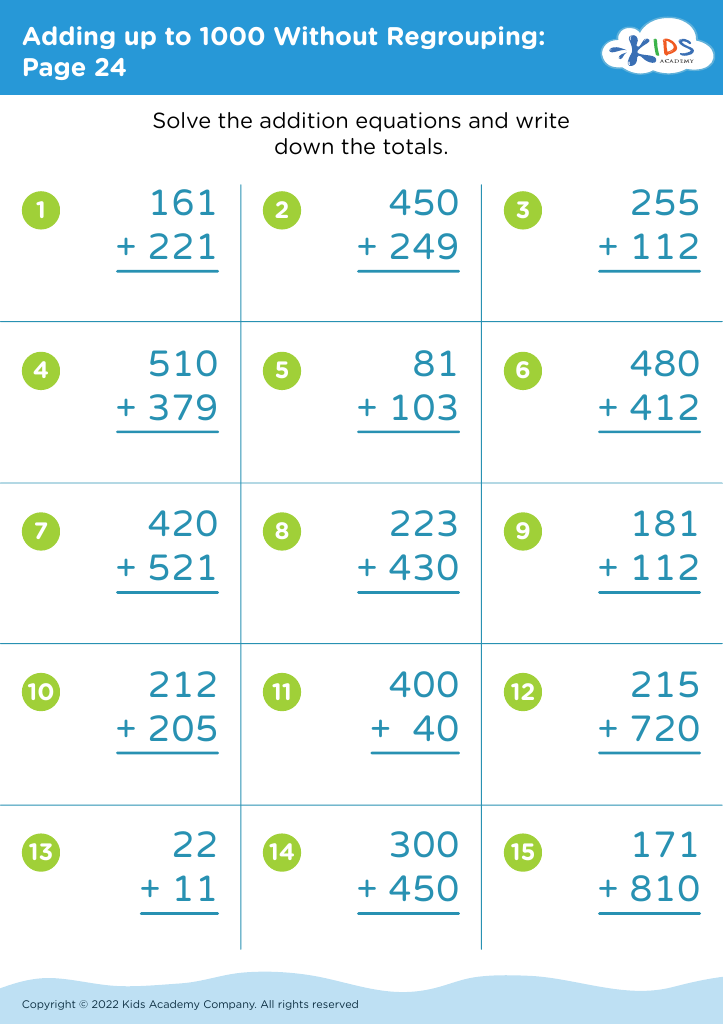



Improving math skills, especially adding up to 1000, for ages 6-9 is crucial for several reasons. Firstly, fundamental math skills act as a building block for more complex concepts. Mastery in addition sets a strong foundation for future topics like multiplication, division, and fractions, which are essential in higher grade levels.
Secondly, early competence in math boosts overall cognitive development. Engaging in numerical and logical thinking sharpens problem-solving abilities and improves critical thinking. This cognitive enhancement is not limited to math alone but spans across science, reading, and even arts.
Thirdly, achieving proficiency in math at an early age can enhance confidence and foster a positive attitude towards learning. When children understand fundamental concepts, they feel more competent and are more likely to engage enthusiastically in future academic challenges, thereby reducing math anxiety.
Lastly, practical application of math is essential in daily life. Skills in addition up to 1000 are directly applicable in activities like shopping, measuring, and even handling money, thereby equipping children with essential life skills.
By focusing on these foundational math skills, parents and teachers ensure children are well-prepared academically and are more adaptable to various real-life scenarios. Investing time and effort during these formative years yields lifelong benefits, making it a critical area of focus.








