Number Recognition Adding up to 1000 Worksheets for Ages 6-9 - Page 2
31 filtered results
-
From - To
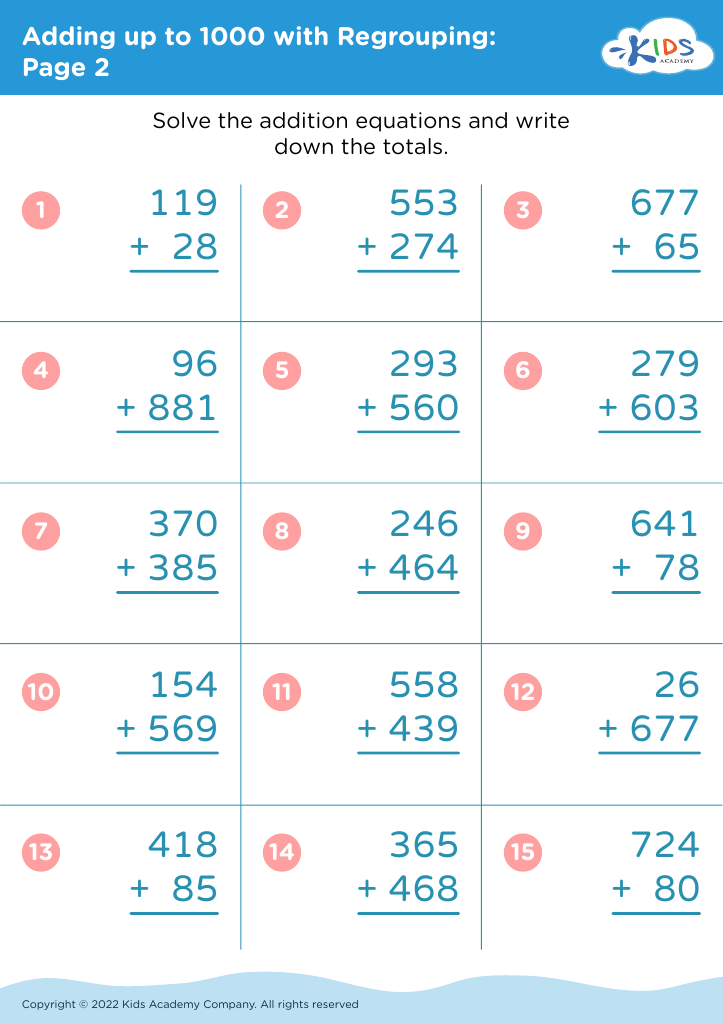
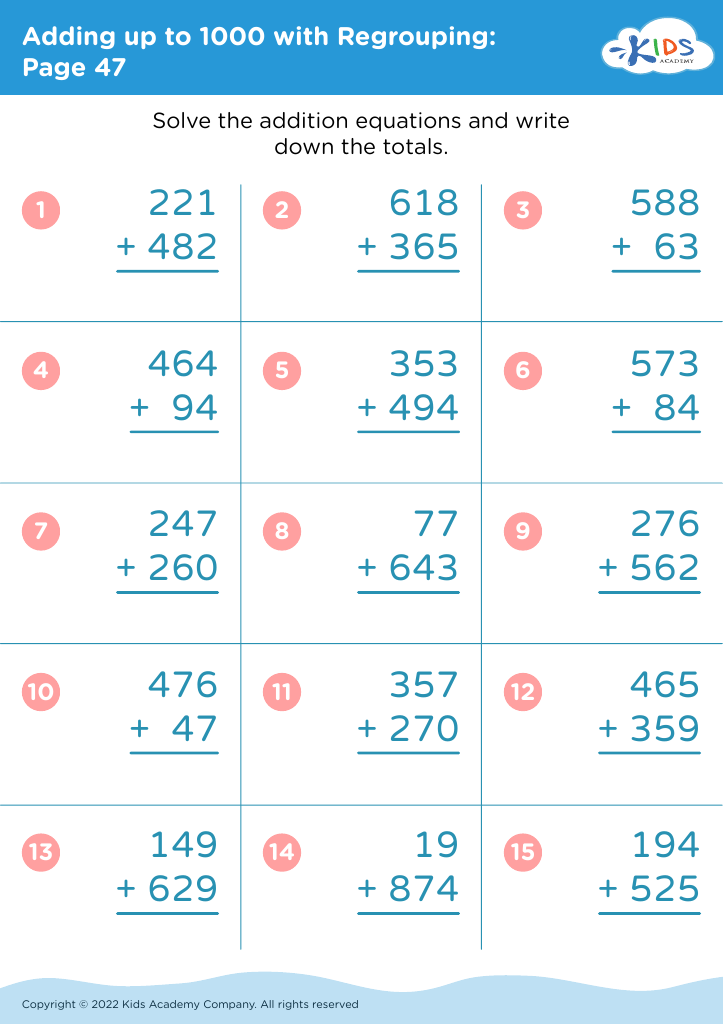
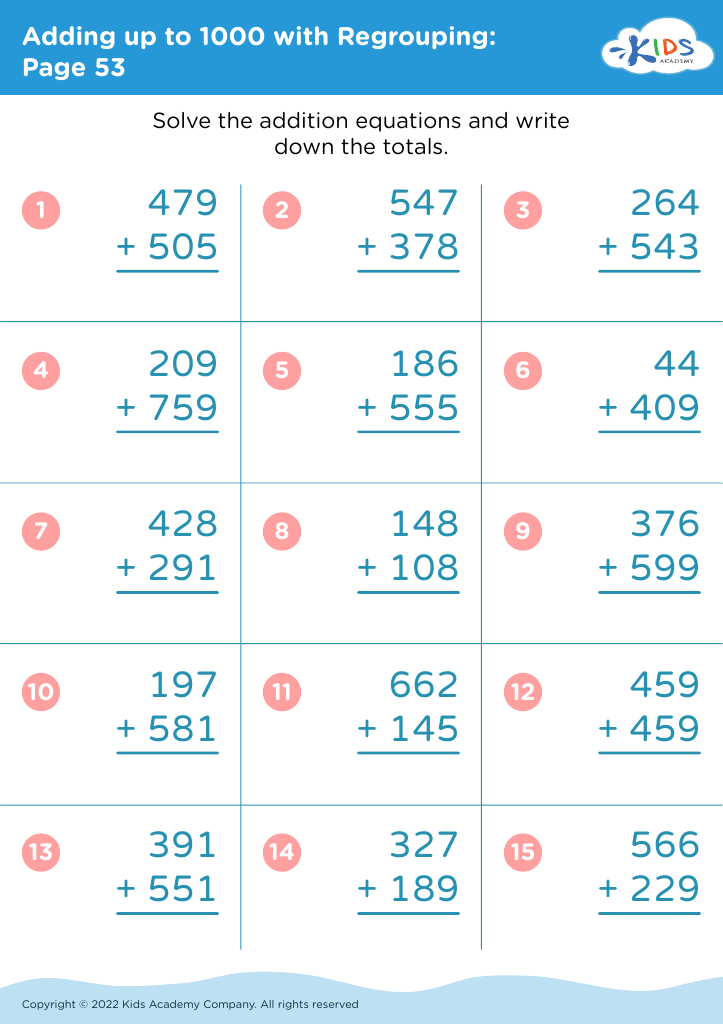
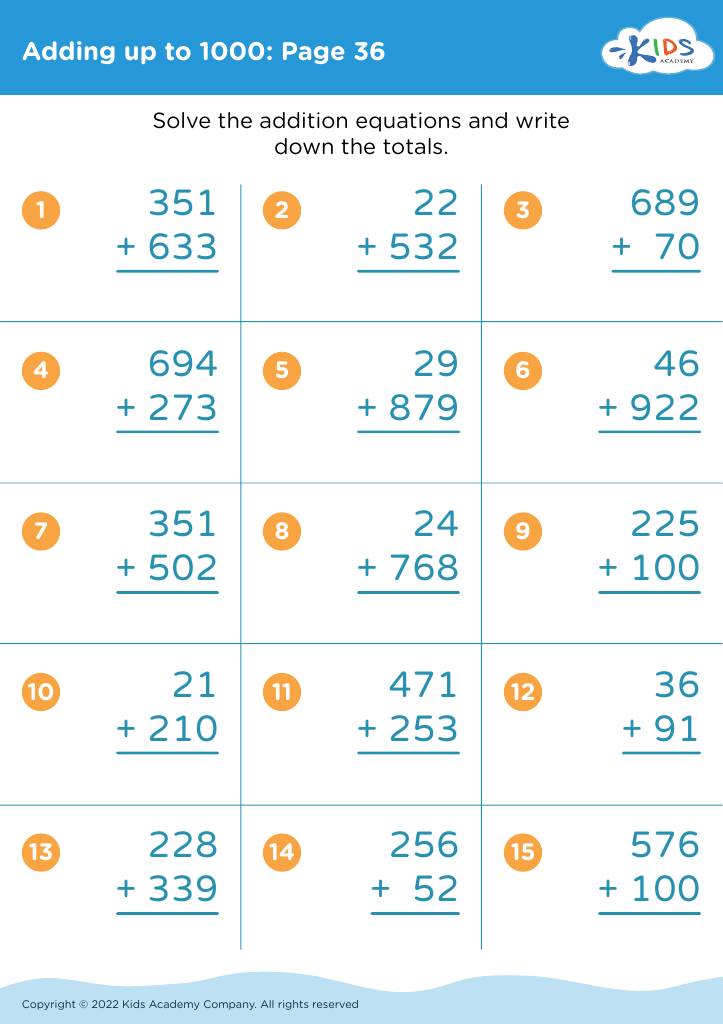
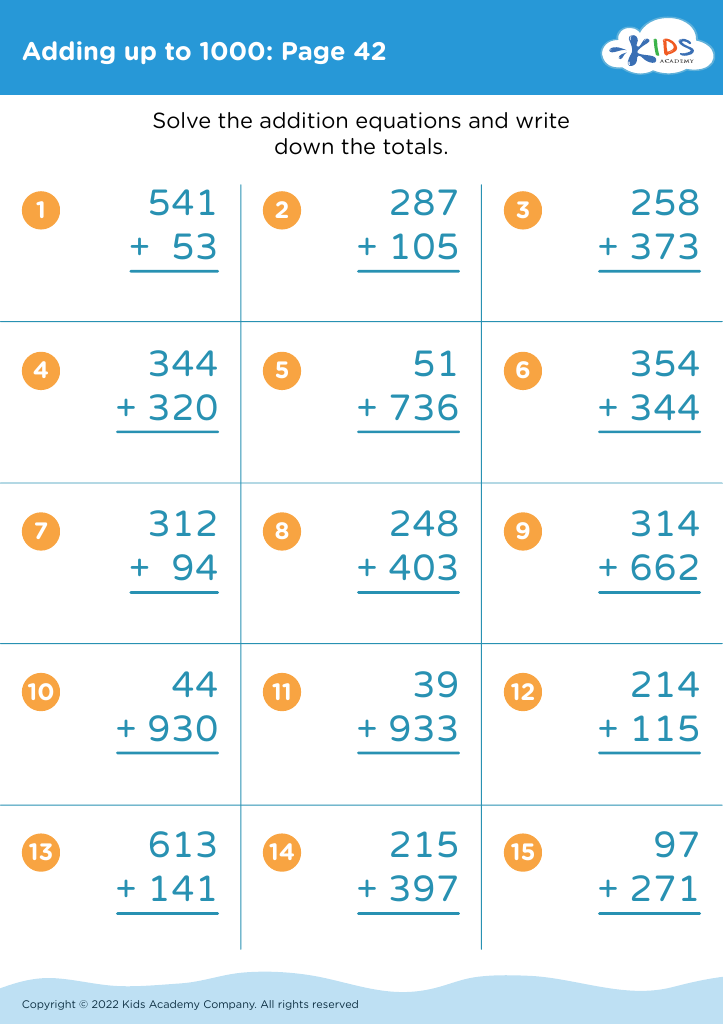
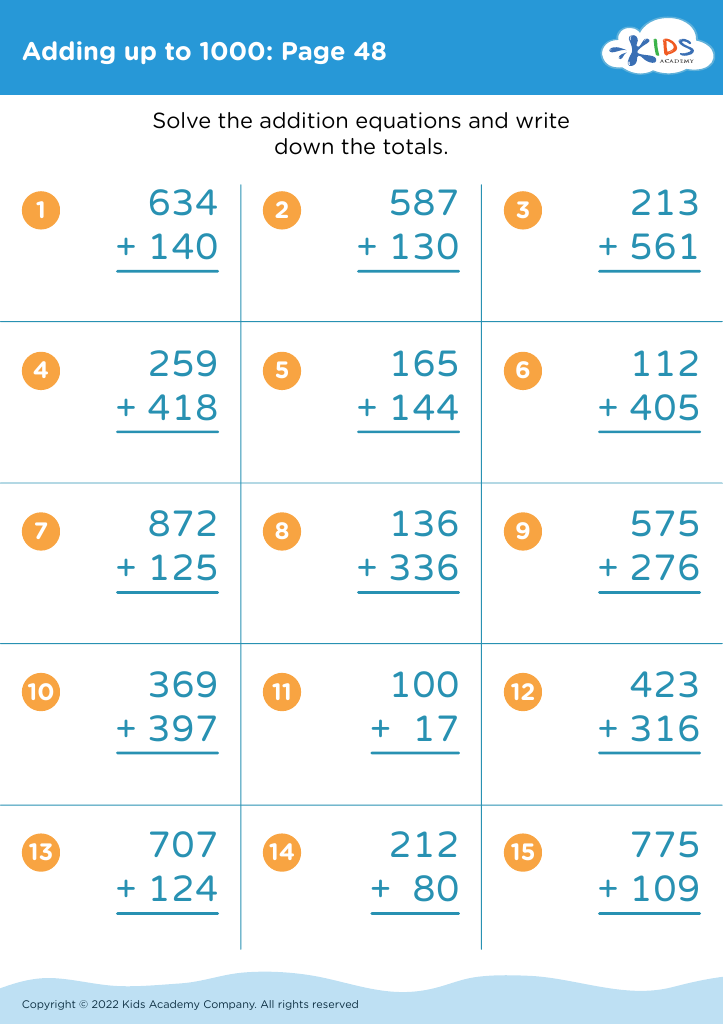
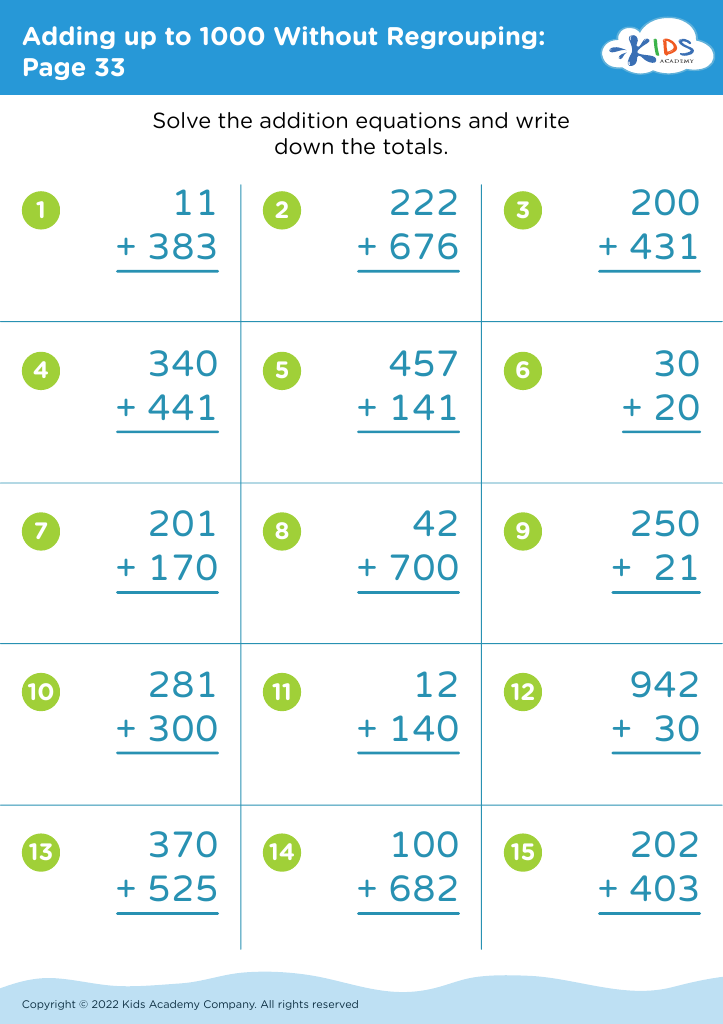




Number recognition and understanding concepts related to numbers up to 1000 are foundational skills for children aged 6 to 9. Firstly, number recognition lays the groundwork for numeracy skills, helping children identify and understand the value of numbers in everyday life. By recognizing numbers, children can accurately read prices during shopping or understand time, which are crucial skills for independent living.
Furthermore, adding up to 1000 solidifies their arithmetic abilities, promoting confidence and a positive attitude towards mathematics. At this age, children are developing critical thinking skills, and engaging with larger numbers enhances their problem-solving abilities as they learn to manipulate numbers in various ways.
For teachers and parents, fostering these skills contributes not only to academic success but also to a child's overall cognitive development. Encouraging number recognition and addition activities at this age can mitigate future math anxiety and promote greater academic achievement. Additionally, a solid foundation in math provides lifelong benefits, equipping children with the skills needed in a number-driven world. Overall, investing in number recognition and competency increases children's chances for success in both education and their future careers.








