Number Sequencing Adding up to 1000 Worksheets for Ages 6-9
5 filtered results
-
From - To
Unlock your child's mathematical potential with our engaging "Number Sequencing Adding up to 1000 Worksheets" designed specifically for ages 6-9. These fun and interactive worksheets help young learners master essential number skills, focusing on sequencing and addition up to 1000. Each worksheet offers a variety of exercises that encourage problem-solving and critical thinking. As children progress, they will gain confidence in their counting abilities while developing a strong foundation for more complex math concepts. Foster a love for learning through hands-on activities that challenge and inspire. Download our worksheets today and watch your child excel in math!
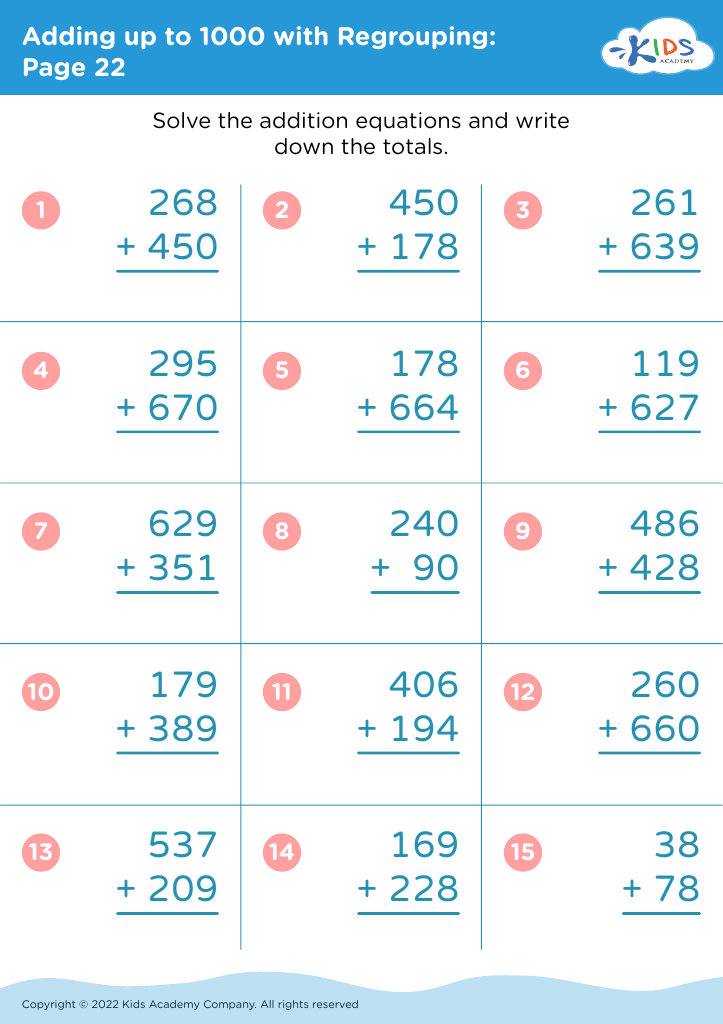
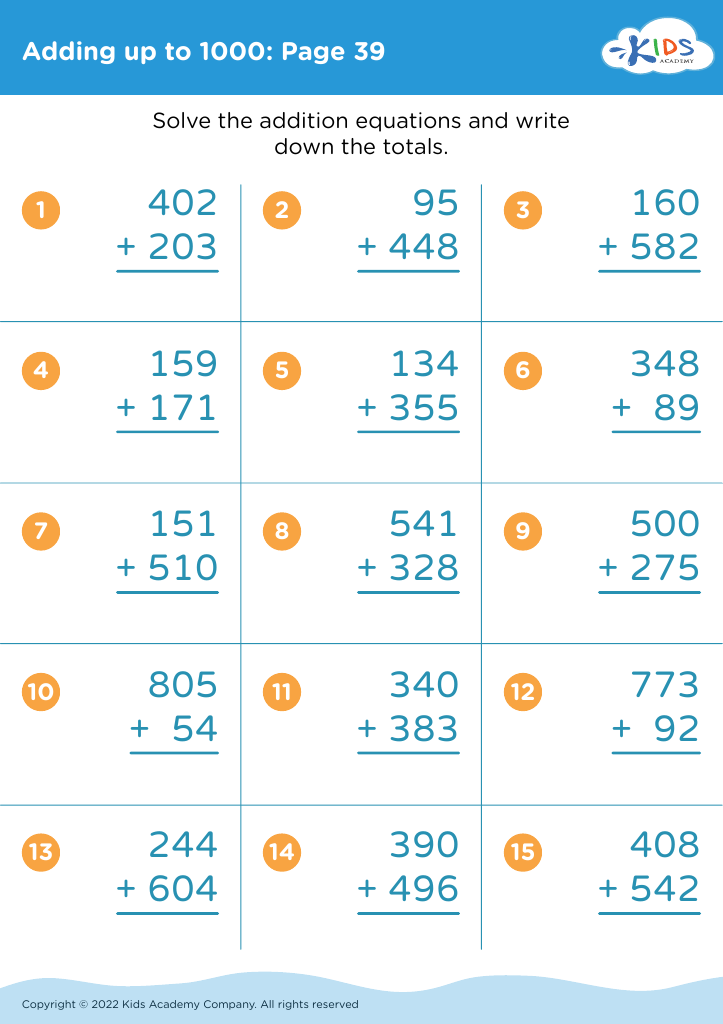
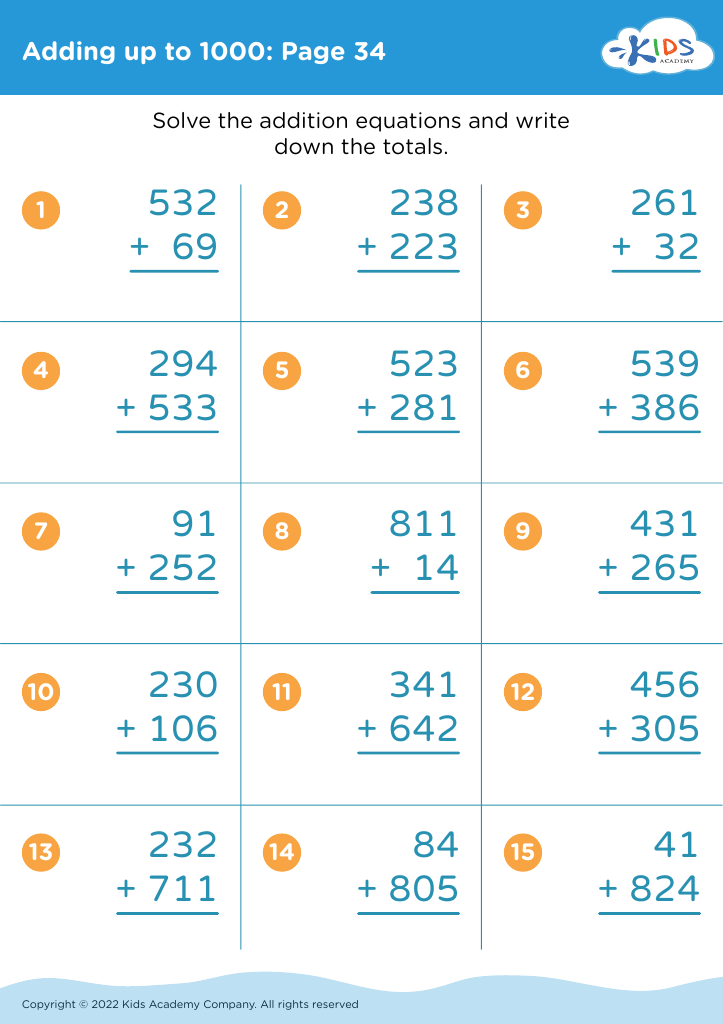
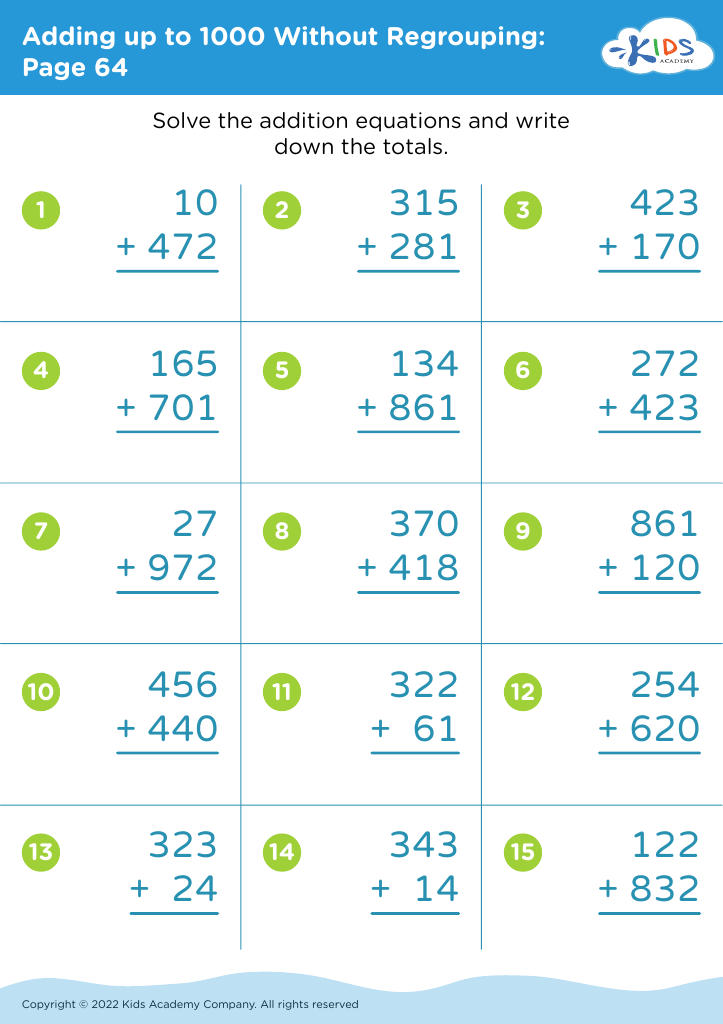
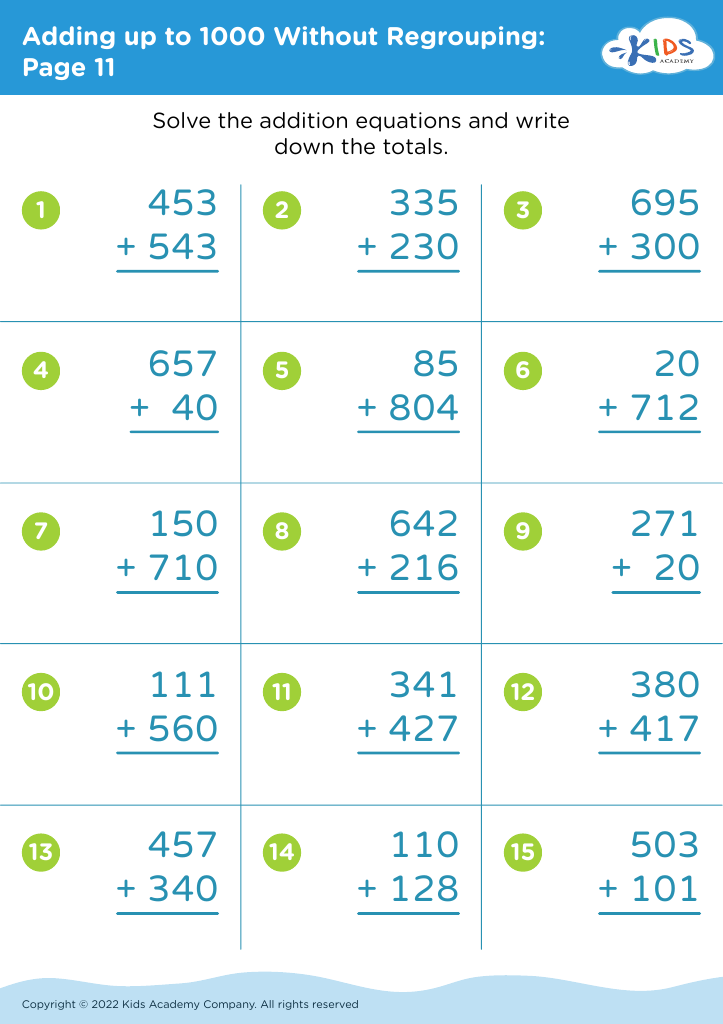



Understanding number sequencing and addition up to 1000 is crucial for children aged 6-9, as it serves as a foundational skill in their overall mathematical development. For parents and teachers, conveying the importance of these concepts is vital for several reasons.
First, number sequencing creates a strong internal number line, helping children visualize and comprehend the relationships between numbers. This understanding is essential when moving towards more complex mathematical operations, such as addition, subtraction, and even multiplication and division later on.
Second, mastering addition up to 1000 enhances mental math skills, boosting confidence as students engage with larger numbers and complex word problems. It lays the groundwork for critical thinking and problem-solving abilities by allowing children to strategize and use different methods for calculation.
Finally, a solid grasp of these concepts fosters a positive attitude towards math, encouraging a lifelong love for the subject. As they overcome challenges in learning, students develop resilience and patience, attributes beneficial not only in academics but also in everyday situations. By prioritizing number sequencing and addition skills, parents and teachers equip children with essential tools for future success in mathematics and beyond.








