Pattern recognition Adding up to 1000 Worksheets for Ages 6-9
3 filtered results
-
From - To
Unlock your child's mathematical potential with our "Pattern Recognition Adding up to 1000 Worksheets for Ages 6-9." Designed specifically for young learners, these engaging worksheets help build foundational skills in pattern recognition while enhancing addition abilities. Young mathematicians will explore various patterns, understand sequences, and practice adding numbers up to 1000 through interactive exercises. These worksheets are perfect for reinforcing classroom lessons or additional at-home practice. Our content aims to boost confidence, develop critical thinking, and create a strong foundation for future math success. Ideally suited for children ages 6-9, these worksheets make learning math an enjoyable adventure!
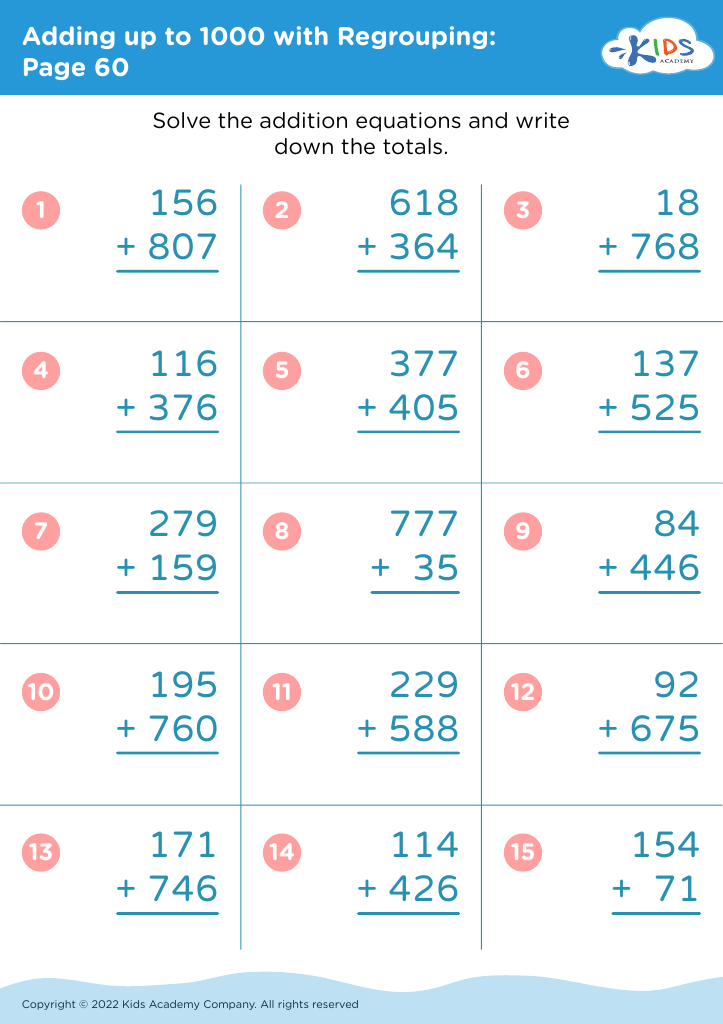
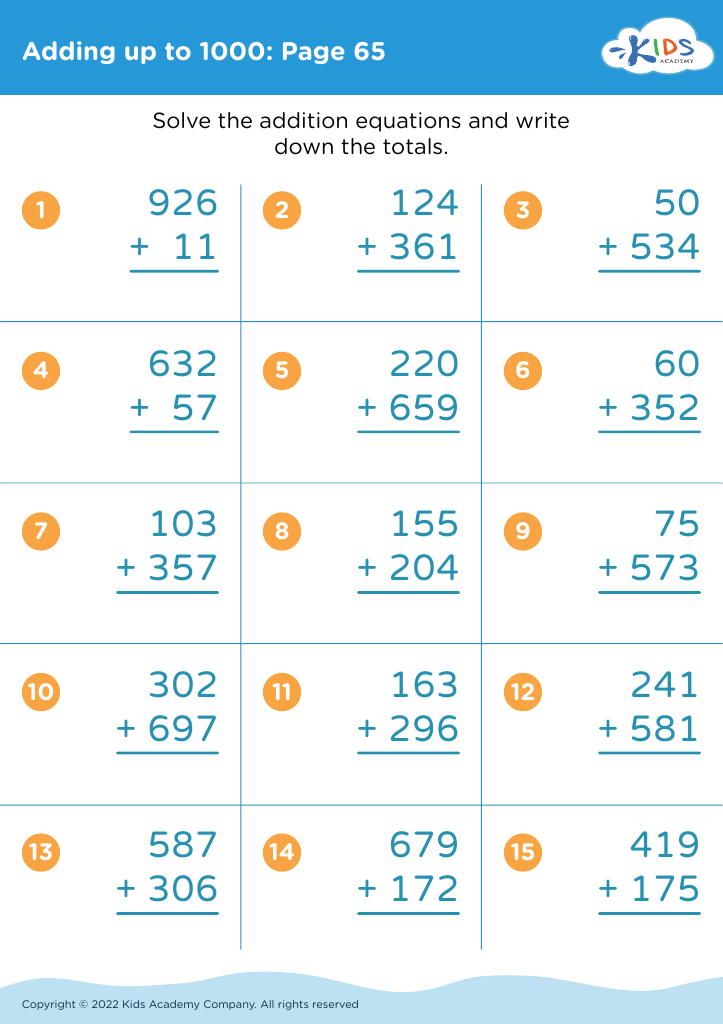
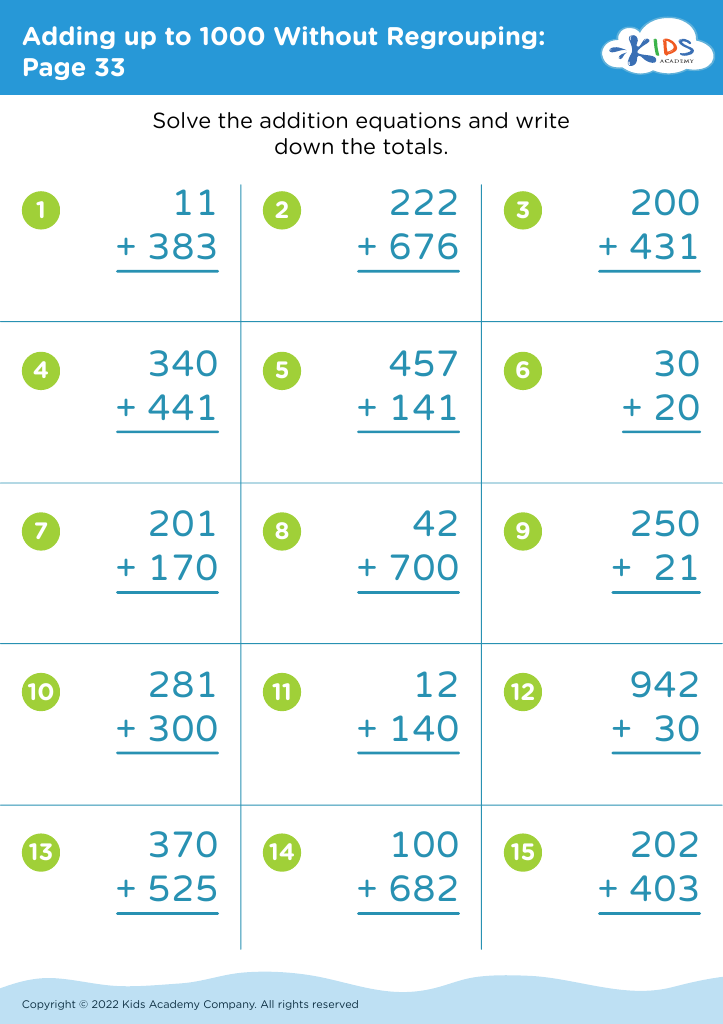



Pattern recognition and the ability to add numbers up to 1,000 are foundational skills that significantly influence a child's cognitive development, especially between the ages of 6 and 9. For parents and teachers, focusing on these skills is essential as they lay the groundwork for advanced mathematical understanding and problem-solving abilities.
Pattern recognition enhances a child's logical thinking by enabling them to identify and predict regularities and sequences. This skill is not only crucial for mathematics but also supports learning in various subjects such as science and reading. Understanding patterns aids in the comprehension of grammar rules, the periodic table in chemistry, and even in coding.
Meanwhile, adding numbers up to 1,000 builds numerical fluency, which is crucial for more complex math operations they will encounter later. It strengthens their understanding of place value, helps them grasp the concept of carrying, and fosters practical skills useful in daily life, such as counting money or measuring ingredients. By approaching these skills through engaging activities tailored for their age, children are more likely to enjoy learning and develop a positive attitude towards mathematics.
In summary, emphasizing pattern recognition and addition up to 1,000 equips children with critical thinking skills, boosts their mathematical confidence, and prepares them for future academic challenges. Therefore, it is vital for parents and teachers to nurture these abilities during these formative years.








