Practice subtraction Adding up to 1000 Worksheets for Ages 6-9
3 filtered results
-
From - To
Welcome to our engaging Practice Subtraction Worksheets designed specifically for children ages 6-9! Our lovingly crafted resources help young learners master subtracting numbers up to 1000 through fun and interactive exercises. Each worksheet encourages critical thinking and problem-solving skills while making learning enjoyable. With colorful illustrations and age-appropriate challenges, your child will develop a solid understanding of subtraction concepts. Whether in the classroom or at home, these worksheets promote independent learning and confidence in math. Explore our collection of subtraction worksheets to transform learning into an exciting adventure. Perfect for reinforcing classroom lessons or enhancing home education, let’s make subtraction fun together!
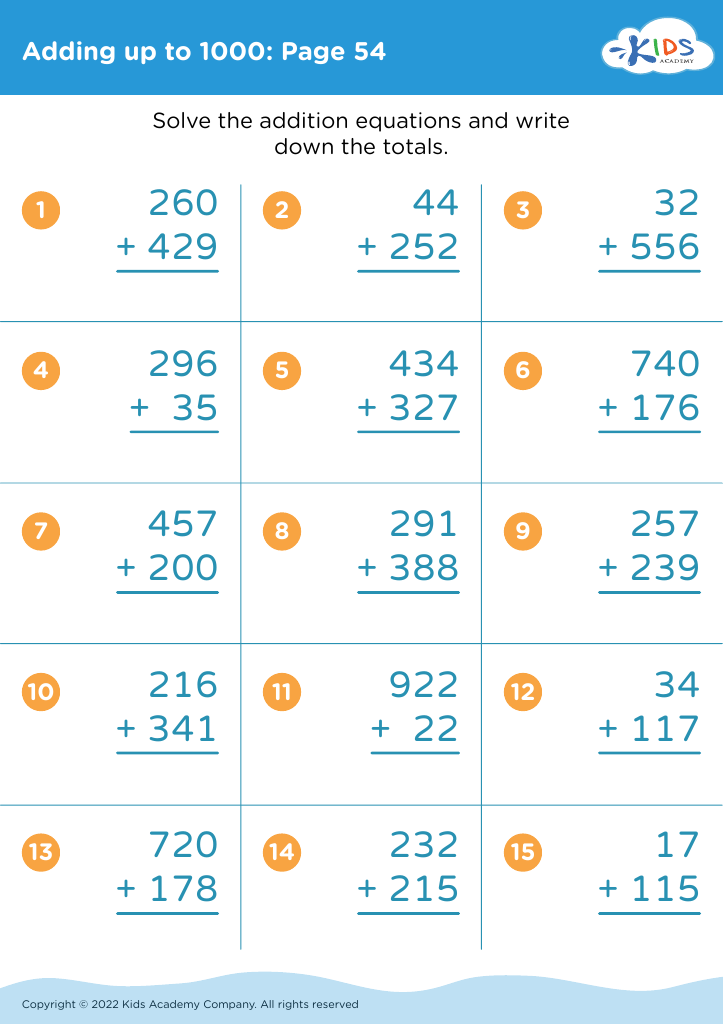
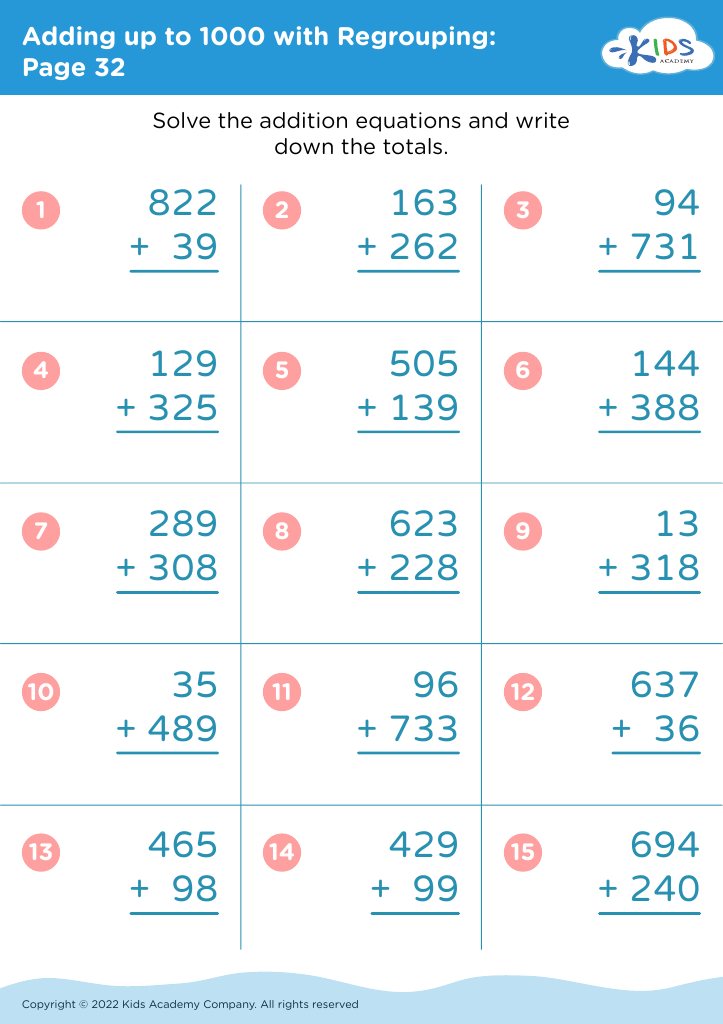
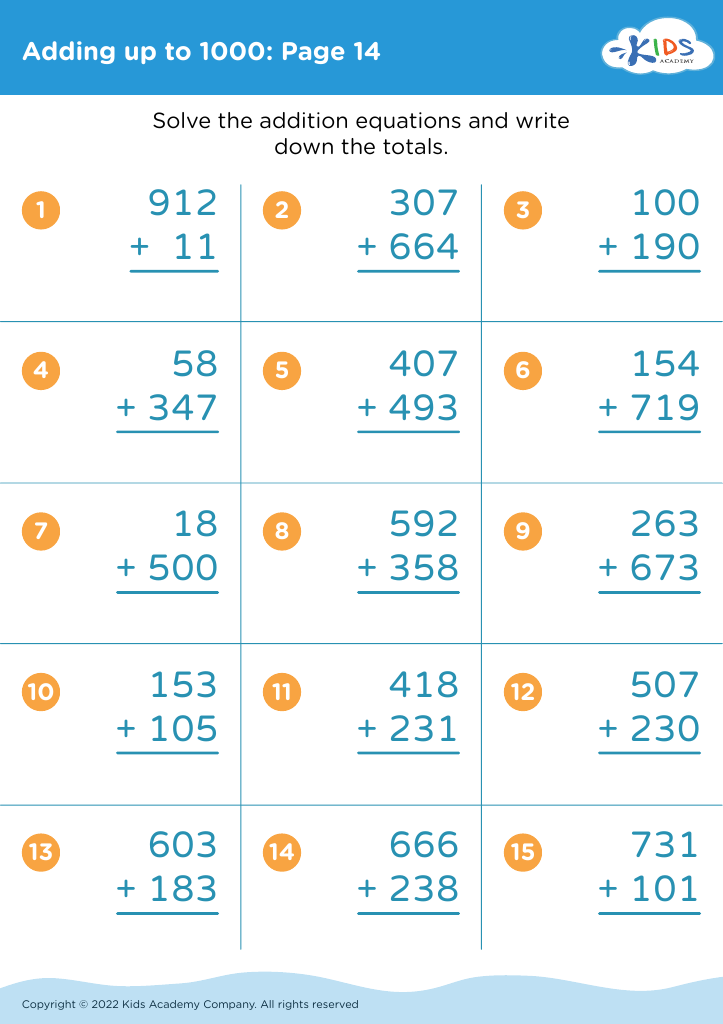



Teaching subtraction, especially within the range of 1000, is vital for children aged 6 to 9 as it lays the foundation for their mathematical understanding. Mastery of subtraction fosters critical thinking and problem-solving skills. At this age, kids are beginning to encounter more complex math problems in school, and a strong grasp of subtraction helps them tackle these challenges confidently.
Moreover, subtraction is a fundamental operation that they will use in everyday life. Whether measuring ingredients, planning budgets for a small project, or even analyzing scores in games, knowing how to subtract efficiently is essential.
Additionally, practice in subtraction promotes numerical fluency, enabling children to quickly and accurately calculate without relying on mechanical methods. This fluency not only facilitates learning in math but also enhances their ability to understand related concepts like addition, multiplication, and division.
Teachers and parents play a vital role in providing engaging activities and opportunities for practice that make learning subtraction enjoyable and effective. Their guidance helps build a positive attitude towards mathematics, encouraging children to see it as an exciting subject rather than a daunting one. Supporting them through this essential learning phase ultimately instills a lifelong appreciation for math.








