Problem Solving Adding up to 1000 Worksheets for Ages 6-9
3 filtered results
-
From - To
Discover our engaging "Problem Solving Adding up to 1000 Worksheets" designed for children aged 6-9! These worksheets are perfect for kids who are ready to strengthen their math skills through problem-solving activities. By utilizing addition strategies to sum up to 1000, learners will enhance their critical thinking, boost their confidence, and improve their math comprehension. Our worksheets are thoughtfully crafted to make learning fun and interactive, ensuring children stay motivated while practicing essential skills. Ideal for classroom use or at-home learning, these resources provide a solid foundation in mathematics. Encourage your young mathematicians to master addition today!
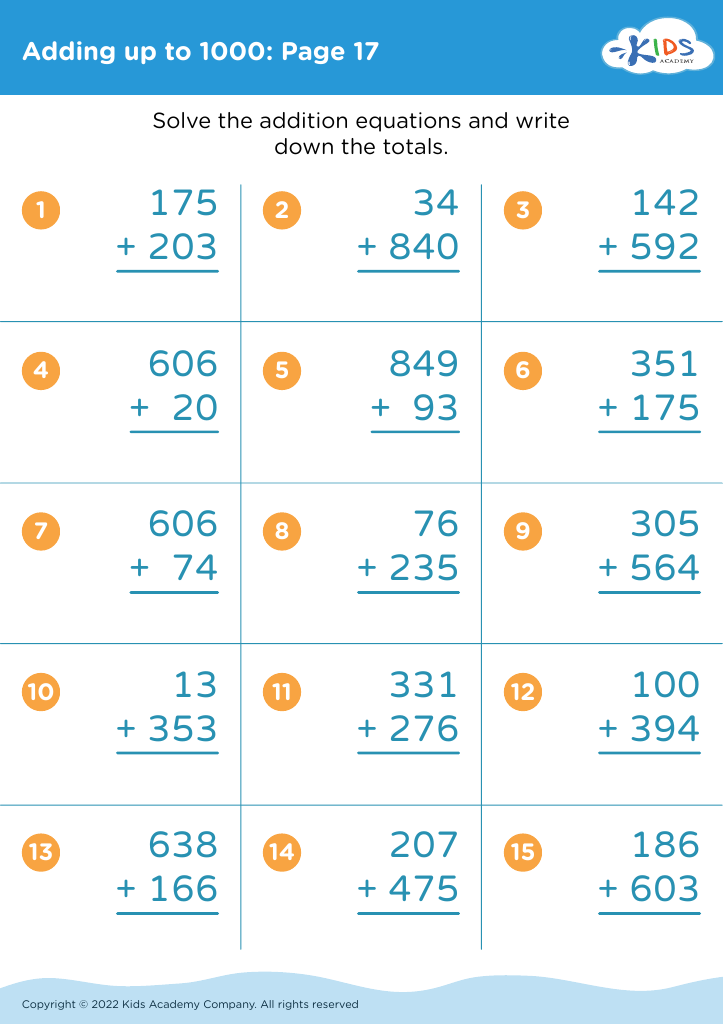
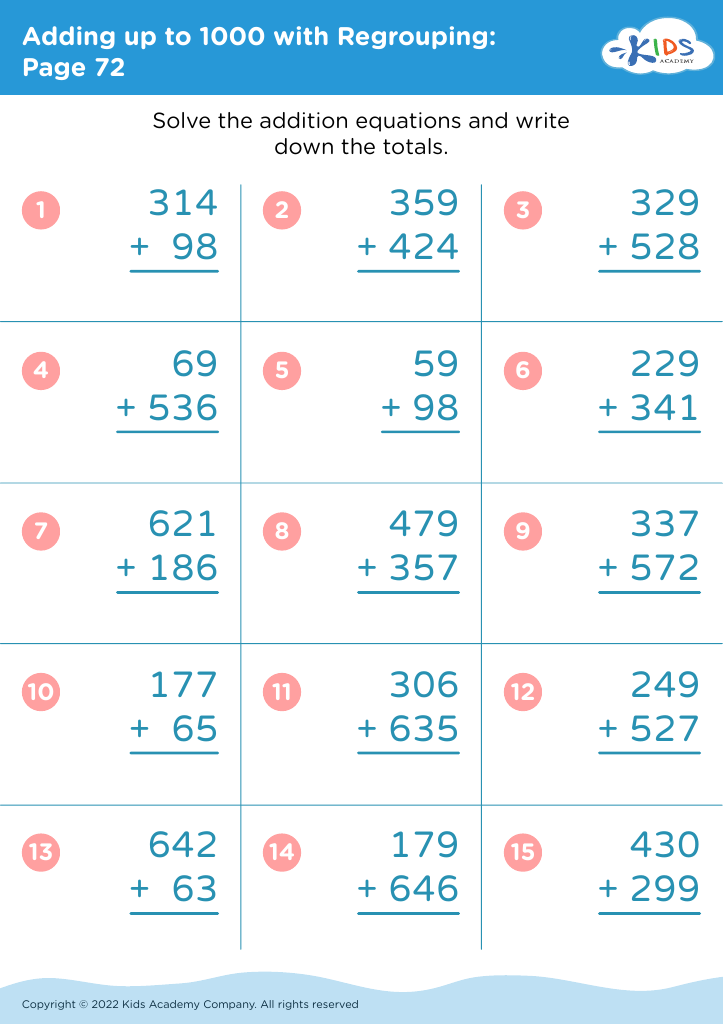
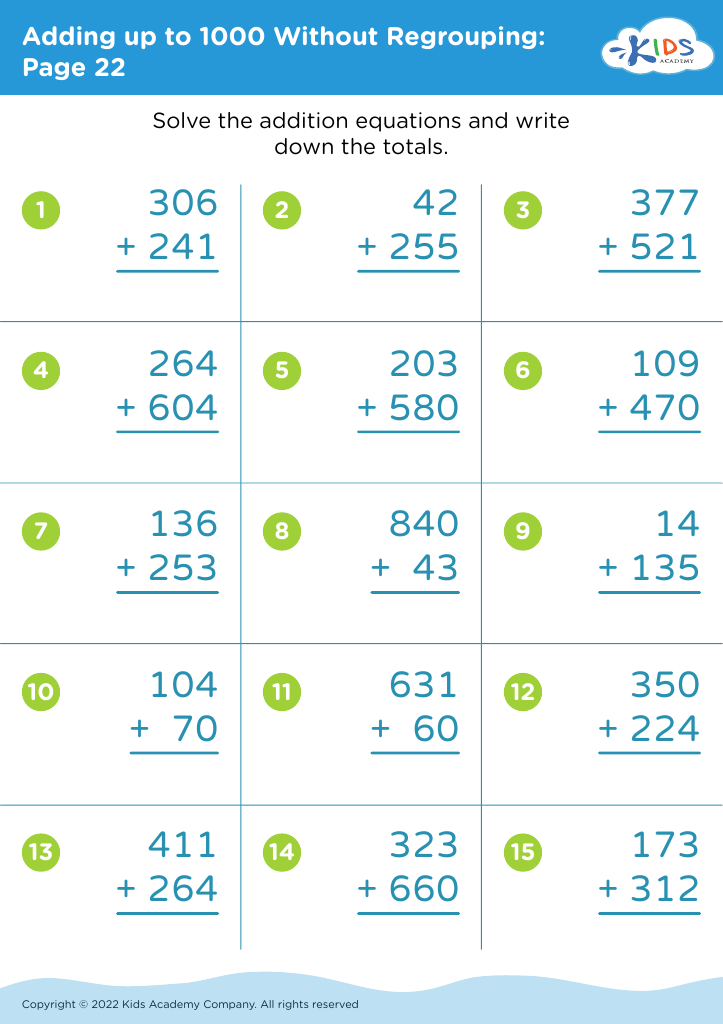



Problem Solving with numbers up to 1000 is a critical skill for children aged 6-9, and parents and teachers should prioritize it for several reasons. Firstly, mastering addition lays a foundational understanding of mathematics, essential for future concepts like subtraction, multiplication, and division. Effective problem-solving enhances students’ cognitive skills, promoting logical reasoning and analytical thinking.
Moreover, this mathematical proficiency is not just academic; it fosters real-world skills. Children learn to apply their arithmetic understanding to everyday situations—budgeting, cooking, and time management, making learning relevant. Developing problem-solving skills also nurtures independence and perseverance. Kids encounter challenges that require trial and error, teaching them resilience in facing difficulties.
Furthermore, fostering a love for math early can diminish math anxiety later in life. As children engage in practical problem-solving tasks, they build confidence in their math abilities, creating a positive feedback loop of success and enthusiasm for learning.
Involving parents in this process can also strengthen the home-school connection. When parents actively support their child’s problem-solving journey, they encourage their children, creating a supportive learning environment. Ultimately, focusing on this skill during early education equips children with essential tools for academic success and everyday life.








