Subtraction skills Adding up to 1000 Worksheets for Ages 6-9
4 filtered results
-
From - To
Improve your child’s subtraction skills with our engaging “Subtraction Skills Adding up to 1000 Worksheets” designed for ages 6-9. These expertly crafted worksheets from Kids Academy are perfect for building a strong foundation in math, focusing on subtracting numbers up to 1000. Each worksheet offers a range of problems to solve, ensuring that young learners develop confidence and enhance their problem-solving abilities. With a variety of activities, children will find learning enjoyable and effective. Ideal for classroom use or extra practice at home, these printables are essential for mastering subtraction and achieving math proficiency. Start building math success today!
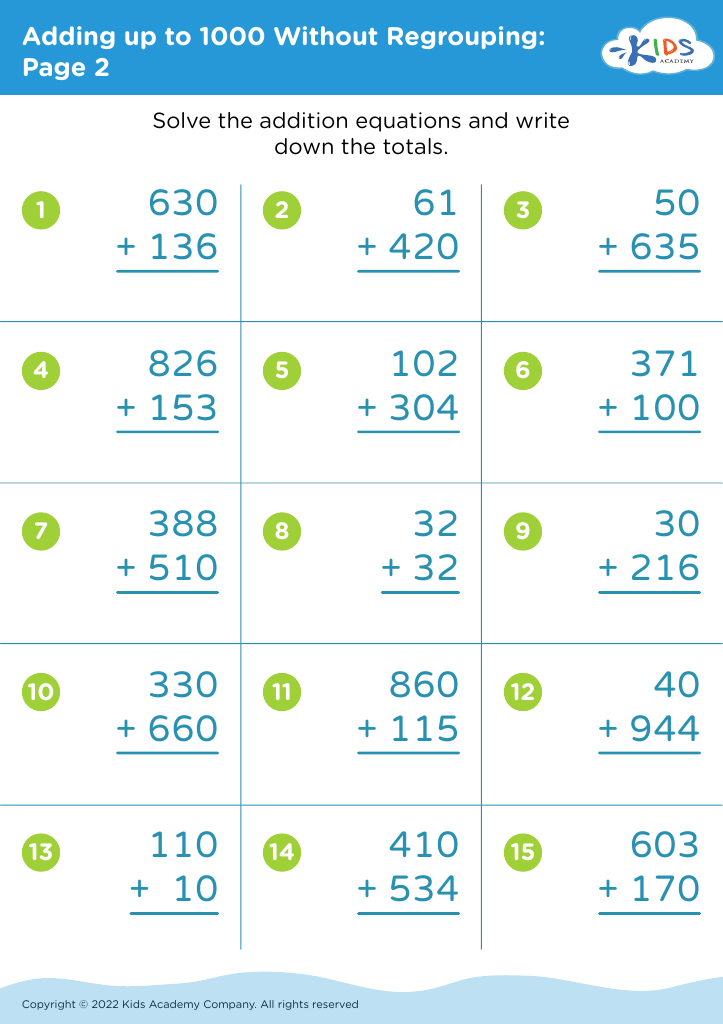
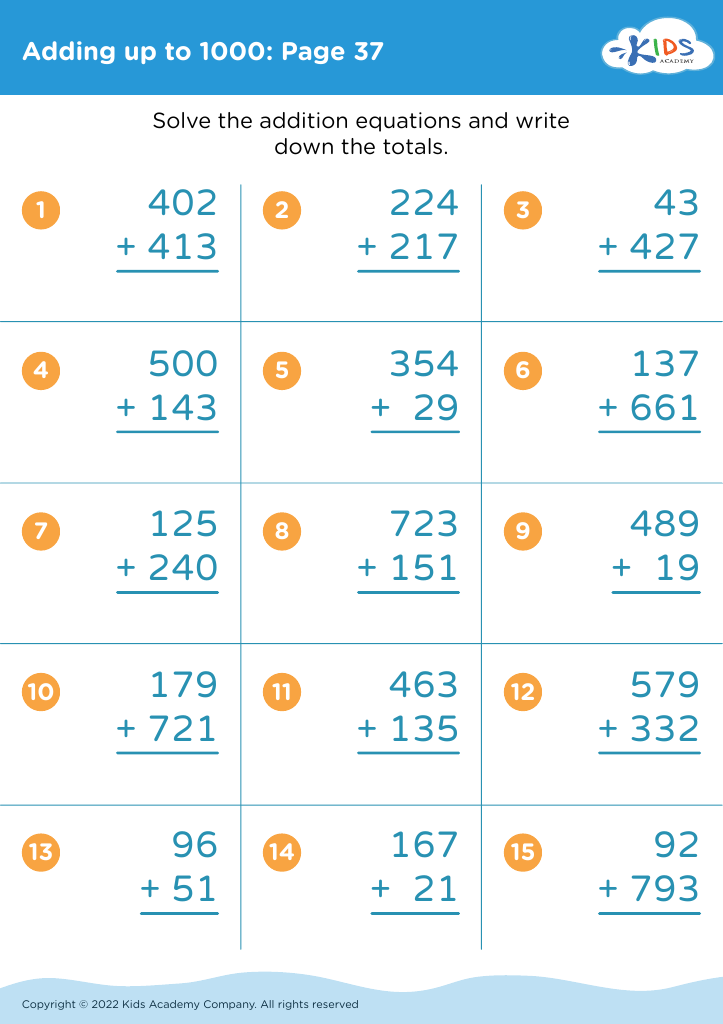
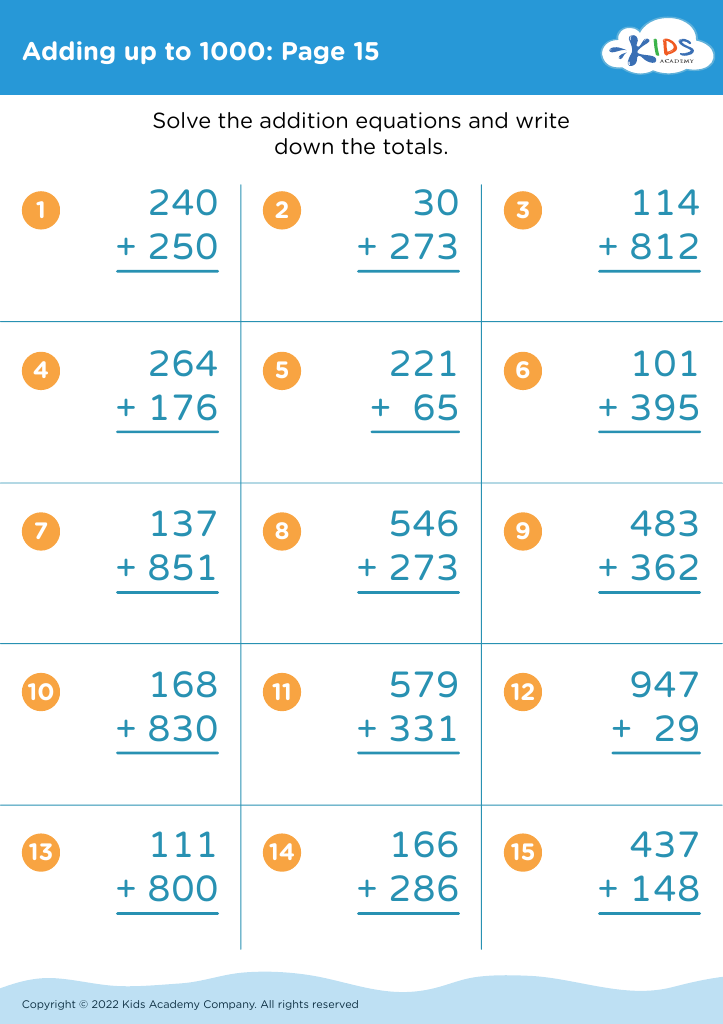
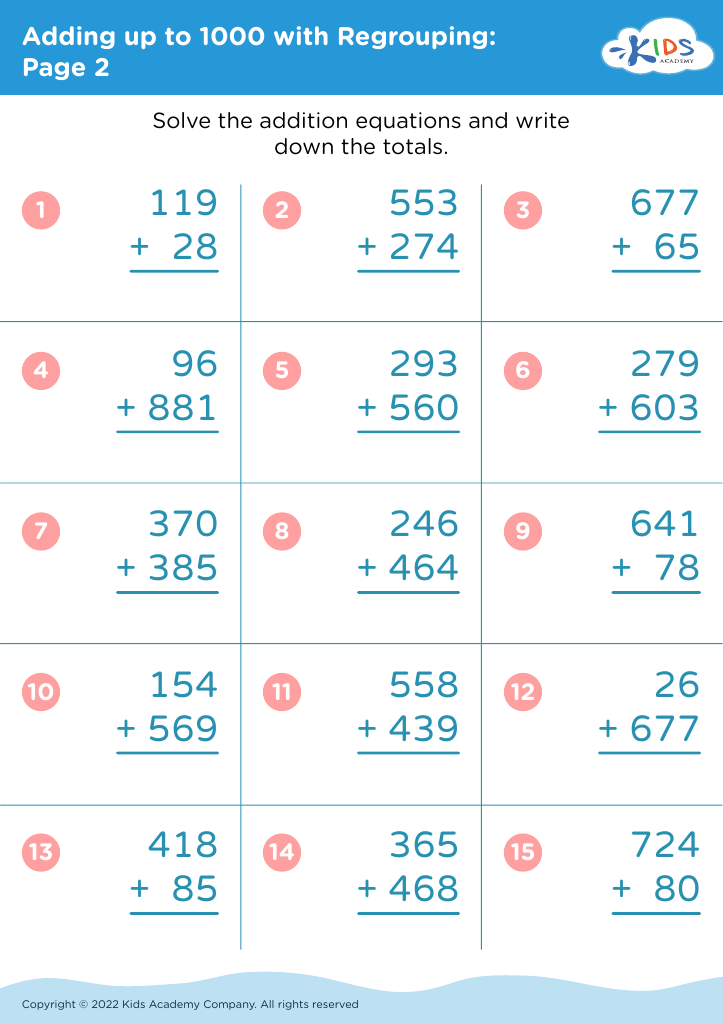



Subtraction skills adding up to 1000 are crucial for children ages 6-9, as they form a foundational aspect of early numeracy. Subtraction isn't just about taking away numbers; it nurtures logical thinking, problem-solving, and analytical skills. Mastering subtraction helps children understand the relationship between numbers and enhances their ability to perform more complex math operations in the future.
Early proficiency in subtraction provides children with the confidence to tackle increasingly challenging math problems, setting a positive trajectory for their educational journey. Teachers and parents should care because these fundamental skills will translate into academic success across subjects that require data analysis and critical reasoning, like science and economics.
Additionally, subtraction is practical. It applies to real-world situations such as understanding time, money management, and measurement, integral parts of day-to-day life. When children develop these skills early, they gain a practical understanding that transcends the classroom, making them better prepared for various tasks and responsibilities.
By supporting subtraction skills up to 1000, parents and teachers equip children with a strong mathematical foundation, fostering a love for learning and problem-solving that will benefit them throughout their academic and personal lives. It's an investment in their future capabilities, underpinning many aspects of both academic performance and everyday functionality.








