Understanding patterns Adding up to 1000 Worksheets for Ages 6-9
5 filtered results
-
From - To
Explore our "Understanding Patterns Adding up to 1000" worksheets designed specifically for children ages 6-9. These engaging resources are perfect for fostering early math skills as young learners discover and apply number patterns in various contexts. Through fun and interactive activities, children will deepen their comprehension of addition and enhance their ability to recognize relationships between numbers. Our carefully crafted worksheets encourage critical thinking, boost confidence, and make learning math enjoyable. With clear instructions and diverse exercises, students will enjoy mastering the concept of patterns as they build towards adding up to 1000. Access our worksheets today for effective and comprehensive practice!
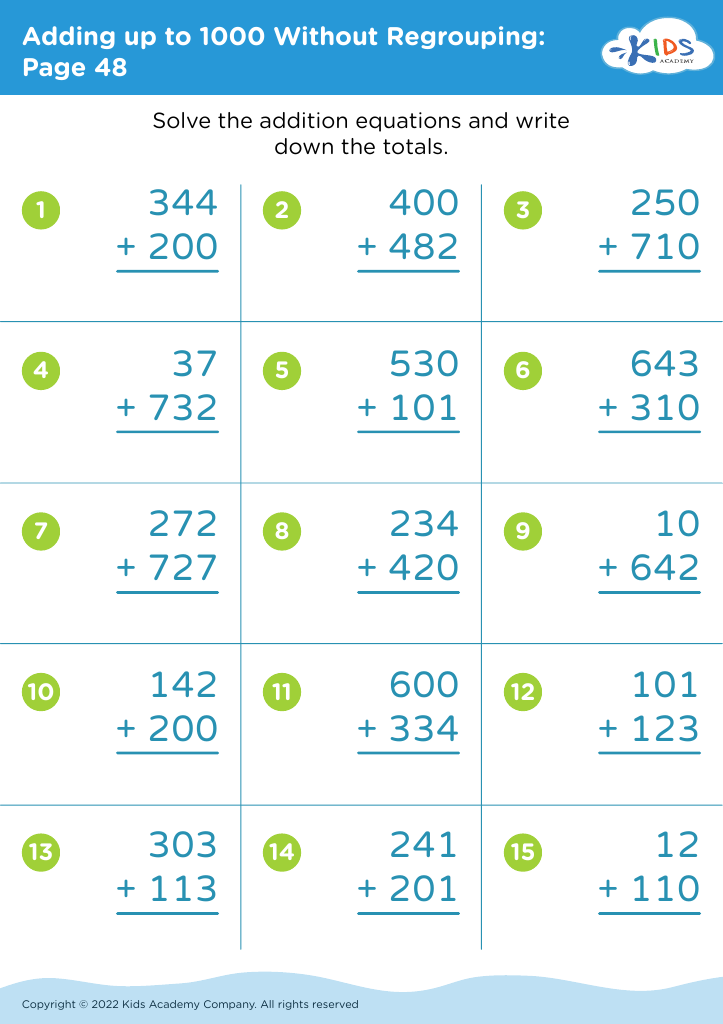
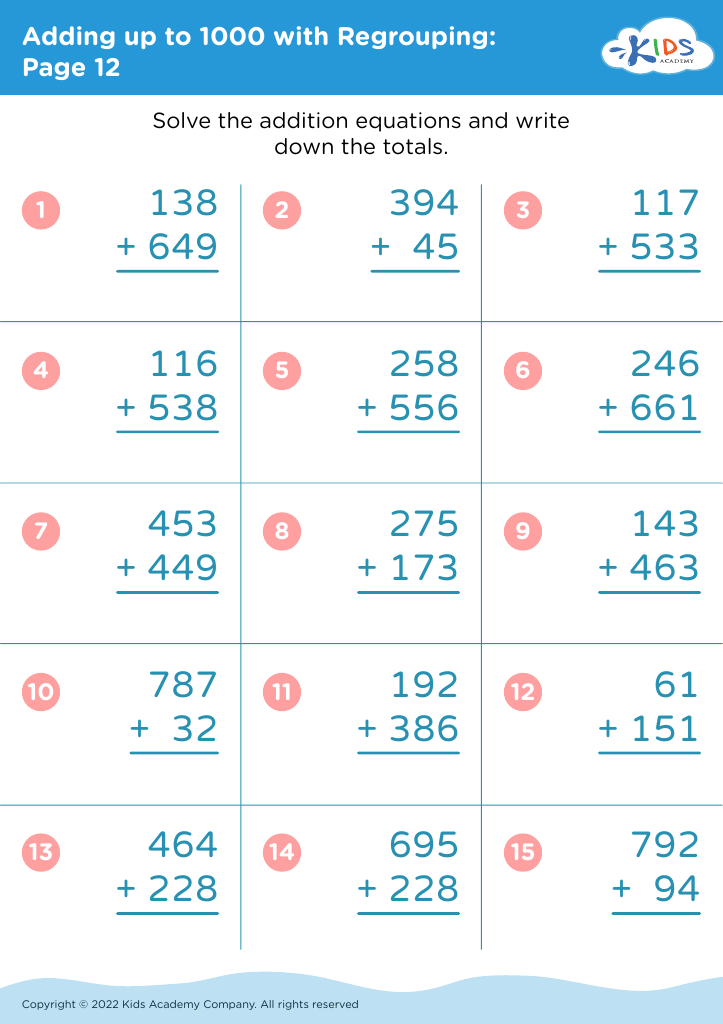
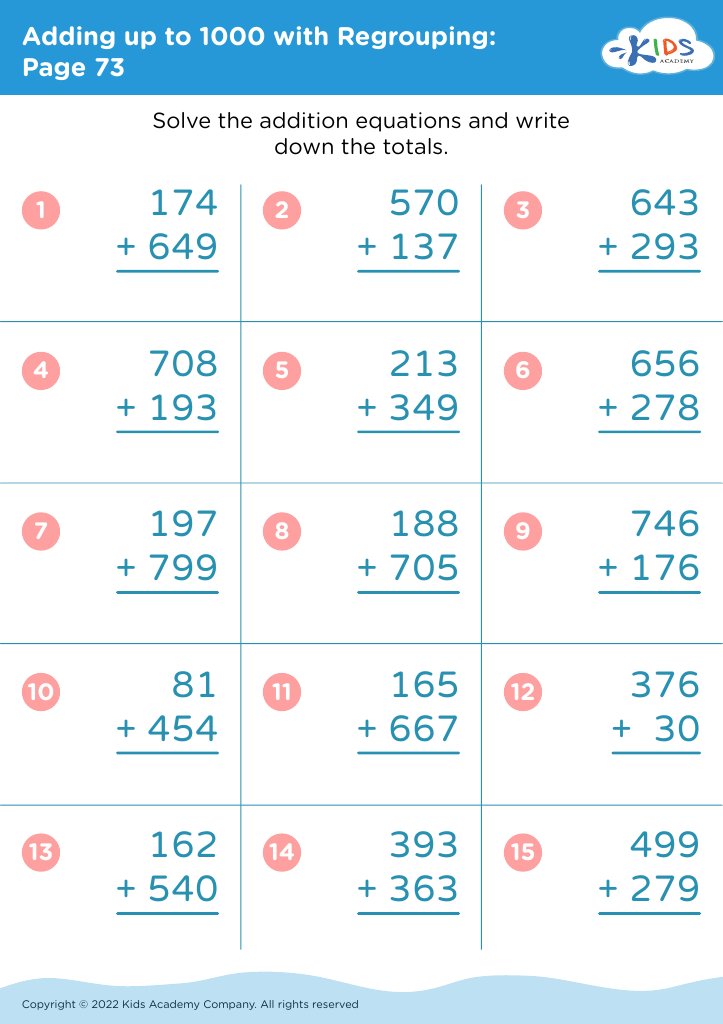
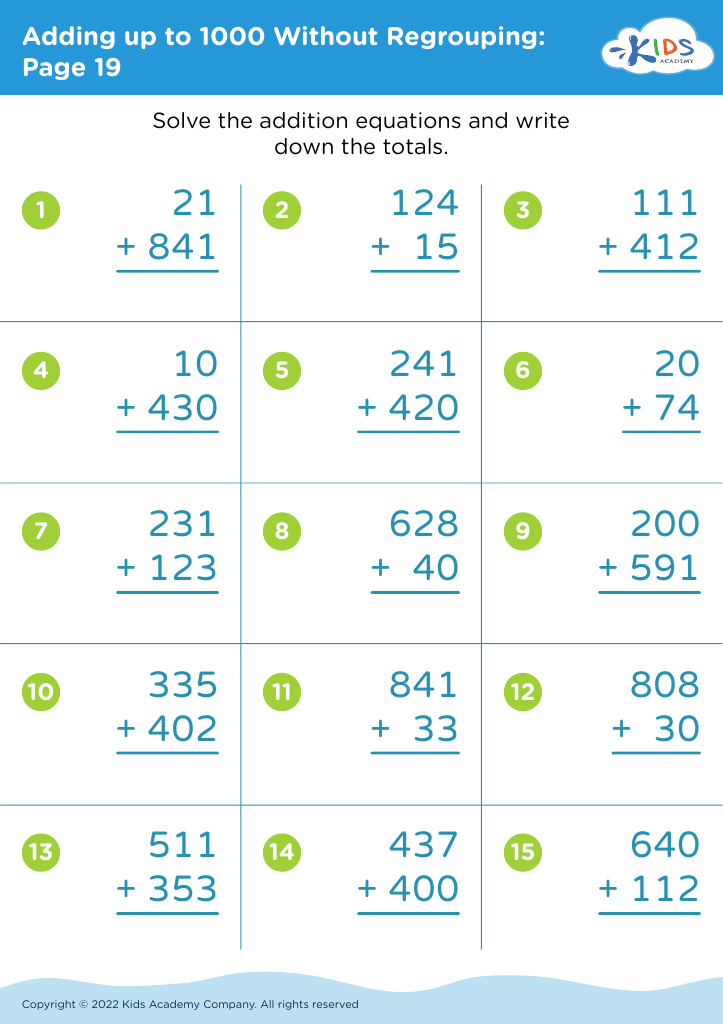
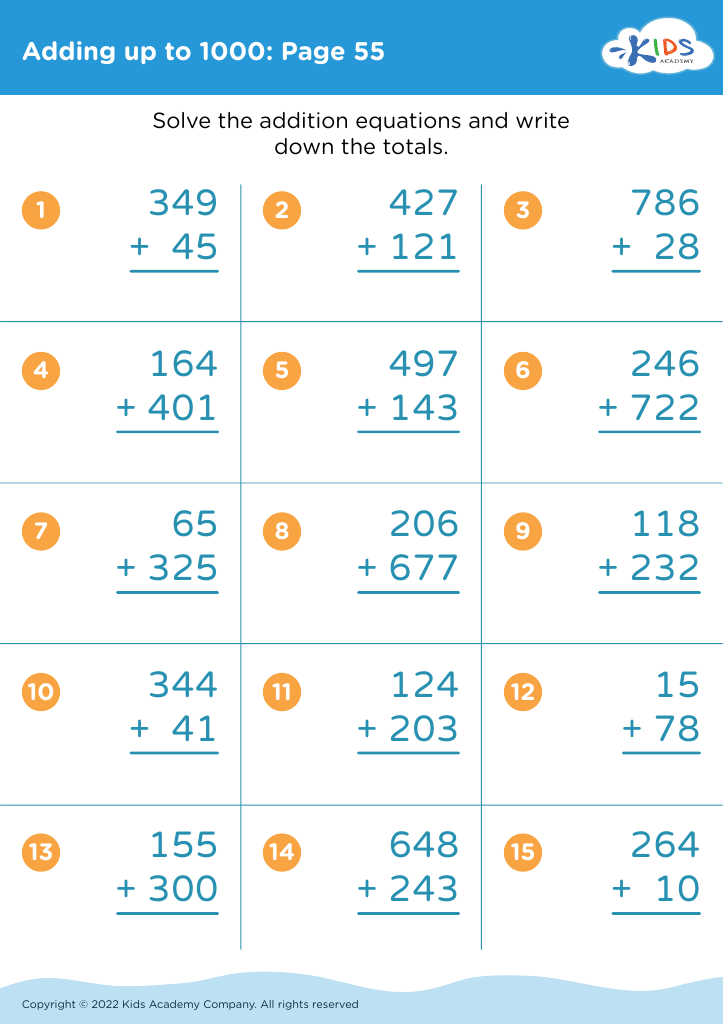



Understanding patterns and the ability to add up to 1000 are foundational skills for children aged 6-9 that significantly impact their mathematical development. First, recognizing patterns helps children identify relationships and sequences in numbers, which is essential for arithmetic and advanced math concepts. When students grasp patterns, they gain confidence in problem-solving, making complex tasks more manageable and less intimidating.
Moreover, adding up to 1000 serves as a critical milestone in a child's arithmetic journey. Mastering this skill enhances their number sense, allowing them to perform calculations more fluidly, paving the way for future learning in higher-tier math and everyday situations. For instance, this knowledge aids in handling money, measurement, and understanding concepts like place value.
Moreover, engaging with these skills fosters critical thinking, as children learn to predict outcomes, develop strategies, and draw conclusions based on their observations. By encouraging this understanding, parents and teachers create a strong foundation for lifelong mathematical literacy. Early mastery leads to greater academic success, positively affecting children's confidence and attitude toward learning in mathematics and other subjects. In essence, emphasizing patterns and number-up additions lays the groundwork for comprehensive learning and critical thinking skills essential for later education.








