Understanding Sequences Adding up to 1000 Worksheets for Ages 6-9
6 filtered results
-
From - To
Explore "Understanding Sequences Adding up to 1000 Worksheets" designed specifically for children ages 6 to 9. These engaging worksheets help young learners master the concept of numerical sequences while enhancing their addition skills up to 1000. Through interactive exercises and colorful visuals, children will discover patterns and relationships within numbers, fostering critical thinking and problem-solving abilities. Perfect for classrooms or at-home learning, these resources aim to make math enjoyable and accessible. Encourage your child to practice their arithmetic and build a solid foundation in math with our fun, educational worksheets tailored to their developmental needs. Get started today!
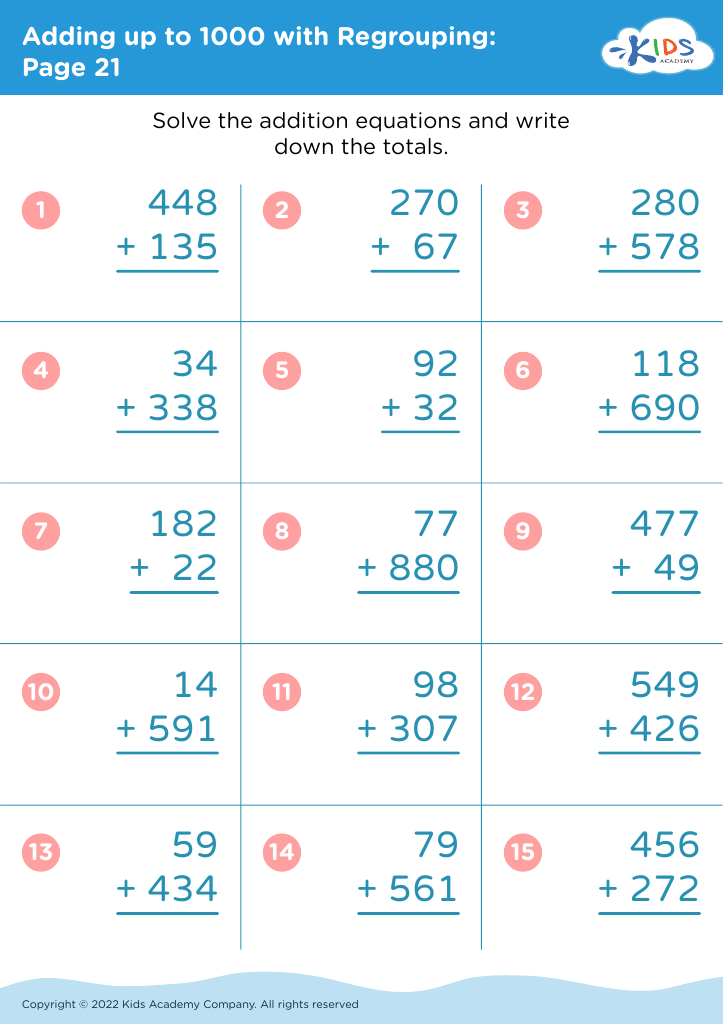
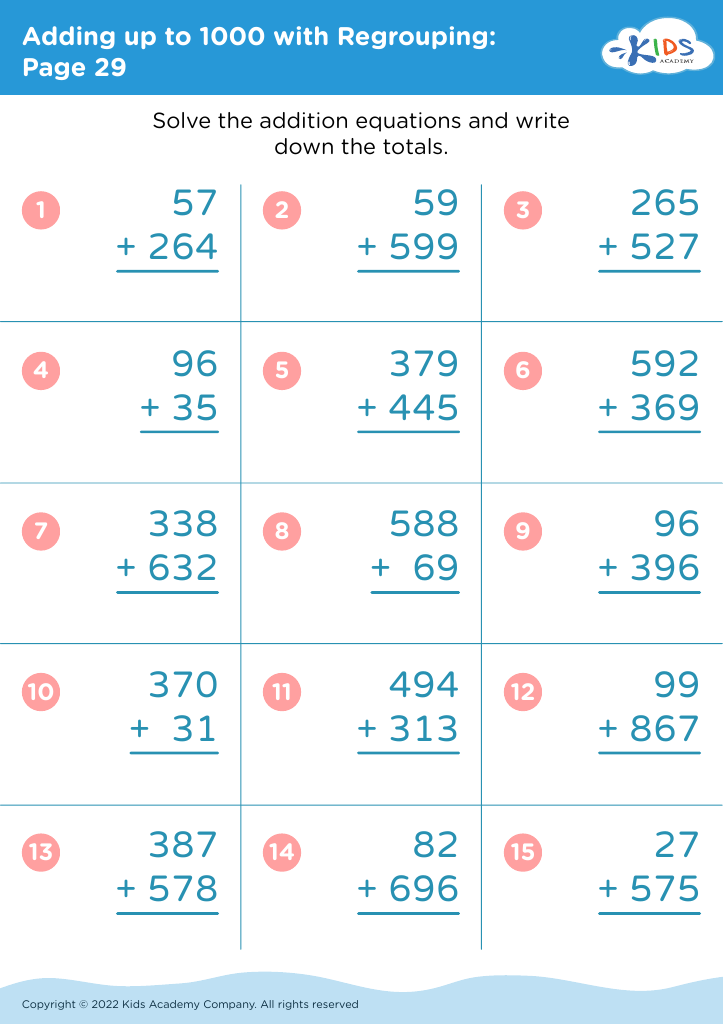
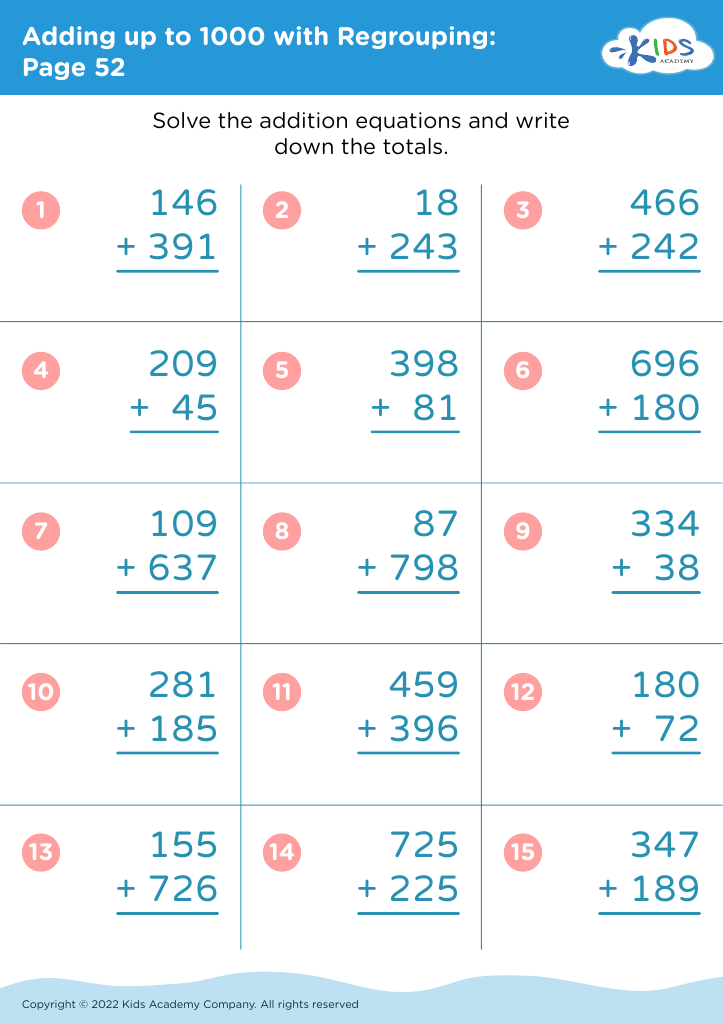
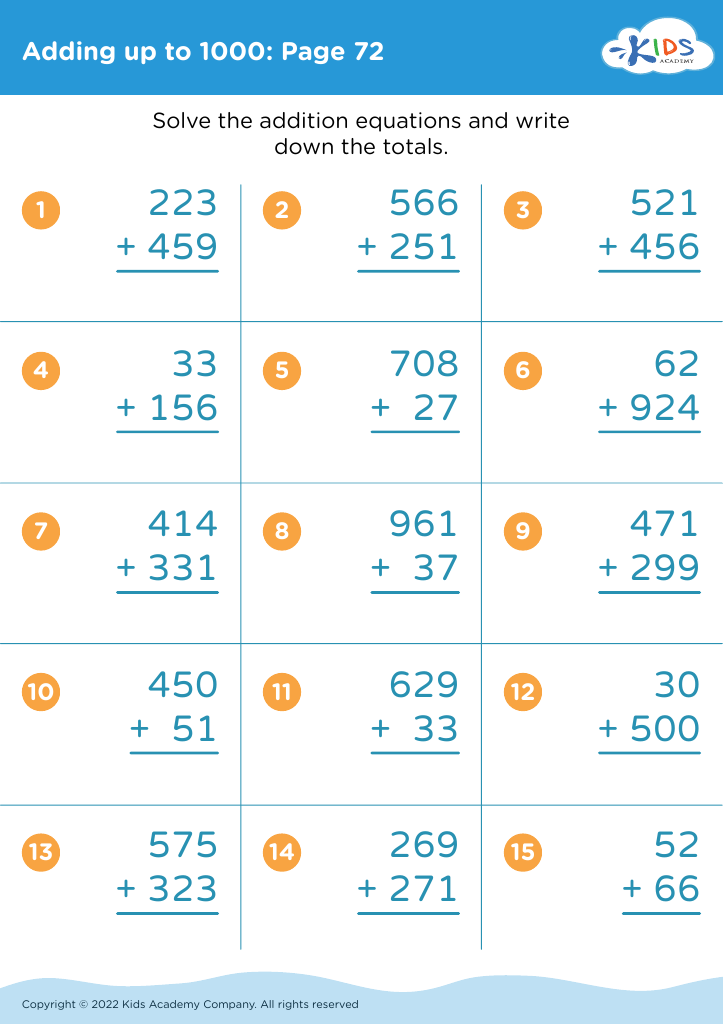
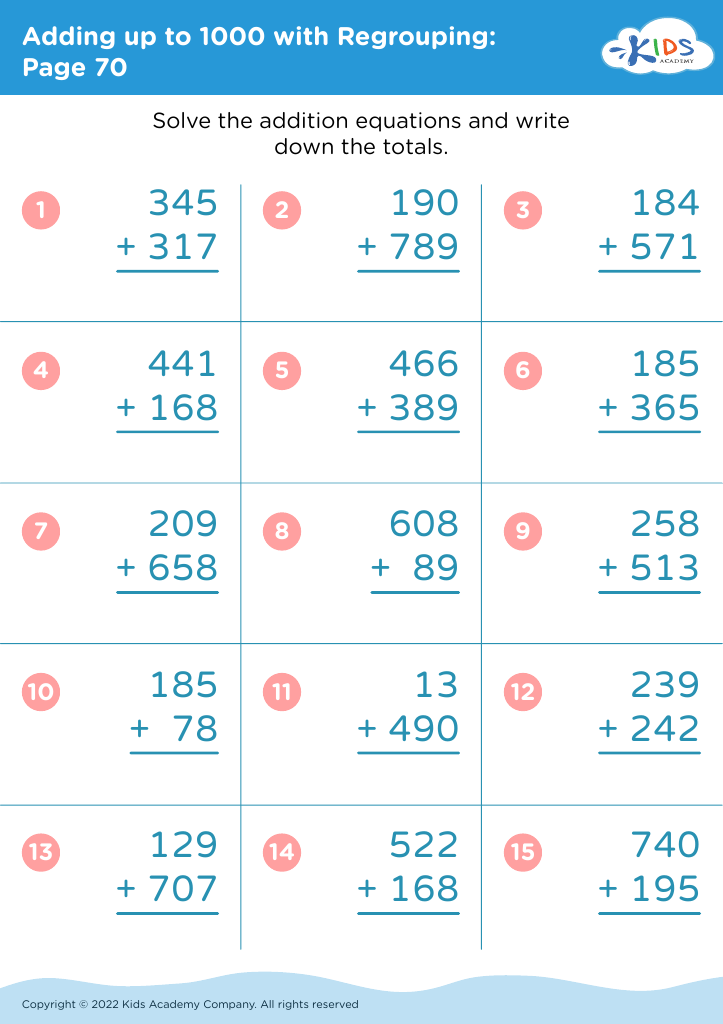
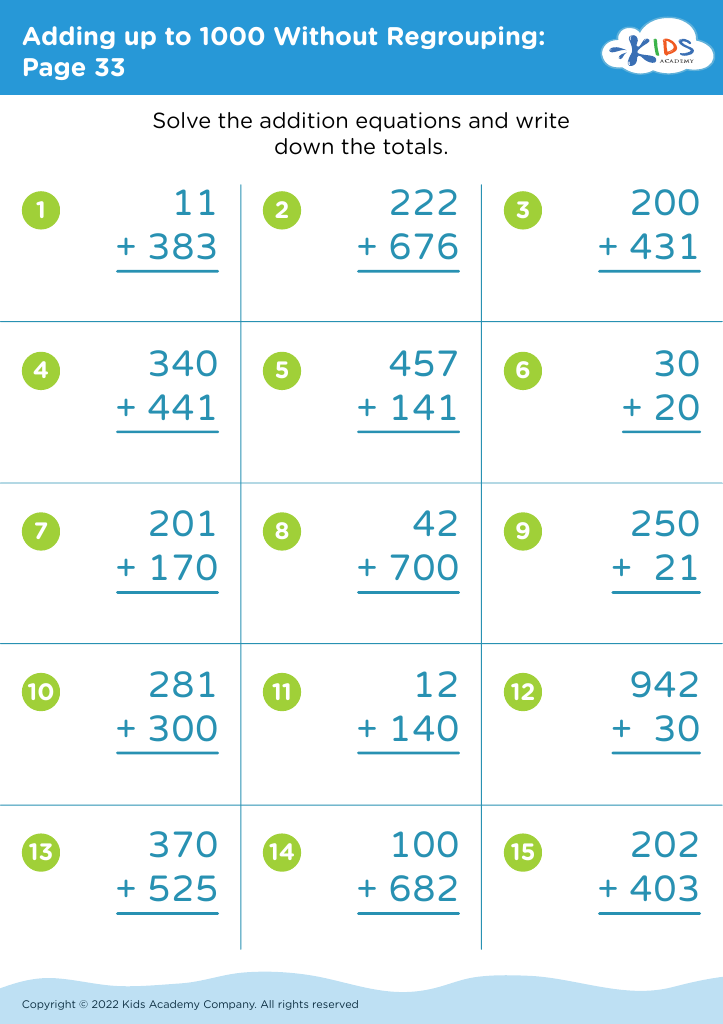



Understanding sequences and the concept of adding up to 1000 is crucial for children aged 6-9 for several reasons. At this developmental stage, children begin to grasp abstract mathematical ideas, which are foundational for their future learning. Since sequences help children recognize patterns, they enhance critical thinking and problem-solving skills. Engaging with sequences also lays the groundwork for understanding more complex mathematical concepts, such as multiplication and division, later on.
For parents and teachers, recognizing that math develops in layers is vital. Introducing children to the concept of adding numbers to reach 1000 encourages mental arithmetic and fosters number sense, equipping children with the confidence to tackle larger numbers and complex operations. Additionally, numeracy is increasingly linked to broader academic success. A solid understanding of sequences and addition can aid children in other subjects, promoting engagement and enhancing overall learning experiences.
Furthermore, sequences add an element of fun and creativity to math, helping to keep children interested and motivated. By supporting their mathematical journey now, parents and teachers not only help children achieve immediate success but also prepare them for future mathematical challenges, ensuring lifelong learning and appreciation of math.








