Visual interpretation Adding up to 1000 Worksheets for Ages 6-9
3 filtered results
-
From - To
Welcome to our "Visual Interpretation: Adding Up to 1000 Worksheets" specifically designed for children aged 6-9! These engaging worksheets help young learners develop essential math skills by allowing them to visualize addition concepts through colorful illustrations and interactive activities. Each worksheet encourages kids to break down problems and understand relationships between numbers intuitively. By using visual aids, students can enhance their comprehension and boost their confidence in math. Perfect for both classroom and home learning, our resources make mastering addition a fun and rewarding experience. Start your child's journey to mathematical success with our comprehensive collection today!
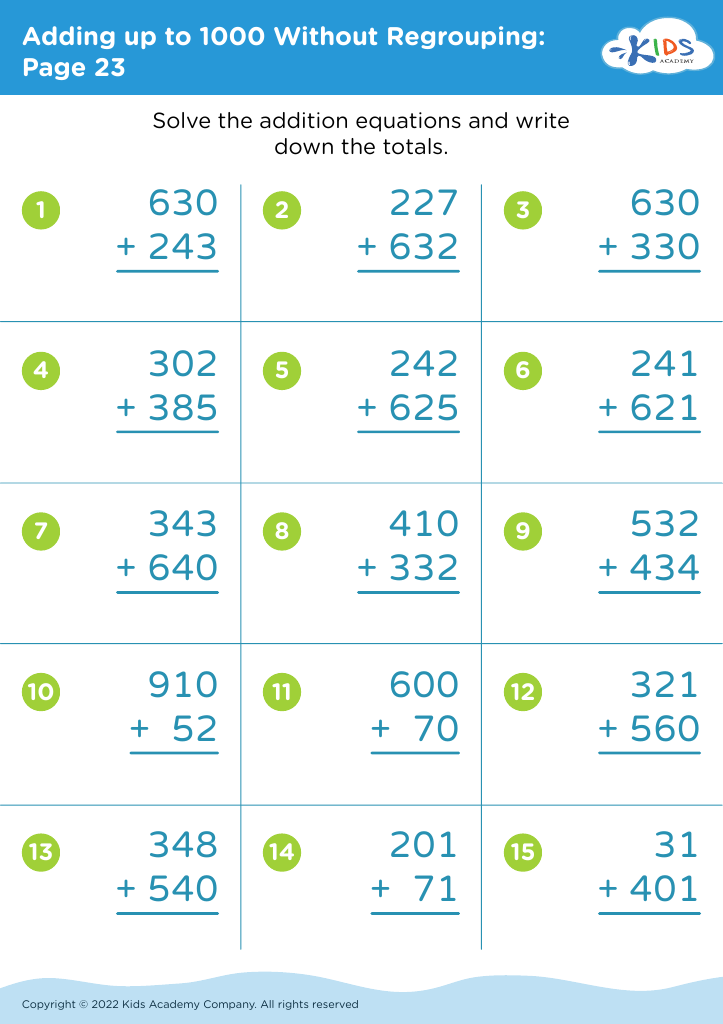
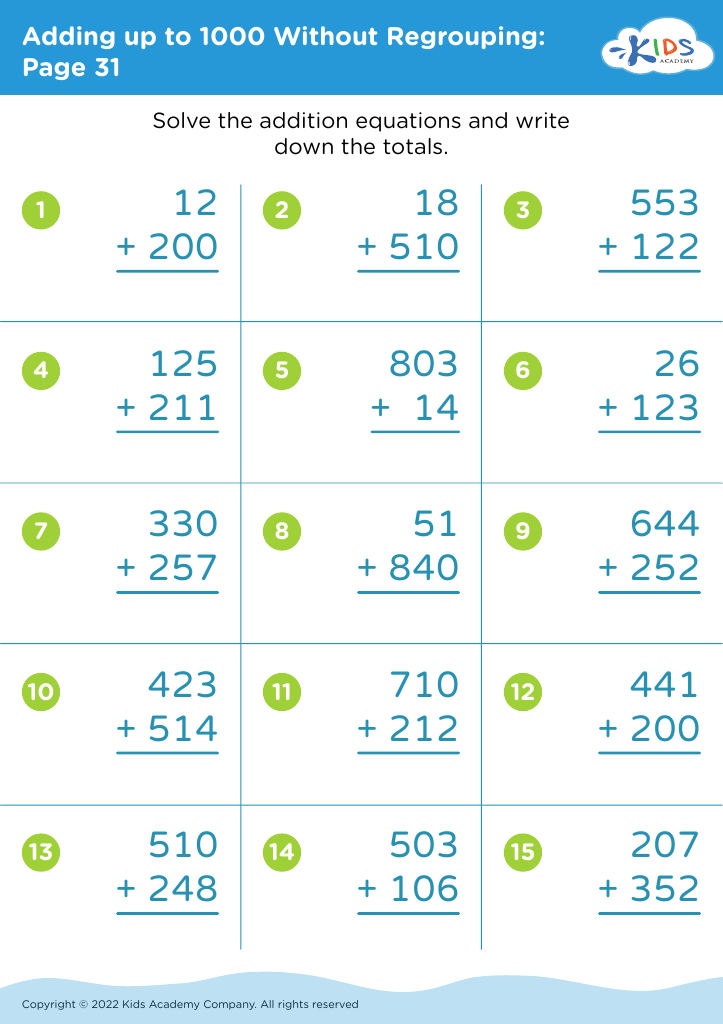
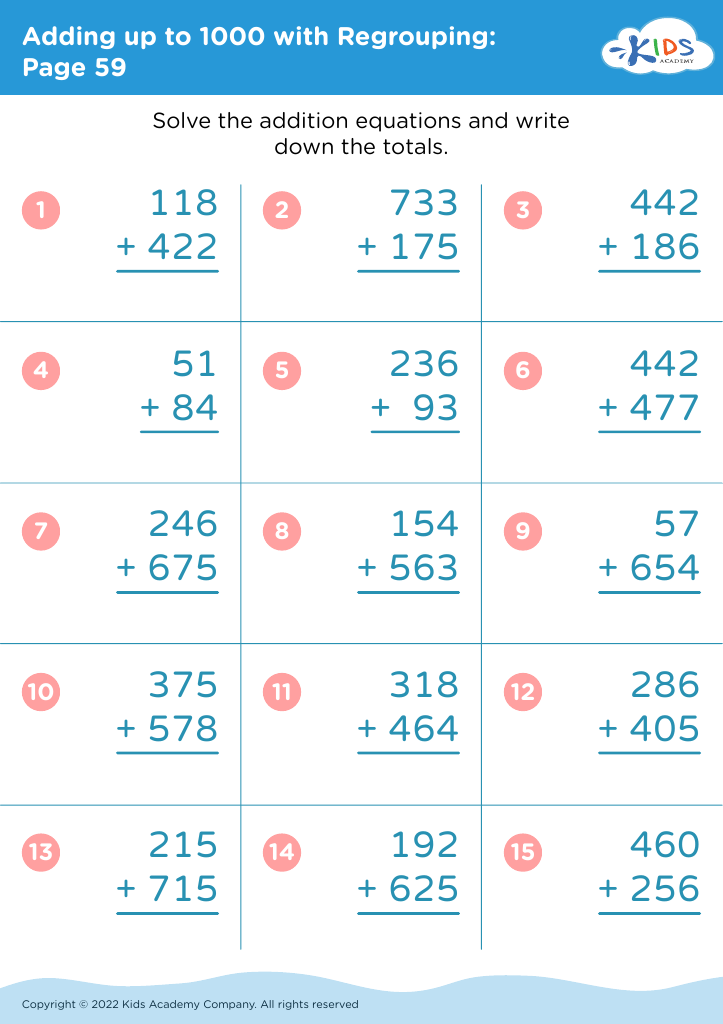



Visual interpretation is a crucial skill for children aged 6-9, and it's important for both parents and teachers to prioritize its development. At this stage, children are surprisingly adept at processing visual information, which aids in comprehension and problem-solving. Understanding how to interpret visuals—charts, diagrams, and illustrations—reinforces mathematical concepts like addition and helps with reading comprehension in foundational literacy tasks.
When children can effectively interpret visual information, it enhances their ability to engage with the world around them, promoting critical thinking and analytical skills. For example, combining visuals with problem-solving tasks, such as "adding up to 1000," allows children to apply their understanding in real-world contexts. Understanding how different pieces of information fit together fosters deeper engagement with academic material.
Furthermore, strong visual interpretation skills can help build confidence. Children who can interpret visuals may feel more empowered in classroom settings and better prepared for future learning challenges. This foundation can ultimately lead to improved academic performance and an appreciation for learning. By nurturing visual interpretation skills, parents and teachers equip children with the tools they need to succeed in their educational journeys and beyond.








