Word Recognition Adding up to 1000 Worksheets for Ages 6-9
3 filtered results
-
From - To
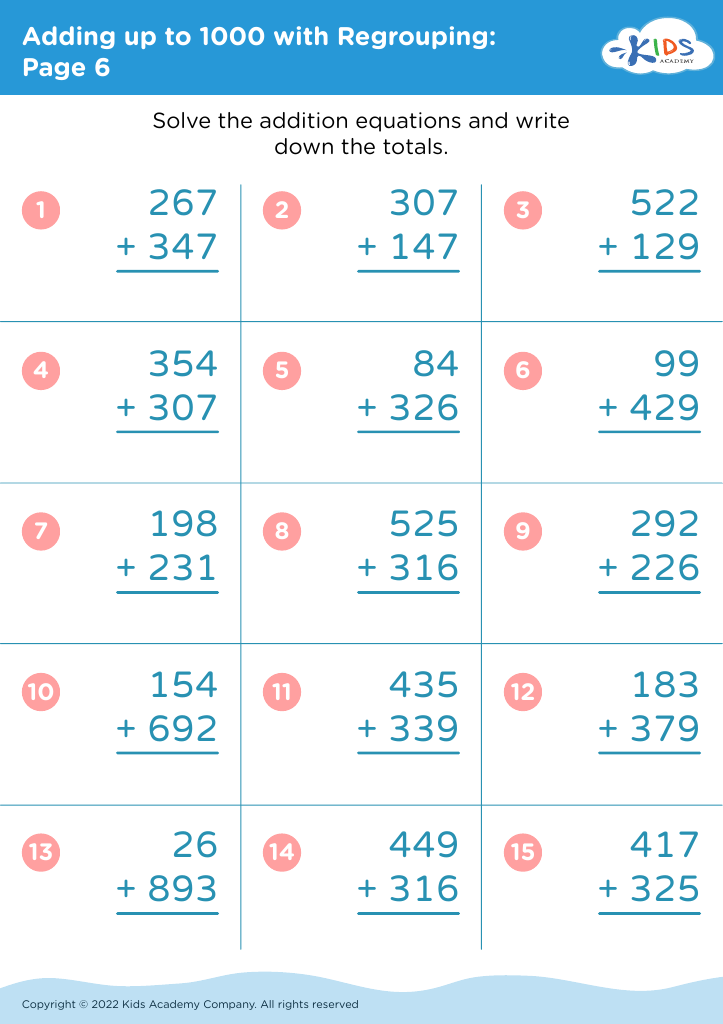
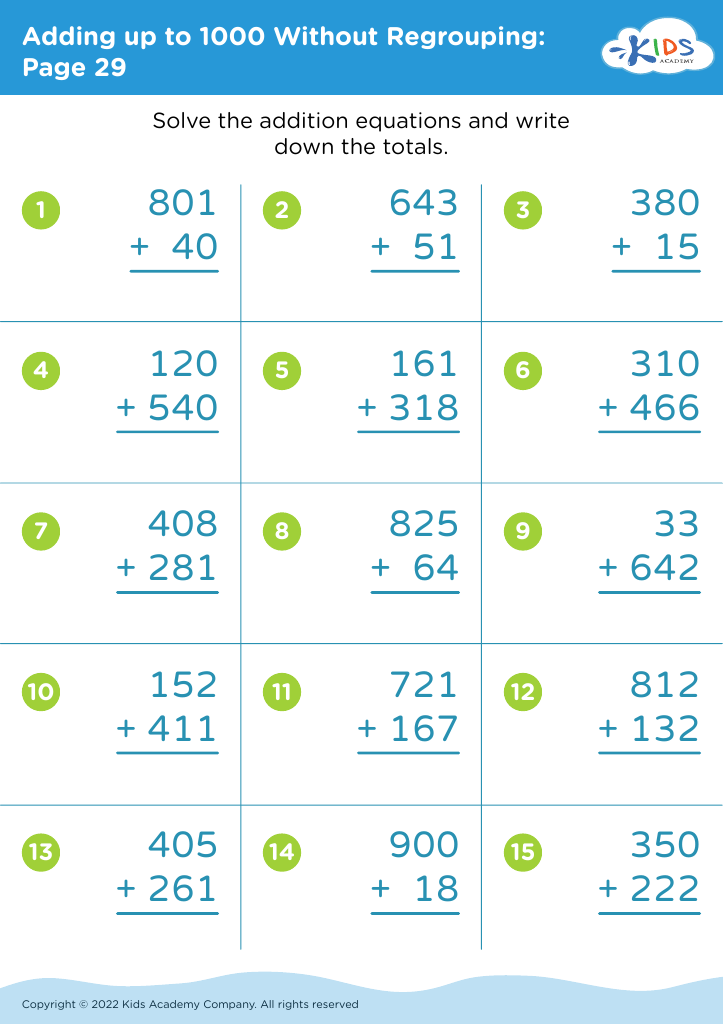
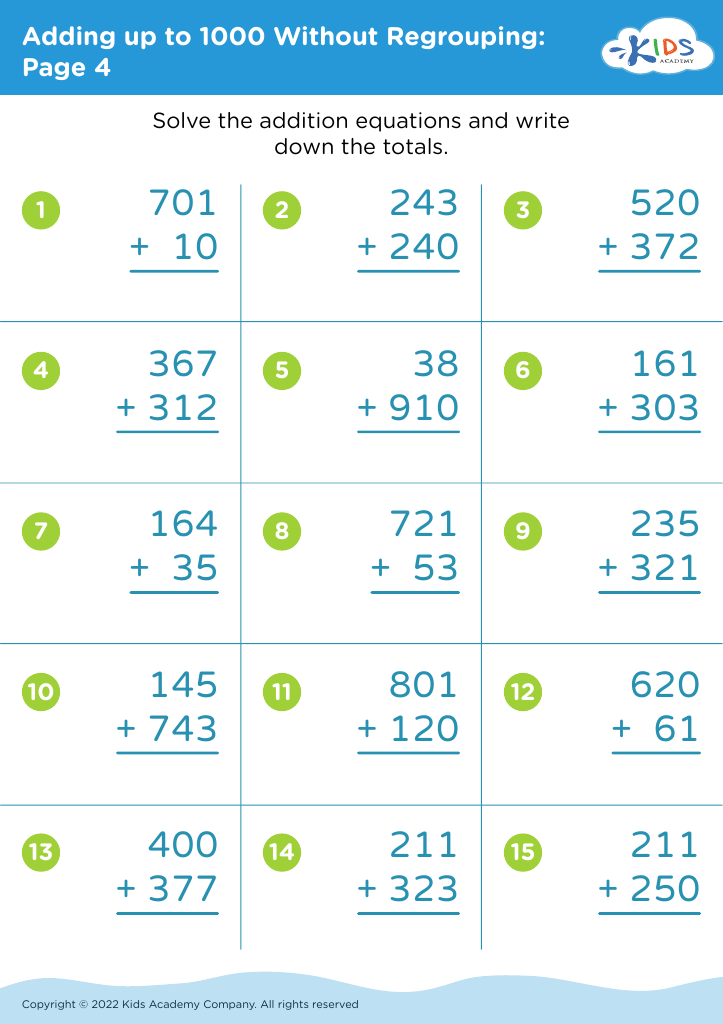
Boost your child's word recognition skills with our engaging worksheets, specifically designed for ages 6-9 and focused on adding up to 1000! This comprehensive collection features 100 worksheets that seamlessly integrate math and language learning, making it fun and effective for young learners. Each worksheet encourages children to identify and understand vocabulary related to math problems, helping them strengthen their comprehension while they practice addition. Ideal for homeschooling or supplementary practice, these worksheets foster critical thinking and enhance literacy skills. Download and watch your child's confidence grow as they master word recognition and develop essential math abilities!



Word recognition is a vital skill for children aged 6-9, forming the foundation for reading fluency and overall literacy development. When children quickly and accurately recognize words, they can focus on comprehending the material rather than decoding each term, leading to better understanding and retention of what they read. This proficiency influences their confidence and the likelihood of enjoying reading, which is crucial for their motivation to learn.
Moreover, strong word recognition skills can enhance vocabulary acquisition. As children read widely, they encounter new words; frequent exposure helps them internalize vocabulary, thereby enriching their language skills. This depth leads to improved written and verbal communication abilities.
Furthermore, the ability to recognize words efficiently supports academic success across all subjects. Young students often face a varied curriculum, and those who can read and understand instructional materials swiftly will perform better in math, science, and social studies.
Lastly, fostering word recognition in this age group is crucial as it prepares children for standardized assessments they will face in later grades, which often assess reading fluency and comprehension. Therefore, parents and teachers should prioritize word recognition to ensure children's educational journey begins on a solid footing, setting them up for future success.








