Color Identification Addition & Subtraction Worksheets for Ages 6-9 - Page 2
26 filtered results
-
From - To
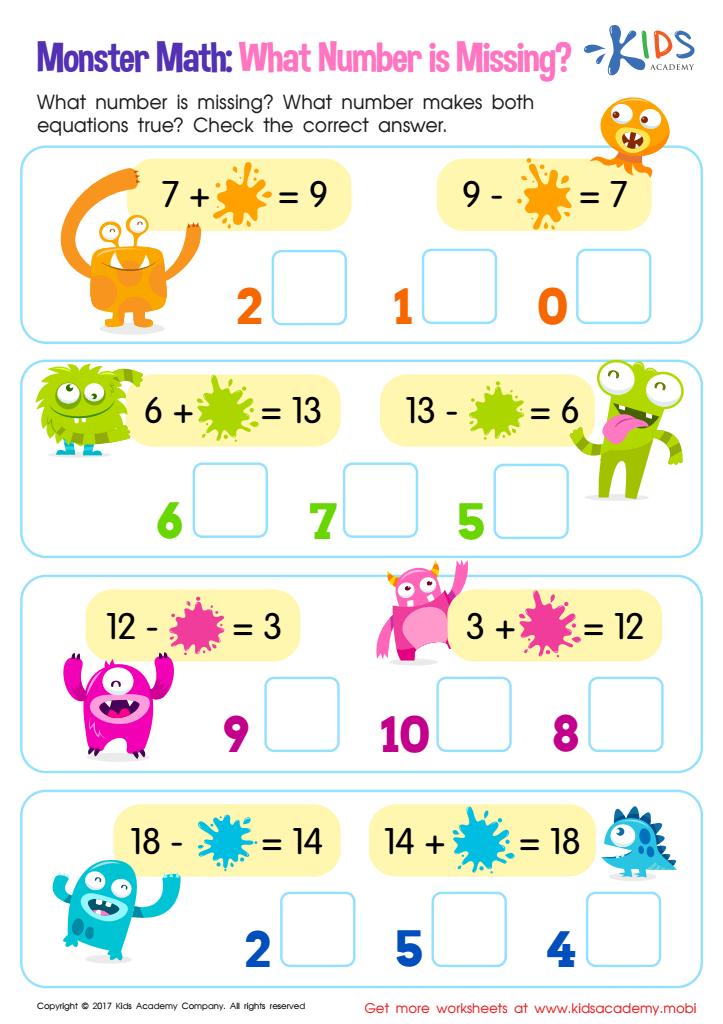
Missing Number: Monster Math Worksheet
 Assign to My Students
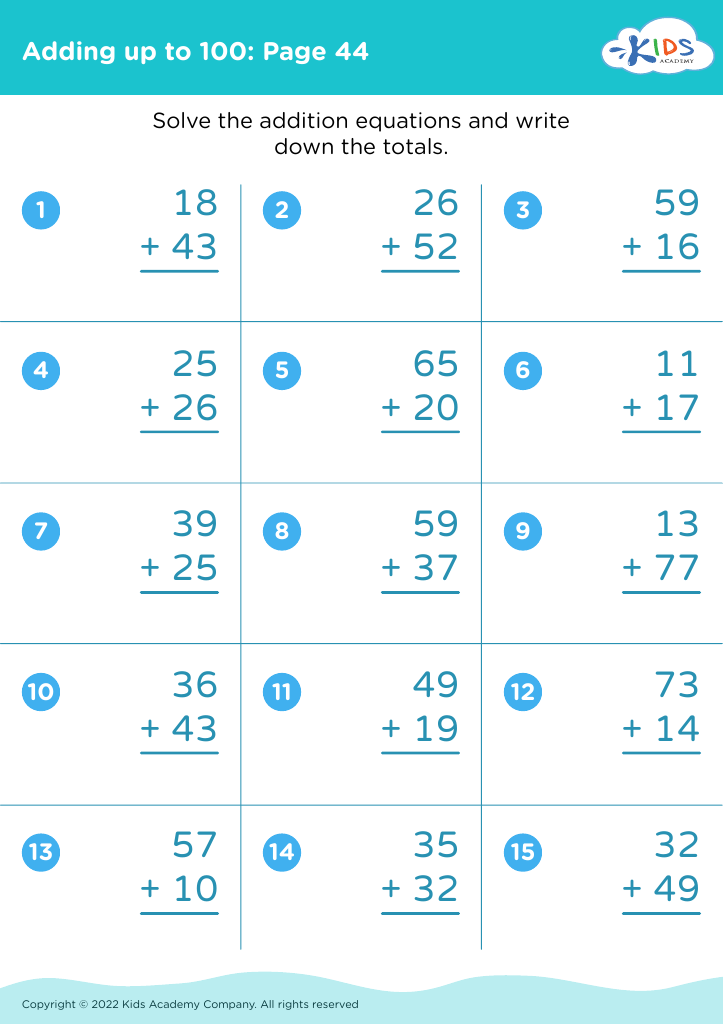








Color Identification in addition and subtraction is an essential skill for children aged 6-9, as it not only enhances their mathematical reasoning but also incorporates visual learning, making math more engaging and accessible. For teachers and parents, understanding the importance of this connection is crucial in fostering foundational math skills that can boost academic confidence and competence.
Using colors in early math education captures children’s attention and makes abstract concepts more tangible. When students associate numbers with colors, they are better able to differentiate quantities and understand the relationships between them. This multisensory approach can cater to various learning styles, helping visual learners grasp concepts more quickly and enjoyably.
Moreover, integrating Color Identification with math encourages cognitive development, problem-solving skills, and critical thinking. It can spark creativity in children and transform math from a daunting subject into a playful activity. Furthermore, mastering addition and subtraction through color-coded techniques can lay a robust groundwork for more complex mathematical concepts in the future.
Ultimately, recognizing the significance of Color Identification in math helps educators and parents create a supportive and vibrant learning environment, ensuring that children build essential skills while developing a joyful attitude towards mathematics.








