Enhance problem-solving Addition & Subtraction Worksheets for Ages 6-9
3 filtered results
-
From - To
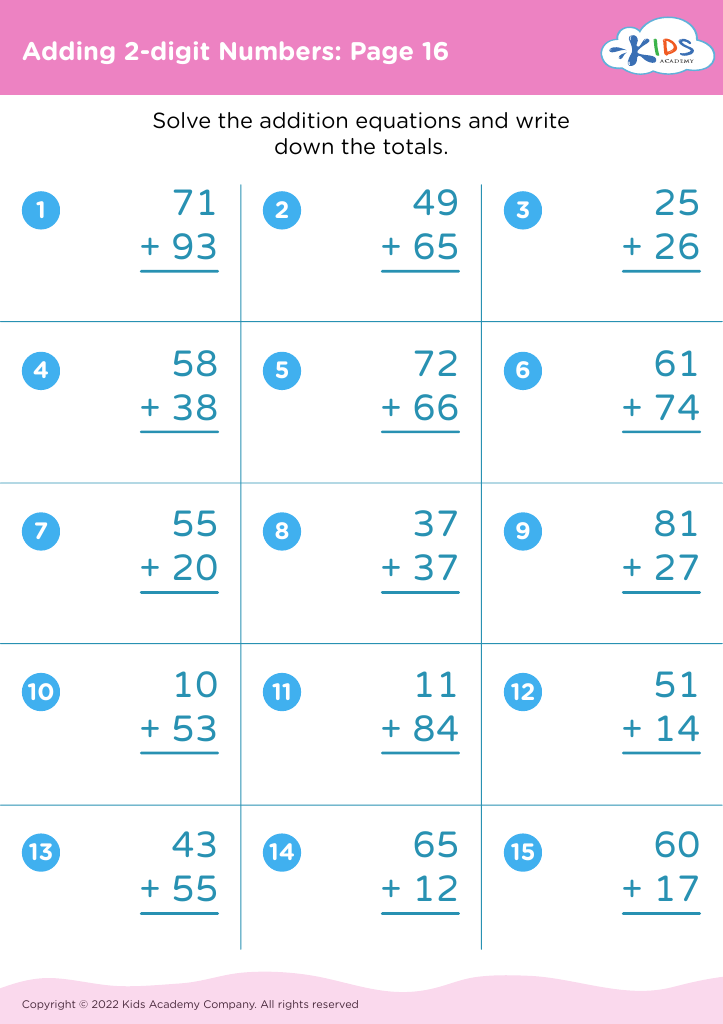
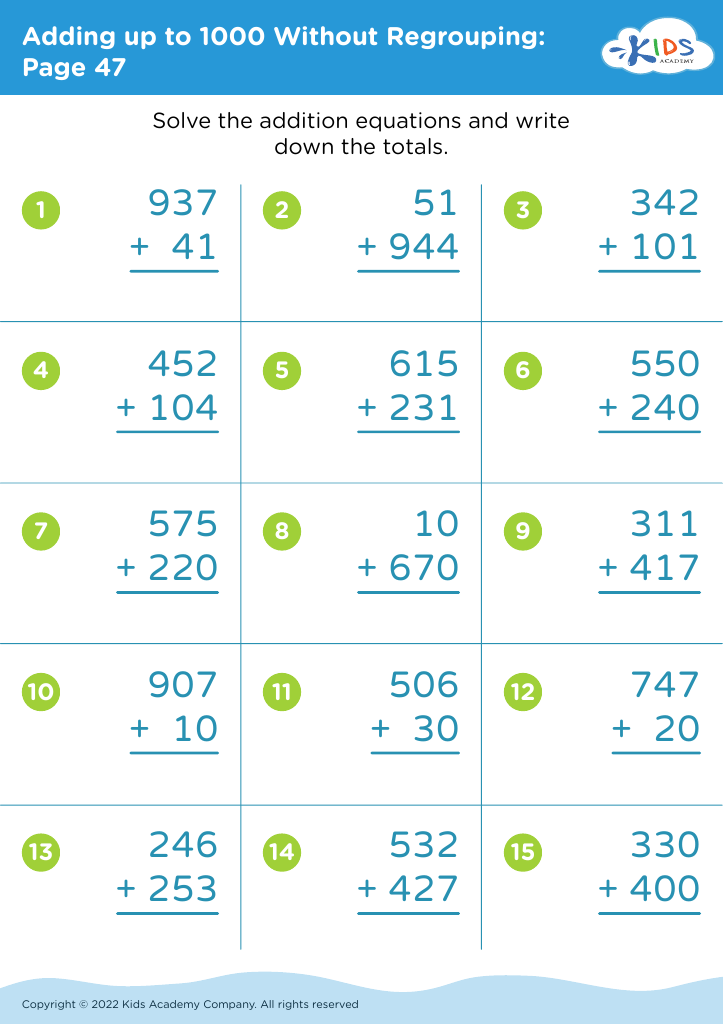
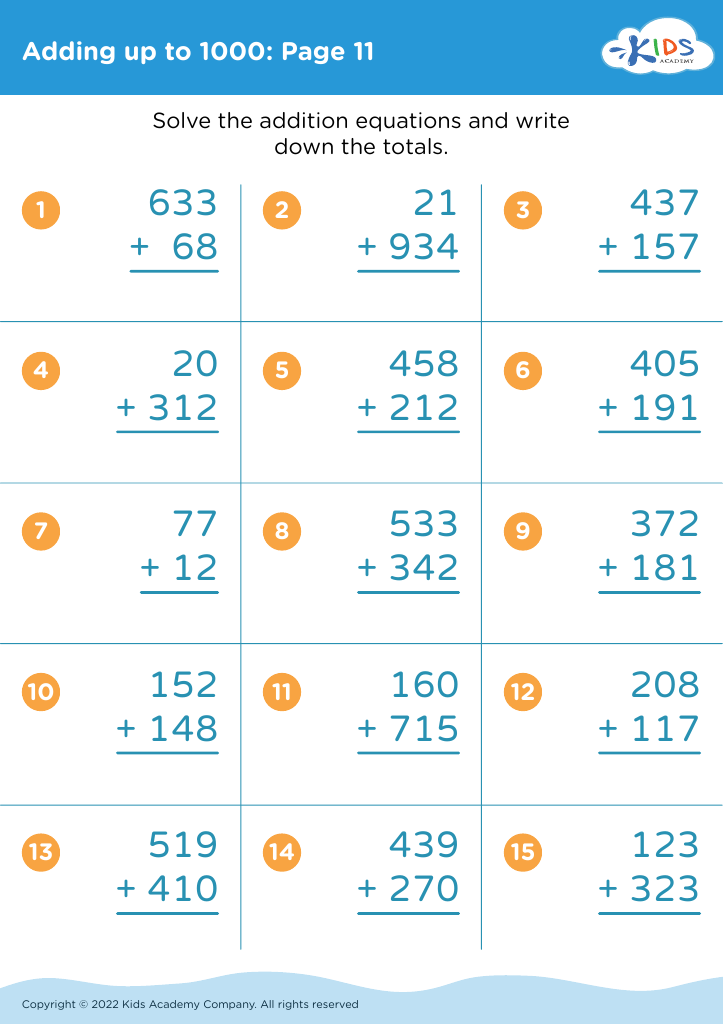
Dive into our "Enhance Problem-Solving Addition & Subtraction Worksheets" designed specifically for children aged 6-9! These interactive, engaging worksheets help young learners develop critical thinking skills while mastering basic math operations. Each worksheet presents fun, real-life scenarios that encourage kids to apply addition and subtraction in unique ways. With vibrant illustrations and a variety of problem-solving strategies, students will not only strengthen their math abilities but also boost their confidence in tackling challenges. Ideal for classroom use or at-home learning, our worksheets offer a playful approach to essential math skills, ensuring that children enjoy the journey to becoming proficient problem solvers!








Enhancing problem-solving skills in addition and subtraction for children ages 6-9 is crucial for several reasons. This developmental stage forms the foundation for more advanced mathematical concepts and critical thinking abilities. By honing these skills, children not only improve their arithmetic competency but also learn how to approach challenges systematically.
Engaging in focused problem-solving activities encourages students to explore different methods and strategies, fostering a growth mindset. It allows them to understand the "why" behind mathematical operations, making learning more meaningful. Furthermore, mastering these basic operations aids in building confidence, as students can tackle real-life situations that require simple calculations, from managing allowances to measuring ingredients in cooking.
For teachers and parents, fostering these skills ensures that children become proficient problem solvers, equipping them for future academic success. Additionally, it promotes collaboration and communication skills, especially when children engage with peers or adults in solving problems together. This holistic approach not only enhances math skills but also nurtures resilience and perseverance, qualities essential in all aspects of life. Thus, investing time and resources into enhancing problem-solving abilities in mathematics for young learners is a critical step in their educational journey.








