Improve problem-solving Addition & Subtraction Worksheets for Ages 6-9
4 filtered results
-
From - To
Enhance your child's mathematical skills with our "Improve Problem-Solving Addition & Subtraction Worksheets for Ages 6-9" at Kid's Academy. Designed to challenge and engage young learners, these worksheets focus on building a strong foundation in basic arithmetic, fostering critical thinking, and boosting problem-solving abilities. With diverse exercises tailored to different skill levels, your child will develop confidence in tackling real-world math problems. Suitable for classroom use or homeschooling, these worksheets are an excellent resource for parents and educators aiming to enhance math proficiency in fun and interactive ways. Start improving your child’s math skills today!
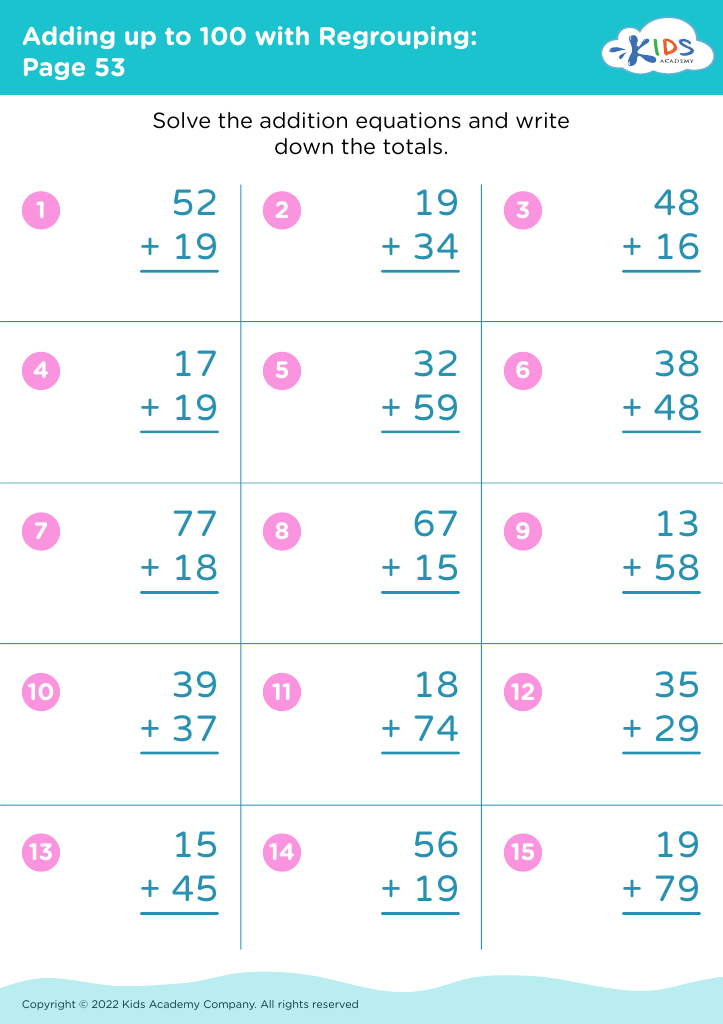
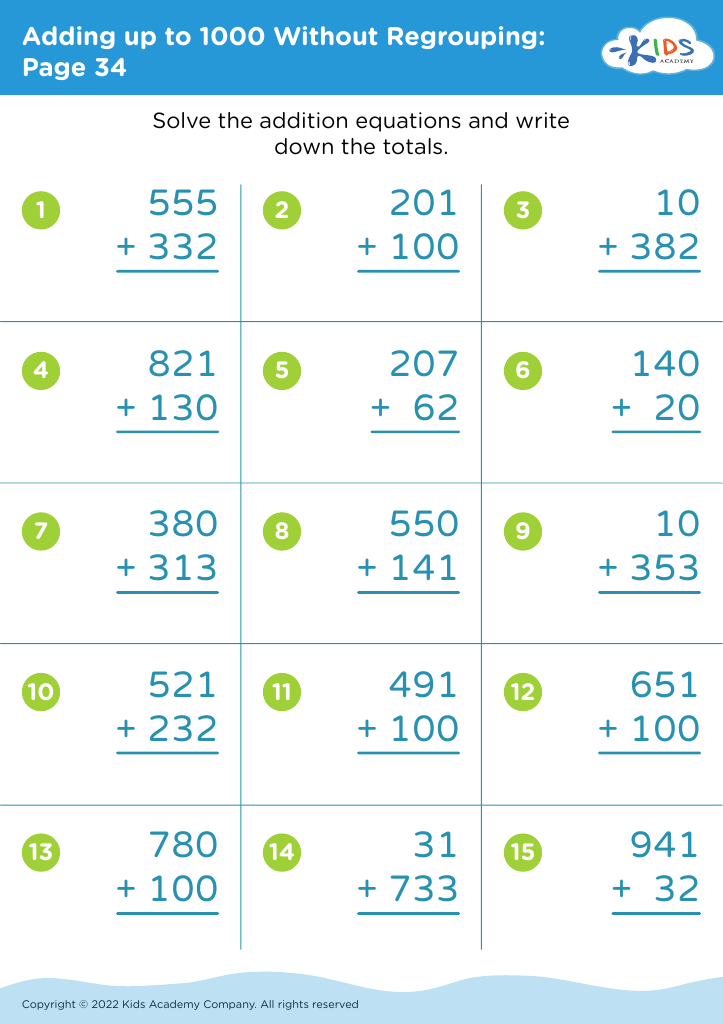
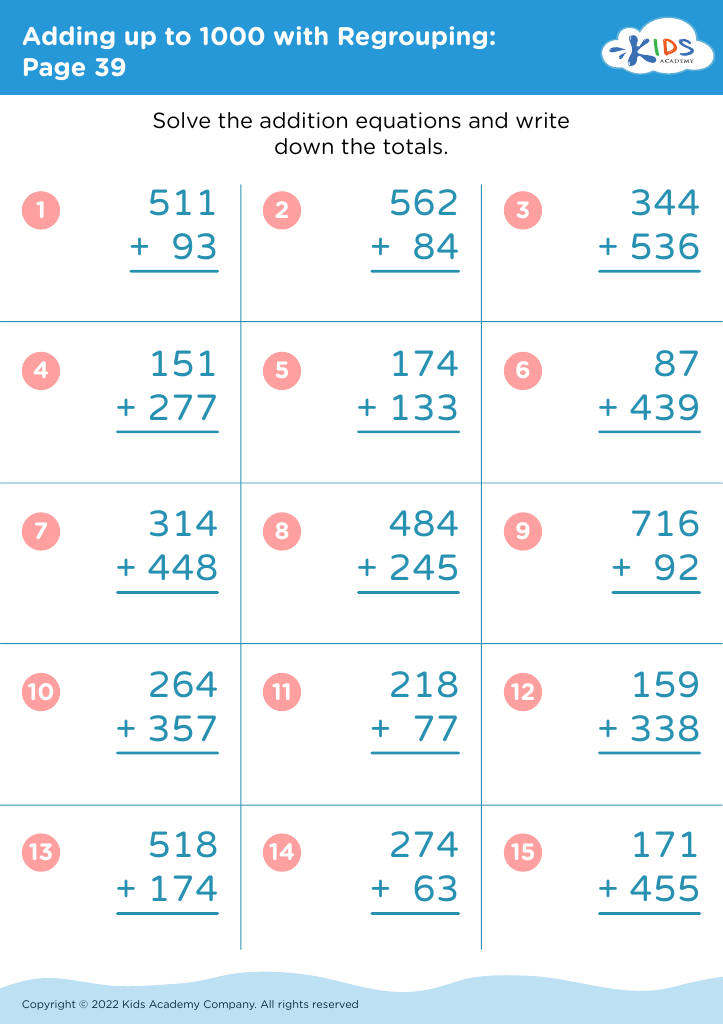
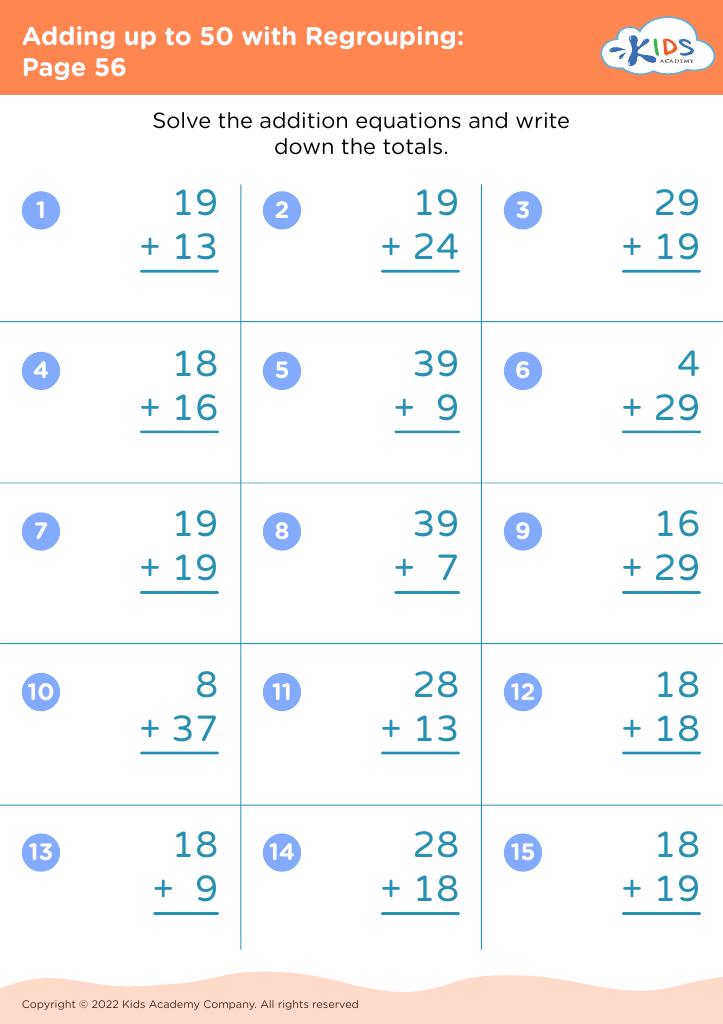








Parents and teachers should prioritize improving problem-solving skills in addition and subtraction for children aged 6-9 as these foundational skills form the bedrock of mathematical competency and broader cognitive development. At this critical developmental stage, children's brains are especially malleable, making it prime time to instill fundamental mathematical concepts.
Firstly, understanding addition and subtraction fosters logical thinking and analytical skills. Early engagement in problem-solving with these operations helps children recognize patterns, formulate strategies, and approach problems systematically. Such skills are invaluable not just in advanced mathematics, but across all subjects and everyday decision-making.
Secondly, proficiency in these basic operations boosts confidence. Mastery in solving mathematical problems enhances a child’s self-esteem, cultivating a positive attitude toward learning and intellectual challenges. Confident learners are more likely to take on new challenges and are better equipped to handle complex tasks in the future.
Moreover, math problems grounded in real-life scenarios enhance practical understanding and applicability. Children learn to utilize arithmetic in handling money, time management, and other day-to-day activities. This practical knowledge is essential for children to navigate future real-world situations effectively.
In conclusion, ensuring children develop robust problem-solving skills in addition and subtraction at an early age is crucial for their academic success, personal development, and readiness to address life's various challenges.








