Improving observation skills Addition & Subtraction Worksheets for Ages 6-9
3 filtered results
-
From - To
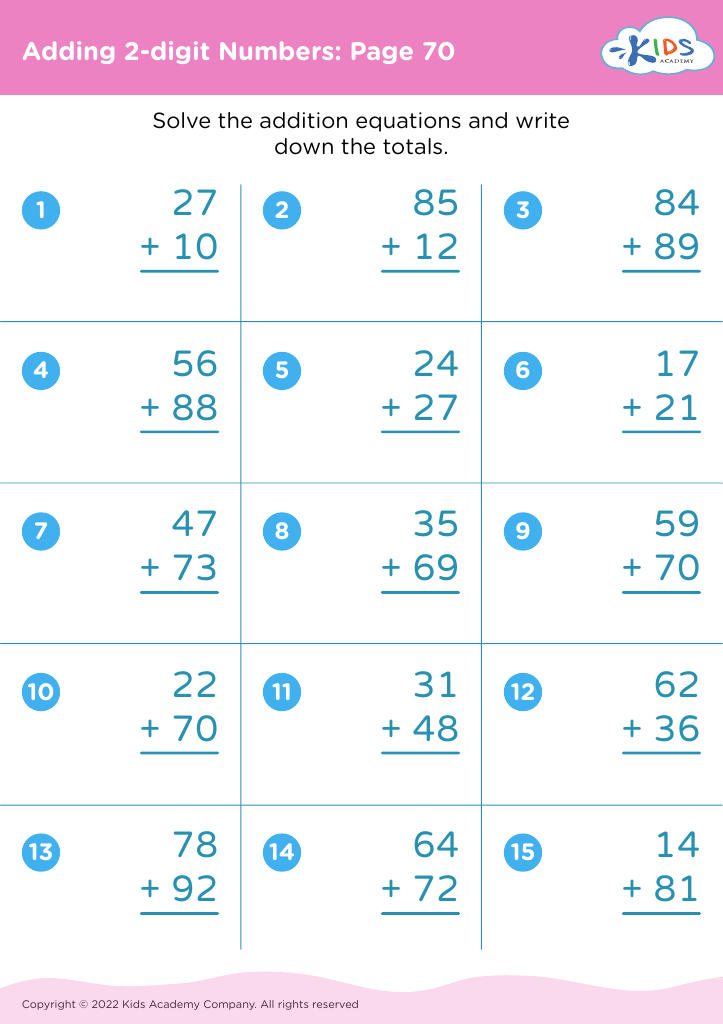
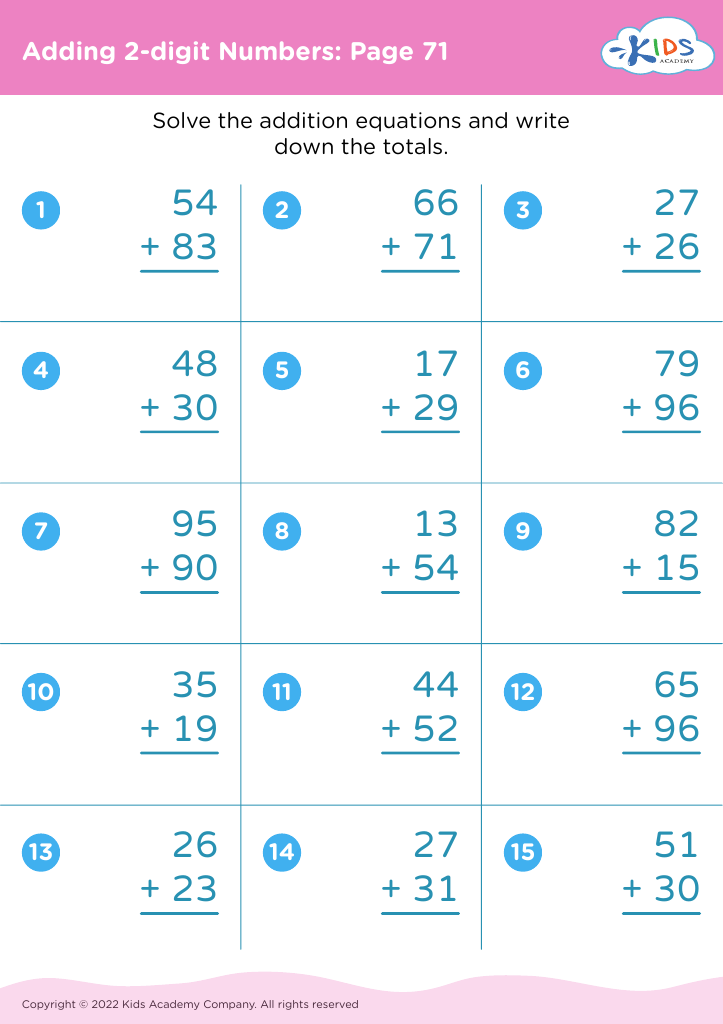
Enhance your child's arithmetic abilities and sharpen their observational skills with our "Improving Observation Skills: Addition & Subtraction Worksheets" designed for ages 6-9. These engaging worksheets, crafted by educational experts, blend fun themes with essential math concepts to create an enjoyable learning experience. Children will practice addition and subtraction while honing their attention to detail and pattern recognition, crucial skills for mathematical proficiency. Perfect for home or classroom use, these activities build a strong foundation in math, promoting critical thinking and problem-solving. Equip your young learner with the tools they need for academic success!
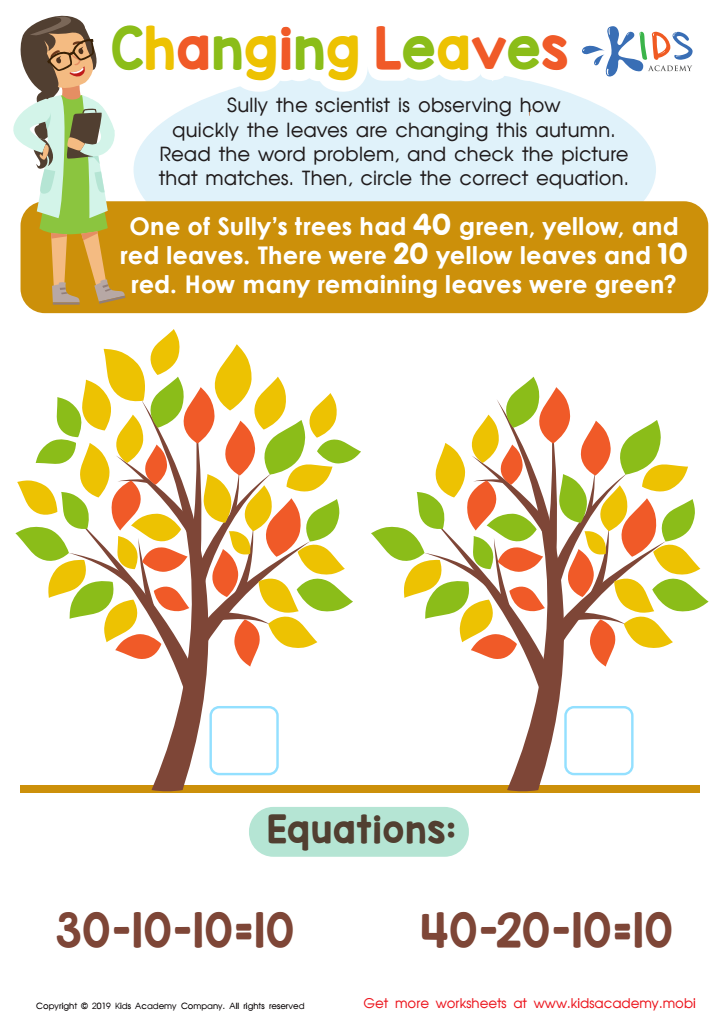
Changing Leaves Worksheet
 Assign to My Students








At ages 6-9, children are laying the critical foundation for future academic success, and honing their observation skills alongside their addition and subtraction abilities is paramount for holistic growth. Observation skills develop a child's ability to notice details, patterns, and relationships, which are essential for problem-solving across all subjects. Improved observation aids in understanding mathematical concepts by helping children recognize number patterns and relationships between different operations.
When parents and teachers focus on enhancing these skills, children become better equipped to tackle more complex mathematical problems, leading to increased confidence and a positive attitude towards learning. Good observation skills also foster attention to detail, an asset not just for mathematics but for reading, writing, and scientific inquiry as well. For instance, observing patterns can help in spelling or grammar checks and in drawing conclusions from experiments.
Moreover, developing both observation and basic arithmetic skills at an early age nurtures critical thinking and logical reasoning. This foundation is essential as children progress through higher levels of education where complex problem-solving and analytical skills are required. Parents and teachers should therefore place emphasis on activities and exercises that promote both observation skills and mathematical operations to prepare children effectively for future academic challenges.








