Compare fractions Addition Worksheets for Ages 6-9
6 filtered results
-
From - To
Discover our engaging "Compare Fractions Addition Worksheets" tailored for children aged 6 to 9. These worksheets not only help young learners master addition but also deepen their understanding of fractions. Using interactive exercises and colorful visuals, kids will enjoy comparing different fractions while honing their mathematical skills. Perfect for classroom use or at-home practice, these resources encourage critical thinking and problem-solving. Designed to align with their developmental stage, our worksheets make learning fun and effective, ensuring a solid foundation in mathematics. Explore our collection today and support your child's journey to becoming a confident math learner!
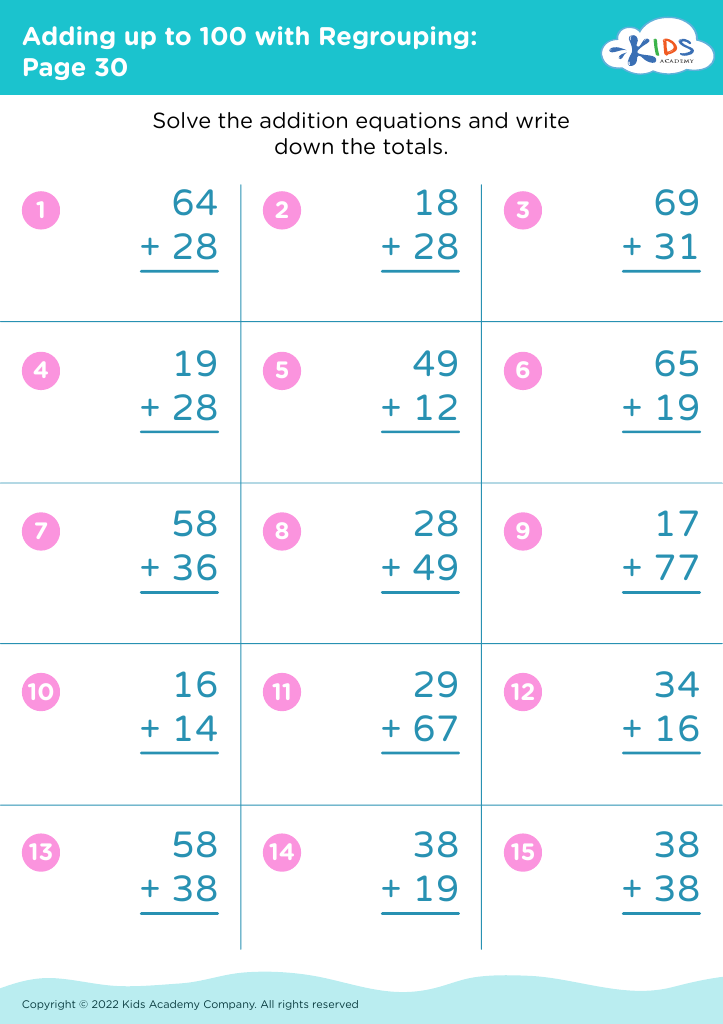
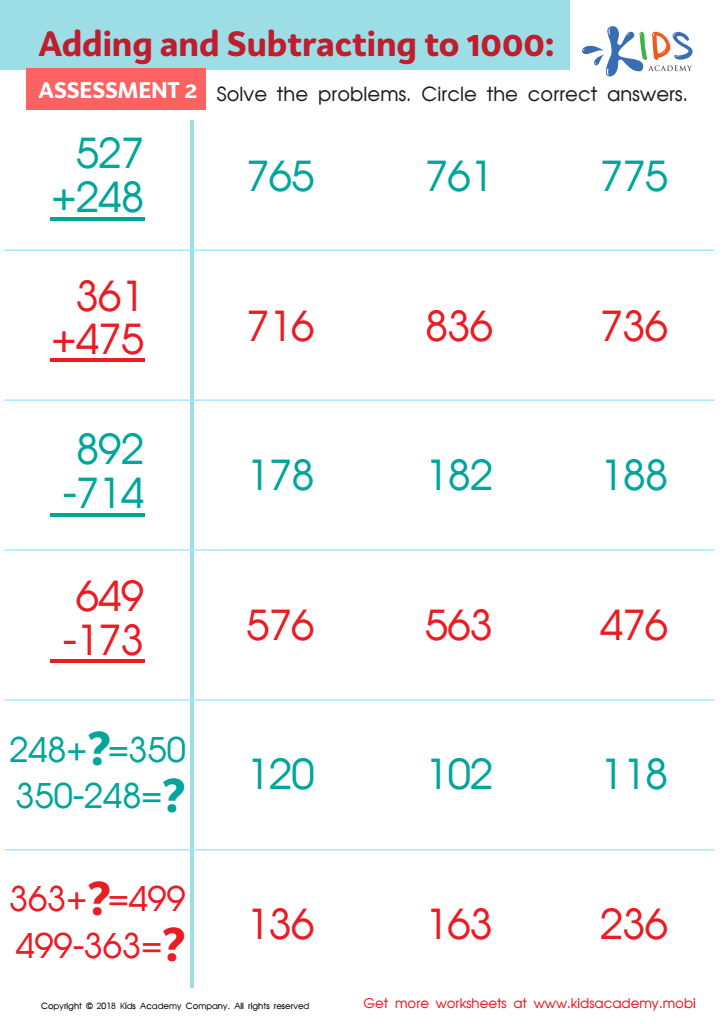
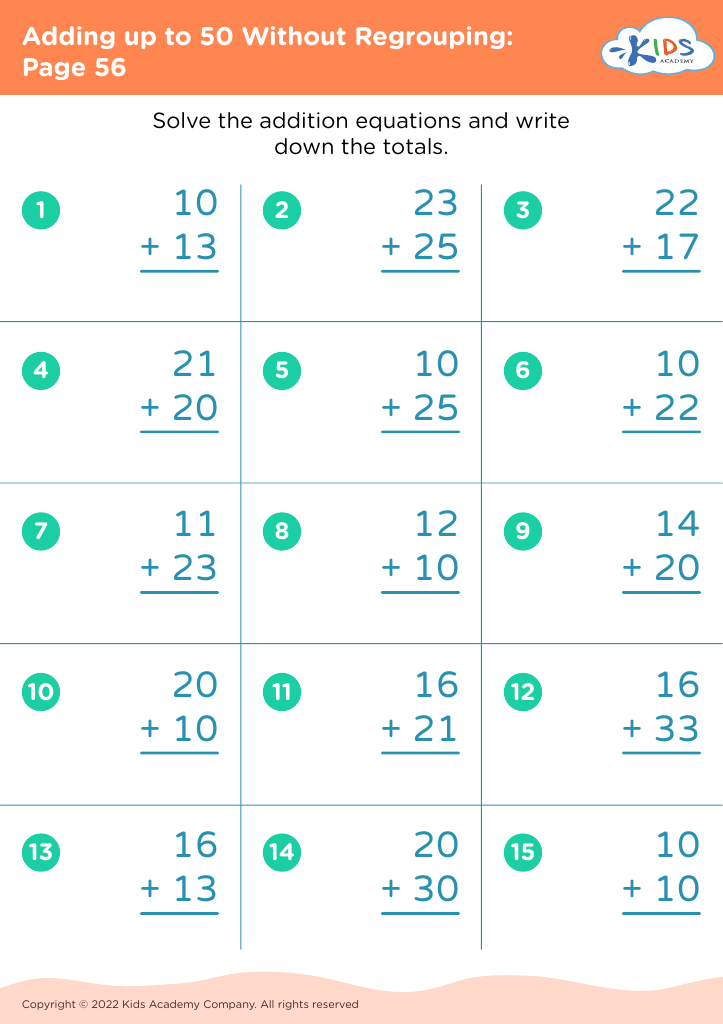
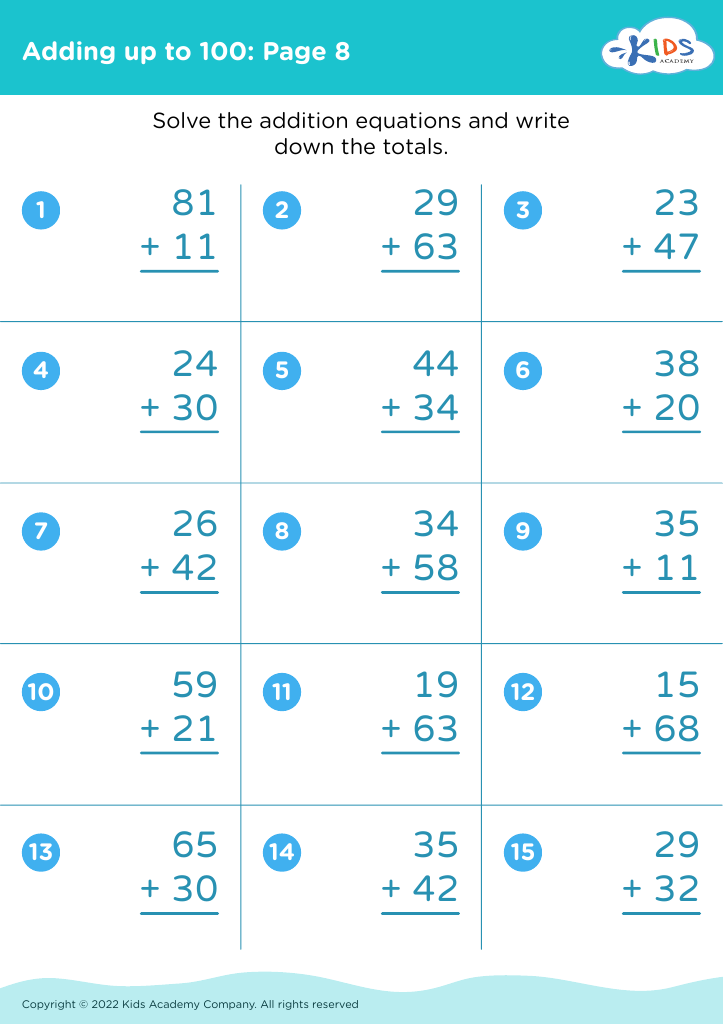
Adding and Subtracting to 1 Worksheet: Assessment 2
 Assign to My Students








Understanding how to compare and add fractions is essential for children aged 6-9 because it lays the groundwork for future mathematical concepts and enhances critical thinking skills. At this age, children begin to encounter fractions in various contexts, from sharing food to measuring ingredients in baking. By grasping how to compare fractions, they learn the importance of parts of a whole, enabling them to make informed decisions in everyday scenarios.
Moreover, learning to add fractions builds on their understanding of numbers and helps develop their ability to solve problems. These skills encourage analytical thinking, which is vital for academic success across all subjects. When parents and teachers actively engage with children in these topics, they not only bolster their math skills but also demonstrate the relevance of math in real life.
Additionally, fostering a positive attitude towards fractions early on reduces anxiety around math and promotes a growth mindset. When children feel confident in their ability to manipulate fractions, they will approach more complex math in higher grades with a solid foundation. Therefore, prioritizing instruction in comparing and adding fractions is crucial for guiding young learners toward becoming proficient problem solvers.








