Enhance critical thinking Addition Worksheets for Ages 6-9
4 filtered results
-
From - To
Looking to boost your child's critical thinking skills while mastering addition? Our "Enhance Critical Thinking Addition Worksheets" for ages 6-9 are designed to challenge young minds through interactive and engaging math tasks. These worksheets incorporate fun activities that blend arithmetic practice with problem-solving techniques, encouraging students to think critically and creatively. Each activity promotes number sense, patterns, and logical reasoning, making math a more enriching experience. Perfect for classroom use or homeschooling, these worksheets help build a strong mathematical foundation while fostering essential analytical skills. Download now and watch your child shine in addition and critical thinking!
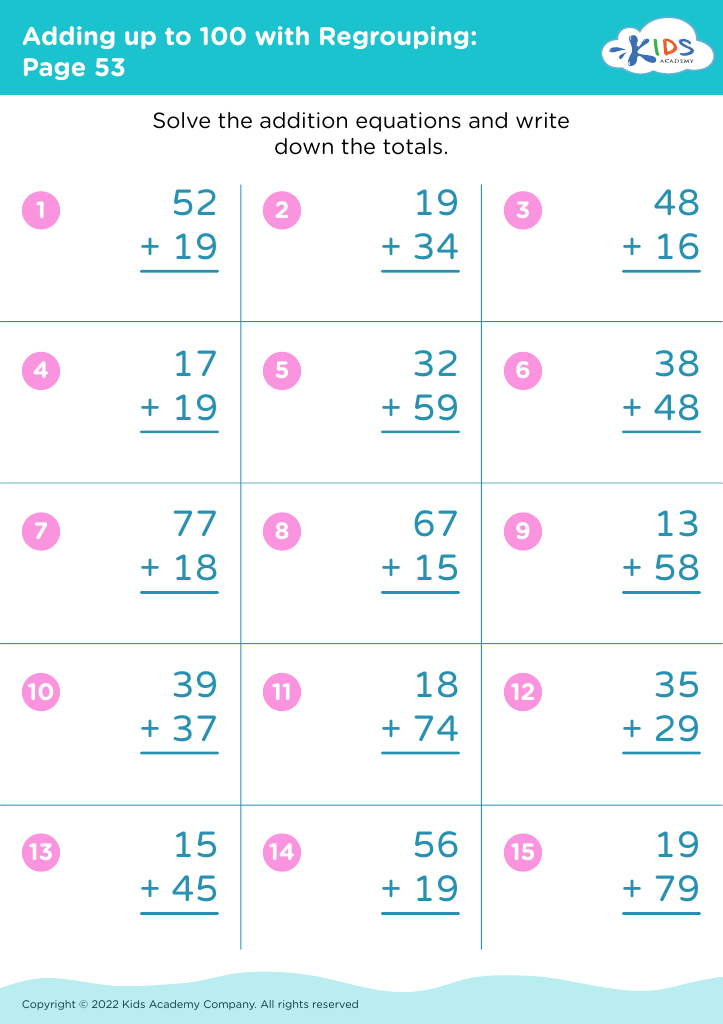
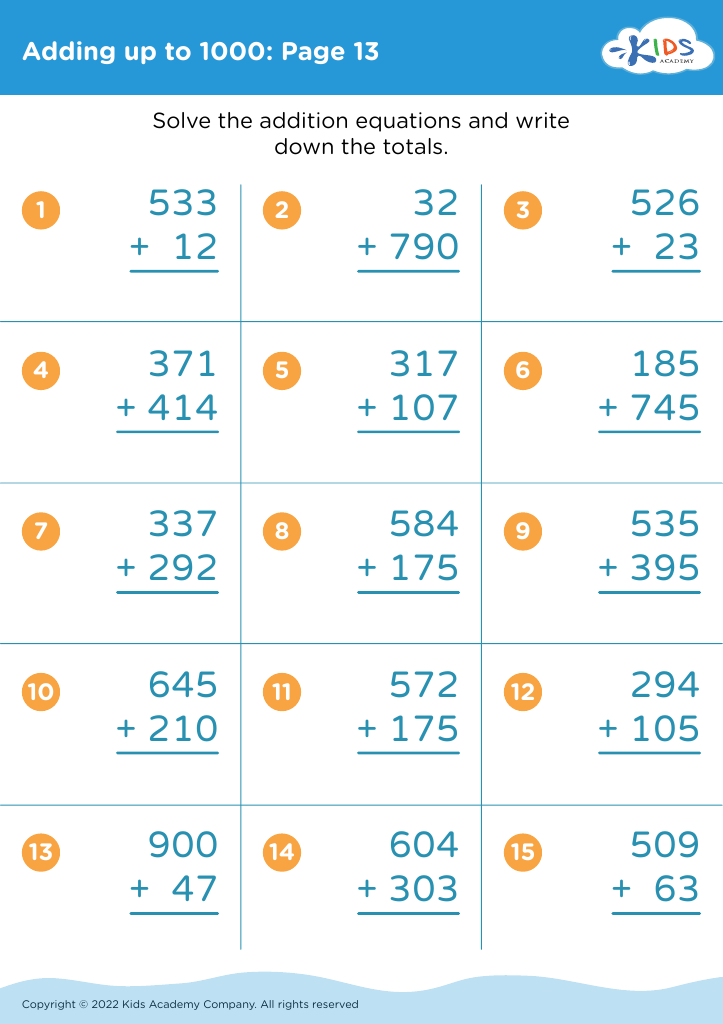
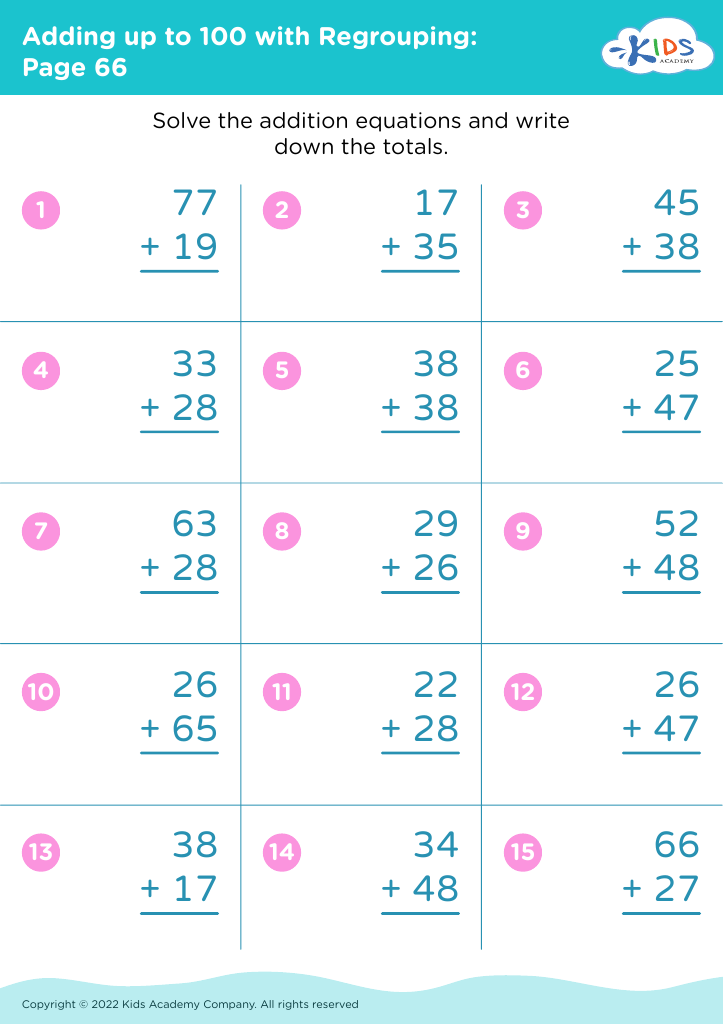
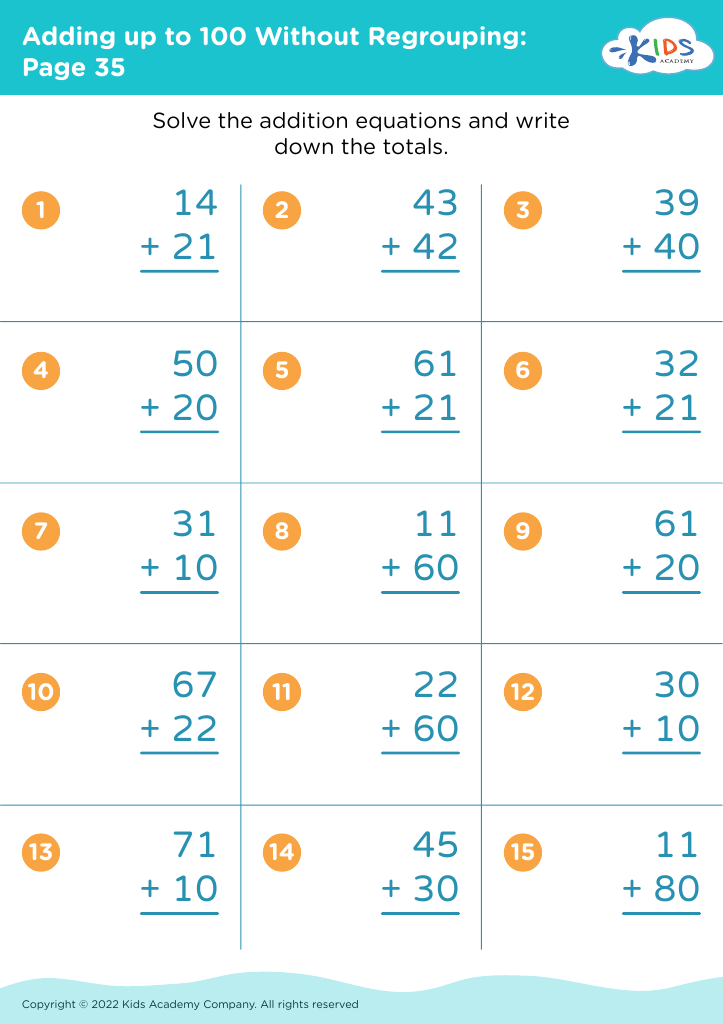








Enhancing critical thinking skills in children aged 6-9 is crucial because this foundational phase of development sets the stage for lifelong learning and problem-solving. At this age, children's cognitive abilities are rapidly expanding, making it an ideal time to cultivate skills that encourage them to reason, analyze, and make informed decisions.
Parents and teachers should care about critical thinking because it empowers children to approach challenges creatively and independently. This skill set not only aids academic performance but also fosters resilience, enabling kids to tackle obstacles and learn from their mistakes constructively. As they develop critical thinking, children learn to ask meaningful questions, evaluate information, and understand different perspectives—capabilities essential for navigating an increasingly complex world.
Moreover, critical thinking encourages children to become engaged and thoughtful citizens. It helps them discern facts from misinformation, enabling them to make informed choices in their lives. By prioritizing critical thinking activities such as problem-based learning, collaborative projects, and discussions in their teaching and parenting strategies, adults can nurture a generation of proactive, innovative thinkers ready to contribute positively to society.
In summary, investing in critical thinking for young children is vital for their academic success, personal growth, and future contributions to the world.








