
Following instructions Addition Worksheets for Ages 6-9
15 filtered results
Difficulty Level
Grade
Age
-
From - To
Subject
Activity
Standards
Discover our engaging Following Instructions Addition Worksheets designed for children ages 6-9. These worksheets not only enhance addition skills but also promote critical thinking and listening ability by requiring young learners to follow specific instructions while solving problems. Each activity fosters both math fluency and comprehension, appealing to diverse learning styles. With a variety of fun exercises, children will enjoy practicing addition in a structured manner. Perfect for home or classroom use, these worksheets are an excellent resource for reinforcing essential math concepts while cultivating the important skill of attentively following directions. Start your child's math journey today!
Favorites
With answer key
Interactive
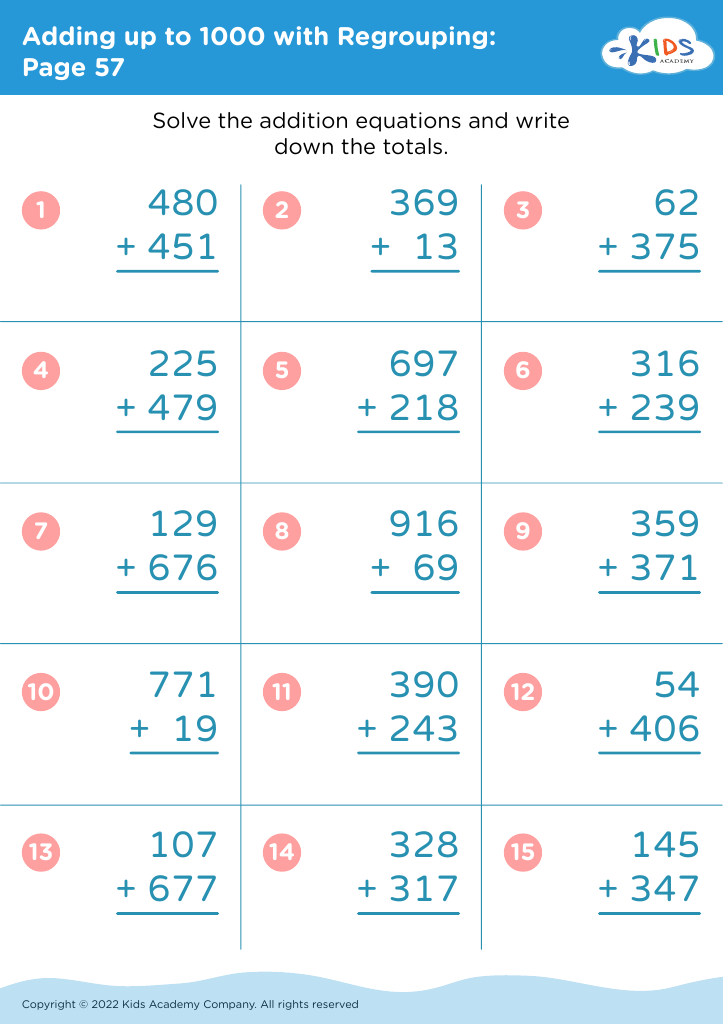
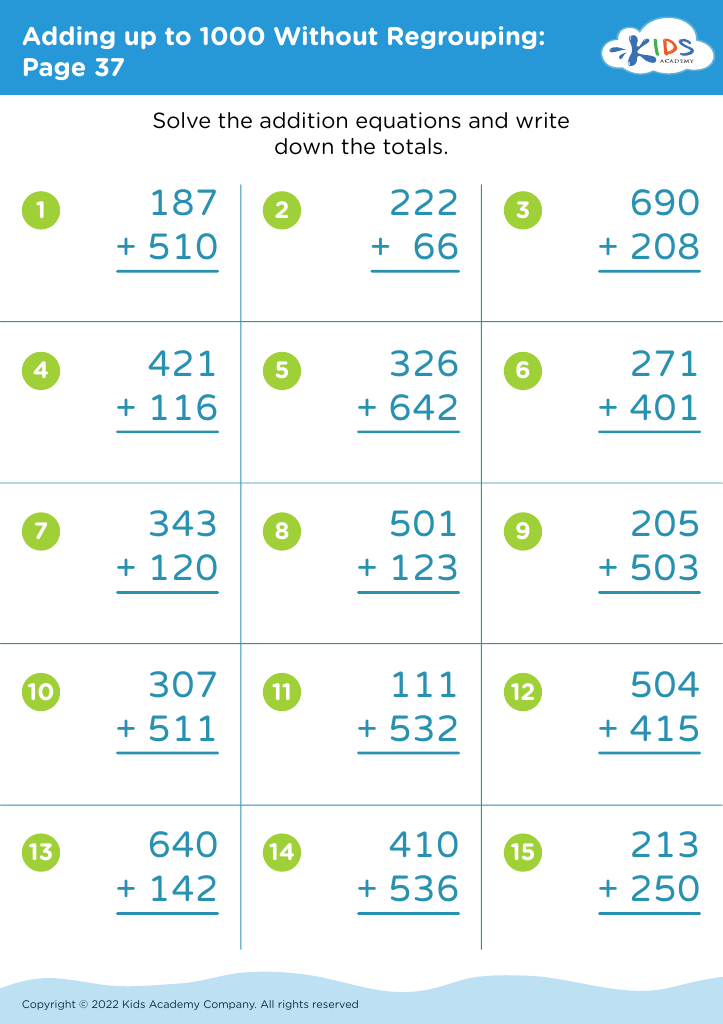
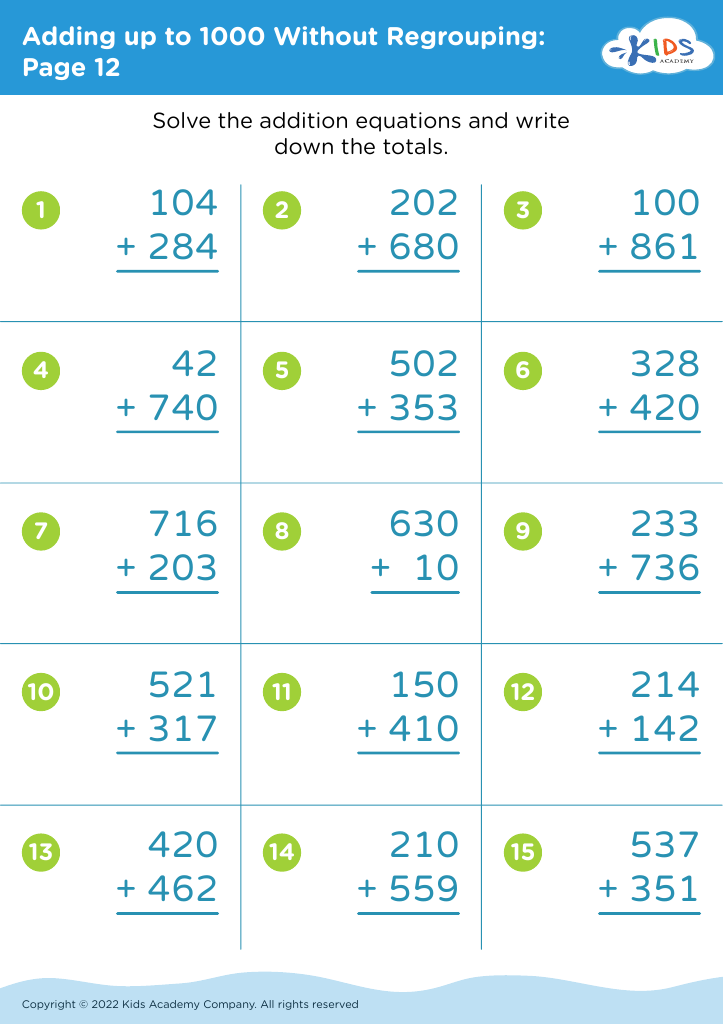
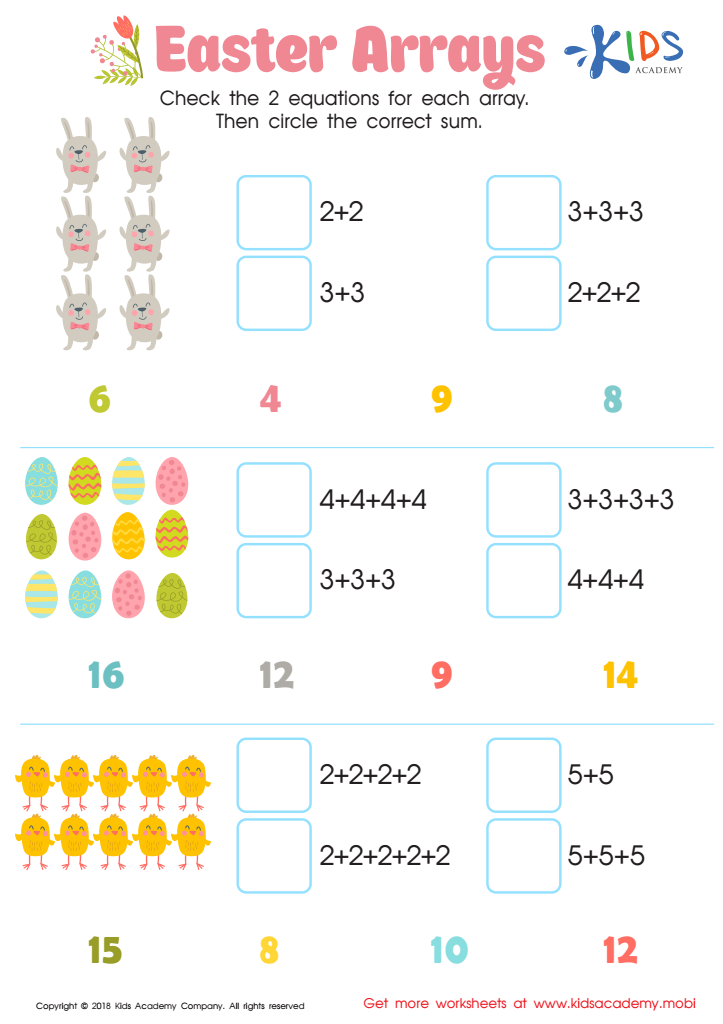
Easter Arrays Worksheet
Does your child love Easter? Do they adore the Easter bunny and egg hunts? Help them have fun with this worksheet! Go through it with them and check the equations for each array. Then, have them circle the correct sum. It's a great way to make the holiday extra exciting!
 Assign to My Students
Easter Arrays Worksheet
Worksheet
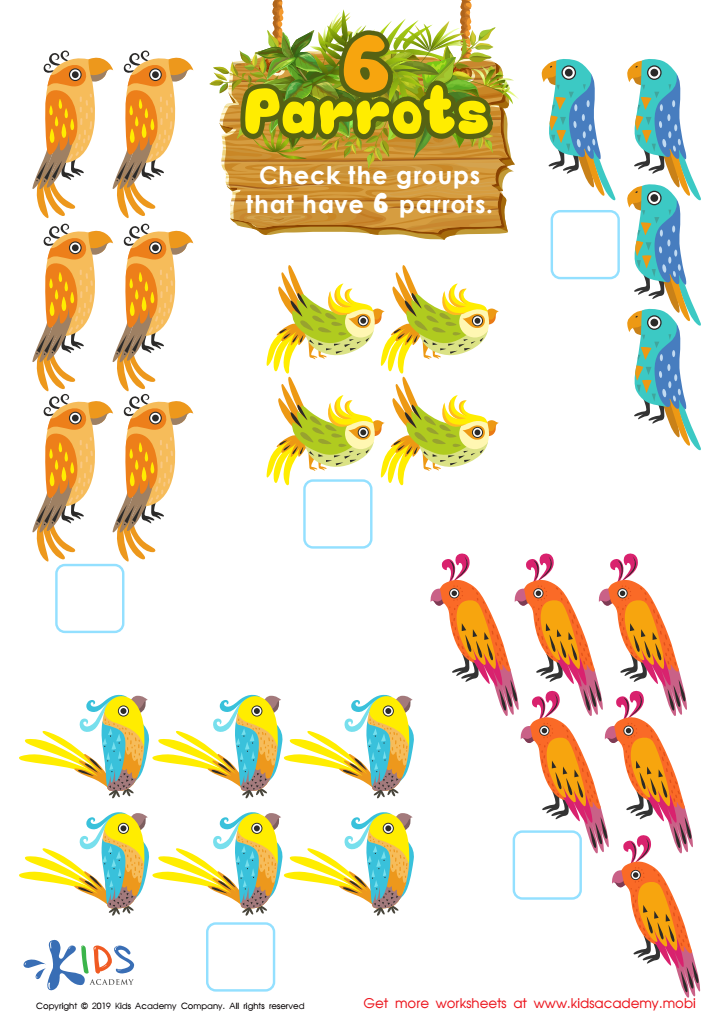
6 Parrots Worksheet
Love parrots? Here's a free worksheet to help your children practice counting to six with colorful parrot representations! Kids will adore counting the parrots and checking off groups of six - and it won't even feel like math! Just a fun way to make some new and exciting friends.
6 Parrots Worksheet
Worksheet
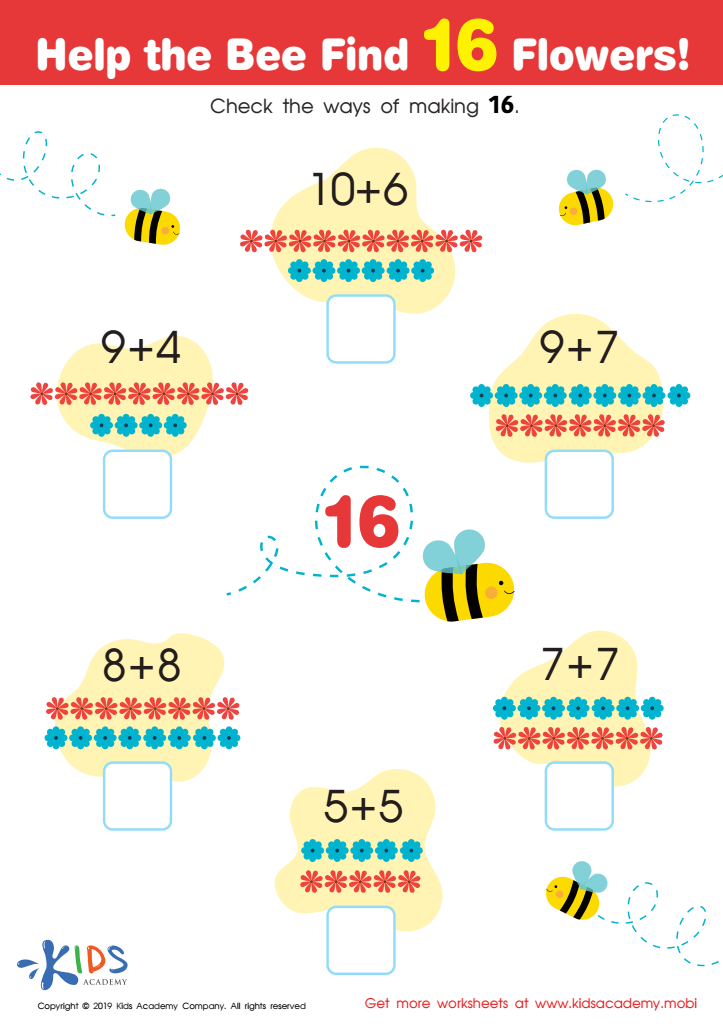
Help the Bee Find 16 Flowers Worksheet
Ask your students to count as high as they can. Show them that different numbers can equal the same figure with examples like 2+2=4 and 3+1=4. Ask for more examples, then help the bees find 16 flowers by checking the ways of making 16.
Help the Bee Find 16 Flowers Worksheet
Worksheet
Join Kids Academy for Free
Who is primarily going to use this learning content?








Following instructions is a crucial skill for children aged 6-9, especially in learning addition. Parents and teachers should prioritize this skill, as it lays the foundation for academic success and personal development. Clear instructions guide students through complex concepts, ensuring they understand the steps involved in solving addition problems. This not only reinforces mathematical comprehension but also fosters critical thinking, as children learn to interpret and analyze directives.
Moreover, following instructions encourages discipline and attention to detail, valuable traits that benefit children in all areas of life. It teaches them the importance of accuracy and the impact of careful listening. When students follow instructions, they gain confidence in their abilities, which can motivate them to tackle more challenging tasks.
Additionally, this skill supports collaborative learning environments, such as group projects or class activities, where following shared directions is essential for success. Parents can reinforce this at home by providing simple instructions for everyday tasks, while teachers can create structured classroom activities that promote these habits.
Overall, emphasizing the importance of following instructions not only aids in mastering addition but also equips children with skills to navigate their educational journeys and everyday experiences effectively.








