Improves counting skills Addition Worksheets for Ages 6-9
4 filtered results
-
From - To
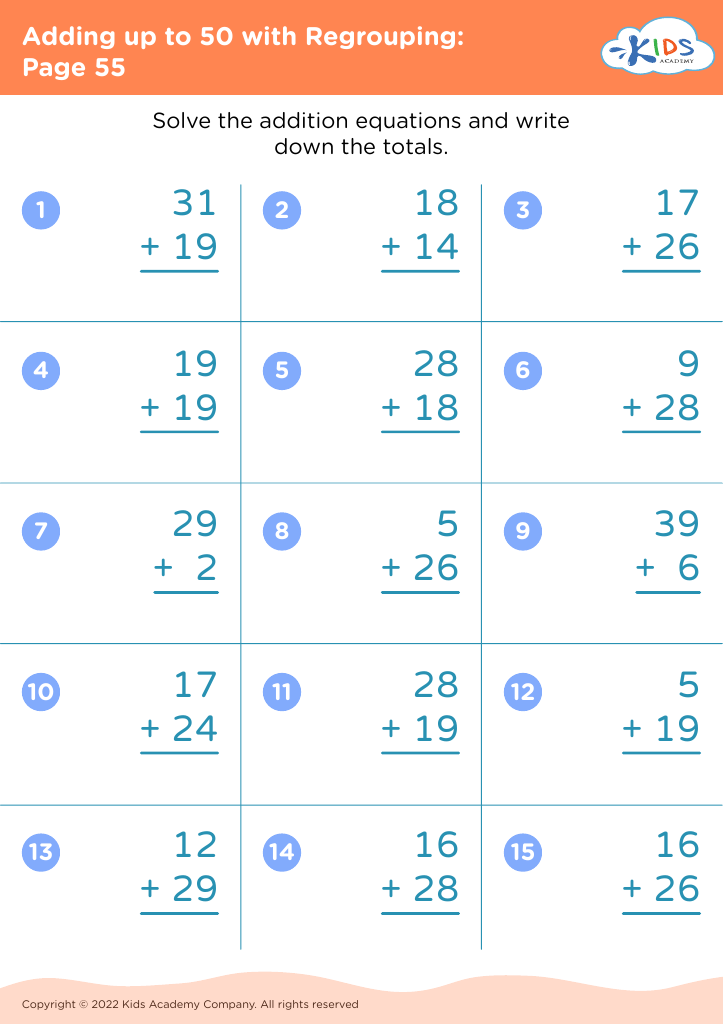
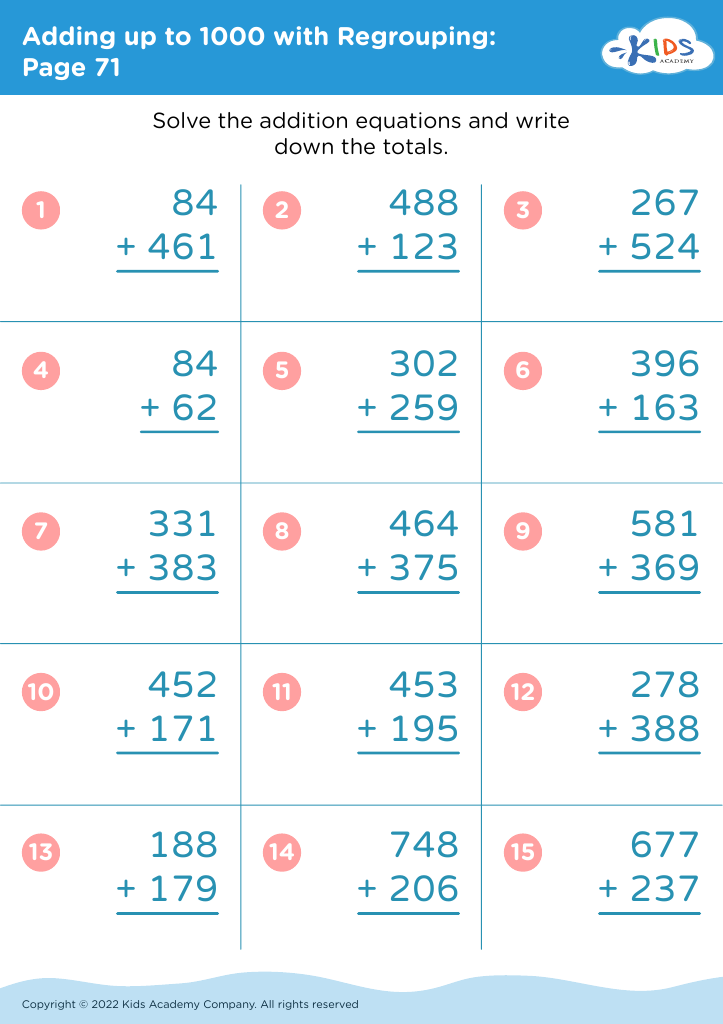
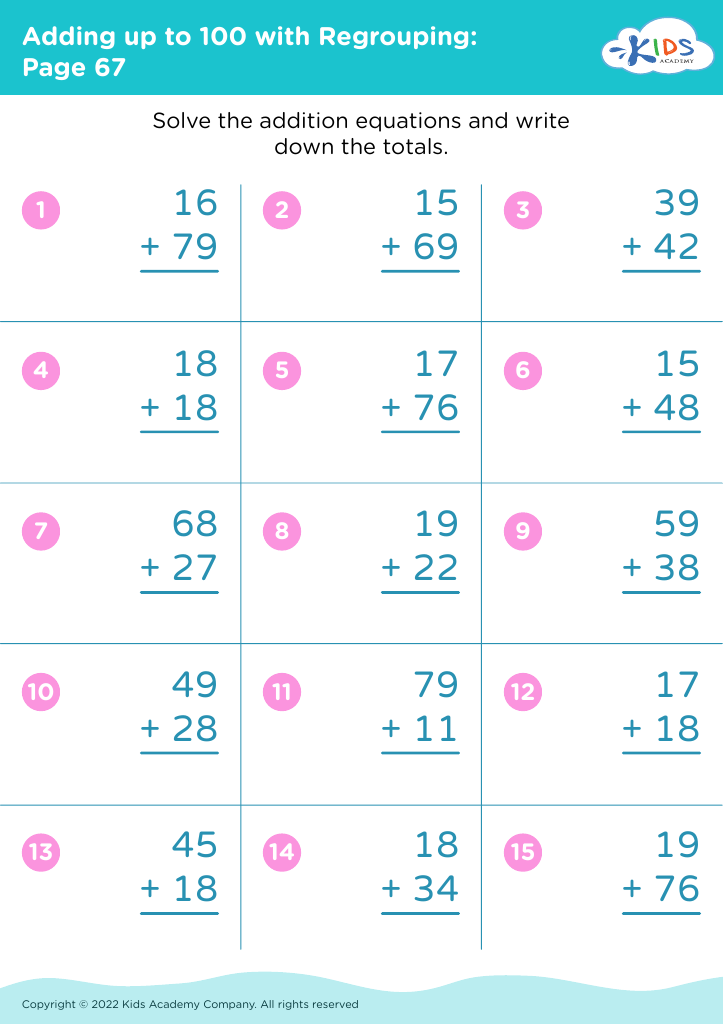
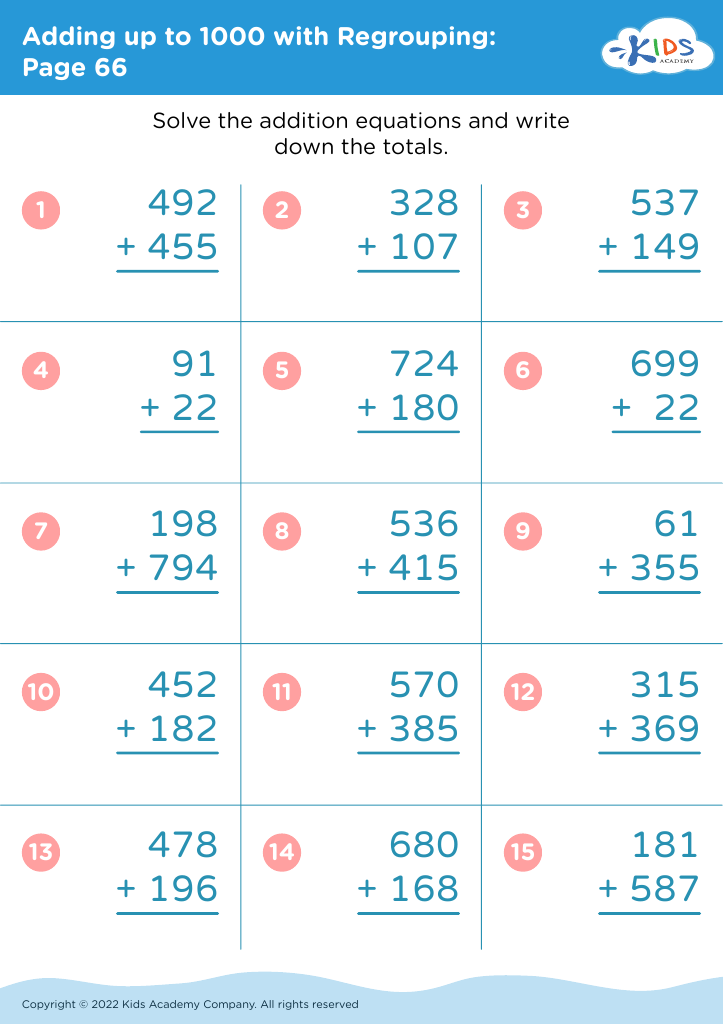
Boost your child's counting skills with our engaging Addition Worksheets designed specifically for ages 6-9. These worksheets serve as a fun and interactive way for young learners to master the fundamentals of addition while enhancing their counting abilities. Featuring colorful illustrations and varied exercises, children will enjoy practicing counting in a lively context. Ideal for home or classroom use, our resources promote critical thinking and problem-solving skills. By working through these worksheets, kids will gain confidence in their math abilities and build a strong foundation for future learning. Explore our collection today and watch your child's skills flourish!








Parents and teachers should prioritize improving counting skills and addition for children aged 6-9, as these foundational abilities are critical for academic success and everyday problem-solving. At this developmental stage, children build the necessary skills to engage with more complex mathematical concepts. Mastering counting lays the groundwork for addition, enabling students to grasp higher-level math in the future.
Fluency in counting and addition enhances cognitive abilities, teaching children how to think logically and solve problems systematically. These skills also aid in boosting confidence; as children practice and succeed in math, they develop a positive self-image and a love for learning. Additionally, a strong foundation in math equips children for practical life situations, such as budgeting, cooking, and time management.
Moreover, engaging in counting and addition exercises encourages teamwork and communication when done in groups or with peers, creating a collaborative learning environment. As educational expectations rise, parents and teachers must work together to ensure that children have robust counting skills and addition knowledge. This early investment in their mathematical understanding fosters a positive attitude toward math, setting them up for a lifetime of success in both academic pursuits and everyday life.








