Improving mathematical skills Addition Worksheets for Ages 6-9
4 filtered results
-
From - To
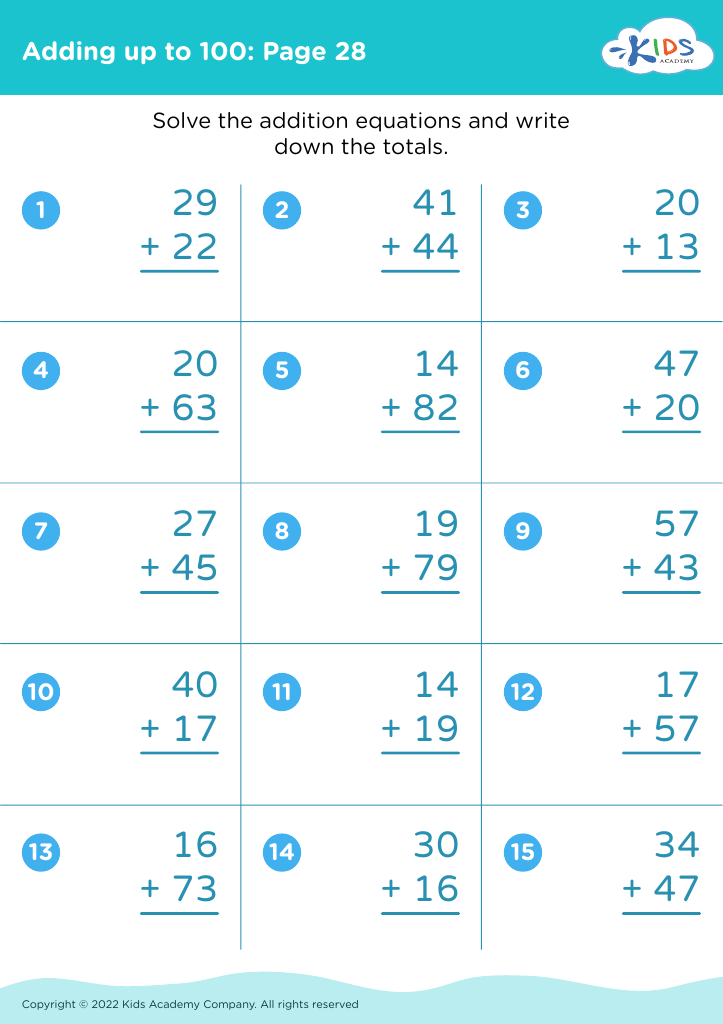
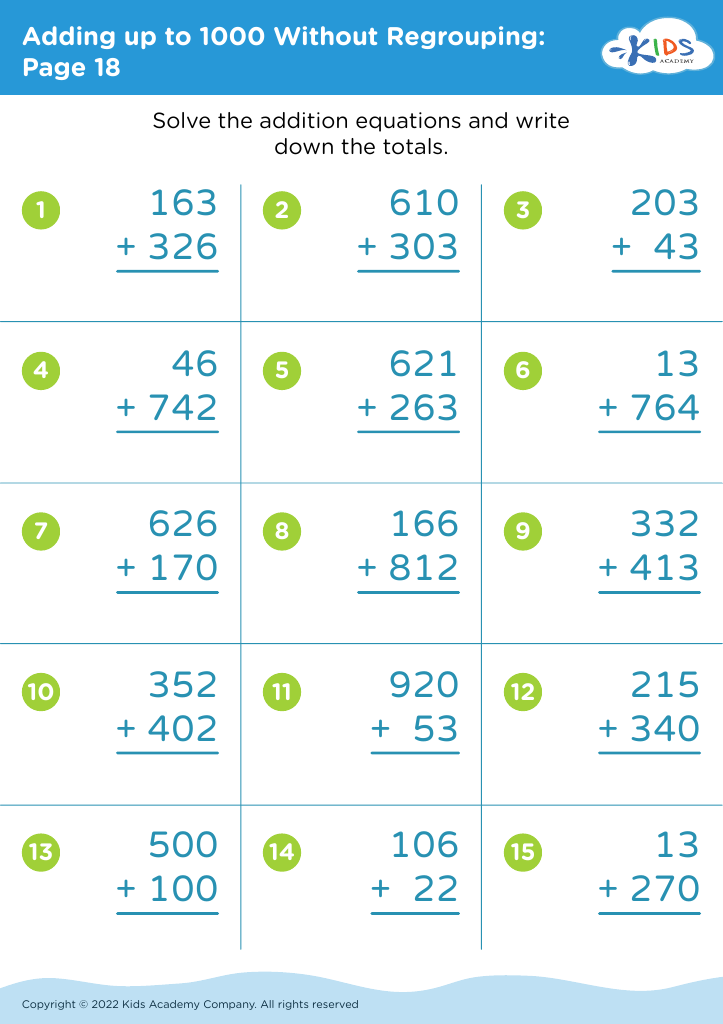
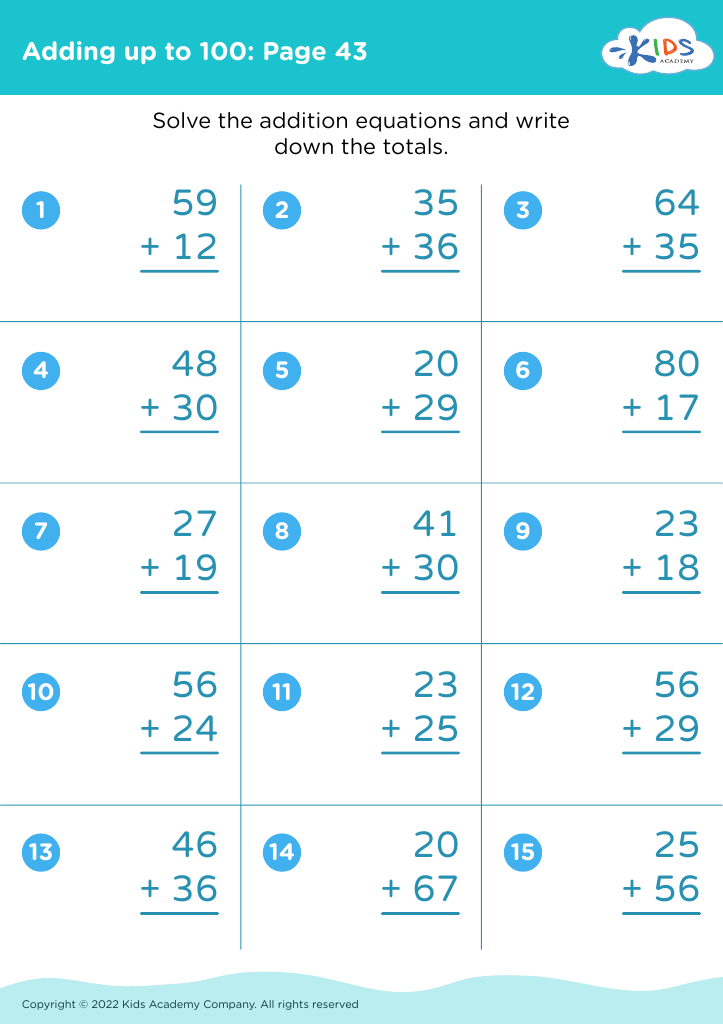
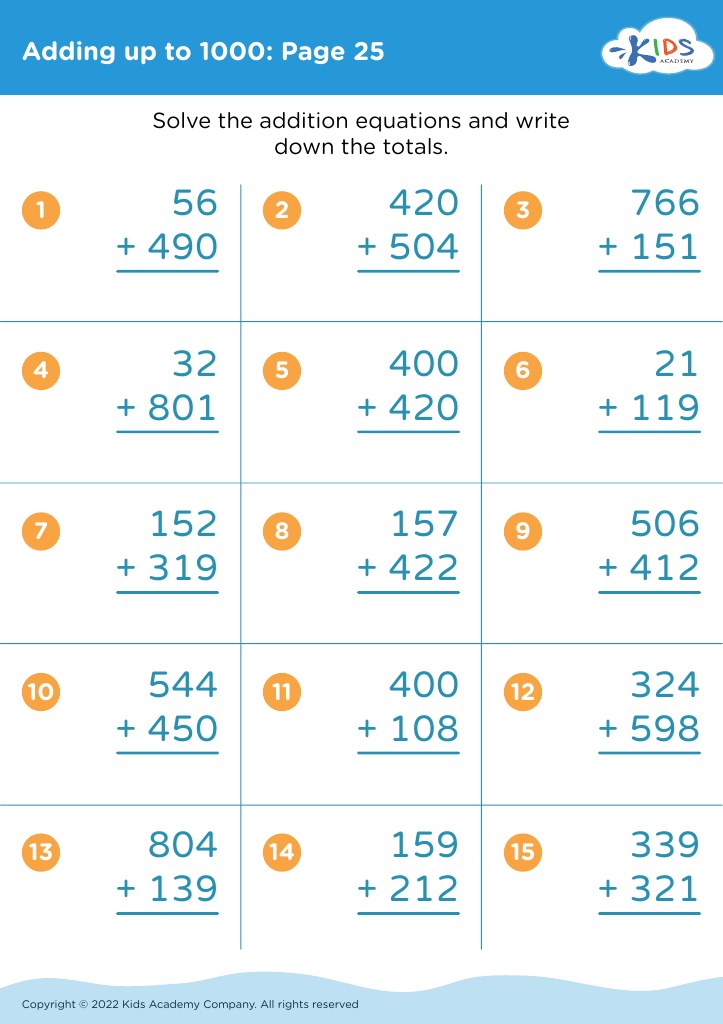
Enhance your child's mathematical skills with our engaging addition worksheets designed specifically for ages 6-9. These resources focus on improving essential addition abilities through fun, interactive practice. Featuring a variety of exercises, including interactive games and real-life problem-solving scenarios, your child will enjoy mastering addition concepts at their own pace. Our worksheets are thoughtfully crafted to promote critical thinking and build a solid foundation in math, ensuring your child gains confidence in their addition skills. Perfect for home or classroom use, these worksheets make learning enjoyable and effective. Discover the joy of math with our comprehensive addition resources today!




.jpg)



Improving mathematical skills, specifically in addition for children aged 6-9, is crucial for several reasons. At this developmental stage, young learners are forming the foundational skills that will support their future academic journey. Mastery of addition not only fosters confidence in math but also enhances critical thinking and problem-solving abilities, which are applicable across multiple subjects and real-life situations.
Moreover, addition serves as the gateway to understanding more complex mathematical concepts, such as subtraction, multiplication, and division; thus, ensuring children have a strong grasp of addition will facilitate their success in future learning phases. From a psychological perspective, consistent practice in addition can also help develop a growth mindset, teaching children that perseverance and effort lead to improvement.
Additionally, when parents and teachers focus on enhancing these skills through engaging activities and practical applications, they foster a collaborative learning environment. Such an environment nurtures a love for mathematics and encourages students to explore and ask questions. Lastly, the benefits extend beyond academics; strong mathematical abilities promote better decision-making and analytical skills, essential in day-to-day life, thereby equipping children for challenges they will face in a rapidly evolving world.








