Improving subtraction skills Addition Worksheets for Ages 6-9
3 filtered results
-
From - To
Improve your child's subtraction skills with our engaging worksheets designed for children aged 6-9! Our "Improving Subtraction Skills Addition Worksheets" offer a fun and interactive way for young learners to master subtraction concepts through various entertaining activities. Each worksheet is tailored to reinforce key skills while ensuring that students develop confidence and fluency in their calculations. By incorporating visual aids and hands-on exercises, children can enjoy practice that aligns with their learning styles. Help your child embark on their math journey today and watch them thrive as they expand their knowledge and capabilities in subtraction. Get started with our printable resources!
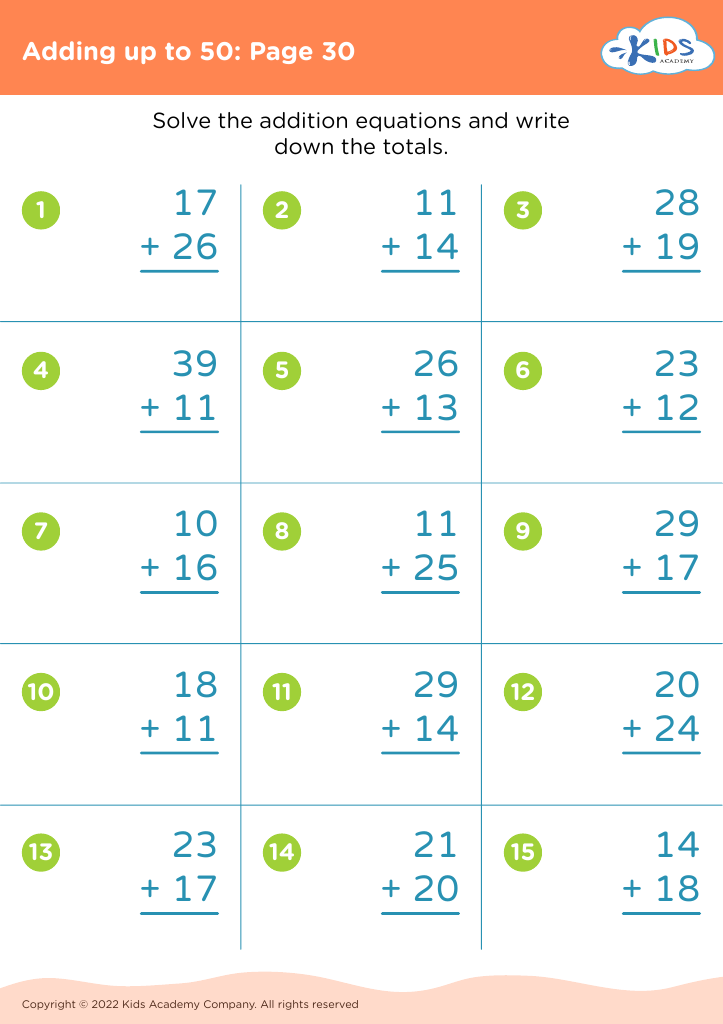
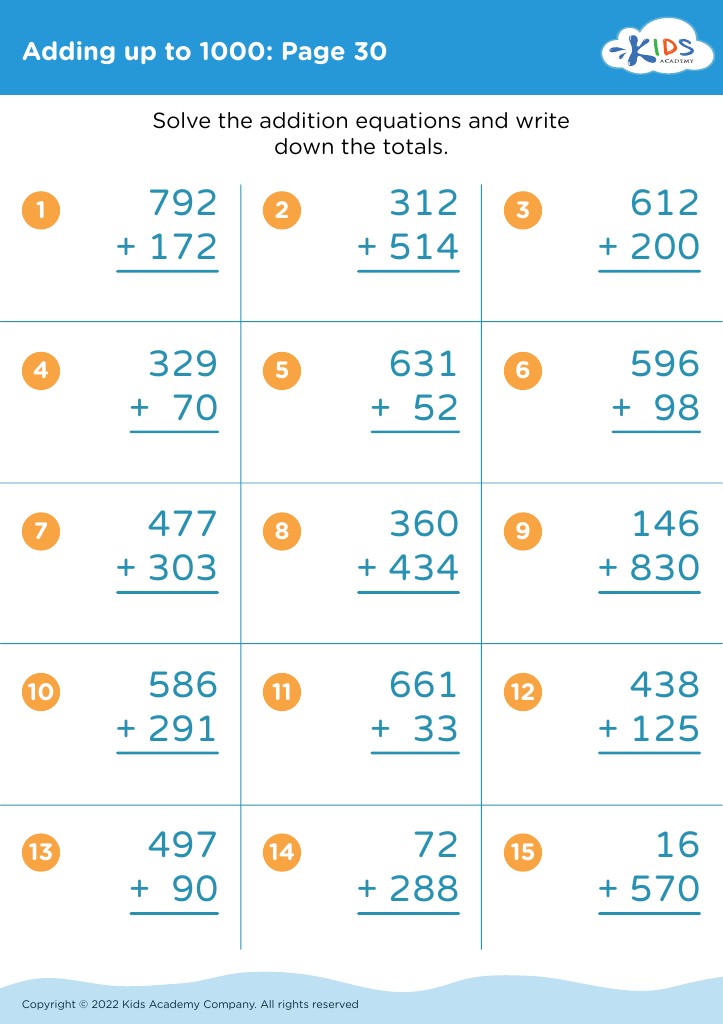
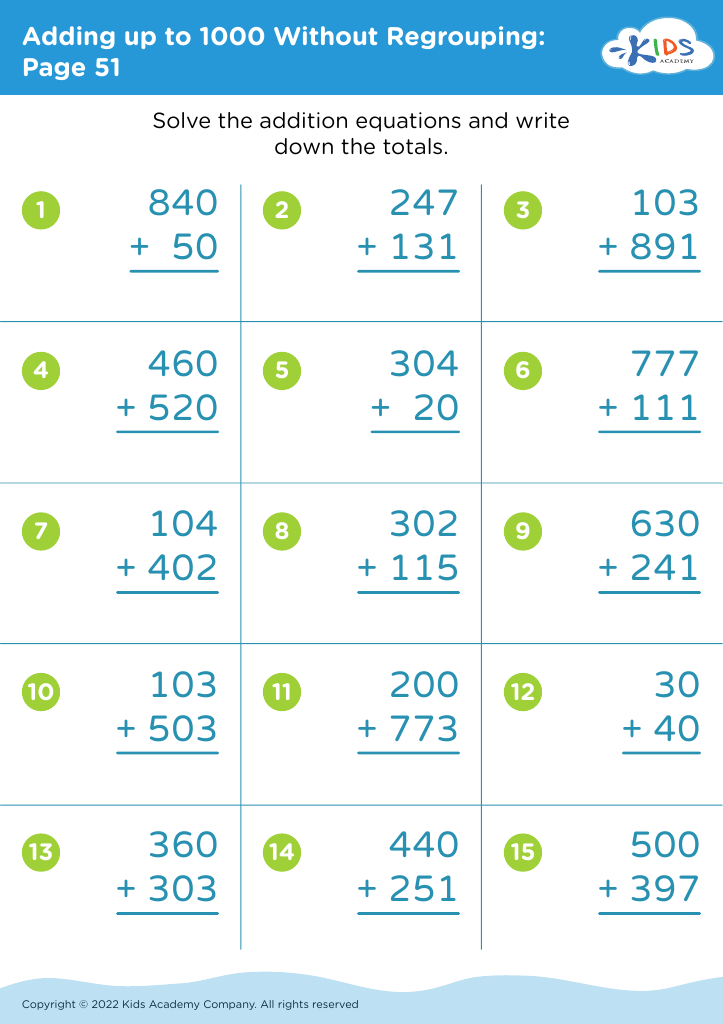








Improving subtraction skills in children aged 6-9 is essential for several reasons. At this developmental stage, children are transitioning from basic arithmetic understanding to more complex mathematical concepts. Mastery of subtraction forms the foundation for advanced math skills they will encounter later, such as multiplication, division, and even algebra. It enhances their problem-solving abilities, enabling them to tackle more complex word problems and real-life situations like budgeting or sharing.
Moreover, strong subtraction skills contribute to a child's confidence in mathematics, reducing anxiety related to the subject. Children are more likely to engage in math activities and persevere through challenges when they feel capable. Additionally, subtraction is directly related to and reinforces the concept of addition—understanding one enhances comprehension of the other, creating a solid numerical foundation.
Beyond academic implications, developing math skills fosters critical thinking and analytical skills that are valuable in daily life. Parents and teachers should prioritize these skills through interactive games, visual aids, and practical applications, ensuring students not only learn subtraction but find enjoyment in the process. An emphasis on improving math skills early on builds a lifelong appreciation for learning, providing tools necessary for future academic and personal success.








