Recognizing equivalent fractions Addition Worksheets for Ages 6-9
5 filtered results
-
From - To
Welcome to our "Recognizing Equivalent Fractions Addition Worksheets" designed for kids ages 6-9. These engaging worksheets help young learners master the concept of equivalent fractions through fun and interactive exercises. By practicing valuable addition skills, students will gain a solid understanding of how fractions can represent the same value. Our worksheets feature a variety of captivating illustrations and easy-to-follow activities to keep your child motivated and interested. Ideal for home schooling or classroom use, these resources empower children to build confidence and improve their math proficiency while recognizing the connections between equivalent fractions. Start their math journey today!
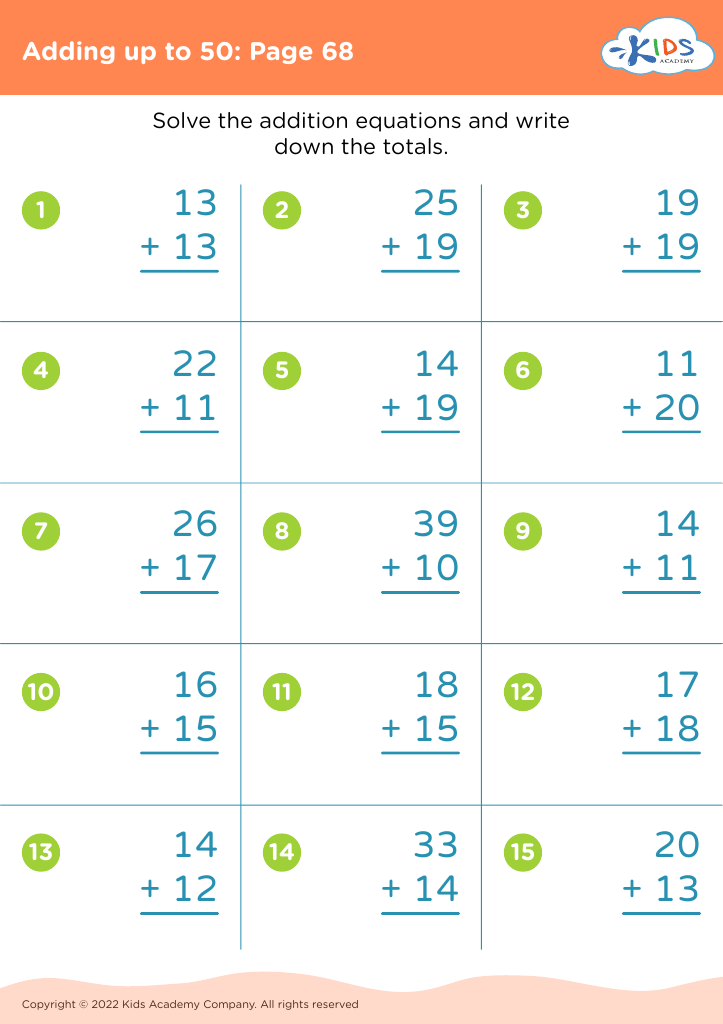
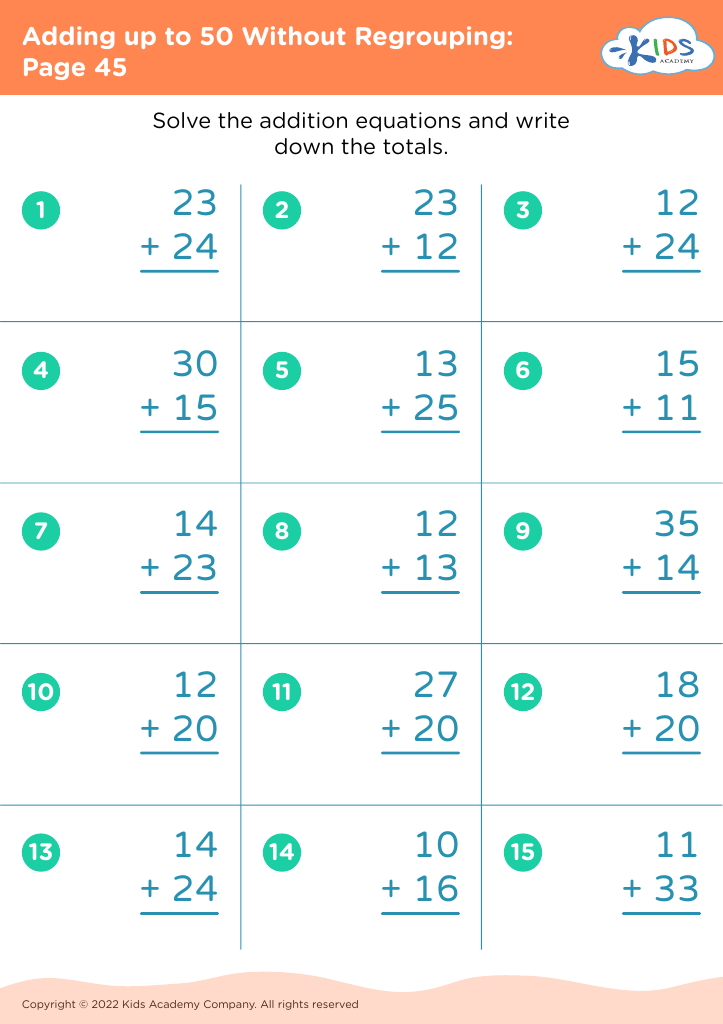
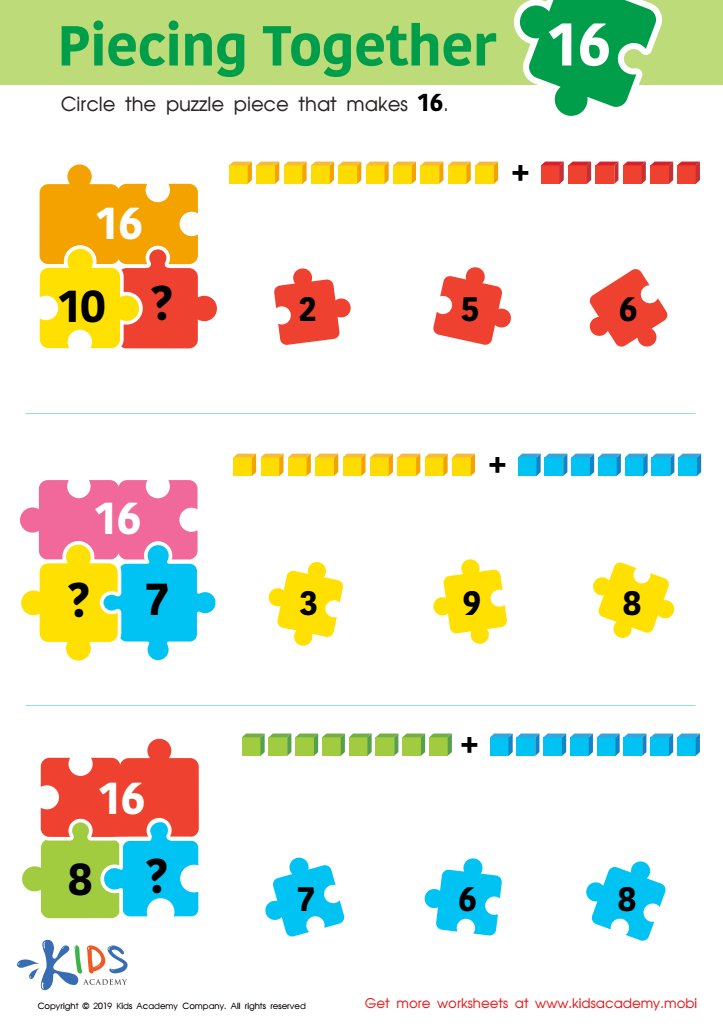
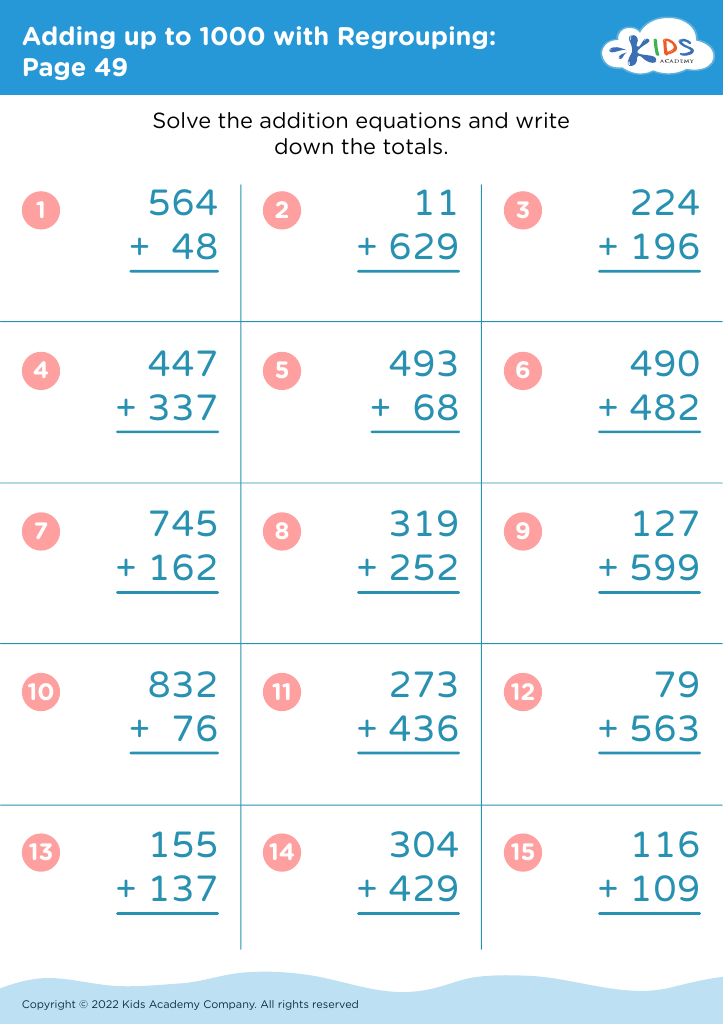
Piecing Together 16 Worksheet
 Assign to My Students
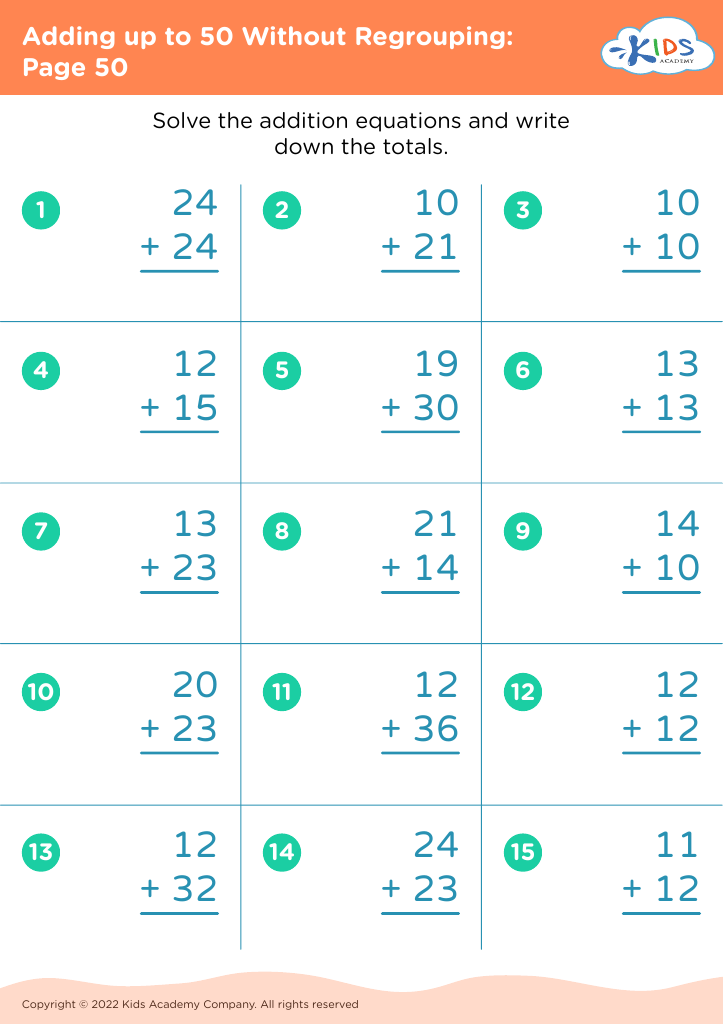








Recognizing equivalent fractions is a fundamental concept in mathematics that greatly benefits children between ages 6 and 9. For parents and teachers, fostering an understanding of equivalent fractions is crucial as it lays the groundwork for future mathematical skills.
Firstly, equivalent fractions help children grasp the concept of division and ratios, which are essential for everyday problem-solving. By understanding that different fractions can express the same value (e.g., 1/2 = 2/4), children can develop flexible thinking and enhance their number sense.
Moreover, introducing equivalent fractions in the context of addition helps to simplify complex concepts. For instance, when adding fractions, understanding equivalency allows children to find common denominators easily—an essential skill for future math topics such as fractions and algebra.
Furthermore, mastering this concept boosts confidence and competence in mathematics, fostering a positive attitude towards learning. Engaging with equivalent fractions through games and visual aids can make learning fun and relatable. For parents and teachers alike, investing time in this critical area supports a child’s overall mathematical development, which feeds into their academic success and sharper logical reasoning skills. By taking this concept seriously, educators and caregivers can set the stage for lifelong mathematical proficiency.








