Understanding number sequence Addition Worksheets for Ages 6-9
3 filtered results
-
From - To
Welcome to our Understanding Number Sequence Addition Worksheets designed for children aged 6-9! These engaging worksheets help young learners master number sequences while building their addition skills. Each worksheet focuses on recognizing patterns and sequences, reinforcing essential math concepts in a fun and interactive way. Children will enjoy completing various exercises that challenge them to arrange numbers, fill in the blanks, and solve addition problems. Designed with age-appropriate content, these worksheets promote confidence and a solid foundation in math. Perfect for home or classroom use, these resources will aid your child in developing critical thinking and problem-solving skills through enjoyable learning experiences!
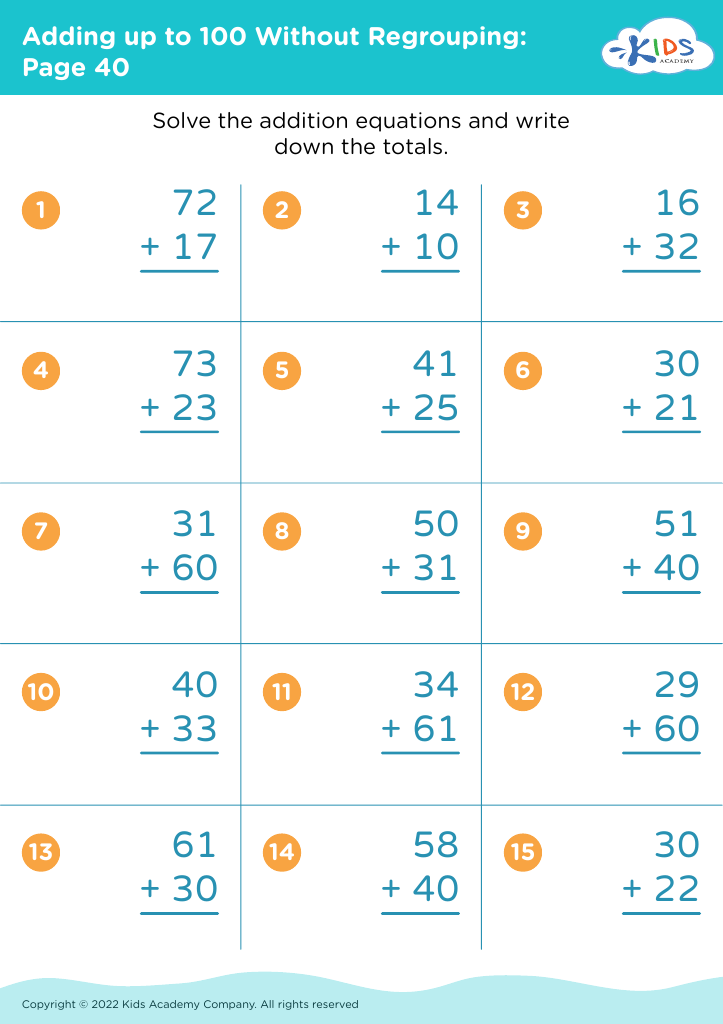
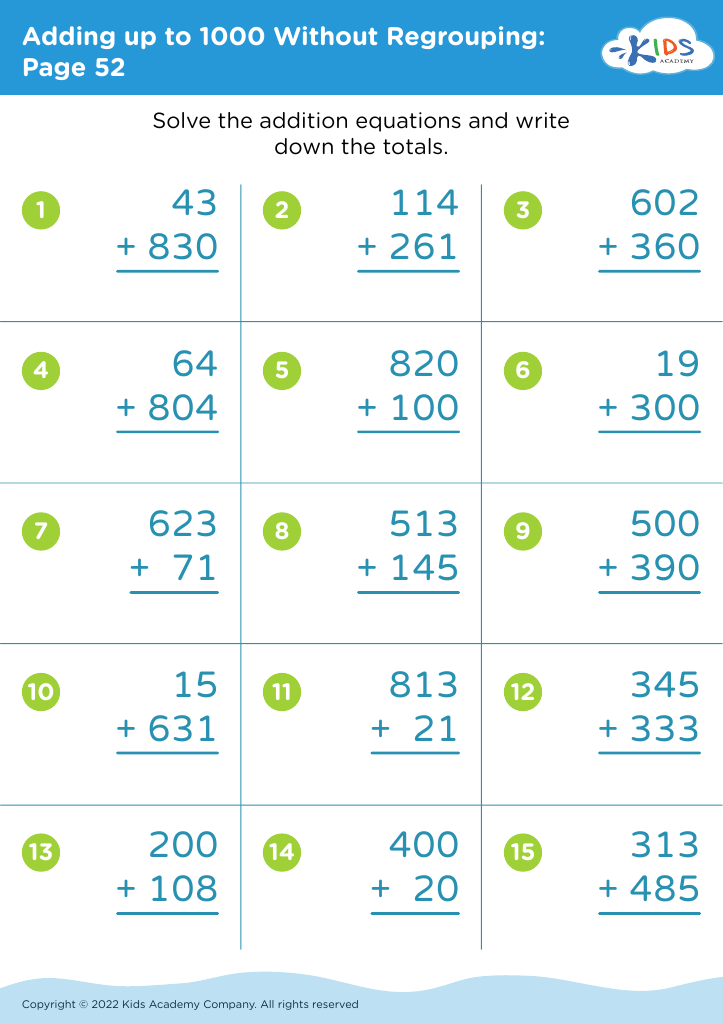
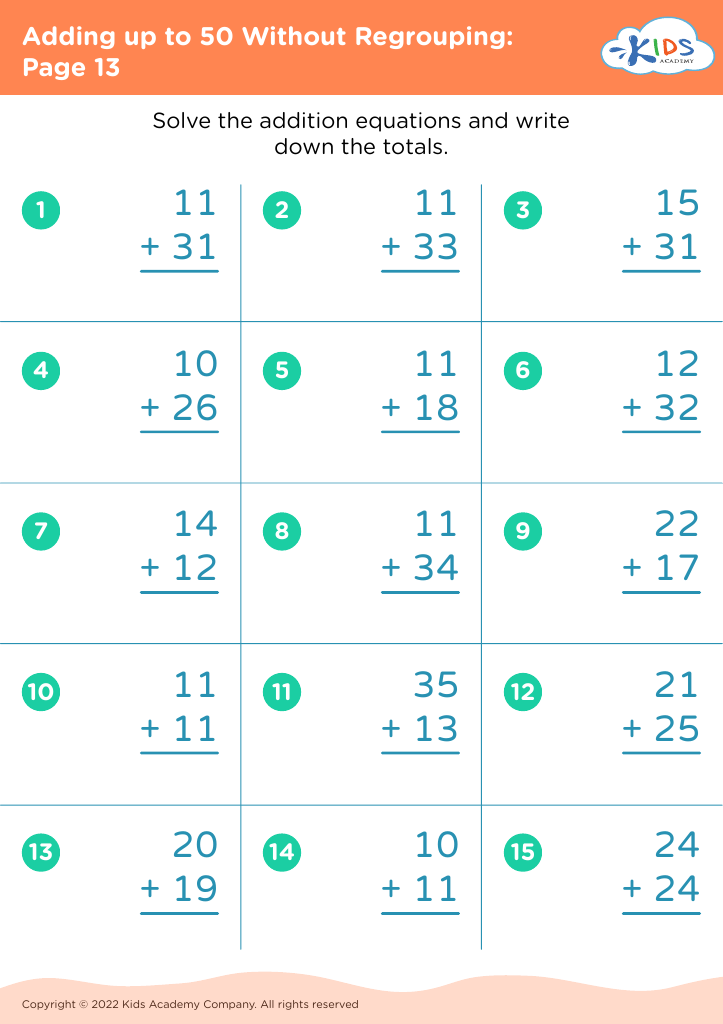








Understanding number sequences and addition is crucial for children aged 6-9 as it lays the foundation for their mathematical skills. During these formative years, children are developing essential cognitive abilities that influence their future learning and problem-solving capabilities.
Firstly, number sequences help children grasp the concept of order and progression, which is vital for understanding not only addition but also other arithmetic operations, such as subtraction and multiplication. Recognizing patterns in numbers enables them to make sense of more complex mathematical concepts in later grades.
Secondly, mastering addition through sequence provides children with the ability to calculate mentally and manage everyday mathematical tasks, such as counting change or figuring out time. It enhances their critical thinking and promotes confidence in their abilities.
Moreover, incorporating number sequences into addition helps in developing visual-spatial skills as children learn to associate numbers in a structured way. This learning technique encourages engagement and can be incorporated into fun games and activities, making mathematics an enjoyable subject.
Ultimately, supporting children in mastering number sequences and addition equips them with foundational skills necessary for future academic success, fosters a positive attitude towards math, and enhances their decision-making in practical life situations.








