Understanding patterns Addition Worksheets for Ages 6-9 - Page 2
29 filtered results
-
From - To






.jpg)

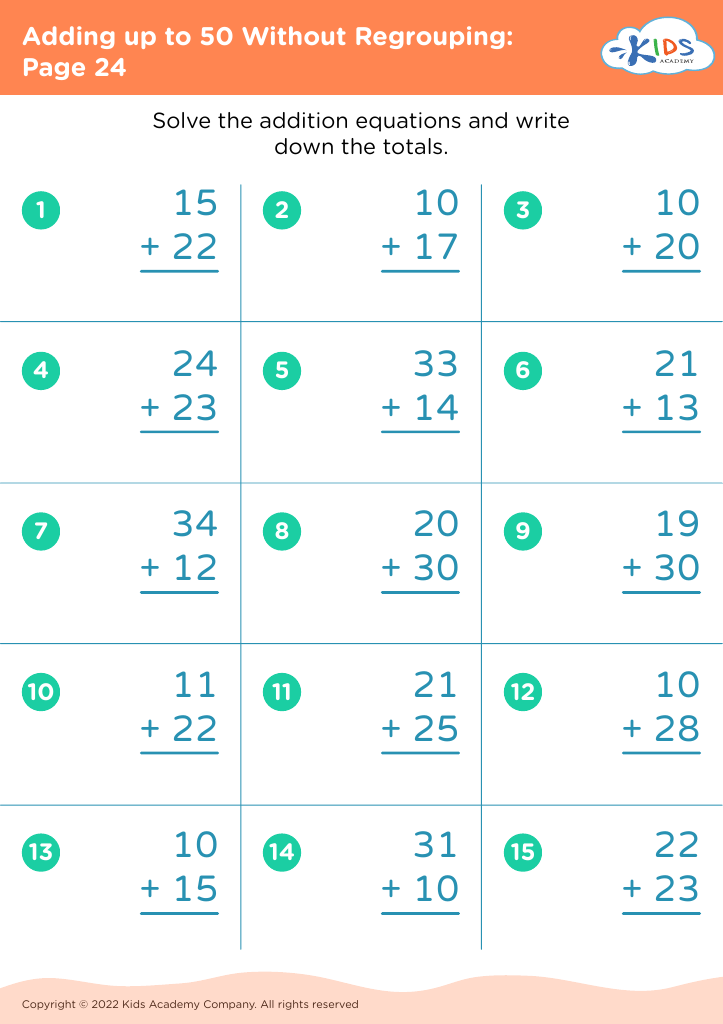
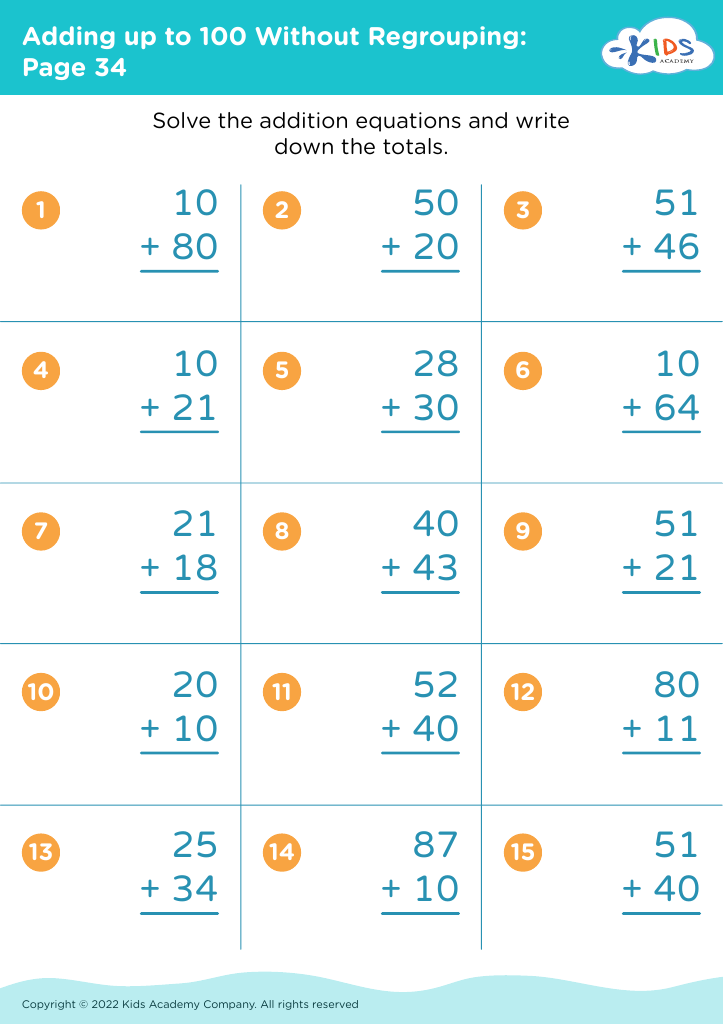
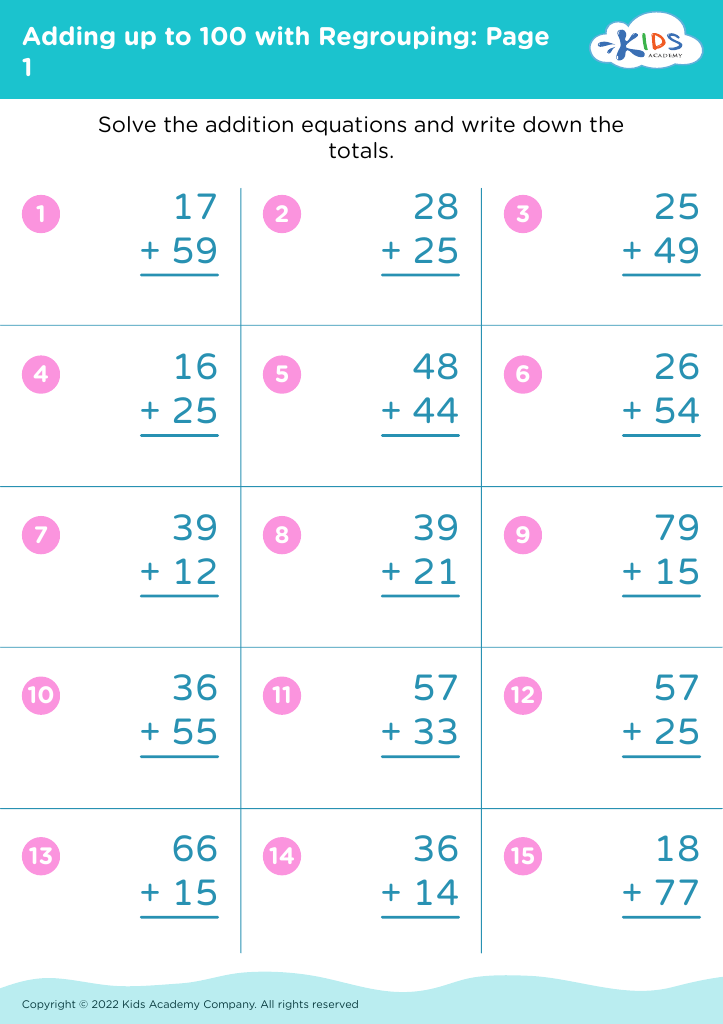
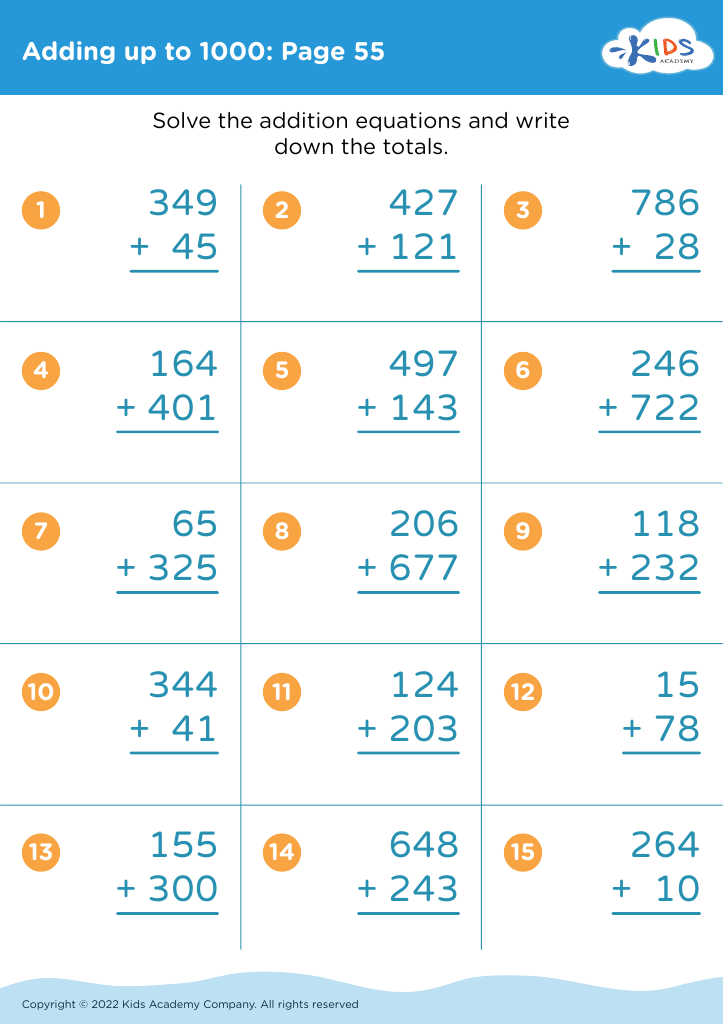
Understanding patterns in addition is crucial for children aged 6-9 because it forms the foundation of fluency in arithmetic and problem-solving skills. At this young age, children's brains are highly receptive to recognizing relationships and sequences in numbers. When they grasp addition patterns, such as knowing that 5 + 3 equals 8 and noticing that 5 + 4 equals 9, they're not just memorizing facts but understanding the underlying structure of numbers.
This comprehension enhances mental math abilities, making it easier for children to add bigger numbers quickly and accurately as they progress in their education. Recognizing patterns in addition can also boost confidence, as children begin to see themselves as capable mathematicians. It prepares them for more complex mathematical concepts down the line, like multiplication tables, algebra, and beyond, which are all built on the basic understanding of number relationships.
Teachers and parents should prioritize pattern recognition in addition to develop logical thinking and analytical skills. Structured activities, such as sorting and sequencing games, help children internalize these patterns, leading to better academic performance. Fostering a solid grasp of these fundamental math skills paves the way for future success in STEM (science, technology, engineering, and mathematics) fields, making this early focus invaluable.








