Money recognition Money Worksheets for Ages 6-9
5 filtered results
-
From - To
Discover engaging Money Recognition Worksheets designed for children ages 6-9! Our interactive resources help young learners develop essential money recognition skills through fun activities that make counting coins and bills enjoyable. Each worksheet is crafted to enhance your child's understanding of currency, fostering confidence in their ability to manage money. With colorful visuals and age-appropriate problems, your child will master recognizing different denominations and making change. Perfect for both classroom and at-home use, these worksheets support early math education while keeping learning playful. Start your child’s journey to financial literacy today with exciting money recognition challenges!
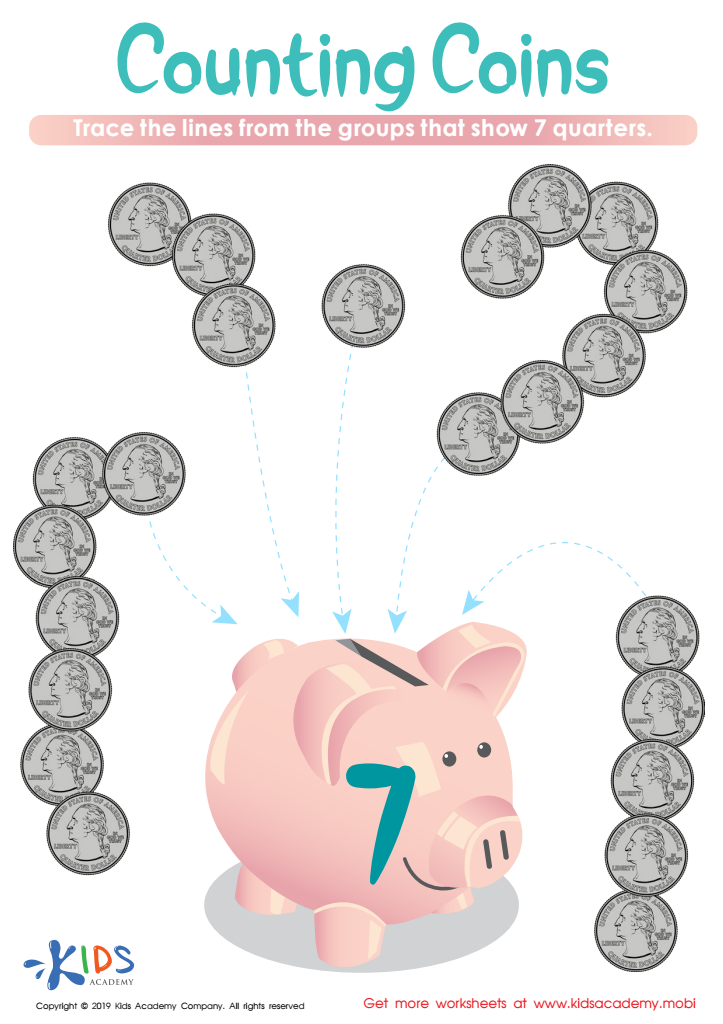
Counting Coins Worksheet
 Assign to My Students
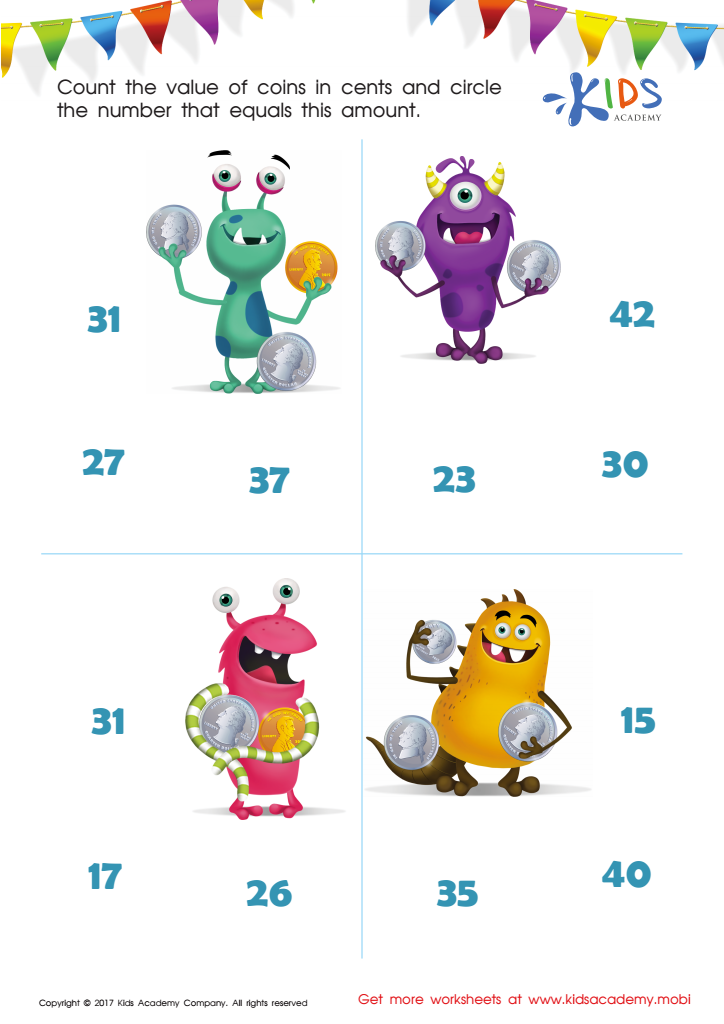
How Many Coins Money Worksheet
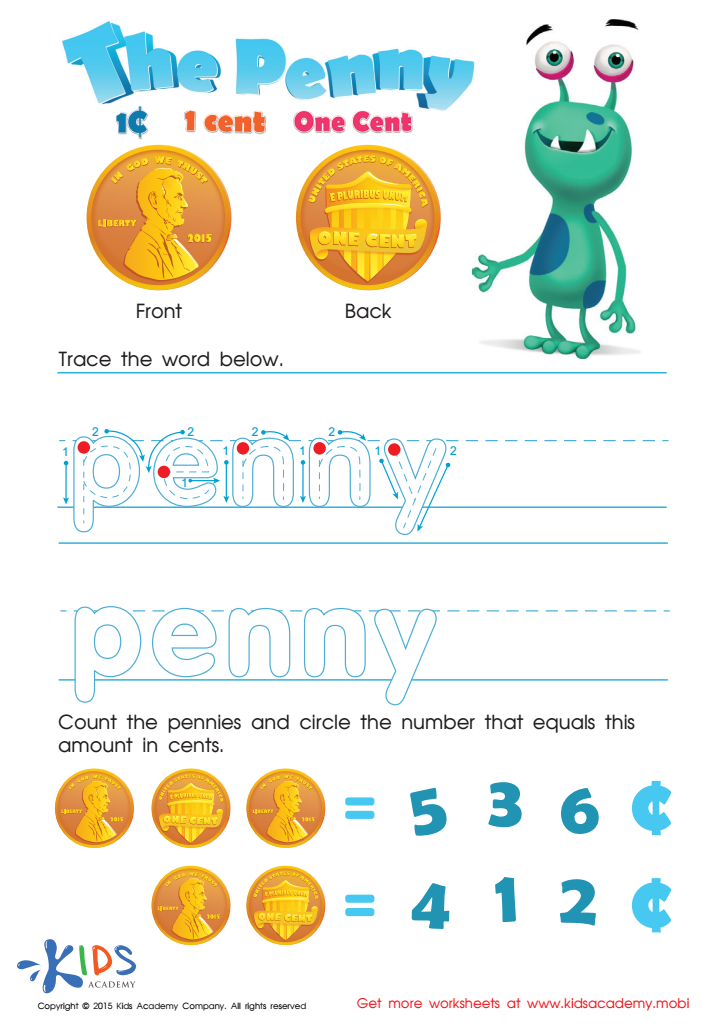
One Cent or the Penny Money Worksheet
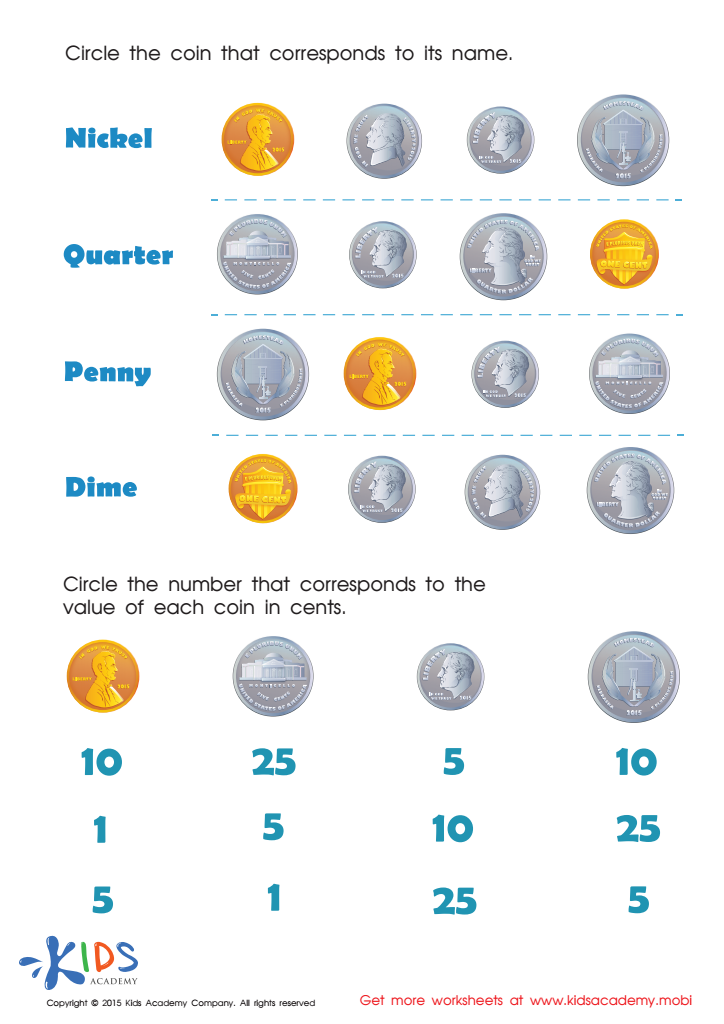
Coin Names and Values Money Worksheet
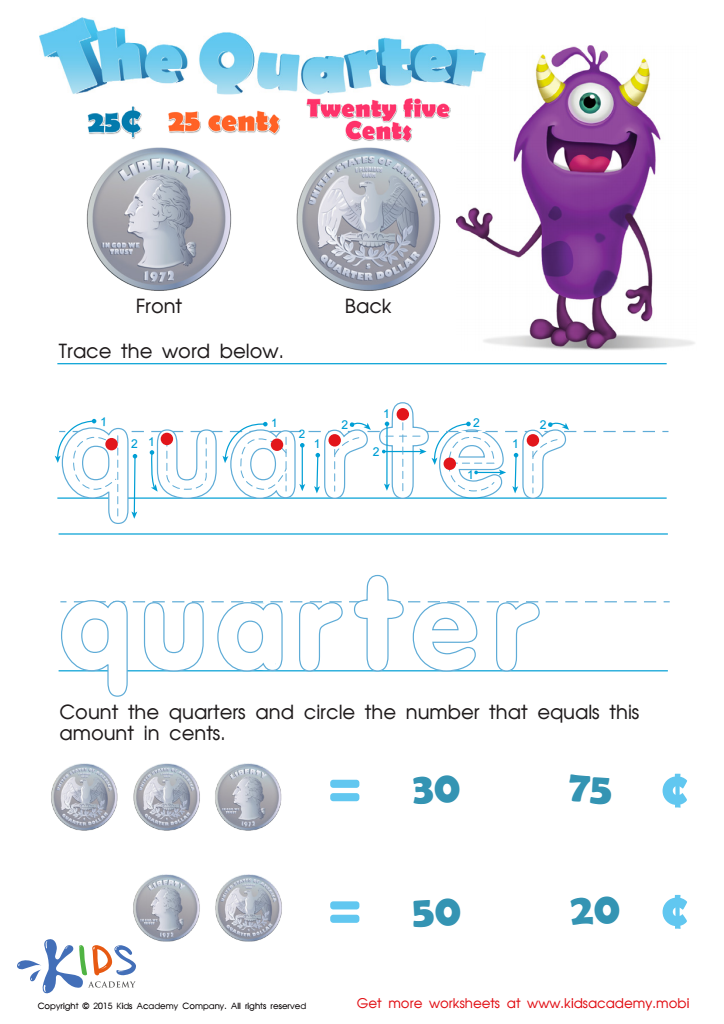
Twenty Five Cents or the Quarter Money Worksheet








Money recognition is a crucial skill for children ages 6 to 9, as it lays the foundation for responsible financial behavior in the future. At this age, children are naturally curious about the world around them, and introducing them to money helps build vital math and cognitive skills. Recognizing coins and bills not only enhances their understanding of basic math concepts, such as addition and subtraction, but also fosters critical thinking as they decide how to save, spend, or share their money.
For parents and teachers, emphasizing money recognition can facilitate discussions about budgeting, saving, and the value of money. By teaching children the significance of different denominations, adults can help them grasp concepts of opportunity cost and comparison shopping in engaging and relatable ways. This early education empowers children to make informed financial choices, ultimately nurturing their independence and fostering a sense of responsibility.
Moreover, as children begin to handle money—such as receiving an allowance or making small purchases—they build confidence and develop social skills. Equipping them with money recognition skills ensures that they are better prepared for real-life financial situations, cultivating a generation that is financially literate and capable of making sound economic decisions.








