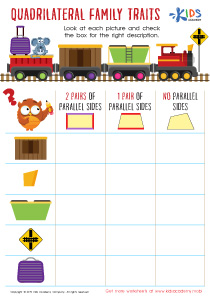
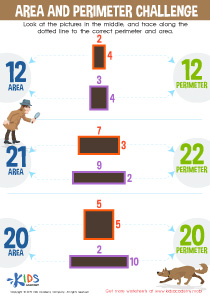
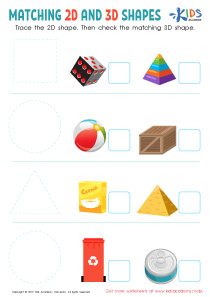
Visual representation comprehension Fractions of Shapes Worksheets for Ages 6-9
3 filtered results
-
From - To
Explore our engaging "Visual Representation Comprehension: Fractions of Shapes Worksheets" designed for children ages 6-9. These worksheets aim to enhance young learners' understanding of fractions through vibrant visuals and interactive activities. Students will recognize, identify, and represent fractional parts of various shapes, from circles to squares, fostering essential math skills. Ideal for classroom use or at-home learning, these resources support visual learners and promote hands-on practice. By using our worksheets, children will gain confidence in their ability to comprehend and work with fractions, laying a strong foundation for future mathematical concepts. Start nurturing their mathematical journey today!
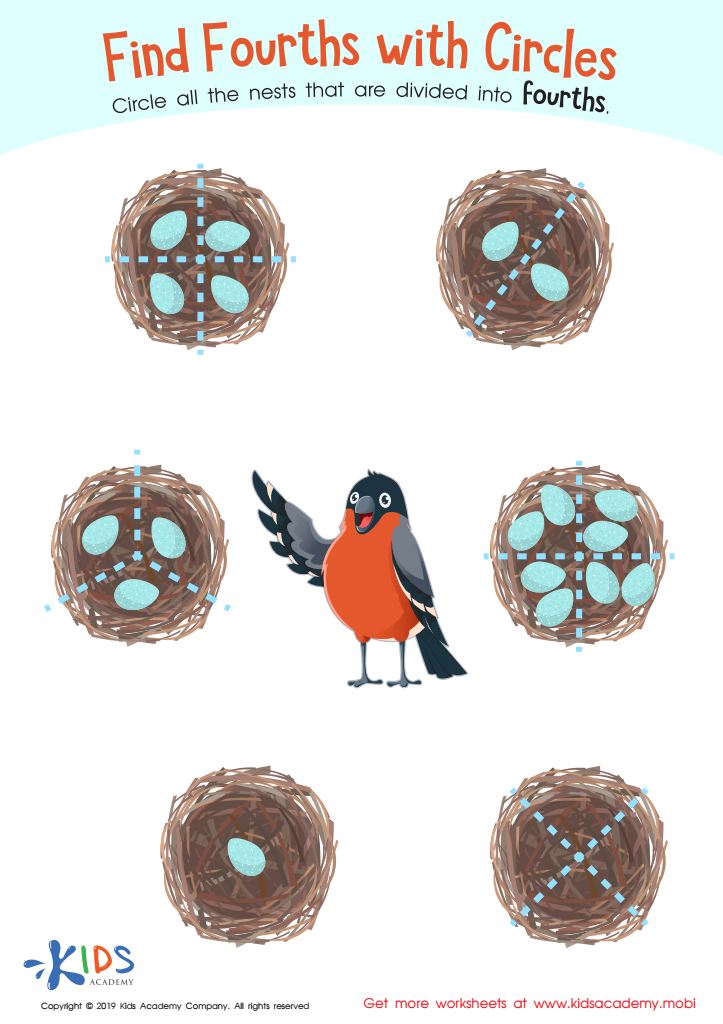
Find Fourths Circles Worksheet
 Assign to My Students
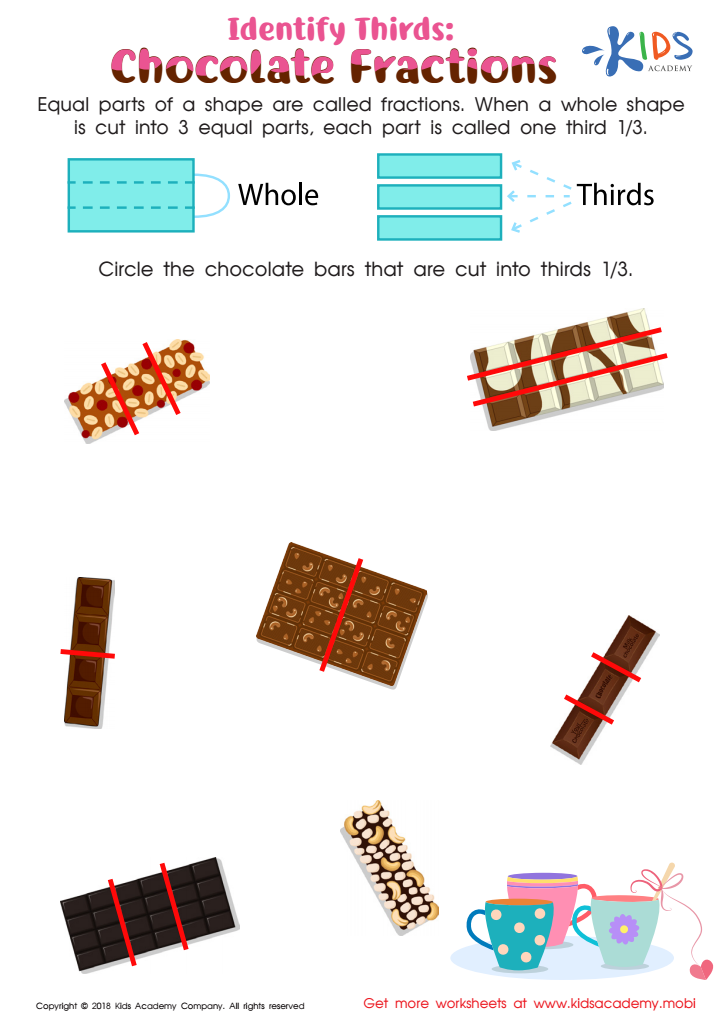
Identify Thirds: Chocolate Fractions Worksheet
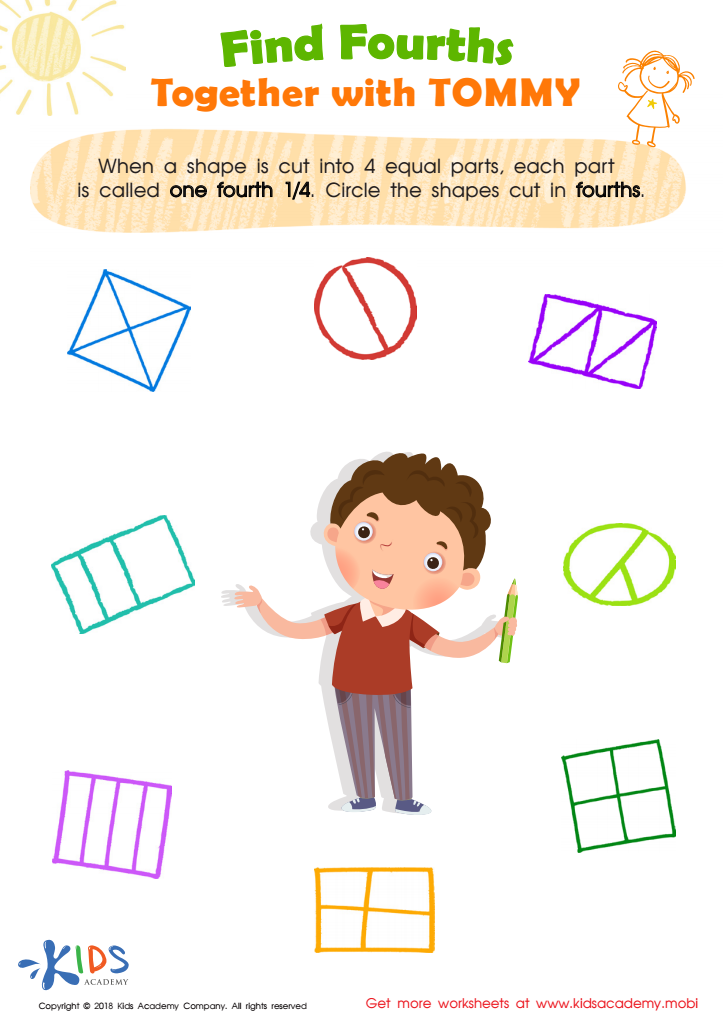
Find Fourths Together with Tommy Worksheet








Understanding visual representation of fractions is crucial for children aged 6-9 as it lays the groundwork for their mathematical reasoning and spatial skills. At this developmental stage, students begin to grasp theconcepts of part versus whole, and visual models help them connect abstract ideas to tangible experience. Utilizing images of shapes divided into fractions—such as circles, squares, or rectangles—enables children to visually interpret and compare fractions effortlessly.
Teachers and parents should prioritize visual representation comprehension in fractions because it enhances critical life skills. It fosters problem-solving abilities while introducing basic concepts of division and proportional reasoning, essential for higher-level math concepts. Moreover, children often learn better through visual means; engaging with diagrams and illustrations can significantly improve their retention and understanding.
As kids progress to more advanced mathematics, a solid foundation in fractions will support their analysis of ratios, percentages, and more complex equations. Encouraging exploration through hands-on activities, such as cutting shapes or using fraction tiles, can make learning interactive and enjoyable. Ultimately, cultivating an early comprehension of visual fractions shapes not only aids academic success but also nurtures a positive attitude toward mathematics that can last a lifetime.