Basic measurement concepts Math Worksheets for Ages 6-9
6 filtered results
-
From - To
Discover our engaging Basic Measurement Concepts Math Worksheets designed specifically for children aged 6-9. These worksheets introduce young learners to essential measurement skills, including length, width, height, and volume. With a variety of interactive activities, including matching, filling in the blanks, and hands-on measuring tasks, students will gain confidence and mastery in measuring objects around them. Each worksheet is tailored to help develop critical thinking and problem-solving skills, making math fun and applicable to everyday life. Perfect for home or classroom use, these worksheets are a valuable resource for nurturing a solid foundation in math for your young learners. Explore the fun today!
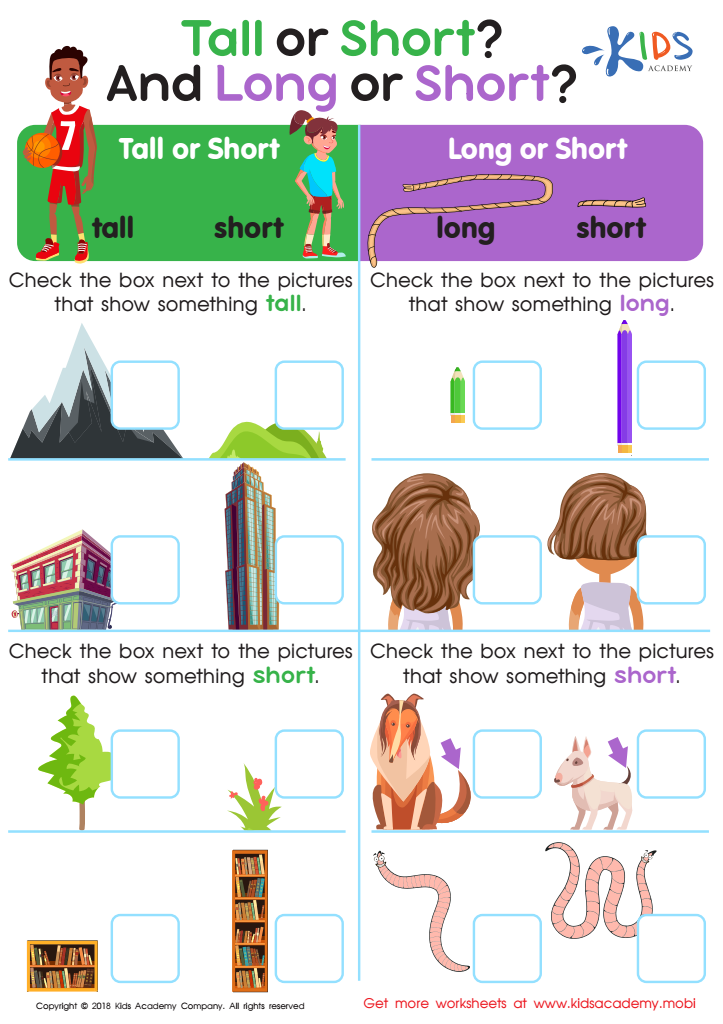
Tall or Short and Long or Short? Worksheet
 Assign to My Students
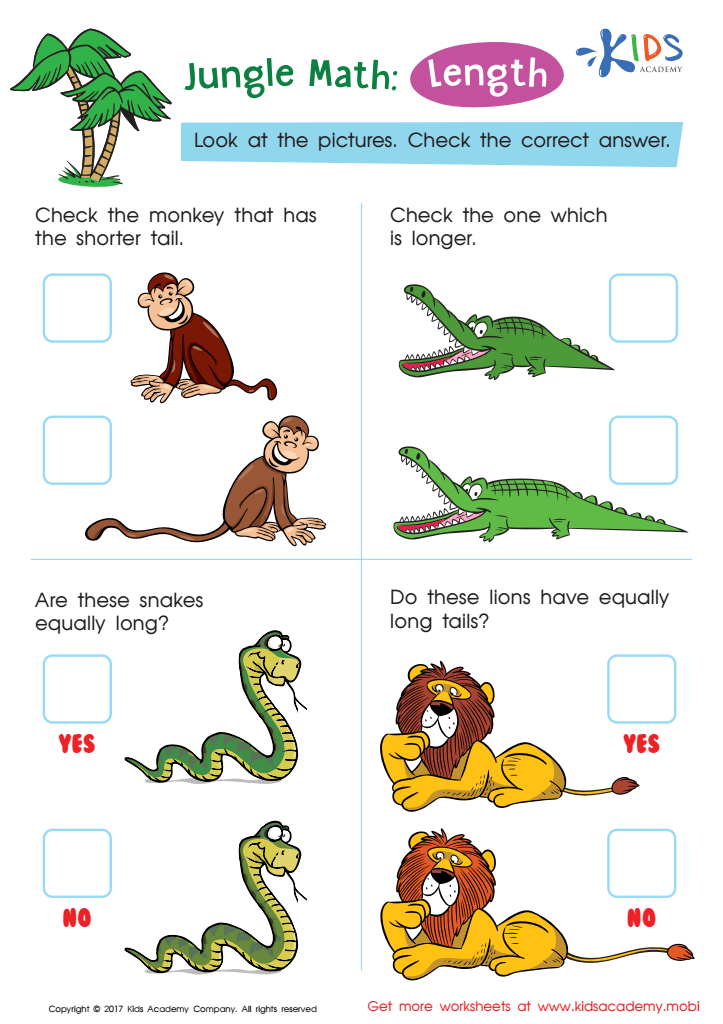
Which One Is Longer - Length Worksheet
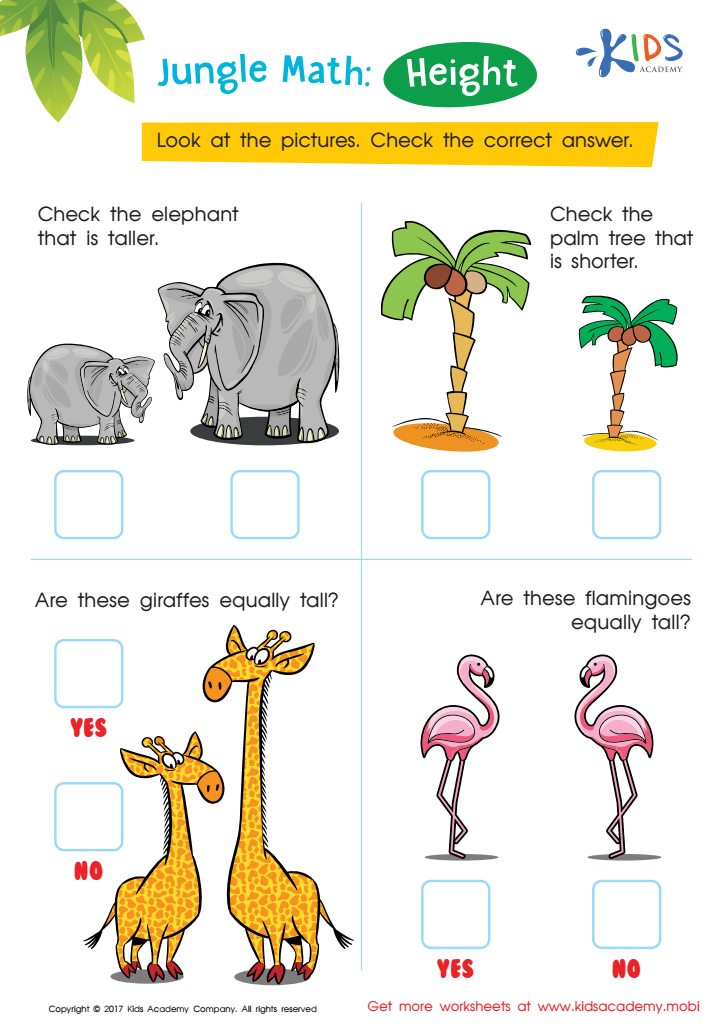
Which Is Taller Worksheet
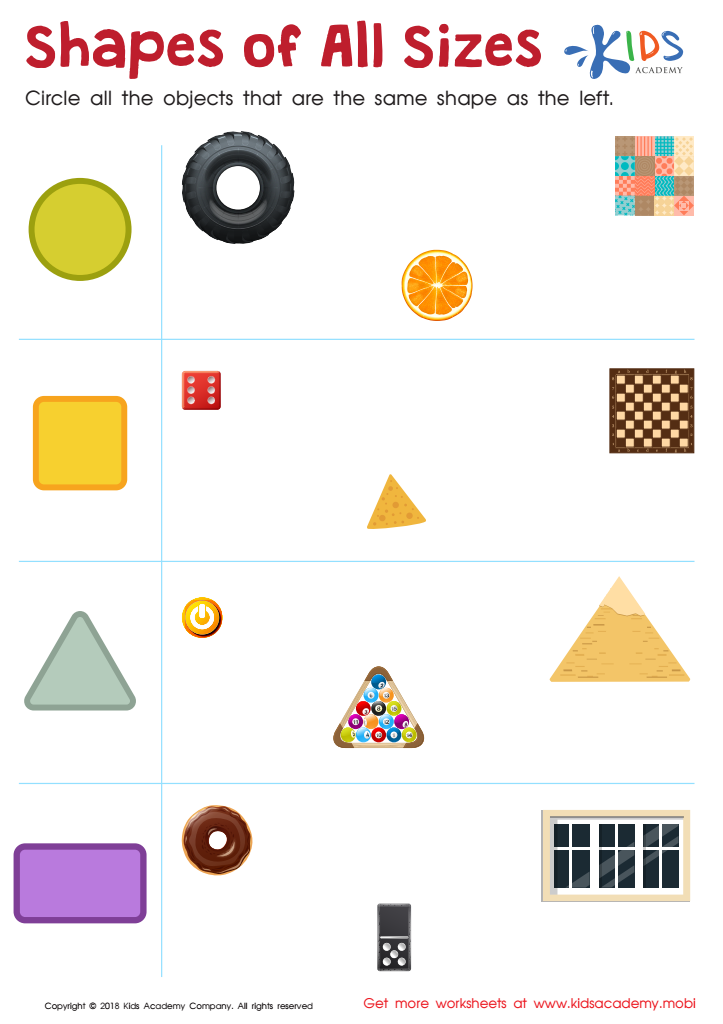
Shapes of All Sizes Worksheet
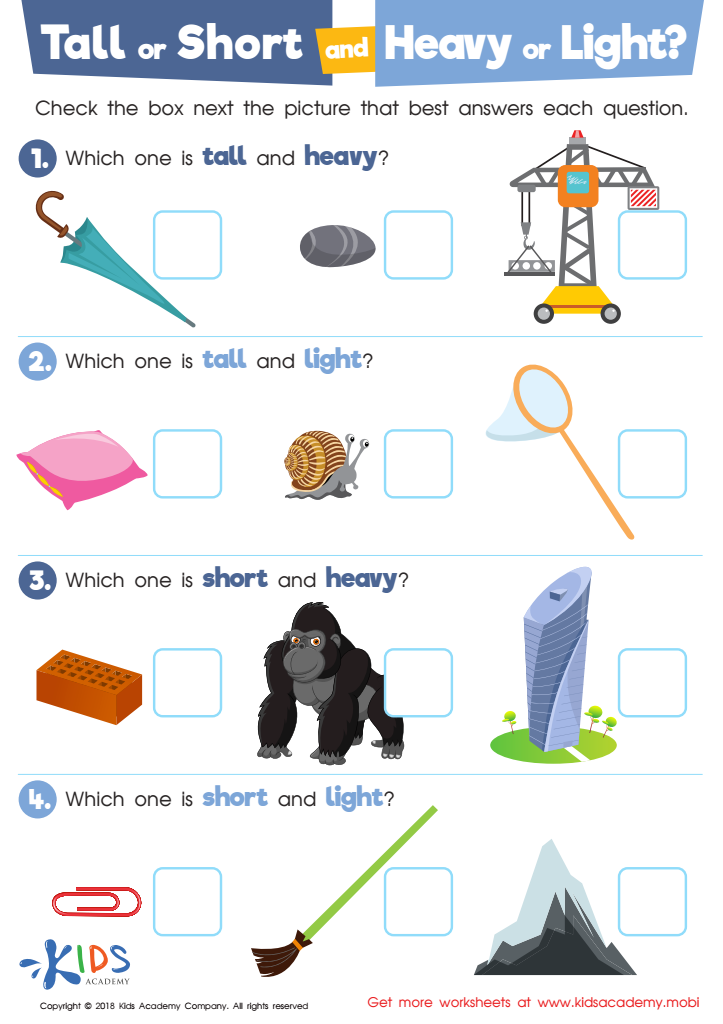
Tall or Short and Heavy or Light? Worksheet
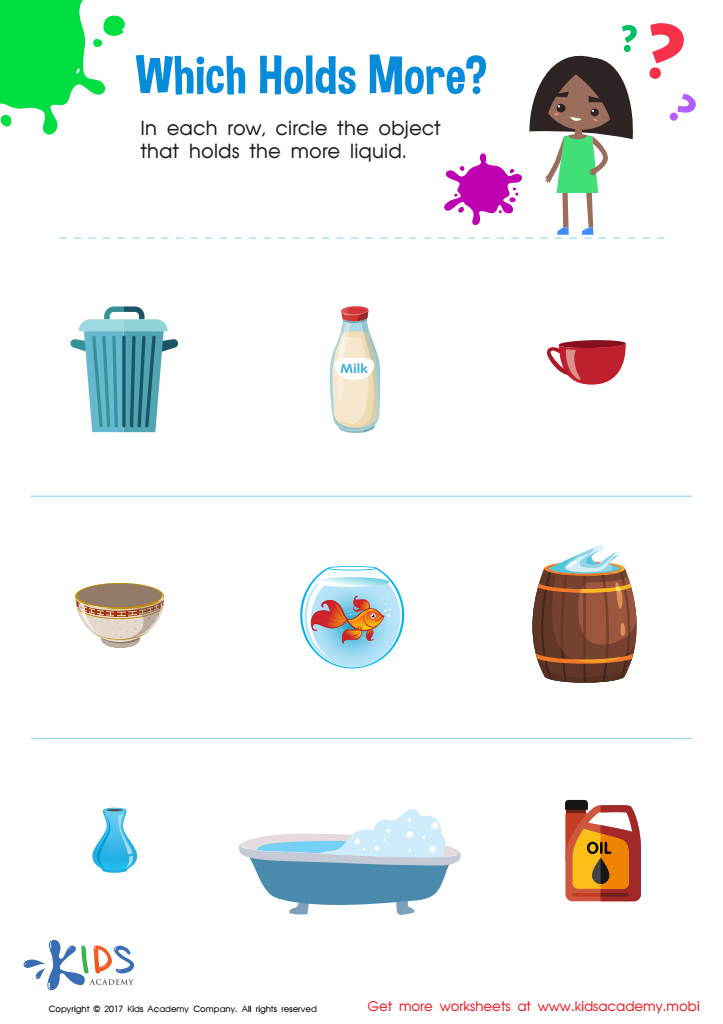
Which Holds More: Capacity Worksheet







Understanding basic measurement concepts is crucial for children ages 6-9, as it lays the foundation for their mathematical development and problem-solving skills. At this age, children begin to grasp key measurement concepts such as length, weight, volume, and time. These skills are not only integral to math but are also essential for everyday activities.
Parents and teachers should care about these concepts because they encourage critical thinking and enhance spatial awareness. For example, when children measure the ingredients for a recipe or compare the heights of their friends, they practice real-world applications of math. This concrete understanding helps kids visualize numbers and increases their confidence in tackling more complex mathematical tasks later on.
Moreover, mastering measurement fosters curiosity and exploration. Children can engage in hands-on activities that promote learning through play, a vital aspect at this developmental stage. Incorporating measurement in daily life encourages interactions and discussions that reinforce learning and make math more enjoyable.
Additionally, strong measurement skills are linked to future academic success. As math becomes more advanced, a solid grasp of measurement concepts will support children in subjects like geometry and science. Therefore, prioritizing measurement education is vital for building a well-rounded mathematical foundation.








