
Developing observational skills Math Worksheets for Ages 6-9
3 filtered results
Difficulty Level
Grade
Age
-
From - To
Subject
Activity
Standards
Enhance your child’s observational skills with our engaging Math Worksheets designed for ages 6-9. These worksheets aim to help young learners develop critical thinking and attention to detail through fun and interactive tasks. By covering various topics such as shapes, patterns, and geometric recognition, these resources encourage children to observe their surroundings and apply their cognitive skills to solve real-life math problems. Perfect for both classroom and home settings, our thoughtfully designed worksheets lay a strong foundation for future math success while fostering a love for learning. Start your child's journey to becoming a more observant and confident math learner today!
Favorites
With answer key
Interactive
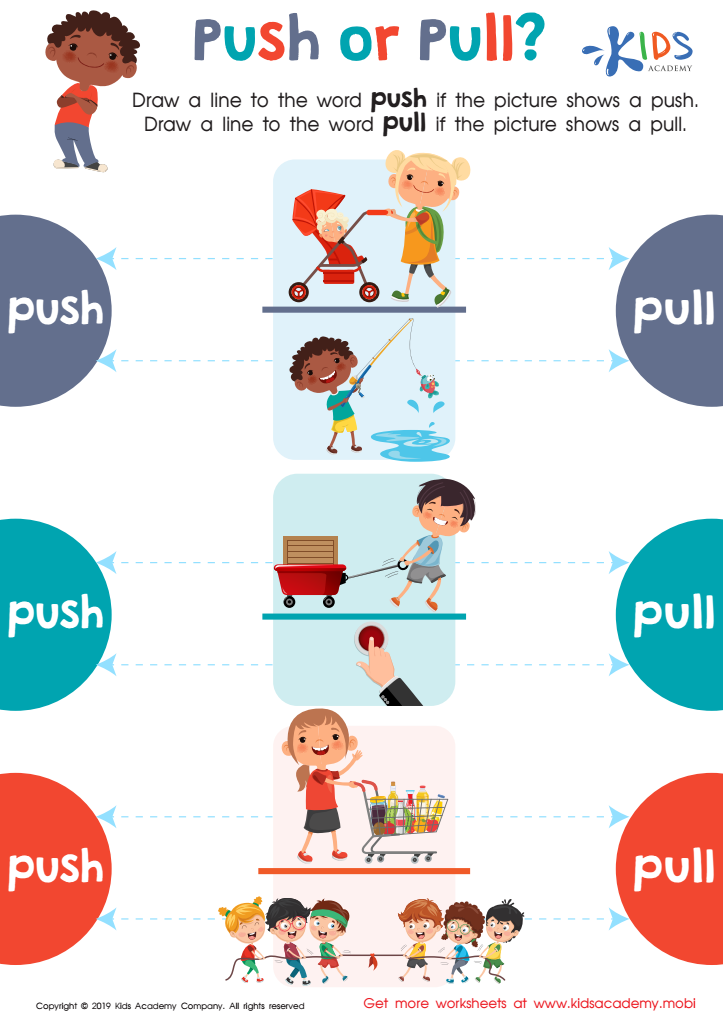
Push or Pull? Worksheet
Young kids may struggle to differentiate push and pull. When they start writing, they may use them interchangeably and wrongly. This worksheet clarifies the concepts: pushing means moving something away, pulling means bringing something closer. It provides pictures and traceable lines for kids to connect each image to the correct word. This helps them understand and remember the difference for future writing and reading.
 Assign to My Students
Push or Pull? Worksheet
Worksheet
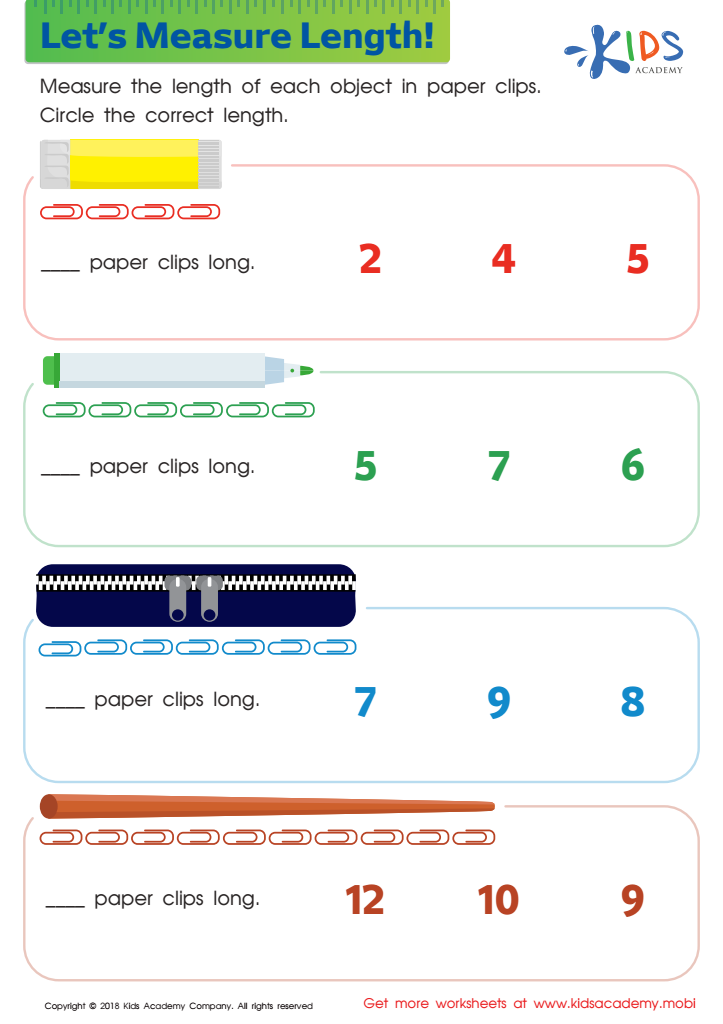
Lets Measure Length Worksheet
It's time to help your child take their measuring skills up a notch! This colorful PDF sheet from Kids Academy introduces kids to measuring with paperclips. Guide them through the page, showing them how to count the clips to measure each image. Then, circle the correct length for each to complete the sheet!
Lets Measure Length Worksheet
Worksheet
Join Kids Academy for Free
Who is primarily going to use this learning content?








Developing observational skills in math for children ages 6-9 is crucial for several reasons. At this age, children are not only exploring their understanding of numbers and operations but are also beginning to relate math concepts to the world around them. Observational skills enable them to identify patterns, make measurements, and solve problems based on their environment. When parents and teachers emphasize these skills, they help children see mathematics as an integral part of their daily experiences, promoting a positive attitude toward the subject.
Furthermore, observational skills lay the foundation for critical thinking and analytical abilities. Children who learn to observe, question, and explore data are better equipped to make connections between mathematical concepts and real-life situations, such as time management, budgeting, or even cooking. Additionally, these skills encourage curiosity and a lifelong love for learning, essential for academic success.
By fostering observational skills in math, parents and teachers can support children's cognitive development, enhance their problem-solving abilities, and encourage collaborative learning experiences. Ultimately, prioritizing observational skills in mathematics helps shape confident, capable learners who are prepared to tackle more complex concepts in the future, ensuring their continued success in both math and other academic areas.








