
Learning times tables Math Worksheets for Ages 6-9
3 filtered results
Difficulty Level
Grade
Age
-
From - To
Subject
Activity
Standards
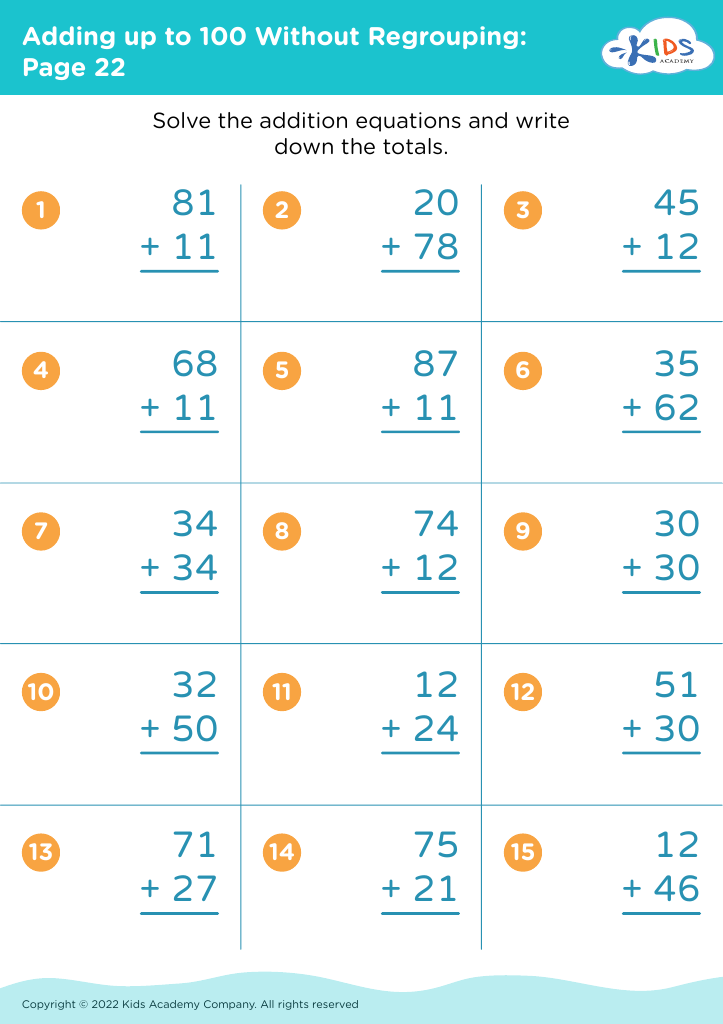
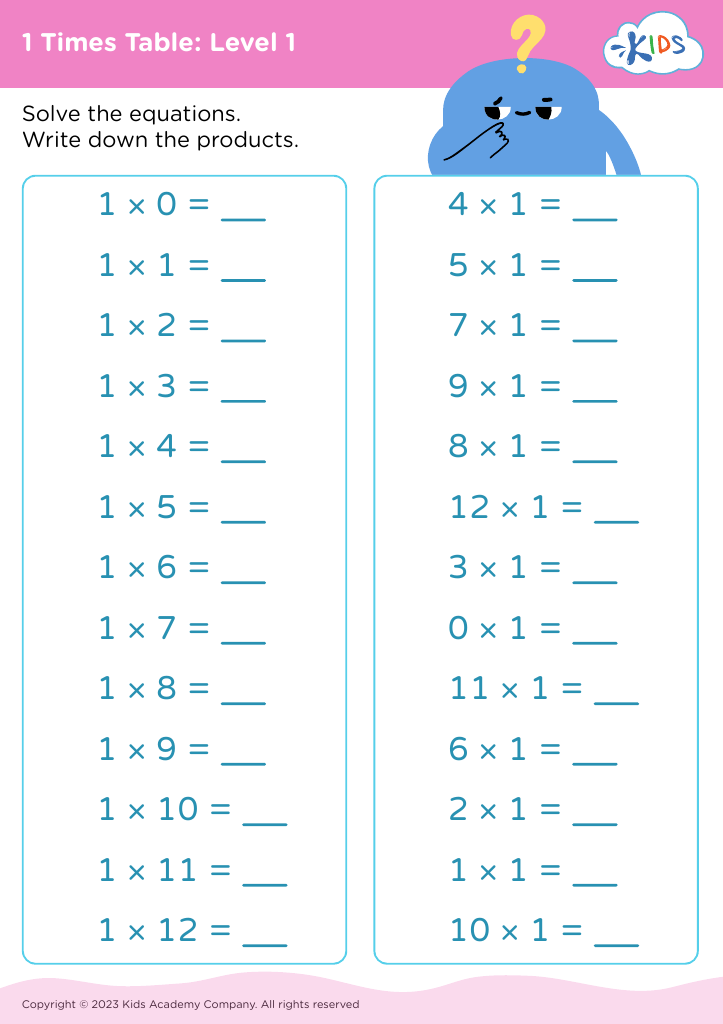
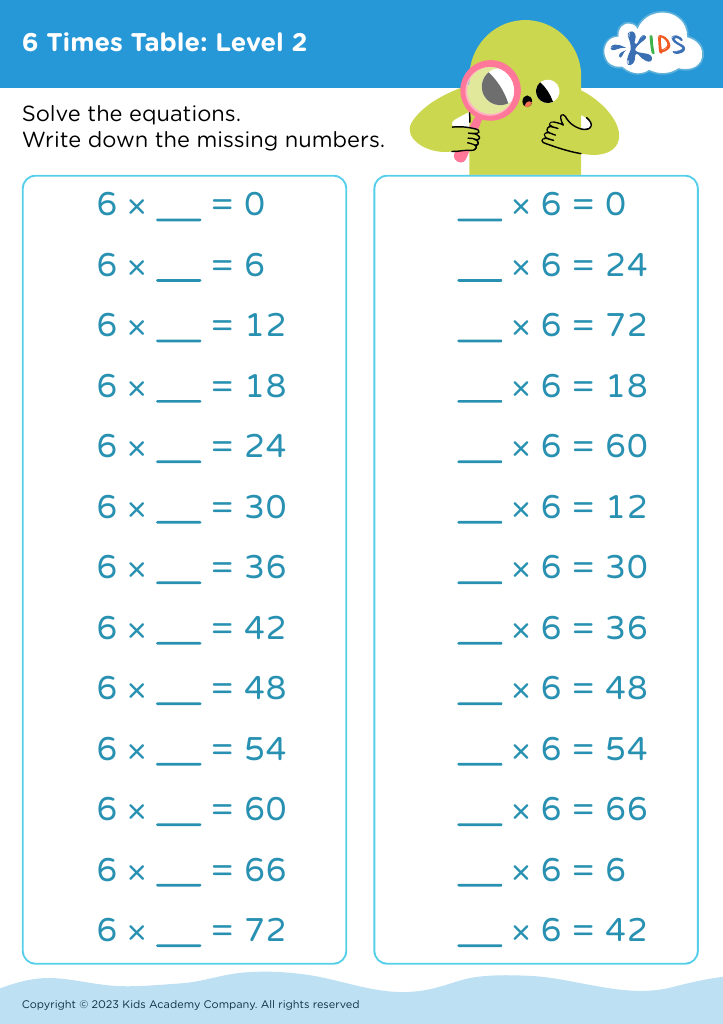
Boost your child's math skills with our engaging "Learning Times Tables Math Worksheets" designed for ages 6-9! Perfect for beginners, these worksheets make mastering multiplication both fun and effective. Each colorful sheet presents times tables in an easy-to-understand format, creatively featuring practical exercises that aid memorization and fluency. Whether your child is just starting out or looking to reinforce their skills, our carefully crafted content will keep them inspired and on track. Powered by Kids Academy's educational expertise, start your child's multiplication journey now and watch their confidence soar!
Favorites
With answer key
Interactive
Join Kids Academy for Free
Who is primarily going to use this learning content?







Learning times tables at a young age is fundamental for children's mathematical development and overall educational progress. For ages 6-9, mastering times tables provides a strong foundation in basic math, which is essential as they advance to more complex mathematical concepts like division, fractions, and algebra. When children proficiently know their times tables, they gain confidence in their math abilities, which fosters a positive attitude toward the subject.
Parents and teachers should prioritize this learning because it aids in developing crucial cognitive skills, such as memorization and recall, which are beneficial beyond math. Introducing times tables early also helps children develop problem-solving skills and logical thinking, both critical for academic success in various subjects.
Additionally, knowing times tables frees up cognitive resources, allowing students to focus on understanding new concepts instead of being bogged down by simple arithmetic. This early competence in mathematics can lead to better performance in STEM (Science, Technology, Engineering, and Mathematics) areas in the future, setting the stage for more educational and career opportunities.
By focusing on times tables, parents and teachers are investing in children's academic confidence, cognitive development, and long-term educational success, which are essential for their overall growth and future potential.








