Problem-solving ability Math Worksheets for Ages 6-9
4 filtered results
-
From - To
Enhance your child's critical thinking and analytical skills with our Problem-Solving Ability Math Worksheets, specially designed for ages 6-9. These engaging worksheets from Kids Academy offer a variety of fun and challenging math problems to improve logical reasoning, pattern recognition, and decision-making. Whether your child is tackling addition, subtraction, multiplication, or division, our high-quality printable resources cater to all levels of young mathematicians. With colorful illustrations and real-world scenarios, your young learner will develop essential problem-solving skills, boosting their confidence and competence in math. Transform learning into an exciting adventure with Kids Academy today!
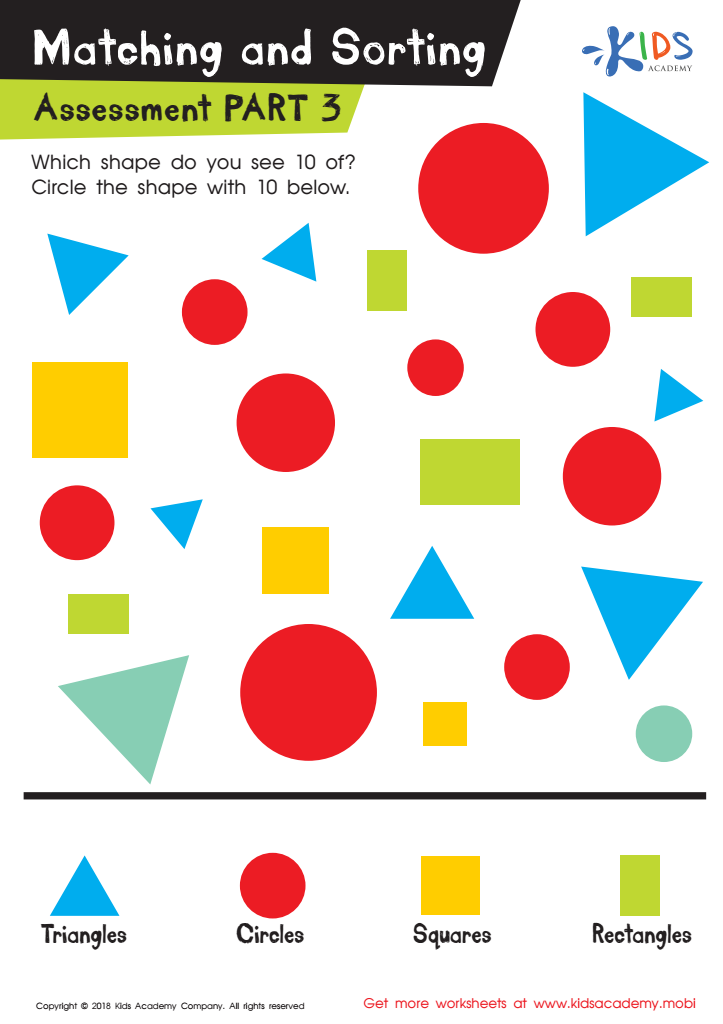
Matching and Sorting for Kindergarten: Assessment 3 Worksheet
 Assign to My Students
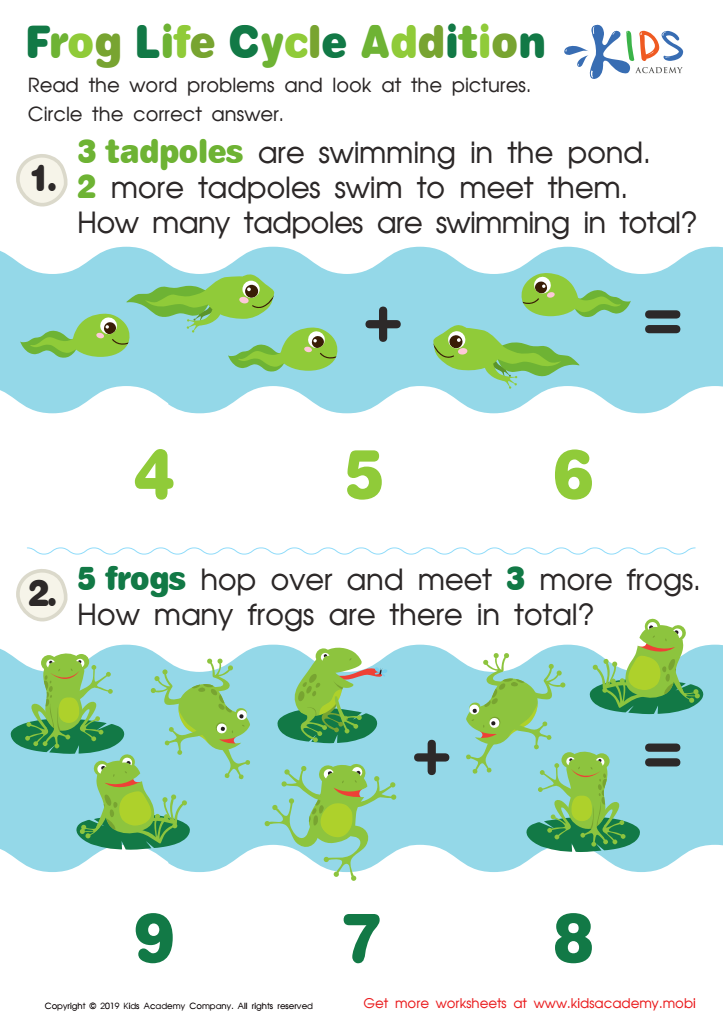
Frog Life Cycle Addition Worksheet
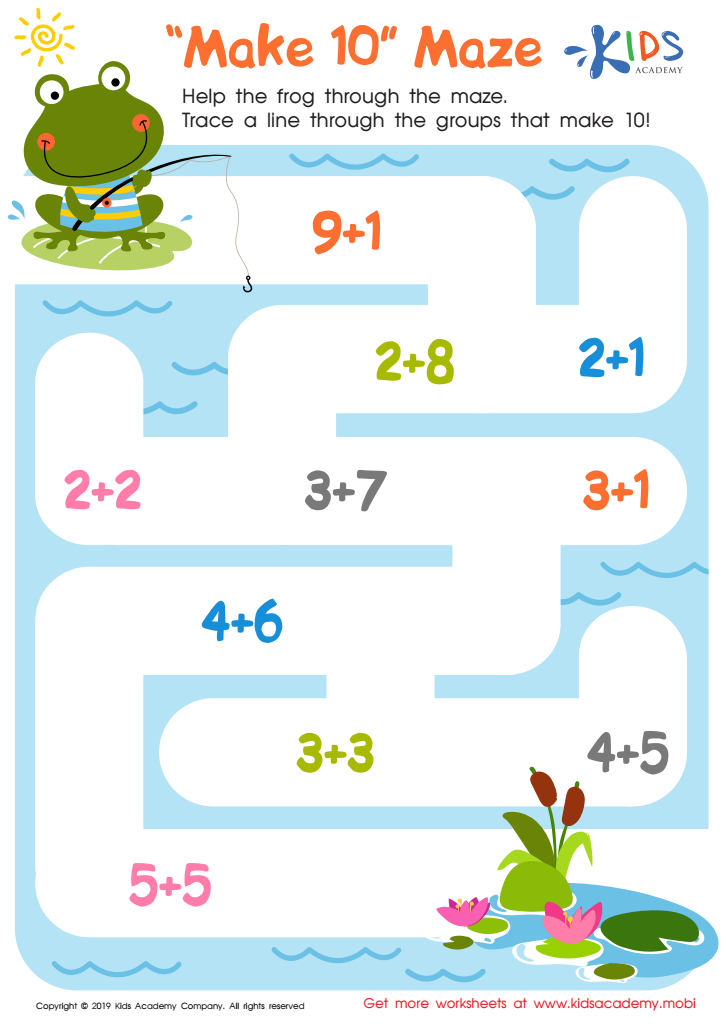
Make 10 Maze Worksheet


.jpg)





Problem-solving ability in math for children aged 6-9 is a cornerstone of early education that has far-reaching implications for their cognitive and emotional development. At this age, children are developing foundational skills that will influence their future learning. When these young minds engage in problem-solving activities, they learn not just to solve math problems, but to think critically, manage challenges, and persist in the face of difficulty.
For parents and teachers, nurturing problem-solving skills helps foster a growth mindset, where children learn that effort can improve competence. This outlook is essential not only in academics but also in life, as it encourages resilience and a willingness to tackle new challenges.
Mathematically, problem-solving enhances understanding of fundamental concepts such as addition, subtraction, multiplication, and division. These skills are critical for more advanced subjects later in their education. Additionally, math problem-solving improves logical thinking and spatial reasoning, both of which are essential skills in everyday life and a wide range of professions.
Moreover, problem-solving activities promote a sense of achievement and build self-confidence. This emotional development is crucial during these formative years, affecting how children perceive themselves and their abilities. When parents and teachers prioritize math problem-solving, they are investing in a well-rounded, capable, and confident young learner.








