Spatial awareness Math Worksheets for Ages 6-9 - Page 2
27 filtered results
-
From - To
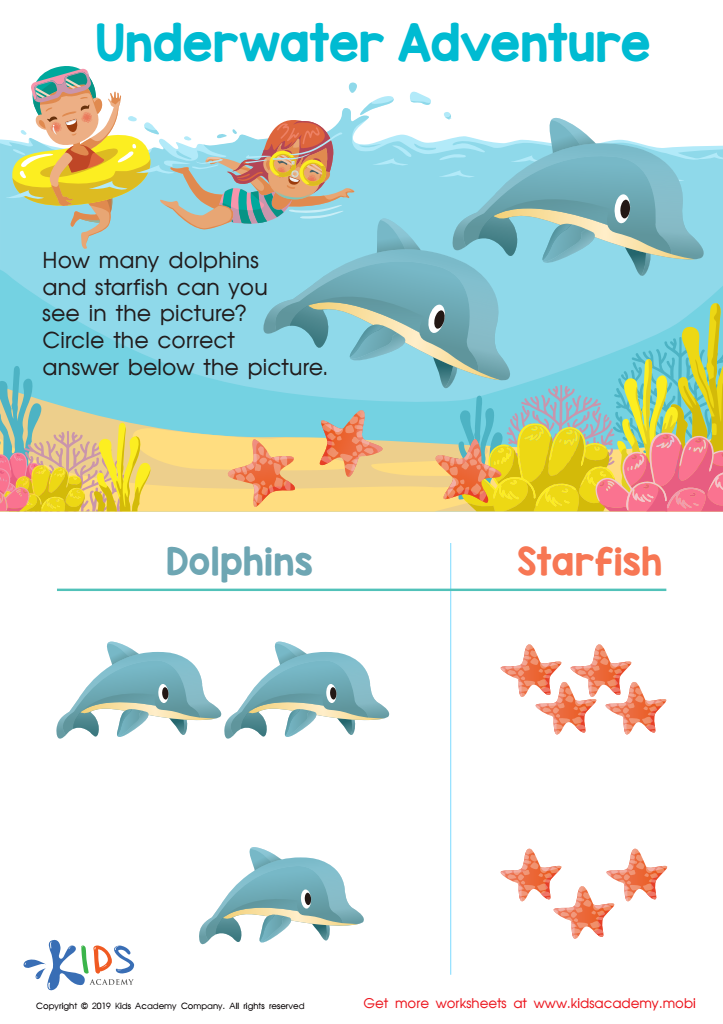
Underwater Adventure Worksheet
 Assign to My Students
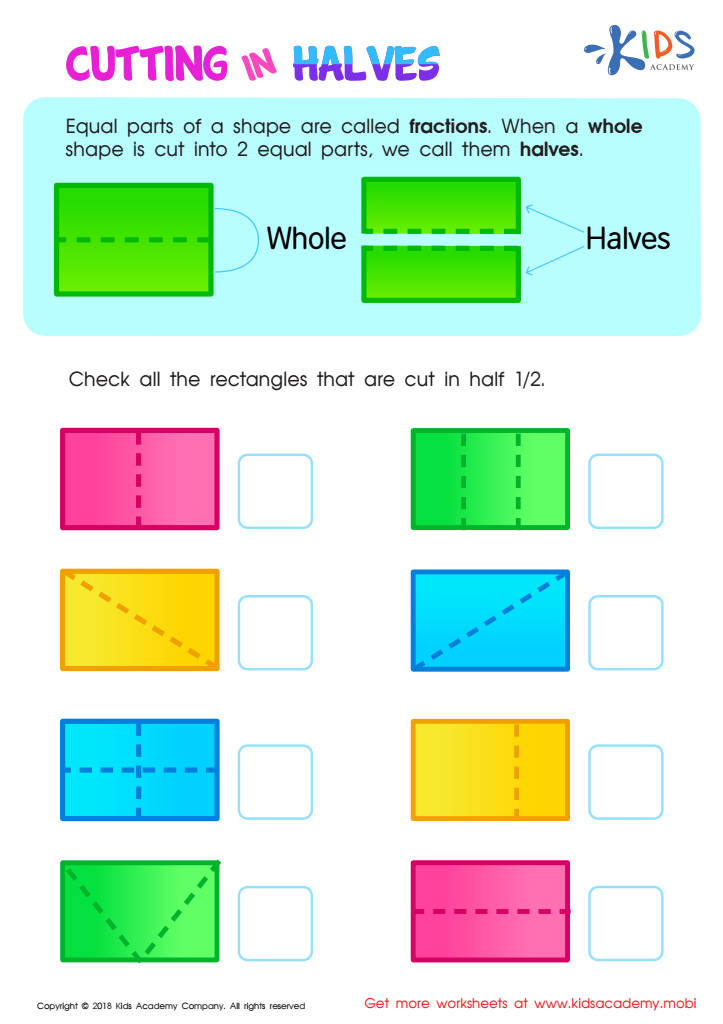
Cutting in Halves Worksheet








Spatial awareness is a crucial skill for children ages 6-9, as it forms the foundation for mathematical understanding and reasoning. Parents and teachers should prioritize developing spatial awareness in young learners, as it enhances their ability to visualize and manipulate objects, recognize patterns, and understand geometry. At this developmental stage, children are beginning to explore concepts such as shapes, sizes, and volumes.
Research shows that strong spatial skills correlate with better performance in various math-related tasks and subjects, including geometry and problem-solving. Enhancing spatial awareness through engaging activities like puzzles, building blocks, and map reading lays the groundwork for more complex mathematical concepts later on.
Additionally, spatial awareness is not limited to math—it plays a significant role in everyday life, affecting how children relate to their environment, navigate spaces, and even connect with science and engineering. By integrating spatial skills into the curriculum, educators and parents empower children to develop critical thinking and creativity.
Moreover, nurturing these skills fosters a love for math and eliminates math anxiety, setting children on a path to academic success. Therefore, parents and teachers should actively engage children in activities that promote spatial awareness, ensuring they have the tools needed for a bright future in academics and beyond.








