Understand sequences Math Worksheets for Ages 6-9
5 filtered results
-
From - To
Unlock your child’s potential in math with our "Understand Sequences" worksheets designed specifically for ages 6-9. These engaging and interactive worksheets help young learners grasp the concept of sequences through fun activities, visual aids, and exercises tailored to their level. With a variety of examples, from simple number patterns to everyday scenarios, children will enhance their critical thinking and problem-solving skills. Perfect for classroom use or at-home learning, these resources foster a love for math while providing essential practice in understanding order and logic. Help your child build a strong foundation in math by exploring sequences today!
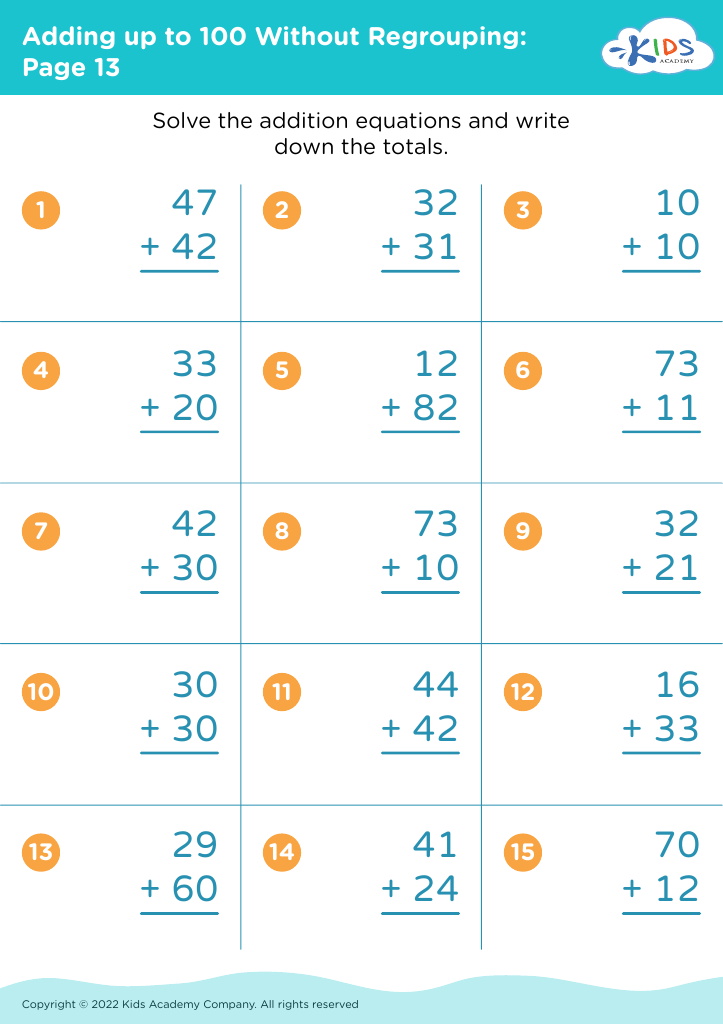
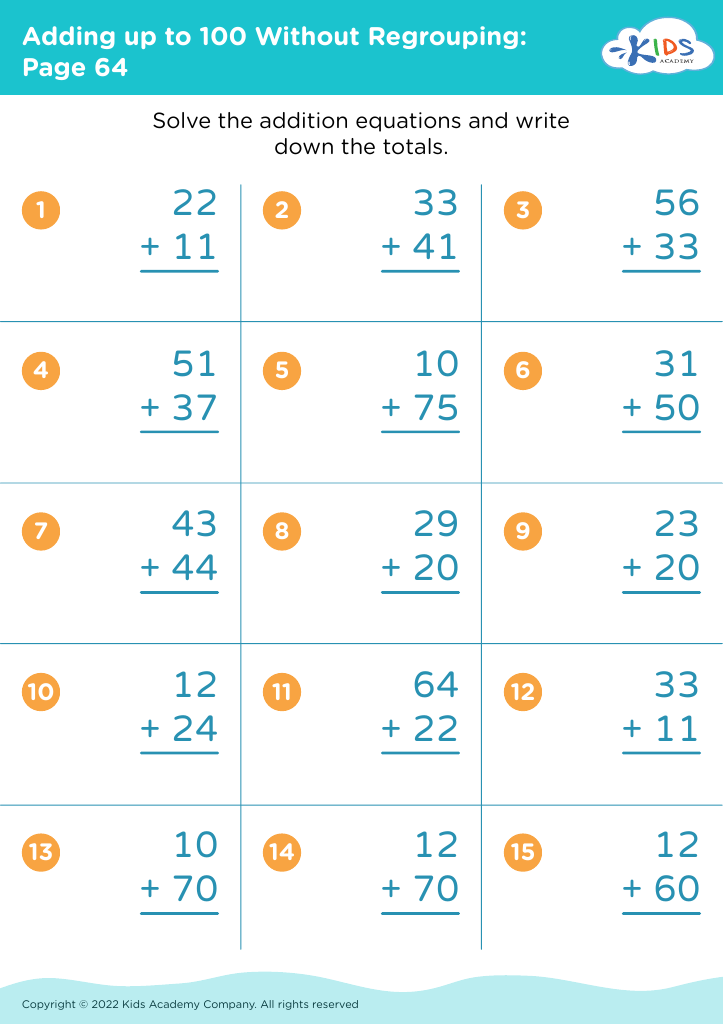
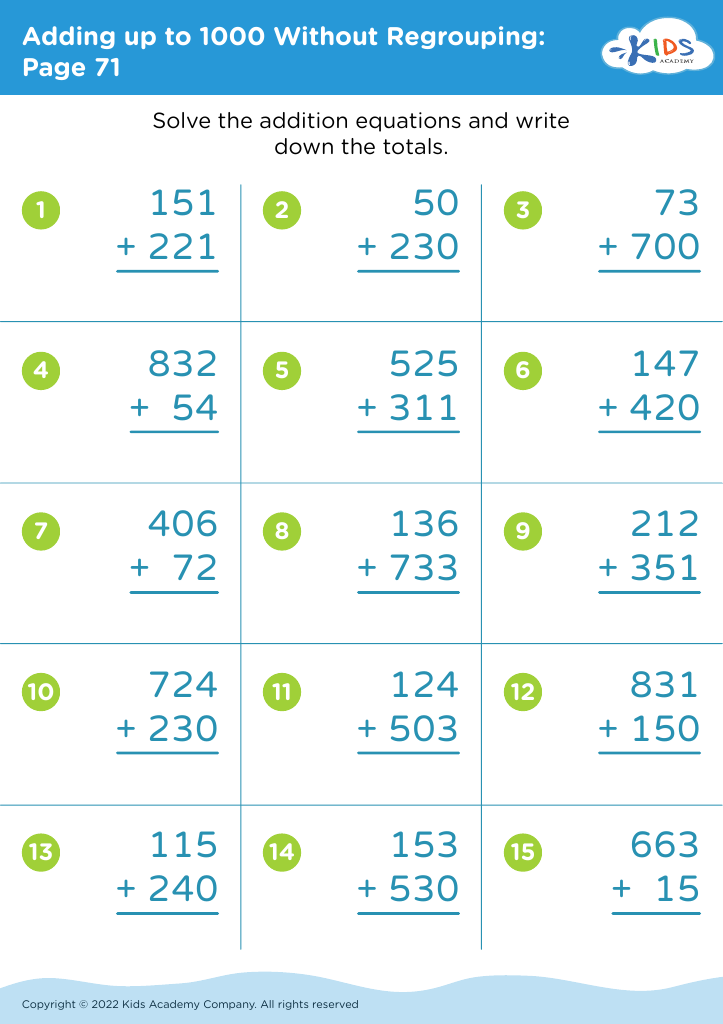
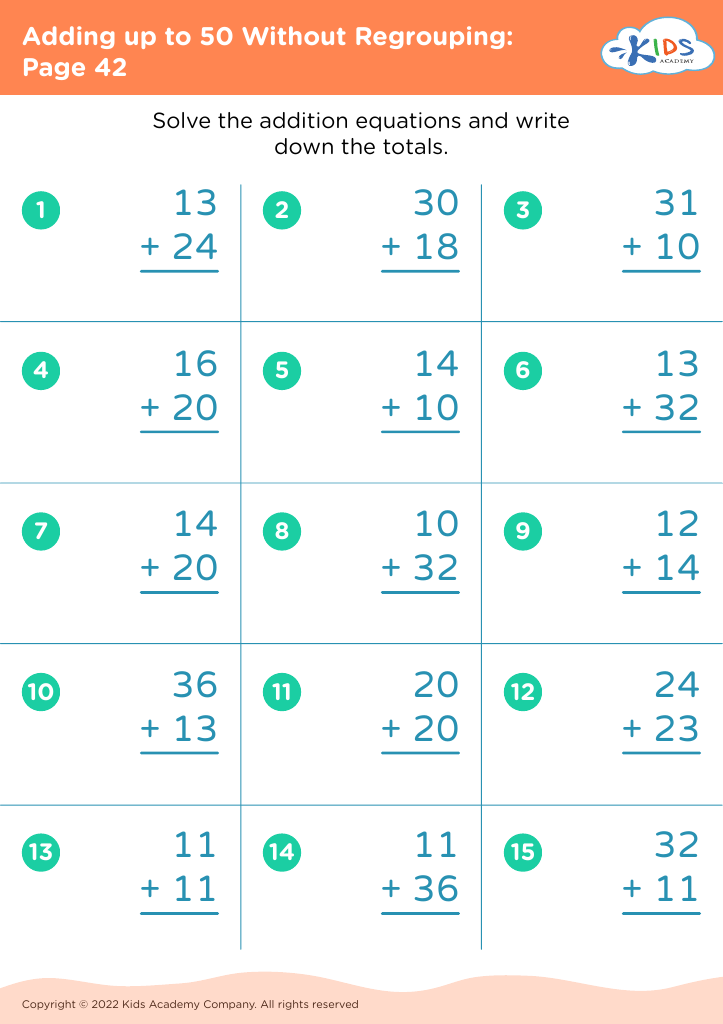




.jpg)



Understanding sequences in math is crucial for children aged 6 to 9, as it lays the foundation for important mathematical concepts. For parents and teachers, emphasizing this skill is essential for several reasons.
Firstly, sequences help children recognize patterns, which is a fundamental aspect of mathematical reasoning. By identifying and understanding patterns, children develop critical thinking and problem-solving skills that will benefit them across various subjects, not just math. This skill is further reflected in everyday life, from predicting outcomes to organizing information.
Secondly, sequences introduce the concept of order and organization, enabling children to comprehend more complex ideas such as arithmetic progressions and functions later on. As students build confidence in sequences, they become more adept at arithmetic and comprehension of larger numerical concepts, ultimately enhancing their overall mathematical fluency.
Lastly, grasping sequences can aid in developing memory and cognitive skills. Activities involving sequences, whether through games, music, or storytelling, can make learning enjoyable and engaging, fostering a positive attitude toward math.
In summary, instilling a strong understanding of sequences in young children equips them with vital skills that transition smoothly into more advanced math, benefiting their academic journey and daily decision-making.








