Weather identification Math Worksheets for Ages 6-9
3 filtered results
-
From - To
Discover our engaging Weather Identification Math Worksheets designed for children aged 6-9! These worksheets seamlessly blend weather education with essential math skills, making learning fun and interactive. Children will explore various weather conditions while practicing counting, addition, and recognition of patterns. Each worksheet is crafted to enhance critical thinking, improve fine motor skills, and encourage creativity through colorful illustrations. Perfect for both classroom activities and home learning, these resources help young learners connect mathematical concepts with real-world observations. Download our Weather Identification Math Worksheets today and inspire your child’s curiosity about nature while reinforcing their math abilities!
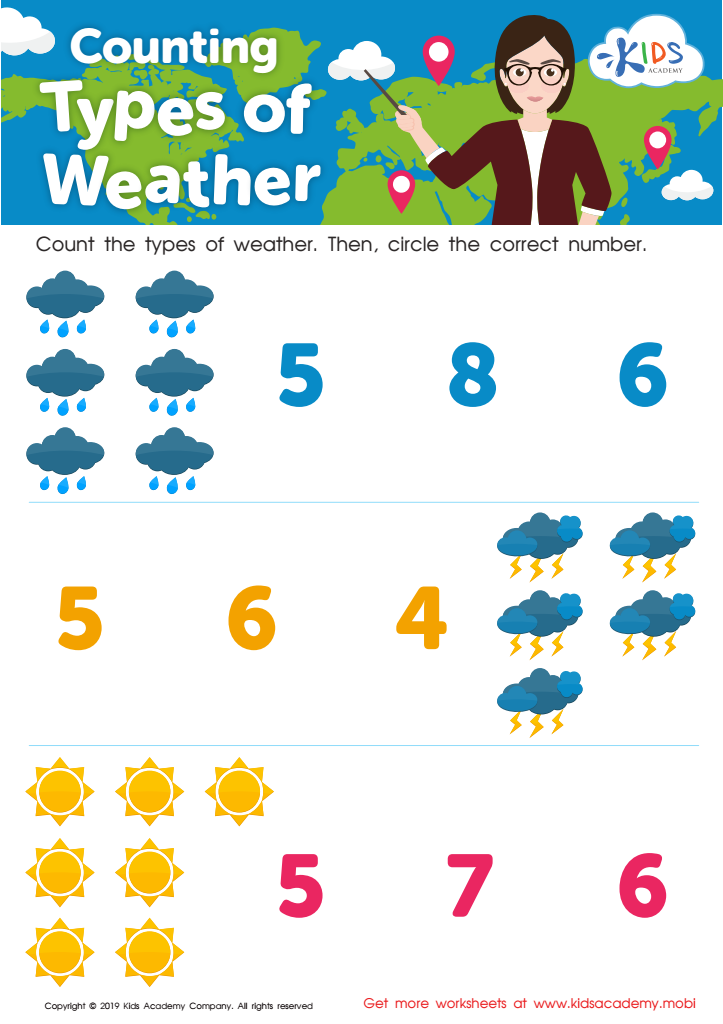
Counting Types of Weather Worksheet
 Assign to My Students







Weather identification math provides an engaging and interactive way for children aged 6-9 to develop essential math skills while also fostering their understanding of the world around them. For parents and teachers, this interdisciplinary approach combines science, math, and critical thinking, enriching students' learning experiences.
Understanding weather patterns encourages children to observe their environment and recognize the impact of weather on daily life. By integrating math into weather identification, students learn to collect and analyze data, interpret graphs, and create charts. Such skills are fundamental in developing numerical literacy and analytical thinking.
Moreover, teaching children to relate math to real-world phenomena, such as measuring temperature or predicting precipitation, makes math more relatable and enjoyable. This hands-on engagement can spark a lifelong interest in science and math, as children see the relevance of these subjects in their everyday lives.
Furthermore, weather identification promotes teamwork and communication skills when children work together to gather information or analyze data. This holistic learning approach not only enhances academic skills but also nurtures curiosity, collaboration, and critical thinking—essential traits for the future. Therefore, incorporating weather identification math into early education is crucial for fostering well-rounded, informed, and capable young learners.








