Filters

6 filtered results

Clear all filters
Favorites
With answer key
Interactive

6 filtered results

Difficulty Level

Grade


Discover an exciting way for kids aged 6-9 to master numbers 0-10 with our Animal Recognition Numbers Worksheets! These engaging worksheets blend math skills with delightful animal images, making learning numbers a thrilling adventure. Perfect for young learners, the activities enhance counting, number recognition, and basic arithmetic, all while students enjoy colorful, captivating animal themes. Whether used in classrooms or at home, these printable resources provide fun, interactive practice to support math proficiency. Encourage a love for learning and boost confidence in numbers with our expertly designed, educational worksheets tailored to early learners.

Check out this FREE Trial Lesson on Numbers 0–10 for age 6-9!

Farm Animals and Pets

Favorites
With answer key
Interactive
  • 6-9
  • Animal recognition
  • Numbers 0–10
Counting Pets Worksheet

Counting Pets Worksheet

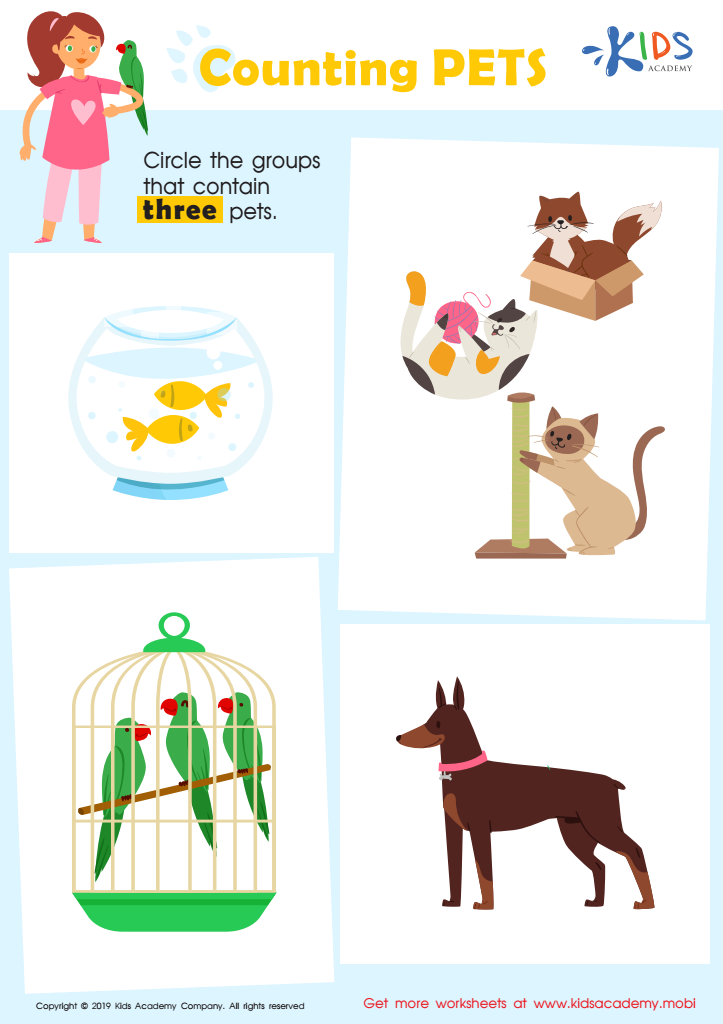
Kids adore their pets, making this free pet counting worksheet the perfect way to combine something they love with math skills. They'll count the number of pets, circle the pictures with three pets, and use one-to-one picture representation to help. This exercise will cultivate their learning and reinforce their love of animals!
Counting Pets Worksheet
Worksheet
Counting Sea Animals Worksheet

Counting Sea Animals Worksheet

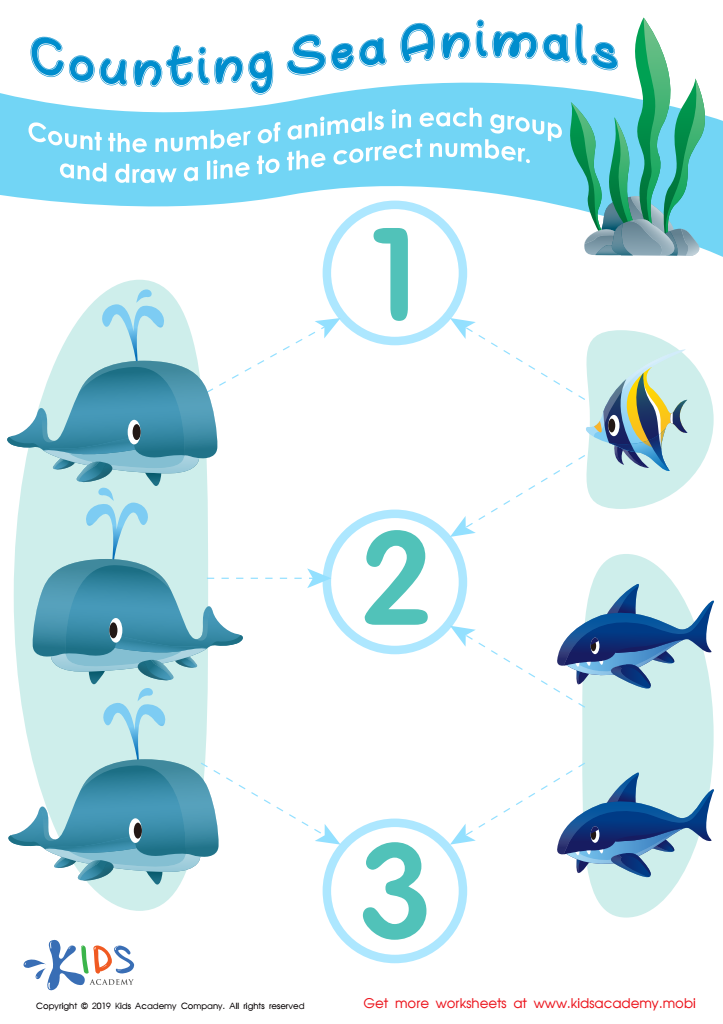
Kids adore sea creatures for their captivating, unknown nature. Let them use this free worksheet to practice counting, where they match numbers to groups of animals. Through traceable lines, they'll easily connect numbers to sea creatures and learn math with vibrant, underwater fun!
Counting Sea Animals Worksheet
Worksheet
Dot to Dot Numbers 1-10

Jungle Counting Connect Dots Worksheet
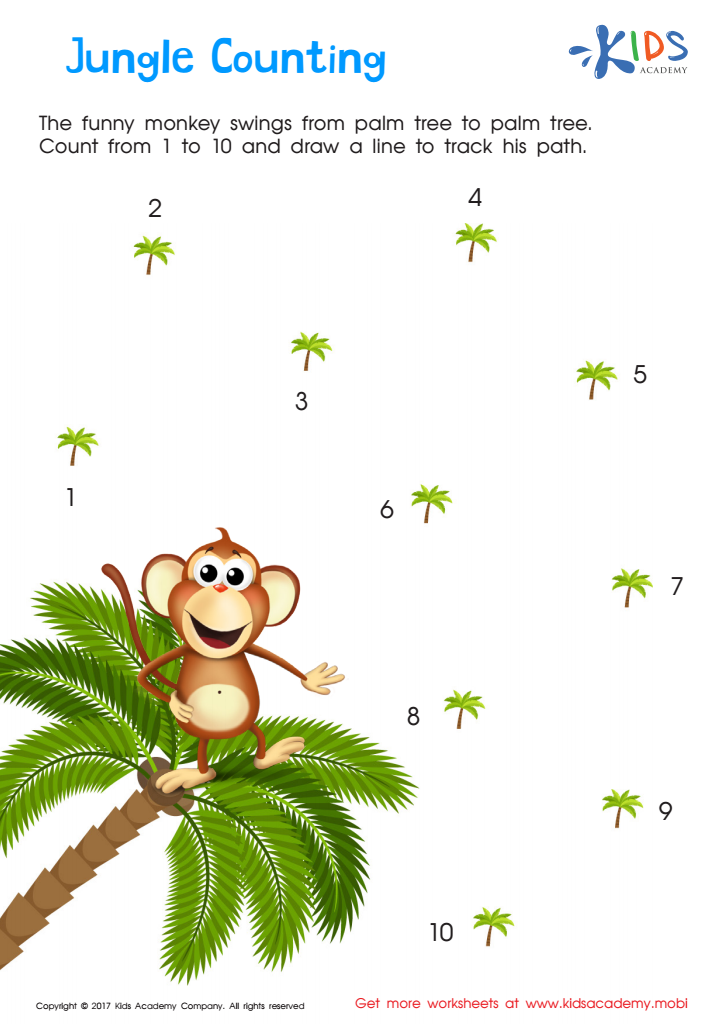
Help your child count from 1-10 and practice problem solving skills with this dot to dot worksheet. Your child will enjoy helping the cute monkey swing from tree to tree while honing their math skills. Let them have a jungle-themed counting adventure!
Jungle Counting Connect Dots Worksheet
Worksheet
Count and Match: Feed the Animals Worksheet

Count and Match: Feed the Animals Worksheet

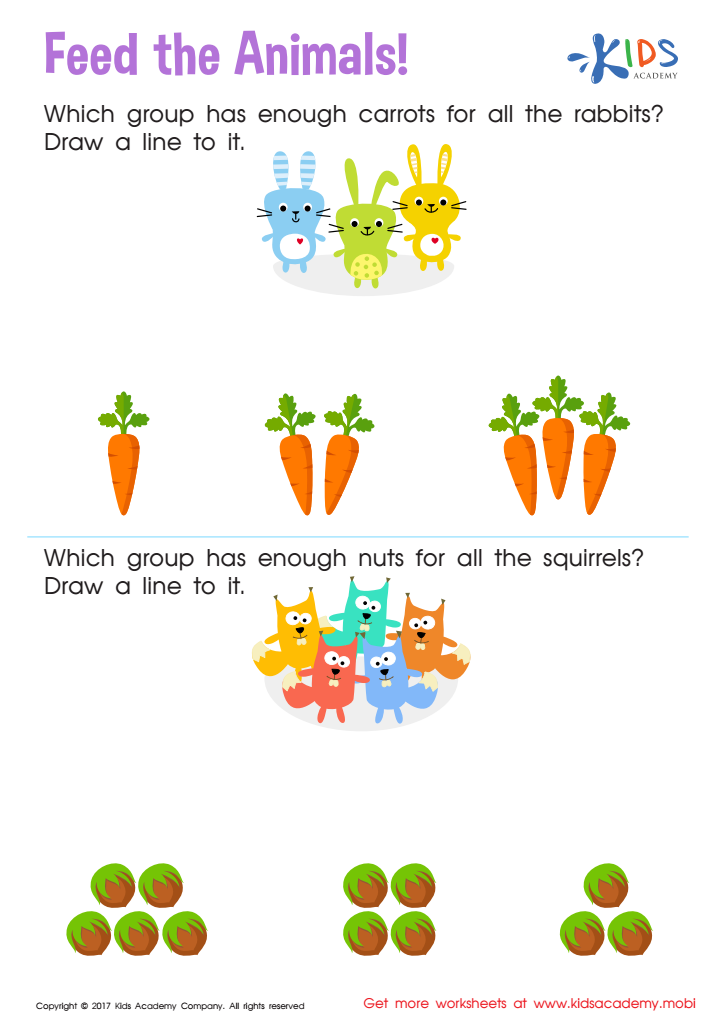
Learning and growing involves more than just numbers, phonics and comparison. This Feed the Animals worksheet helps kids to exercise their reasoning skills. They must work out how many rabbits and carrots there are, and then repeat the process for the squirrels. This encourages problem solving and counting skills.
Count and Match: Feed the Animals Worksheet
Worksheet
Counting Birds Worksheet

Counting Birds Worksheet

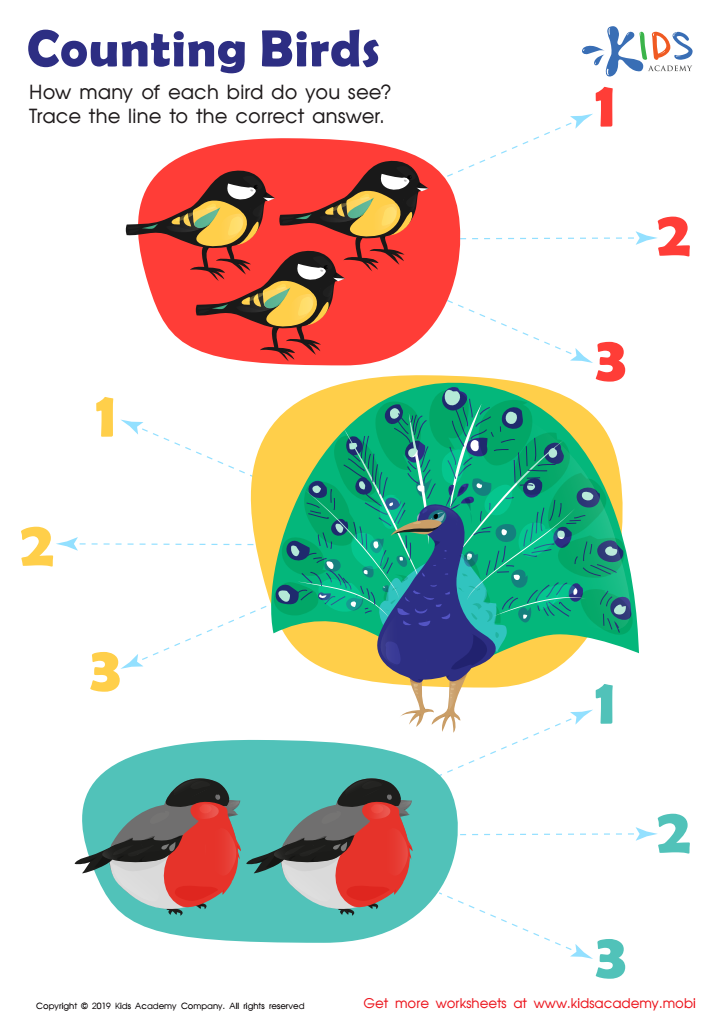
Kids love counting! With each number they learn, they can make a one-to-one representation with an item. The more practice they get, the better. Try this counting worksheet with traceable lines, to give your children practice and work on their fine motor skills. They will enjoy connecting the picture to the right number, and will feel like mathematicians with each success!
Counting Birds Worksheet
Worksheet
Counting Farm Animals Worksheet


Counting Farm Animals Worksheet

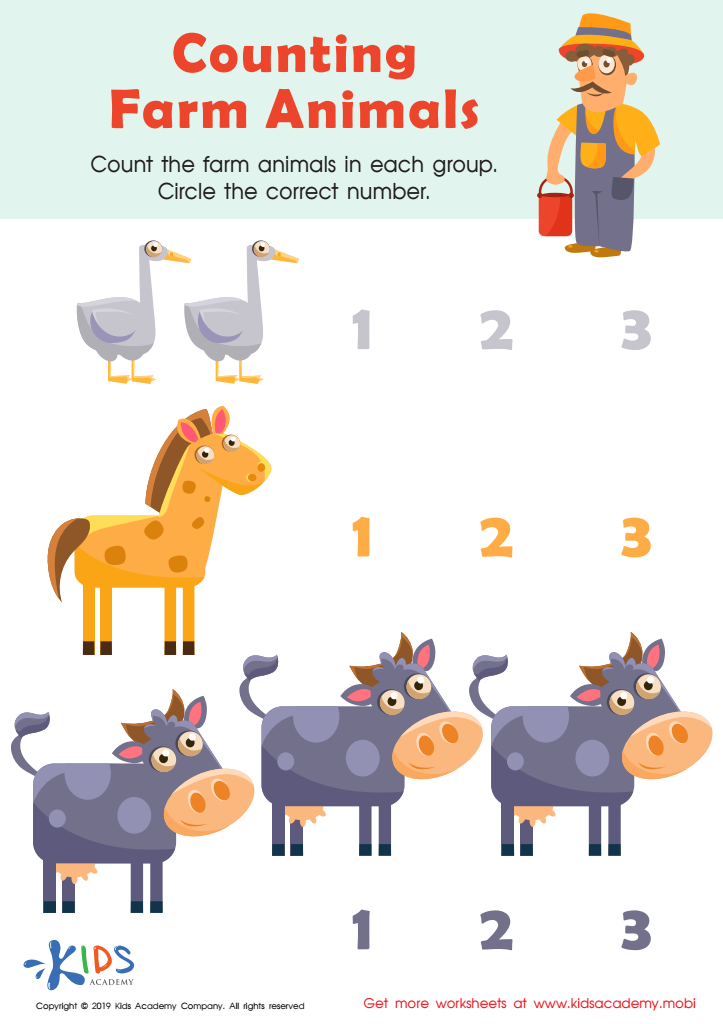
Kids love farms! That's why this free farm animals counting worksheet is great for building number sense and counting skills. Have your young mathematician count the pictures, then circle the corresponding number. It's a fun and meaningful way to practice counting.
Counting Farm Animals Worksheet

Worksheet


Animal recognition and numeracy are critical aspects of early childhood development. For children aged 6-9, learning to associate numbers with animals serves a dual purpose – it nurtures numeracy skills while simultaneously developing observational and cognitive capacities.

Understanding numbers 0-10 forms the foundation of mathematical proficiency. Representing these numbers with animals enhances this learning by engaging children’s innate curiosity about animals, enriching the educational experience. For example, using "three ducks" or "six fish" provides a visual and tangible object for children to connect with numerically, making abstract concepts more concrete and easier to grasp.

Moreover, this approach supports memory retention and recall by utilizing multi-sensory learning pathways. Visual recognition of animals complemented with numerical values involves both the visual and logical parts of the brain, leading to improved long-term retention.

Additionally, engaging in such activities encourages children to observe carefully, improving their attention to detail. It also promotes language development, as children discuss their observations: "Can you count how many tigers are there?"

Parents and teachers benefit too. Such activities create enjoyable, interactive learning sessions, strengthening relationships and fostering a positive educational environment. Ultimately, blending animal recognition with basic numeracy brings a holistic approach to early education, building pivotal skills needed for more complex learning in the future.