Dinosaur Knowledge Reading Non-Fiction Worksheets for Ages 6-9
4 filtered results
-
From - To
Introduce your child to the fascinating world of dinosaurs with our engaging Dinosaur Knowledge Reading Non-Fiction Worksheets, tailored for ages 6-9. These educational worksheets from Kids Academy are designed to enhance reading comprehension and expand your child's knowledge about the prehistoric giants. Each worksheet combines interesting facts, vivid illustrations, and carefully crafted activities to foster learning in a fun and interactive manner. Perfect for homeschooling or supplementing classroom education, these worksheets will ignite curiosity and help your young reader develop essential reading and cognitive skills. Dive in and let your child discover the amazing creatures that once roamed the Earth!
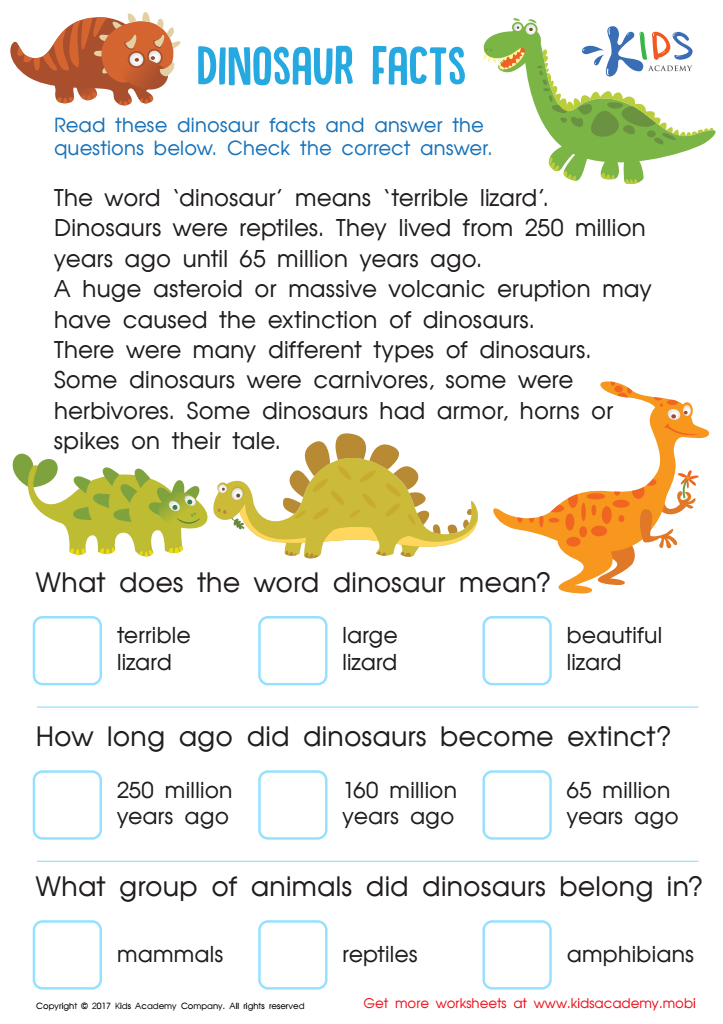
Dinosaur Facts Worksheet
 Assign to My Students
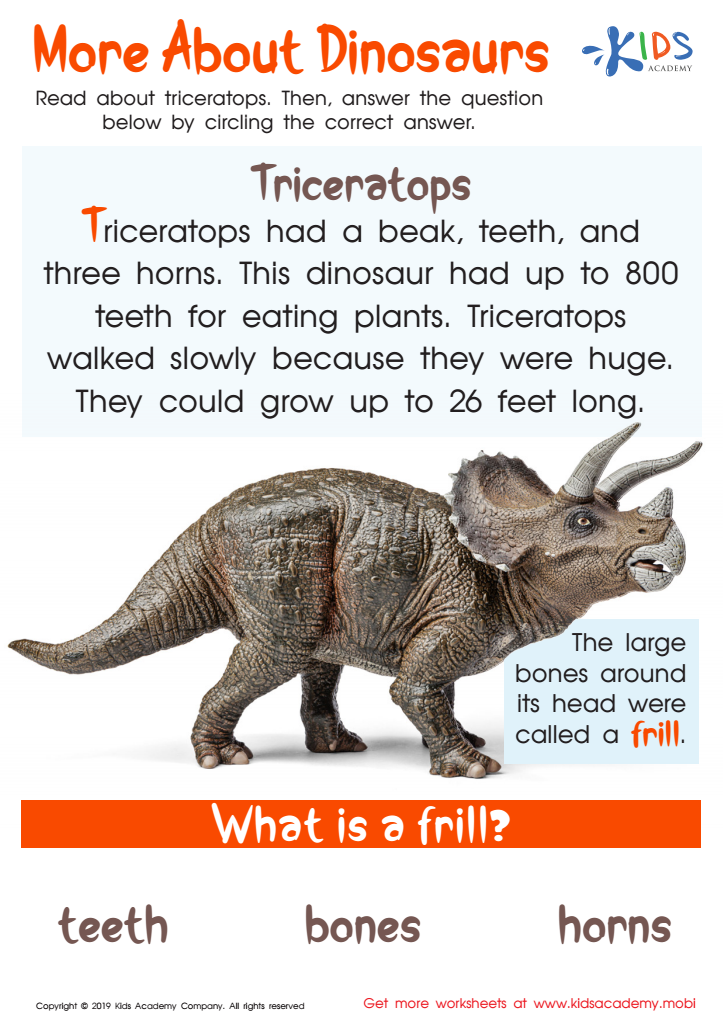
More About Dinosaurs Worksheet
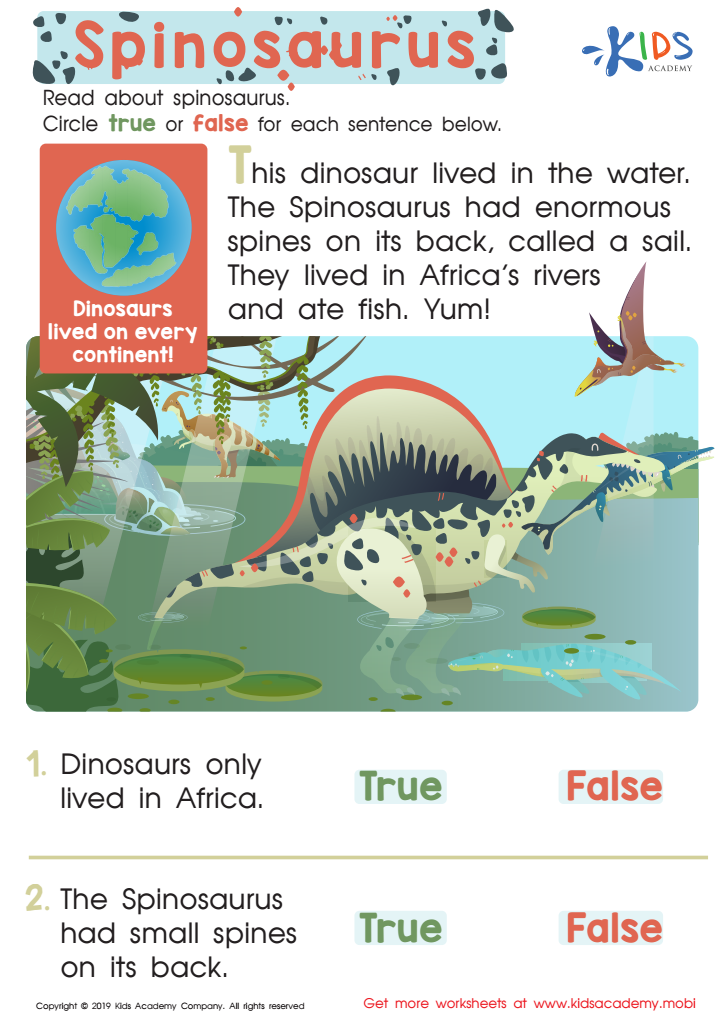
Spinosaurus Assessment Worksheet
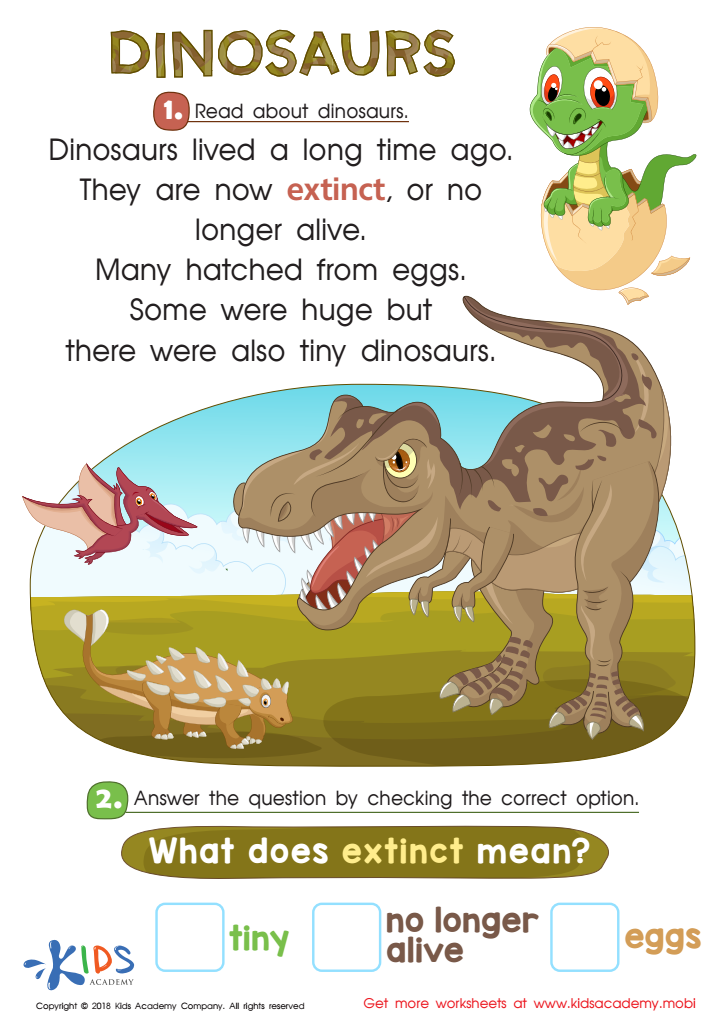
Dinosaurs Worksheet








Parents and teachers should prioritize Dinosaur Knowledge Reading for children ages 6-9 because it sparks curiosity and ignites a lifelong love of learning. Dinosaurs captivate young minds, transforming what might initially seem like a small interest into a doorway to broader scientific understanding. Engaging with non-fiction texts about dinosaurs enhances children’s reading comprehension by exposing them to complex vocabulary and varied sentence structures in an engaging context.
Moreover, learning about dinosaurs integrates multiple disciplines: paleontology introduces basic geoscience; discussions about herbivores and carnivores enrich biological understanding; timelines of the Mesozoic Era offer a glimpse into geology and the Earth’s history. This cross-curricular approach reinforces the interconnected nature of knowledge, fostering critical thinking.
Non-fiction reading also improves information-gathering skills. Children learn to discern facts, summarize content, and develop enquiring predispositions, crucial skills for their academic future. Additionally, these activities might cultivate empathy and responsibility, as many stories about dinosaurs can draw parallels to environmental stewardship and conservation efforts.
In essence, Dinosaur Knowledge Reading for young children is more than just learning about prehistoric life. It nurtures intellectual curiosity, enhances interdisciplinary comprehension, and prepares children with essential reading skills and ethical awareness indispensable for holistic development.








