Enhancing observation skills Reading Non-Fiction Worksheets for Ages 6-9
4 filtered results
-
From - To
Enhance your child's observation skills with our engaging non-fiction reading worksheets designed specifically for ages 6-9. These educational resources promote critical thinking, improve comprehension, and foster a love for learning through interactive activities. Children will explore a variety of topics while honing their ability to notice details, make connections, and analyze information effectively. The worksheets encourage active participation, helping young learners develop essential skills for academic success. Perfect for classroom use or at-home learning, these resources are tailored to support early readers on their journey to becoming confident and insightful learners. Start cultivating their observation skills today!
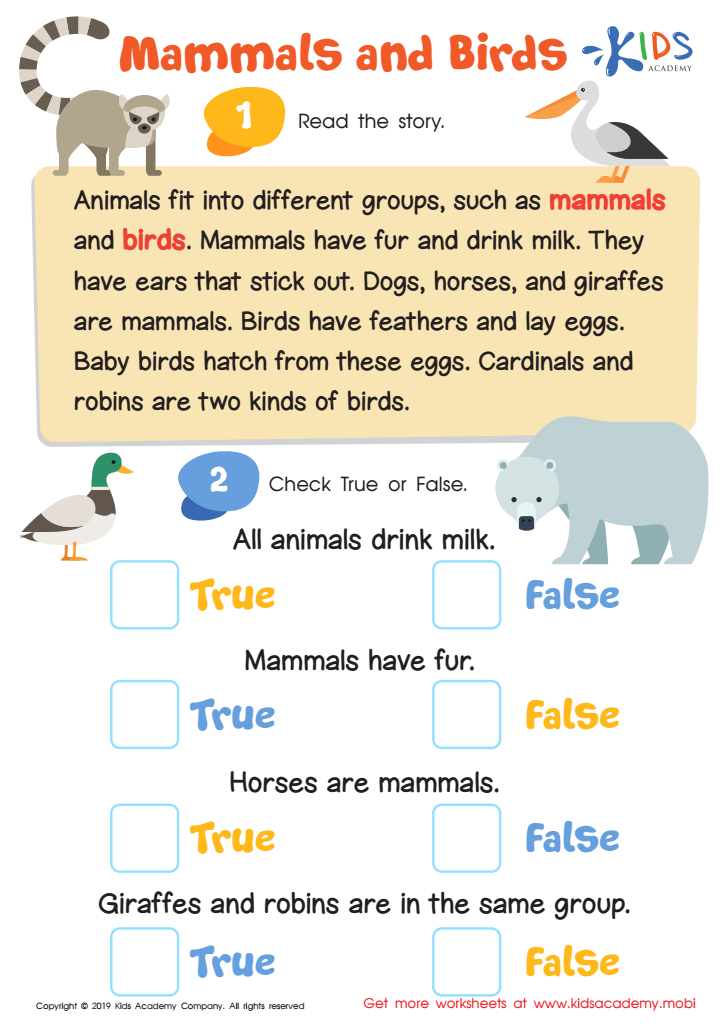
Mammals and Birds Worksheet
 Assign to My Students
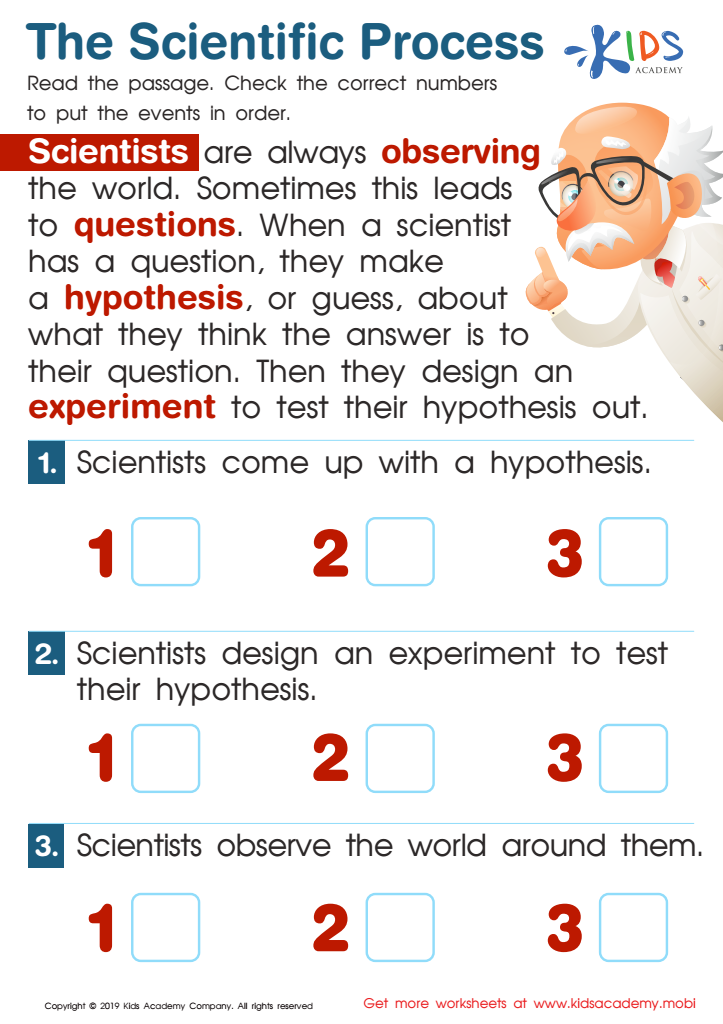
The Scientific Process Worksheet
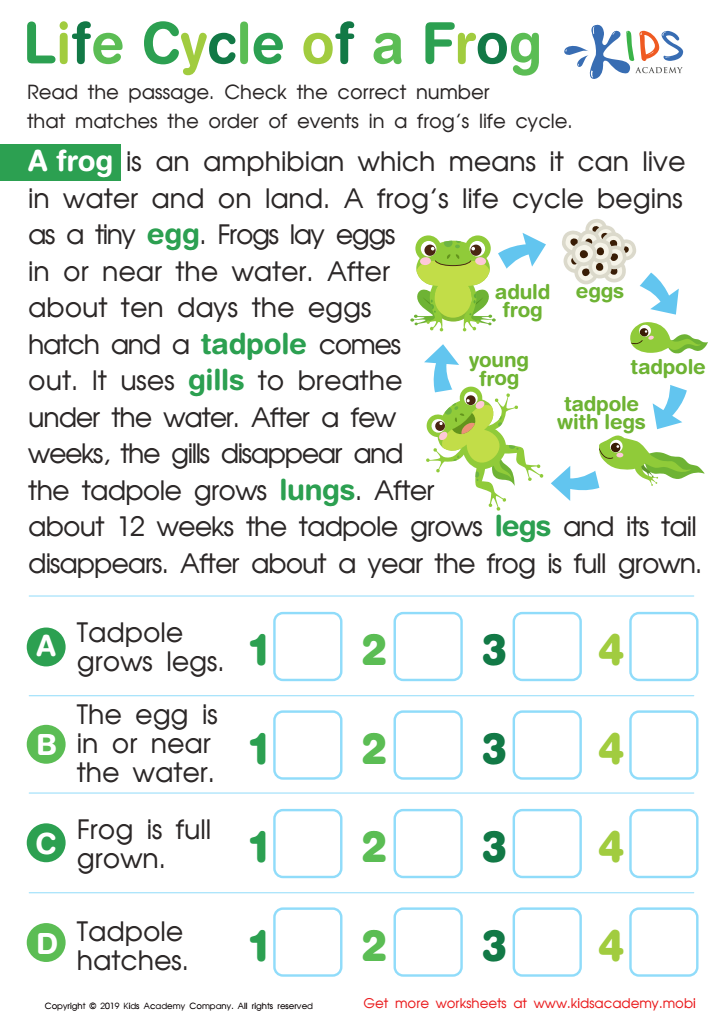
Life Cycle of a Frog Worksheet
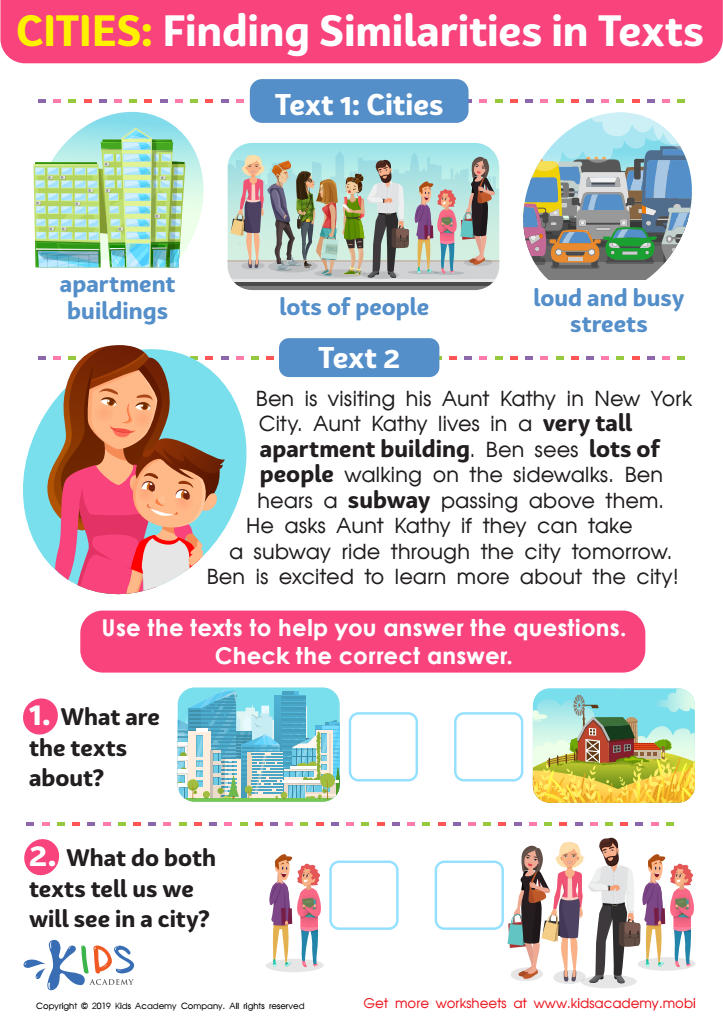
Cities: Finding Similarities Worksheet








Enhancing observation skills when reading non-fiction is crucial for children ages 6-9 because this stage of development lays the foundation for critical thinking and lifelong learning. Parents and teachers should prioritize this skill, as it fosters curiosity and engages young minds with the world around them. When children learn to observe details, they develop the ability to analyze information more effectively. This becomes especially important in non-fiction texts that present real-world concepts and facts.
By honing observation skills, children improve their comprehension, making connections between ideas and constructing a more profound understanding of the material they read. They learn to identify key features, such as headings, captions, graphs, and illustrations, which enhances their ability to extract pertinent information. Encouraging children to ask questions about what they observe nurtures a habit of inquiry that is essential for academic success.
Furthermore, these skills transition beyond reading; they influence other areas of learning and life. Being observant aids in problem-solving, creativity, and adaptability. Therefore, parents and teachers should actively engage children in discussions about what they see in non-fiction texts, developing both their observation skills and an appreciation for the diversity of knowledge available in the world.








