Letter recognition Letter S Worksheets for Ages 7-8
3 filtered results
-
From - To
Enhance your child's literacy skills with our engaging Letter S recognition worksheets designed for ages 7-8. These thoughtfully crafted activities encourage young learners to identify and differentiate the letter S through fun exercises like tracing, coloring, and matching games. By using these worksheets, children will build confidence in recognizing both uppercase and lowercase S while reinforcing their understanding of phonetics. Our engaging content makes learning enjoyable, ensuring that foundational literacy skills are developed effectively. Perfect for classroom use or at-home learning, our Letter S worksheets provide a comprehensive approach to mastering this vital aspect of the alphabet. Explore now and support your child's learning journey!
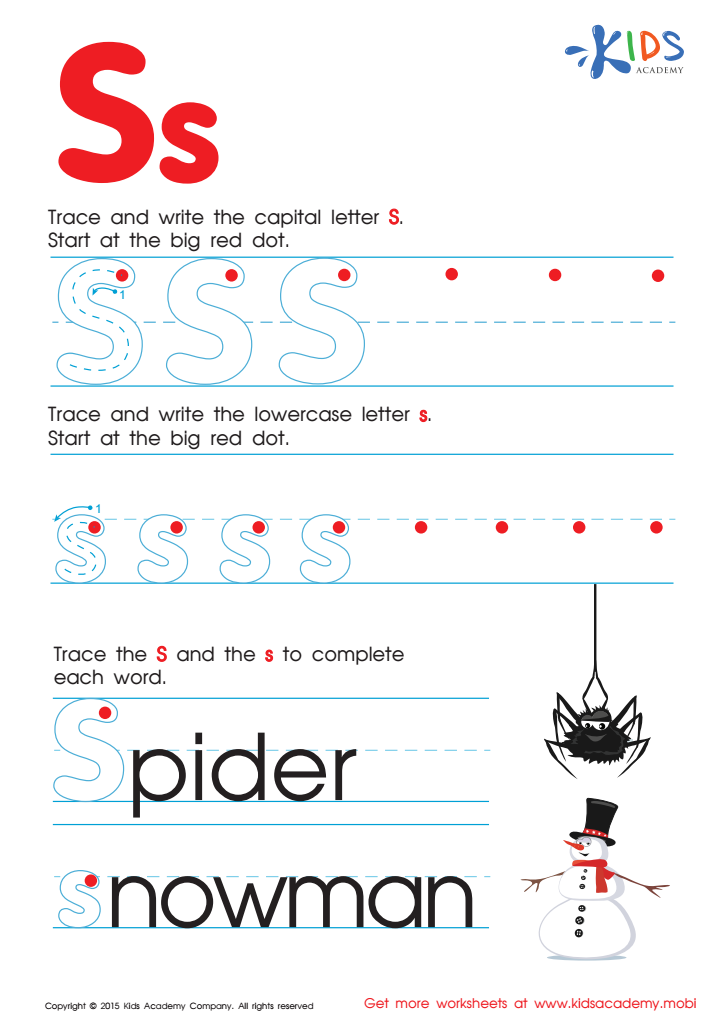
Letter S Tracing Page
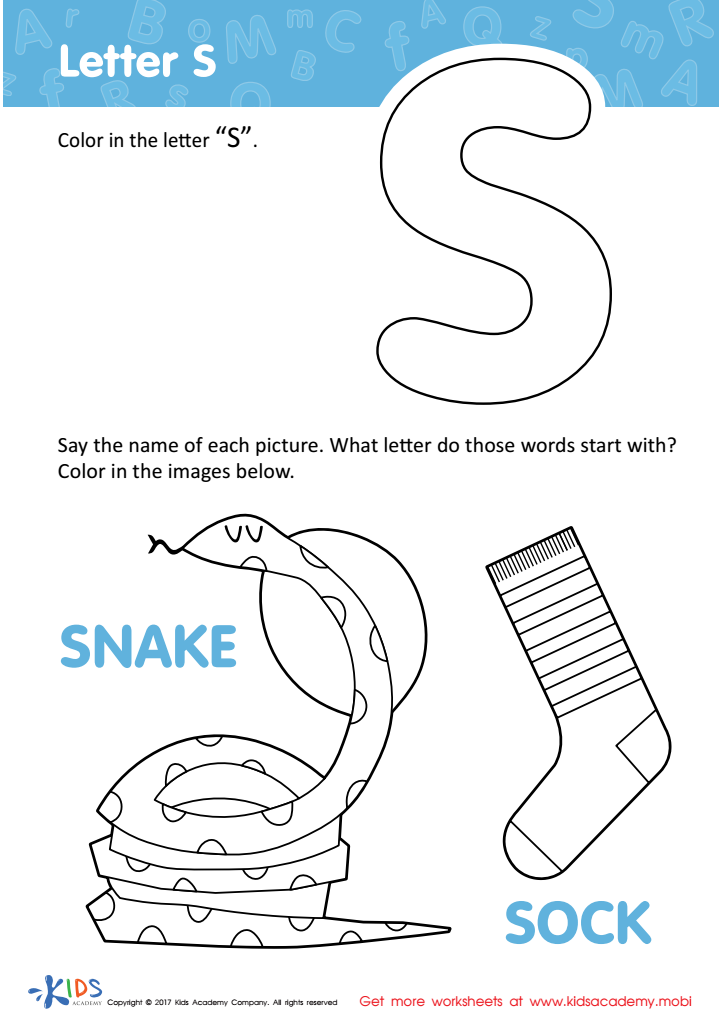
Letter S Coloring Sheet
 Assign to My Students
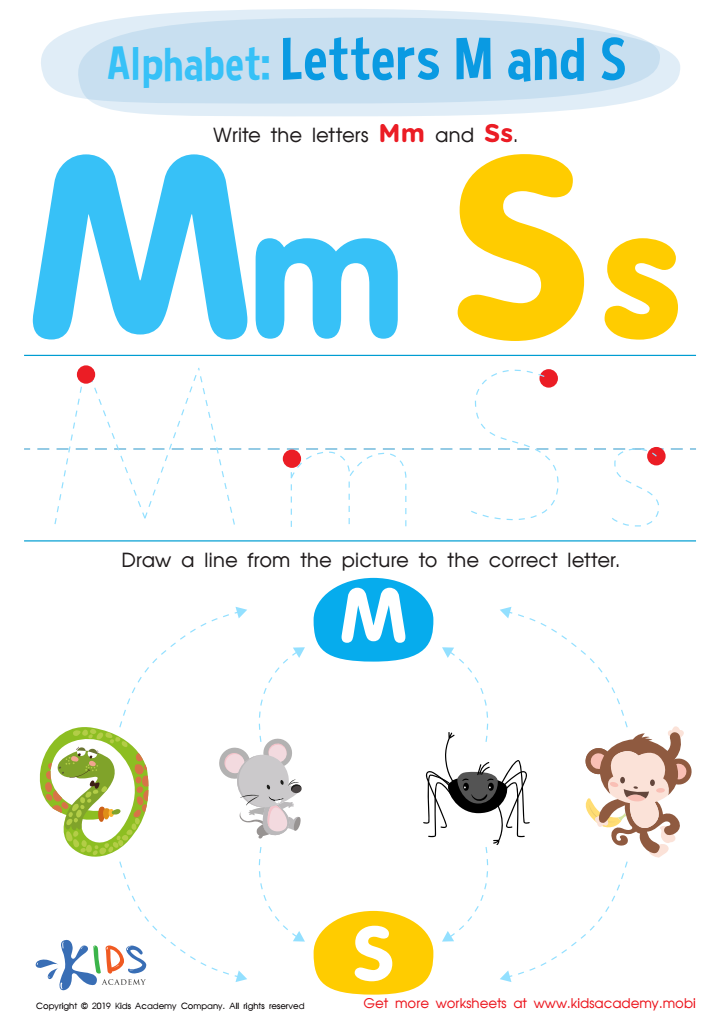
Letters M and S Tracing Worksheet








Letter recognition is a foundational skill in early literacy that significantly impacts a child's reading and writing abilities. For children ages 7-8, focusing on the letter 'S' is particularly important due to its frequency in the English language. Understanding 'S' helps children identify and pronounce many common words, enhancing their reading fluency. It is vital for phonemic awareness, aiding in the recognition of sounds and letter-sound correspondence, which is crucial when decoding new words.
Moreover, letter recognition extends beyond just reading; it also plays a role in writing. Kids need to recognize 'S' to spell words accurately, improving their overall communication skills. Encouraging familiarity with 'S' can make writing activities more enjoyable and less daunting, thereby fostering a positive attitude towards literacy.
Additionally, understanding how 'S' can change the meaning of words—through pluralization or verb conjugation—enhances vocabulary development. As parents and teachers engage children in learning the letter 'S,' they also promote critical thinking and creativity, essential components in learning. Recognizing the letter 'S' is more than just a literacy milestone; it's an important step towards developing a proficient and confident reader and writer. Therefore, supporting this aspect of learning is essential for every child's educational journey.