Sound Association Letter Sounds Worksheets for Ages 7-8
3 filtered results
-
From - To
Enhance your child's reading skills with our "Sound Association Letter Sounds Worksheets" tailored for ages 7-8. These engaging worksheets focus on helping young learners connect the sounds of words with their corresponding letters, a crucial step in developing phonemic awareness. Each activity encourages children to practice letter-sound recognition through captivating illustrations and fun exercises. This resource not only supports literacy but also fosters critical thinking and cognitive skills. Perfect for classroom use or homework, these worksheets motivate children to explore sounds creatively and confidently. Unlock your child’s reading possibilities and watch them flourish with our comprehensive worksheets today!
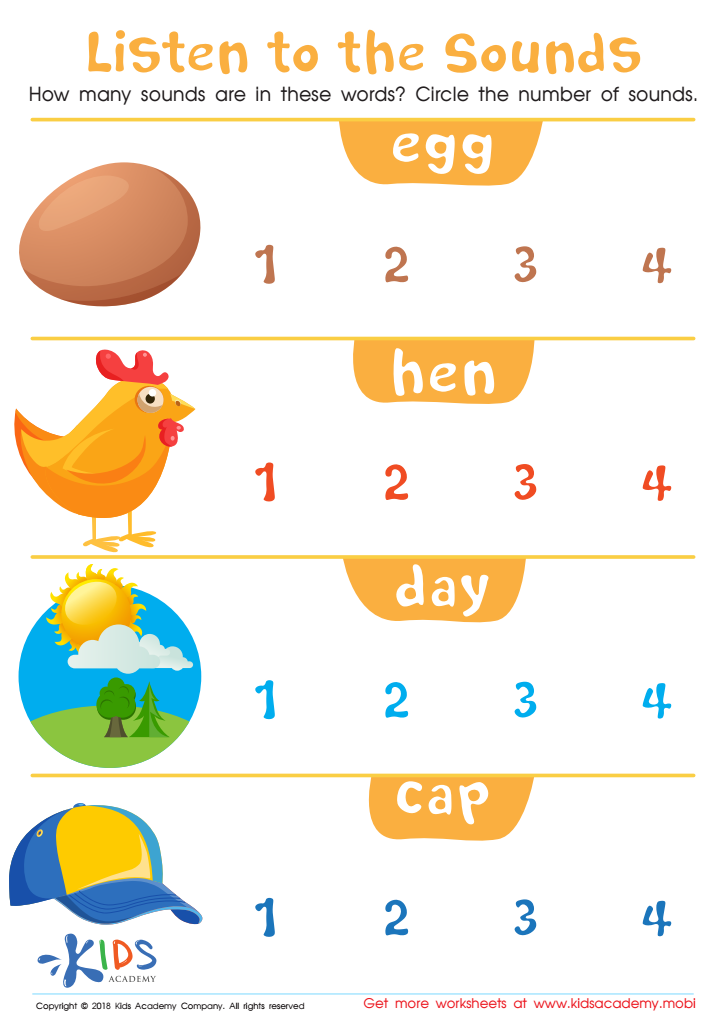
Listen to the Sounds Worksheet
 Assign to My Students
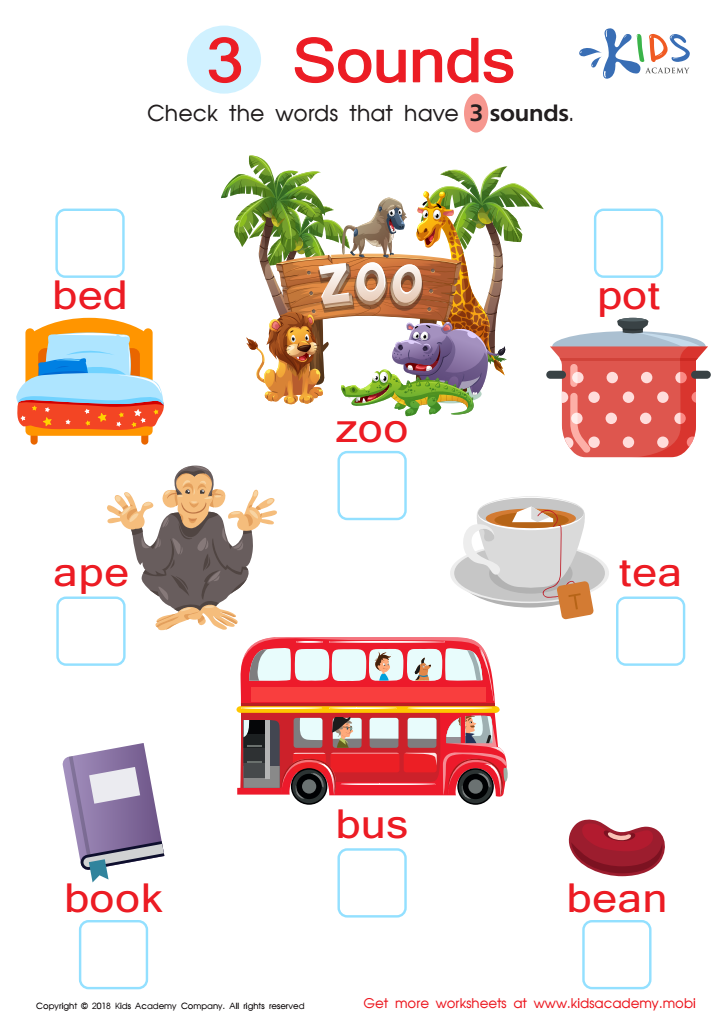
3 Sounds Worksheet
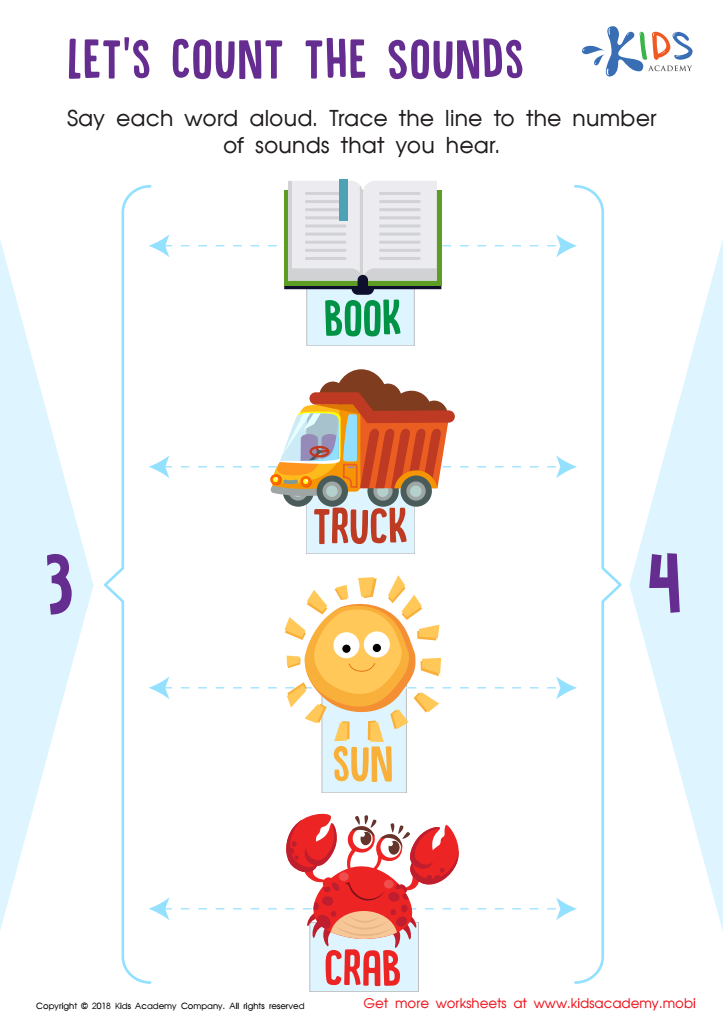
Let's Count the Sounds Worksheet








Sound association with letter sounds is crucial for children ages 7-8 as they build their reading and writing skills. At this age, children are transitioning from learning to read to reading to learn. Understanding the sounds associated with letters—and the corresponding phonemes—enhances their phonetic awareness, allowing them to decode words more efficiently.
Effective literacy development correlates with academic success across subjects, and grasping sound-letter relationships lays the foundation for fluent reading. If parents and teachers prioritize teaching these sounds, they support children's ability to recognize, read, and spell words in a more confident manner.
Moreover, cultivating sound association aids in enhancing vocabulary. With a solid understanding of letter sounds, children can explore word construction, leading to richer language skills.
Additionally, engaging parents in these activities fosters a collaborative approach to learning which creates a stable support system for children. Activities like phonemic games can be interactive and fun, making learning enjoyable. Engaging children in sound and letter games at home complements classroom learning, reinforcing the connection and ensuring children retain and apply their knowledge in practical contexts. In combination, these efforts can significantly improve literacy outcomes and promote a love for reading among young learners.







