Phonics practice Vowels and Consonants Worksheets for Ages 7-8
3 filtered results
Difficulty Level
Grade
Age
-
From - To
Subject
Activity
Standards
Enhance your child's reading skills with our Phonics Practice Vowels and Consonants Worksheets designed for ages 7-8. These engaging printables boost kids’ understanding of vowel and consonant sounds, helping them master phonics through enjoyable activities. Each worksheet offers diverse exercises focused on differentiating vowels from consonants, pronunciation, and word construction. By making learning fun, these worksheets not only improve literacy but also build confidence in young readers. Ideal for both classroom and home use, these resources ensure your child excels in reading comprehension and phonics. Start this educational journey today and watch your child’s reading abilities soar!
Favorites
With answer key
Interactive
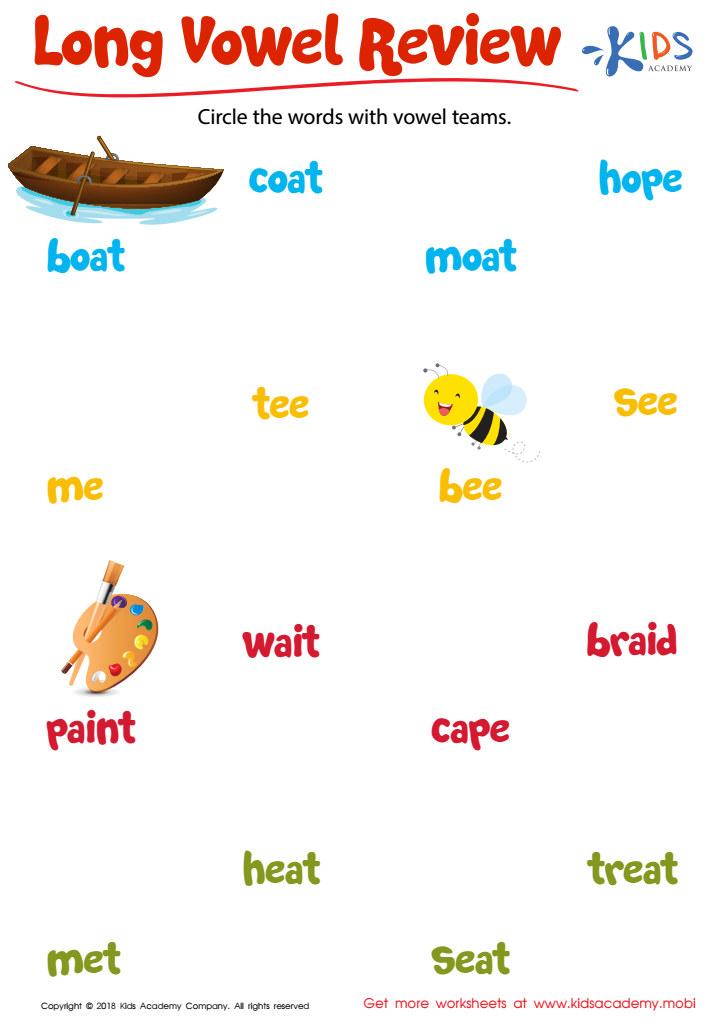
Long Vowel Review Worksheet
Vowel teams like "ea" and "ai" help us make words, and understanding these patterns aids emerging readers in becoming more fluent. This review worksheet has students finding words with vowel teams that make the long vowel sound, and helps them recognize high-frequency words.
 Assign to My Students
Long Vowel Review Worksheet
Worksheet
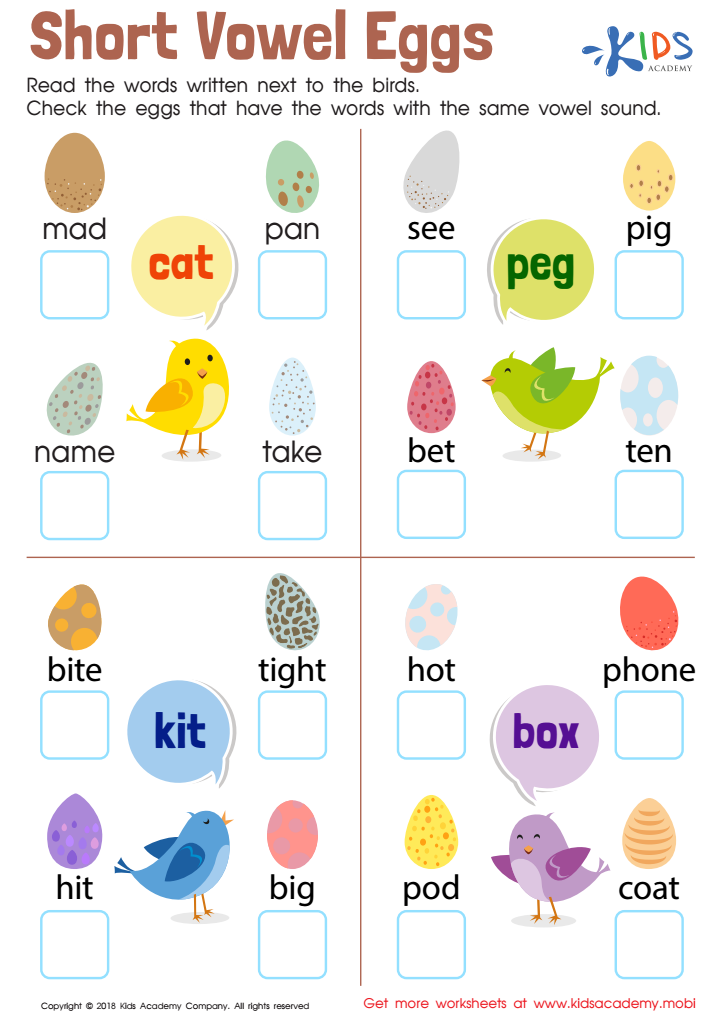
Short Vowel Eggs Worksheet
Your students will love helping these birdies pick the short vowel eggs! Have them read the words in the thought bubbles, then check off the boxes with the same short vowel sounds. The bright colors of this free Worksheet will draw them in and get them practicing their vowels!
Short Vowel Eggs Worksheet
Worksheet
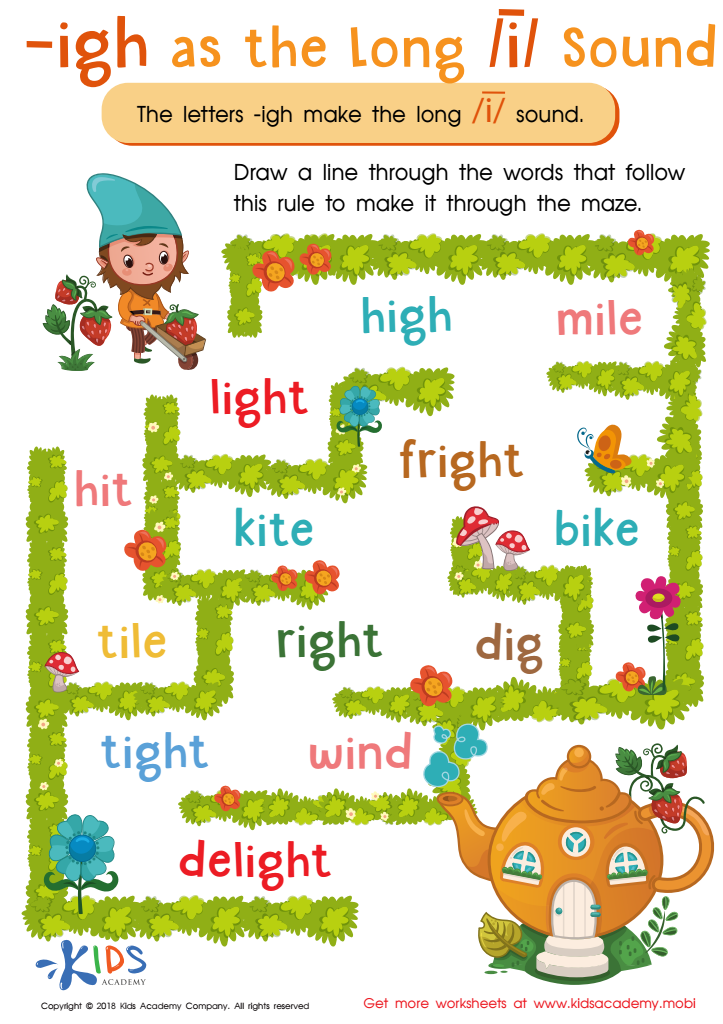
Reading: IGH as Long I Worksheet
Kids can have fun and learn with this maze! They'll look for and read words with the 'long I' sound spelled 'igh'. Most words ending with 'T' have this spelling. Decode words while learning about long vowel sounds and their spellings.
Reading: IGH as Long I Worksheet
Worksheet
Join Kids Academy for Free
Who is primarily going to use this learning content?



Phonics practice for vowels and consonants is essential for children ages 7-8 because it forms the foundation of proficient reading and writing skills. At this critical developmental stage, children's brains are particularly receptive to linguistic patterns, making it an ideal time to reinforce these fundamental elements of language. Phonics instruction helps them understand the relationship between letters and sounds, which is crucial for decoding unfamiliar words, enhancing reading fluency, and boosting comprehension.
By focusing on both vowels and consonants, children learn to recognize how these sounds combine to form words. Mastery of phonics enables them to tackle a broader vocabulary, improving their ability to understand and enjoy reading materials beyond their age level. This practice fosters greater confidence and independence in reading, which positively impacts their overall academic performance.
Moreover, strong phonics skills lay the groundwork for accurate spelling and clear written expression. This dual-focus not only aids in immediate learning objectives but also prepares children for more advanced literacy tasks in higher grades. Parents and teachers should prioritize phonics practice to ensure that children build a robust linguistic toolkit, setting the stage for a lifelong love of reading and effective communication skills. In essence, effective early phonics education is integral to nurturing knowledgeable, competent, and confident learners.