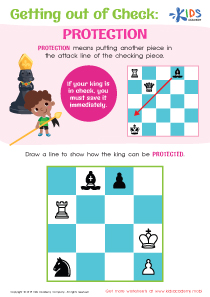
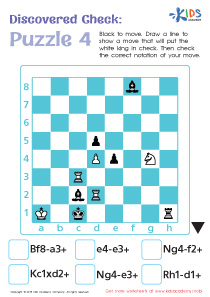
Decision making skills Chess Worksheets for Ages 7-8
3 filtered results
-
From - To
Enhance your child's cognitive development with our "Decision Making Skills Chess Worksheets for Ages 7-8." Designed to cultivate critical thinking and strategic planning, these engaging worksheets provide young minds with an interactive way to learn the nuances of chess. Each activity encourages thoughtful decision-making, boosting problem-solving abilities that are crucial both on and off the chessboard. With a step-by-step approach, children gain self-confidence and patience as they navigate through fun and challenging puzzles. Perfect for budding chess enthusiasts, these worksheets are an excellent resource to support your child's mental growth and decision-making skills.
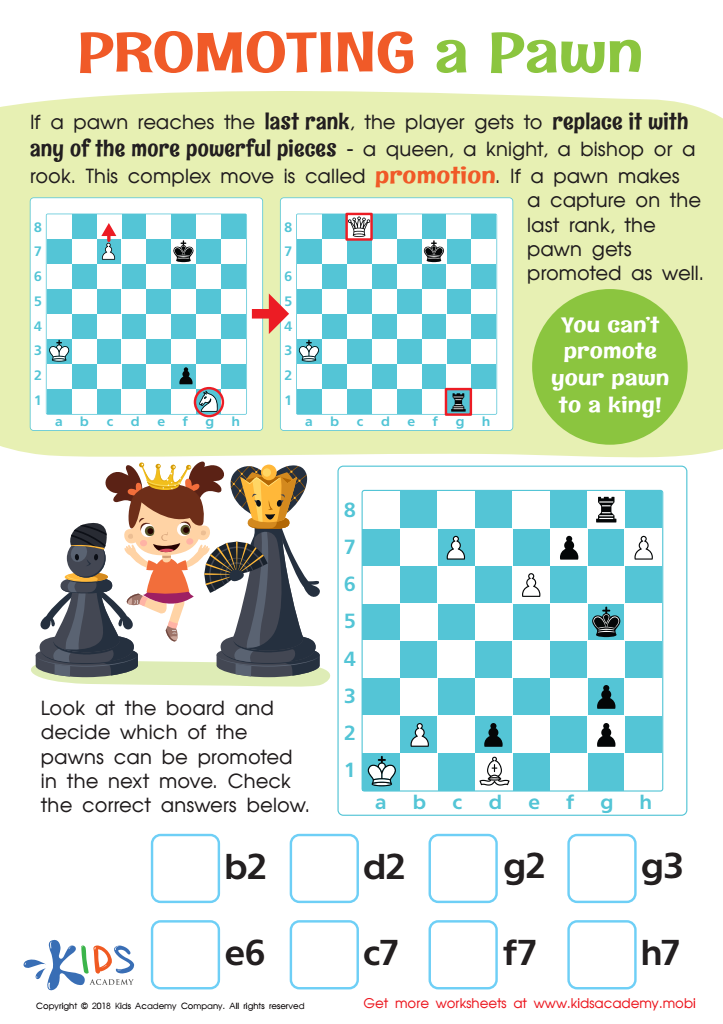
Promoting a Pawn Worksheet
 Assign to My Students
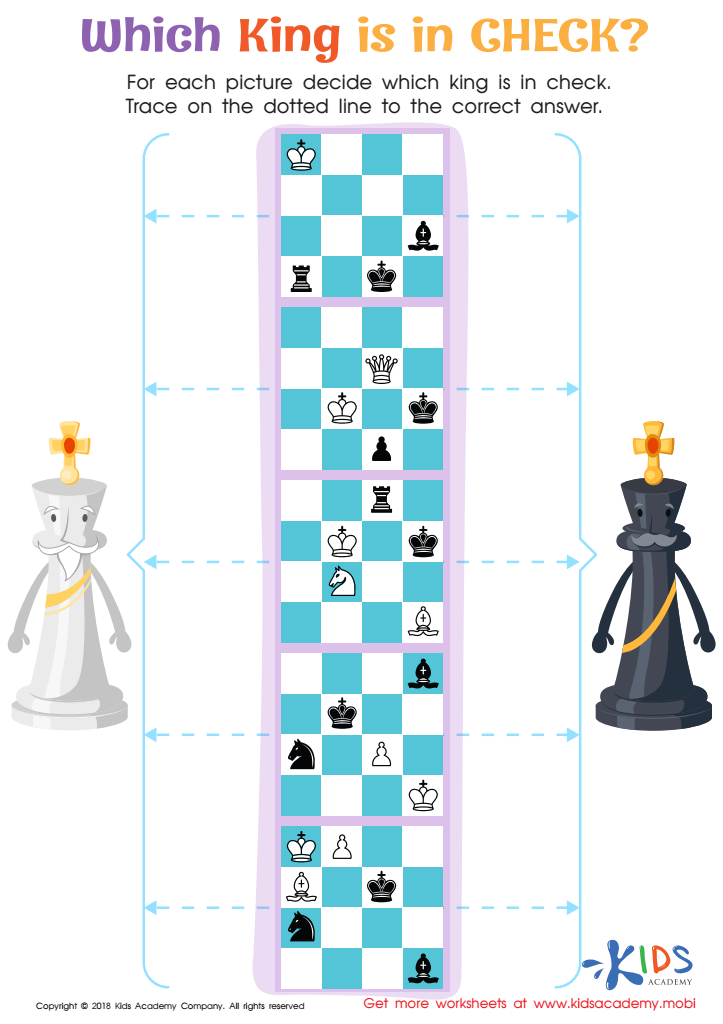
Which King is in Check? Worksheet
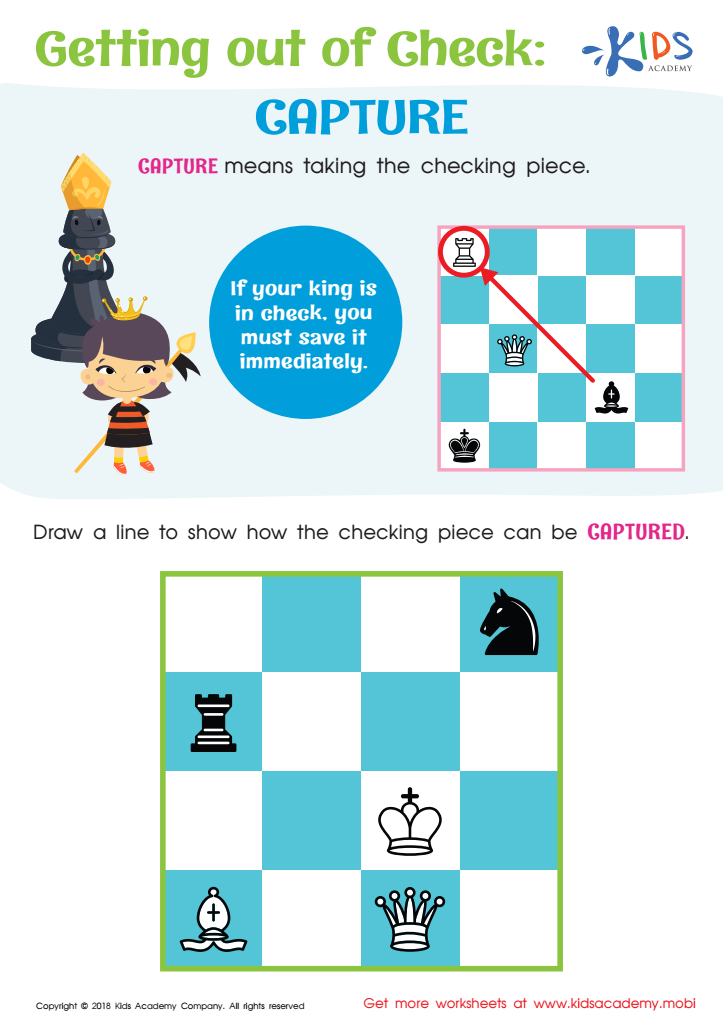
Getting out of Check: Capture








Teaching chess to children aged 7-8 can profoundly impact their decision-making skills, which is crucial at this developmental stage. At this age, children are honing their cognitive abilities and learning how to approach problems systematically. Chess serves as an excellent tool to foster these skills because it requires players to plan, strategize, and evaluate different outcomes before making a move.
First, chess encourages critical thinking. Each piece's movement dictates specific strategies, compelling young players to think several steps ahead. This foresight translated into everyday decision-making, helps children learn to anticipate consequences and weigh options carefully.
Second, chess promotes patience and discipline. The game teaches that impulsive actions often lead to poor outcomes, whereas thoughtful deliberation tends to yield better results. This sense of patience and restraint is essential in making well-informed choices in various aspects of life, from academics to social interactions.
Furthermore, chess cultivates resilience. Mistakes and losses are inevitable, but they offer invaluable learning experiences. Children learn to cope with setbacks and apply lessons learned in future situations, ultimately improving their problem-solving skills and emotional resilience.
Lastly, chess boosts confidence. Successfully navigating a complex game helps children build self-assurance in their decision-making abilities, fostering a positive attitude towards facing challenges both in and out of the classroom.
In summary, introducing chess to 7-8 year-olds can profoundly enhance their decision-making capabilities, providing lifelong benefits in critical thinking, patience, resilience, and confidence.