Learning addition Worksheets for Ages 7-8
5 filtered results
-
From - To
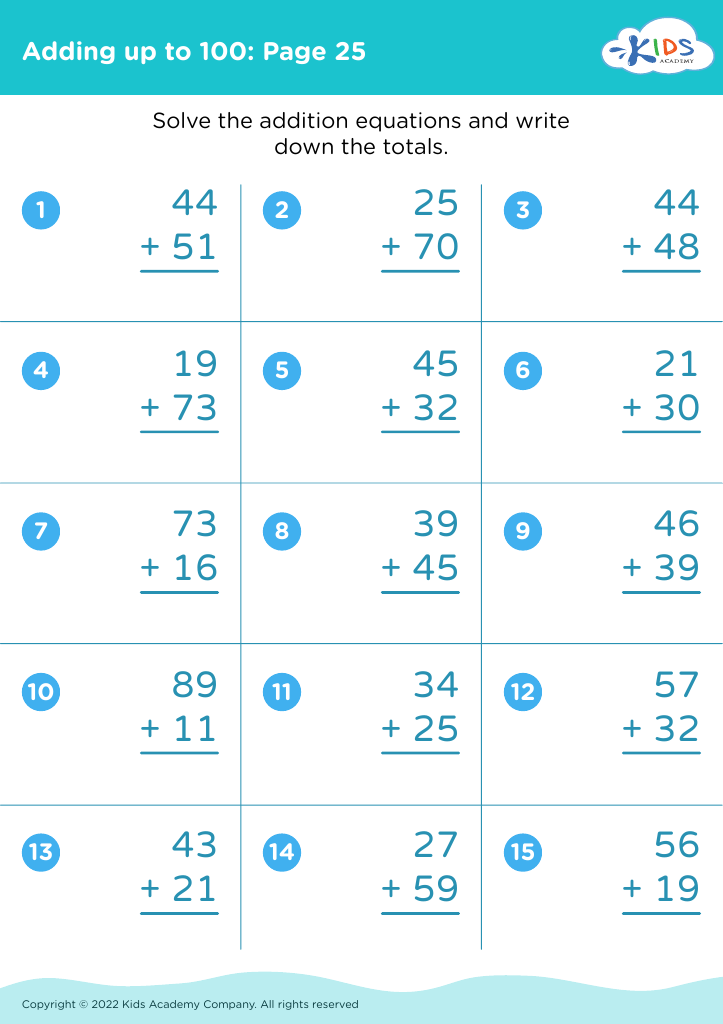
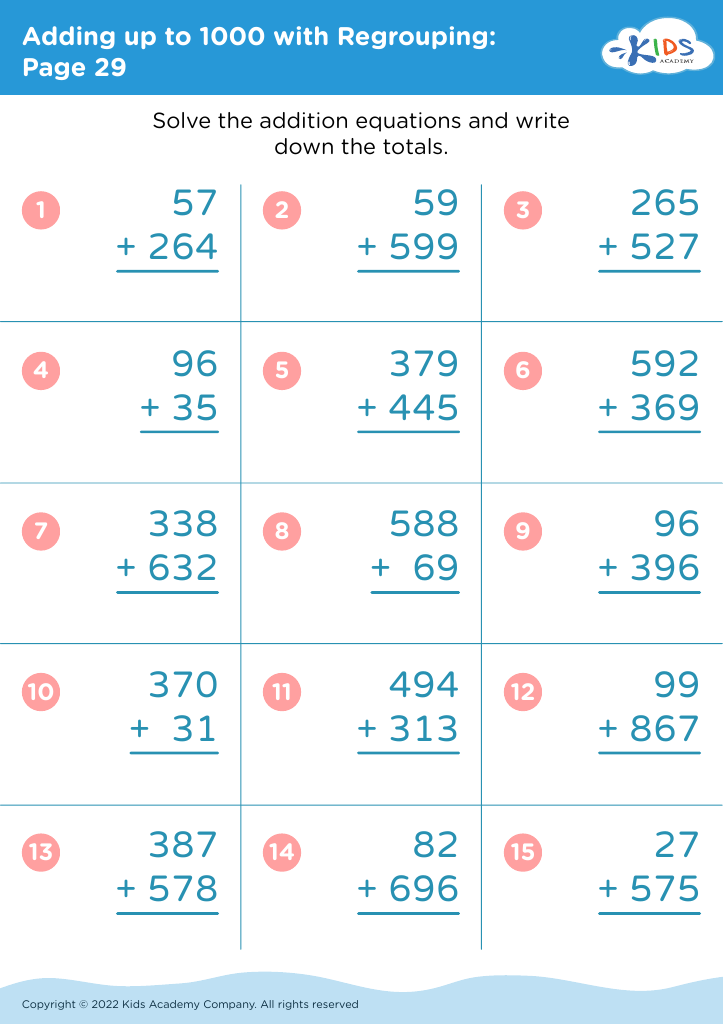
Our "Learning Addition Worksheets for Ages 7-8" are designed to make mastering basic math concepts enjoyable and engaging. Tailored for young learners, these worksheets provide a variety of addition problems that build essential skills through practice and repetition. With colorful visuals and fun themes, children will find the content stimulating and fun while developing their mathematical confidence. Perfect for classroom or home use, our worksheets align with educational standards to ensure that kids aged 7-8 can hone their addition skills effectively, preparing them for more complex math concepts in the future. Fun, educational, and effective – start your child's mathematical journey today!
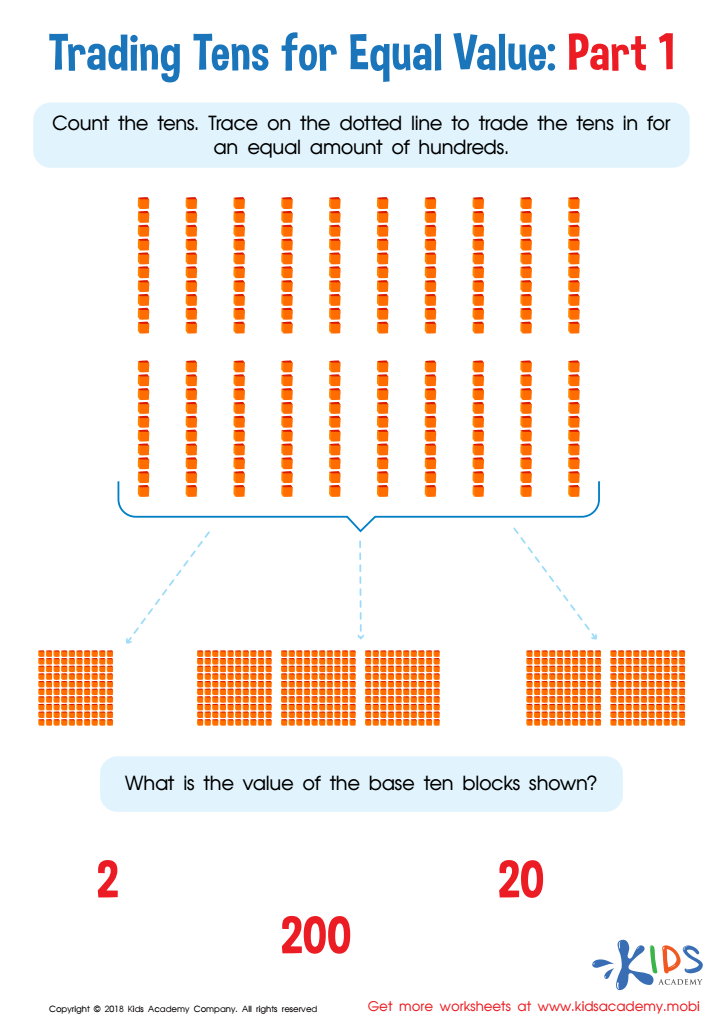
Trading Tens for Equal Value Worksheet: Part 1
 Assign to My Students
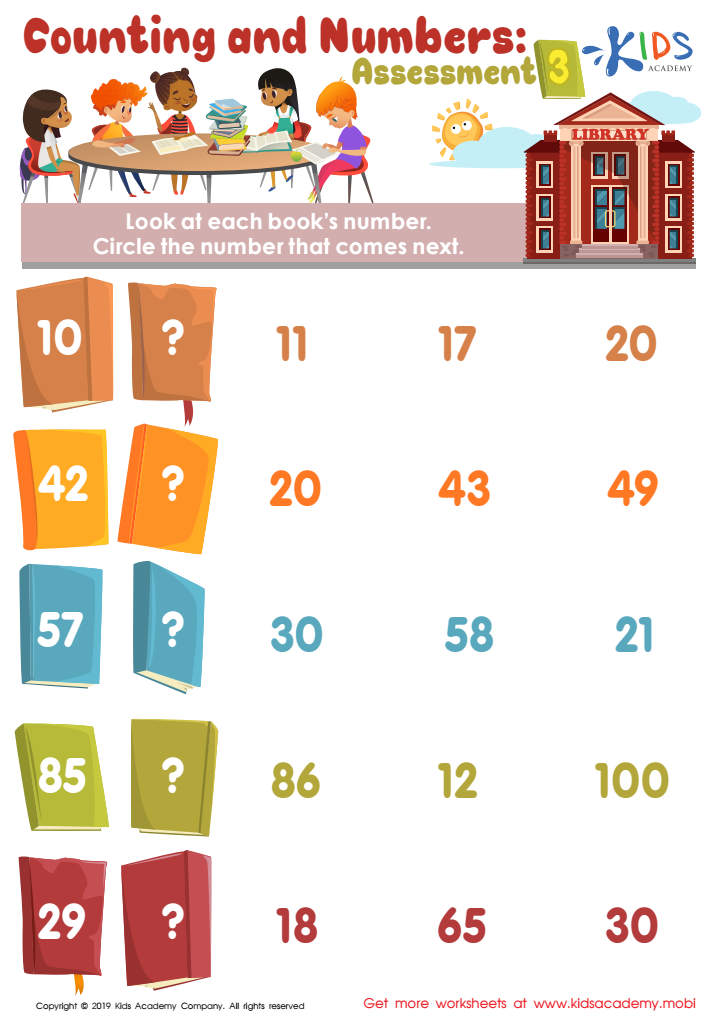
Counting and Numbers: Assessment Worksheet
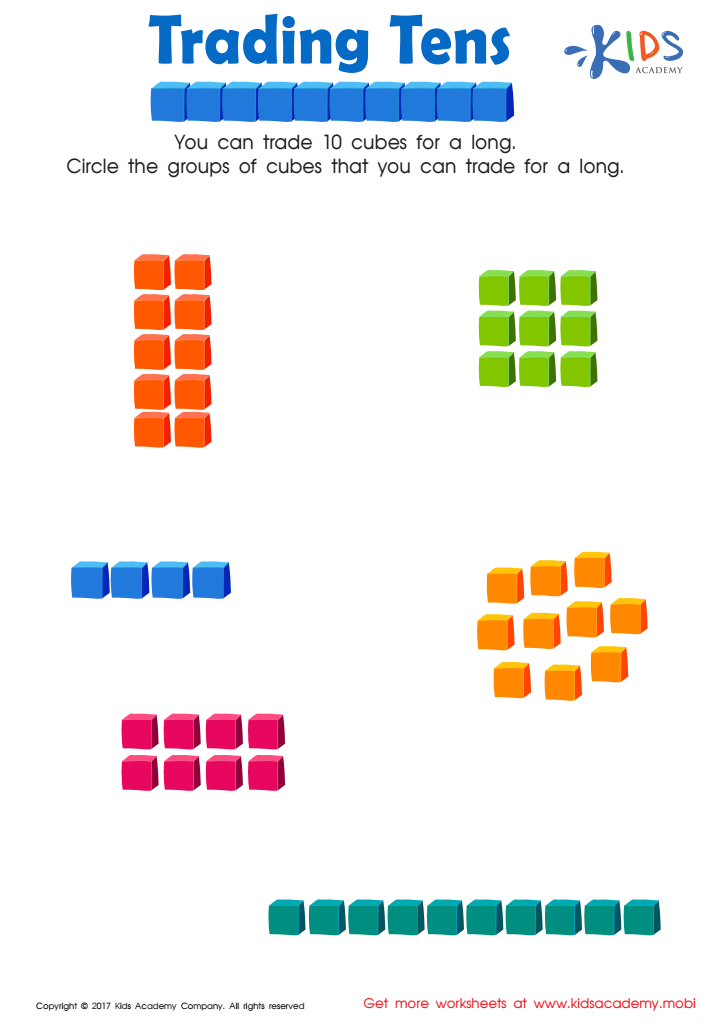
Trading Tens Worksheet








Learning addition at ages 7-8 is crucial for children's cognitive and academic development. At this stage, children's brains are particularly receptive to forming foundational math concepts that are essential throughout their education. Addition lays the groundwork for more complex arithmetic operations like subtraction, multiplication, and division. Understanding these basics enhances problem-solving skills, logical reasoning, and numerical fluency, which are vital for higher-order math topics covered in later grades.
For parents and teachers, encouraging proficiency in addition contributes to children's confidence in their abilities, reducing math anxiety and enabling a more positive attitude towards the subject. This foundational skill also translates into practical life skills, allowing children to manage daily tasks such as handling money, telling time, and sharing items evenly. Moreover, early mastery of addition aligns with academic standards and benchmarks that children are expected to meet, ensuring they remain on track with their peers.
Creating an engaging, supportive learning environment for practicing addition fosters a love for math and instills a growth mindset. Games, puzzles, and interactive activities can make learning addition fun and motivating, promoting curiosity and persistence. Consequently, cultivating these skills at an early age equips children with the tools they need for continuous academic success and everyday problem-solving.








